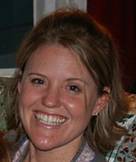
Interview with Meike Thomsen: Leading by Example Series

August 23, 2010

This series is dedicated to highlighting the impact made by exemplary literacy and language professionals who lead by example. They share their inspirational tips and stories. This week I’m delighted to showcase a teacher in a German bilingual program, who inspires young learners to study German, and also mentors her fellow teachers as part of her professional practice.

What is your name, affiliation, and connection to language learning?
My name is Meike Thomsen and I’m the learning leader for the first German Bilingual Junior High Program within the public Calgary Board of Education. The program welcomes its first students in September 2010. Previously, you could find me in the same capacity in the German Bilingual elementary school of the CBE. In a bilingual school, mathematics is taught in the target language. It is my luck (and the students’)  that I love mathematics and have been working with teachers on improving math pedagogy for the past 2 years before ‘rejoining’ the German Bilingual program at the Junior High level; ordering all their resources, library collection and determining which German Math book suits our Alberta curriculum best.

What are your thoughts about leadership and language learning?
It is my strong belief that every person should speak at least two languages and should have travelled at least once for an extended period of time to a country where the language is spoken. If we are looking at gaining world peace, we need to be able to understand each other. In order to understand another culture, we have to be able to communicate in their language and need to have lived within the culture for at least a year to truly understand it.

This is the reason why all European countries encouraged the exchange of youth between cities after World War II. The city I grew up in had a ‘sister city’ in England. Every year teenagers from my city went to visit there for 2 weeks and then the British youth would come and visit us for 2 weeks. The reasoning behind? You don’t fear what you know  You also don’t want to fight a war with a nation you have visited.

Here is an example that struck me when I learned of it: During World War II an American General was ordered to bomb one of the oldest German cities (Rothenburg op de Tauber). He couldn’t bring himself to do this, because he had visited this city as a young man and new of its historical importance. This city still has original parts dating back to the 11th century. Thanks to this general, this part of German history is alive today, because he had a personal connection to Rothenburg and knew what it would mean to destroy a city like that.

In your opinion, what’s the most important aspect of a language teacher’s job?
Engagement! People who learn a second language need to be engaged and they need to understand the importance of learning a second language. In the literature review of my thesis, I have a whole section on what the benefits of second language learning are.

While adult learners usually have a very specific reason for learning a second language, children and youth need to have fun doing it. Singing, puppet plays, watching German movies and having a German pen pal (email pal) are just a few things that will engage them in learning.

The second important aspect of a language teacher is the ability to teach the culture of the other country in a way that shows children/adults that our cultures do share some commonalities, but that there are distinct differences and… this is what they are. Personal space is a major one. Our personal bubble is much bigger here in Canada than in a lot of other countries. What is considered rude or polite? What is considered harassment? To teach cultural awareness is important and can be a lot of fun.

What are some of the projects you’ve been involved with that you would like to share?
The biggest project was my research in regards to my thesis: “The Sustainability of the German Bilingual Program in Calgary”. One of the most interesting (and frustrating) experiences was that parents had complained to me about not having a voice and not getting input … yet when I was looking for research participants (a survey and a focus group) not many were forthcoming. It took me 3 different attempts and approaches to get a sufficient numbers of parents to complete the initial survey.

What do you see as three new directions in language learning?
Thanks to the evolution in technology, the interactive part of language learning has become much easier. Teachers can find teachers in the target language’s country, connect, and then connect their students. Skype is free and kids can talk to each other, using the language they are learning. It makes the language come alive and removes it from the sterility of the classroom and the textbook. Using Skype also allows the students to use their hands, body and signs to help with communications – a phone call relies exclusively on words, which is much harder for beginners.

Today, we encourage students to speak – no matter how bad the grammar might be. This is a change in attitude and is still hard for the students to do. When I learned English, our instructors encouraged us to write down the sentence and ‘get it perfect’ before trying to speak … which resulted in very stilted and not natural conversations.

_________________

Share or Tweet this: Interview with Meike Thomsen: Leading by Example Series http://wp.me/pNAh3-hl


Interview with Martha Urquhart: Leading by Example Series

July 5, 2010

Monday Inspiration Series: Literacy and Language Professionals who Lead by Example

This new series is dedicated to highlighting the impact made by exemplary literacy and language professionals who lead by example. The series features interviews with each of our leaders, sharing their inspirations, stories and tips. This week I’m delighted to showcase a literacy and language leader in Alberta who impacts the lives of many people in amazing ways through her work.

What is your name, affiliation, and connection to language learning?

Martha Urquhart
ESL Consultant with Rural Routes Initiative, NorQuest College
Literacy Specialist with the Community Reading Program, Slave Lake Adult Education Committee

As an ESL Consultant with Rural Routes, I train and mentor ESL Instructors and Tutors across Northern Alberta.  I consult with the ESL providers in small, rural communities, who are often the literacy coordinators or the adult education coordinators for the local community learning councils, regarding the training needs of their instructors and volunteer tutors, resources to use in their programs, ESL support available for their community, and any other topics on which the ESL providers require input.

As a Literacy Specialist with the Community Reading Program, a local volunteer tutor adult literacy service operating under the umbrella of the Slave Lake Adult Education Committee, I assess ESL learners, train the volunteer tutors, and provide resources and support for the tutors as they help their learners acquire the English language.

What are your thoughts about leadership and language learning?

To me, a leader is someone who helps others to rise up to their fullest potentials. All of the volunteer tutors who work one-on-one with their learners and ESL instructors who teach ESL classes are leaders in the field of language learning.  Even the volunteer tutors who work one-on-one with literacy learners are leaders as they are helping someone develop their literacy skills, part of language learning even if that language is their own.

These are perhaps the greatest leaders of all because they do so quietly, most often without rewards of any kind, other than pats on the back and yearly appreciation dinners.  They attend training without any compensation, donating their own time to improve their own skills in order to help others rise up to their fullest potentials.

Truly, the greatest leaders of all time are the ones at the grass-roots level.

In your opinion, what’s the most important aspect of a language teacher’s job?

It’s critical for language teachers to connect the classroom to the outside world.  Learners have to be able to use the language outside of the classroom. The purpose of language is not to be able to communicate within the halls of an institution, but to take that learning out into the world and apply it to one’s own life.

This requires the teaching of skills that allow learners to complete activities that require interacting with their communities (such as interviewing business owners), providing a safe place for the learners to develop the required skills, and creating opportunities to build bridges between the classrooms and the communities.

I believe this is important regardless of whether you are working with children or with adults.  It is especially important when working with adults, as adult learners have to see the relevance in what they are learning and how that applies to their own lives.

What are some of the projects you’ve been involved with that you would like to share?

I seem to always be involved in some project.  I believe in lifelong learning and being a part of a variety of projects allows me to live that belief.

My most recent project involved working with the iCCAN project and utilizing video conferencing equipment to increase training opportunities for small ESL and literacy community based programs.

Most of the 13 communities involved in this project had little to no video conferencing experience.  Eight sessions were offered (two of three different topics; one topic having two parts) with a total of 160 tutors, instructors, facilitators, coordinators, and board members participating.

I facilitated the first topic from a desk top videoconferencing unit while the next two topics were conducted from a classroom unit. These experimental sessions showed grassroots in action as some community programs are now partnering with other rural programs in utilizing video conferencing to increase the professional development opportunities for their tutors and instructors.

What do you see as three new directions in language learning?

I think that ESL programming in small rural communities will become more systematic.  Although it will be a challenge to ensure that community based programs remain personally relevant for their particular learners, I believe this will increase the quality of ESL programming.

This, in turn, will increase the professionalism within the field.  As more communities become comfortable with using video conferencing, and more training opportunities become available (via video conferencing or traditional formats), small rural community based programs will be able to increase the professionalism within their ESL programming.

And I believe computers will become an “additional language” that everyone, regardless of their roles within their communities, will need to add to their database of knowledge.  Already, literacy programs are seeing an increase in requests for what is being termed “computer literacy”.  I think incorporating the use of computers within the ESL programming will also be important, both as a tool for language learning itself and as a required skill for future opportunities.

_______________

Like this post? Share or Tweet it: Interview with Martha Urquhart http://wp.me/pNAh3-aV


Interview with Brent Novodvorski: Leading by Example Series

June 28, 2010

Monday Inspiration Series: Literacy and Language Professionals who Lead by Example

Brent David Novodvorski, a Deaf teacher of ASL and ESL to local immigrants.

This new series is dedicated to highlighting the impact made by exemplary literacy and language professionals who lead by example. The series features interviews with each of our leaders, sharing their inspirations, stories and tips. Today, I’m pleased to share an interview with Brent David Novodvorski.

I worked with Brent in 2009. Together we worked on “Literacy for Deaf Immigrant Adults: A Symposium for Collaboration and Learning”, the first event of its kind in Western Canada. The symposium brought together members of the Deaf and Hard of Hearing Community, as well as those from immigrant-service agencies in Calgary to talk about the needs of Deaf and Hard of Hearing immigrants in our city. The final report for the symposium was published by the National Adult Literacy Database (NALD). You can find it here.

From working side-by-side with Brent at that amazing event, I can say that he is truly a leader in his field. He is Deaf and works with local immigrants, teaching them American Sign Language (ASL) and English as a Second Language (ESL).

1. What is your name, affiliation, and connection to language learning?

My name is Brent David Novodvorski.  I work in a community college in Western Canada with an excellent reputation for innovative work and sustainability in literacy and languages.  I also work as an independent scholar.  I offer an array of connections to language learning: research, curriculum development, building instructional strategies and methods to reflect teachings.  The outcome of my work advances language learning on three levels: teacher, student and environment.  My specialities are: sign language, English, English as a second language and bilingualism.

2.  What are your thoughts about leadership and language learning?

Leadership is a delicate term, especially in communities not valued for their uniqueness and indigenous and linguistic knowledge.  Leaders have a presence. I have taught sign language poetry and the students shared poems about their experience.  These students are from other countries where sign language is considered primitive and subordinate to vocal languages.  The teacher as leader was present when I taught poetry but when I brought the students to the community to share their work – my leadership was taken to a new level – students formed new connections with other members of the community and created new poems!

3.  In your opinion, what’s the most important aspect of a language teacher’s job?

Language teachers need to recognize and appreciate what knowledge and skills are valued, celebrated and carried in communities – workplace, ethnic cultures, and linguistic.  Although, it is varied; the curriculum has the unique position to be evolutionary and reflective of the changing world.  The curriculum is the site, or a workbench, for language teachers to weld the values of membership in communities.  I do not visualize this work in isolation; teachers share their craft in a community of practice.  Therefore, I am an advocate of literacy and languages as an accessible medium for social, democratic and economic participation.

4.  What are some of the projects you’ve been involved with that you would like to share?

There are several projects I have been involved with:

  1. “Effective teaching approaches and materials for Deaf and hard of hearing immigrant adults in bilingual education.”
  2. “Bridging classroom experience to community: a literature review of sign language in learning contexts.”
  3. “Small Gestures: Improving access to education for Deaf and hard of hearing adult immigrants during the settlement process.”

5.  What do you see as three new directions in language learning?

1.     What Mother Tongue?

With the rapid development of technology and communication connections, the world is becoming, metaphorically, flat.  This means there are more linguistic contacts with different parts of the world. People learn languages other than your mother tongue! I see many language teachers with knowledge of more than two or three languages.

2.     Deaf Professionals

Leaders are increasingly focused on assets of the people they work with.  This is good news for Deaf workers who often struggle to move beyond tokenship towards equal opportunities that capitalizes on assets. I see Deaf professionals as an extraordinary asset to the fabric of leadership.

3.     Framework based on Knowledge of the Community

Research framework has evolved from a researcher-centered way of thinking to include the learner’s knowledge and ‘life’ of the community.  This has an impact on the ways of doing research, as well as how research results are shared and disseminated.  Hands-on workshops are slowly replacing the traditional ‘stand and talk’. I see a framework based on individuals and meaningful connections in communities.

As a side note from me, I wanted to add that Brent is also the brains behind Calgary’s first International Sign Language Celebration Day (ISLCD), which will be held in on September 24. This day is chock-a-block with performances and opportunities for everyone in the community to experience the richness of international sign language and Deaf culture.

____________

Like this post? Share or Tweet it: Interview with Brent Novodvorski http://wp.me/pNAh3-a9

Update – June 2018 – This blog has had over 2 million views thanks to readers like you. If you enjoyed this post, please “like” it or share it on social media. Thanks!

Sarah Elaine Eaton is a faculty member in the Werklund School of Education, University of Calgary, Canada.


Interview with Cheryl Haga: Leading by Example Series

June 21, 2010

Monday Inspiration Series: Literacy and Language Professionals who Lead by Example

This is the first in a new series dedicated to highlighting the impact made by exemplary literacy and language professionals who lead by example. The series features interviews with each of our leaders, sharing their inspirations, stories and tips. To kick off the series, I’m pleased to share an interview with Cheryl Haga, Area Director for Lango: Foreign Languages for Kids.

What is your name, affiliation, and connection to language learning?

Cheryl Haga, Bay Area Director for LANGO: Foreign Languages for Kids

LANGO: Foreign Languages for Kids provides French, Mandarin, and Spanish classes for kids ages 18 months to 11 years old. Our classes are incredibly engaging and dynamic, taught by native or bilingual teachers with passion and positivity. As the Bay Area Director, I have the honor of working with our teachers, families, and school partners to ensure that our language program is not just meeting the needs and expectations of our families – but exceeding them! As an educator for the better part of my career, it’s incredibly powerful to see kids as young as 1 ½ years old respond non-verbally to directions in a foreign language…especially when I saw them at the start of the season with no understanding of that language at all.

What are your thoughts about leadership and language learning?

Growing up in the central valley of California, where most of my friends spoke something other than English at home, I was lucky to have learned Spanish early in life. I also had some amazing opportunities to travel during high school and college which allowed me to learn other languages. From my perspective, I’d like to see Language Leaders truly lead the charge on brining foreign languages to the lives of young children, specifically in the schools. Everyone reading this blog knows the benefits of learning a foreign language, I’d love to see our combined efforts making significant headway to expanding language acquisition to extend down to our Kinder classes.

In your opinion, what’s the most important aspect of a language teacher’s job?

Because my focus is on early language acquisition, the most important part of a foreign language teachers job is to get the kids excited about the language. If the children are engaged in the class – having fun and enjoying themselves – they will learn the language. If they start to learn the language early in life, they will have the confidence to try other languages later on, and they will have an increase desire to learn about and understand other cultures. The more understanding there is about other people, the more we are able to find common ground…all that from a teachers’ ability to engage a young child in a foreign language.

What are some of the projects you’ve been involved with that you would like to share?

Our main project – really our whole mission – is exposing as many kids as possible to foreign languages. Even if that means simply having them come to just one season of classes; we want everyone in the Bay Area to have an opportunity to learn French, Mandarin, and/or Spanish. It’s vital in this day and age for our children to be able to communicate in more than just one language.

What do you see for the future of language learning?

Wow. The future of language learning. That’s a big question isn’t it?

I’d like to see every pre-school and elementary school with a foreign language curriculum – integrated into part of the day along with Science, History, English, Math, and all the other essential programs. I’d like to see more focus in the middle and high school foreign language programs on the importance and benefit to learning another language – not just memorization of congregation, but a deeper understanding of the cultural impact a language has on the people. I’d love to see families engaging in foreign exchange programs (like many high school students do) so that the learning and understanding becomes part of the family conversation right from the beginning. I’d like to see our ‘global awareness’ reach farther than just the catch phrase of the week.

________________

Like this post? Share or Tweet it: Interview with Cheryl Haga: Leading by Example Series http://wp.me/pNAh3-9w

Update – January 2018 – This blog has had over 1.8 million views thanks to readers like you. If you enjoyed this post, please “like” it or share it on social media. Thanks!

Sarah Elaine Eaton is a faculty member in the Werklund School of Education, University of Calgary, Canada.