Interview with Brent Novodvorski: Leading by Example Series

June 28, 2010

Monday Inspiration Series: Literacy and Language Professionals who Lead by Example

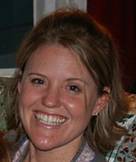
Brent David Novodvorski, a Deaf teacher of ASL and ESL to local immigrants.

This new series is dedicated to highlighting the impact made by exemplary literacy and language professionals who lead by example. The series features interviews with each of our leaders, sharing their inspirations, stories and tips. Today, I’m pleased to share an interview with Brent David Novodvorski.

I worked with Brent in 2009. Together we worked on “Literacy for Deaf Immigrant Adults: A Symposium for Collaboration and Learning”, the first event of its kind in Western Canada. The symposium brought together members of the Deaf and Hard of Hearing Community, as well as those from immigrant-service agencies in Calgary to talk about the needs of Deaf and Hard of Hearing immigrants in our city. The final report for the symposium was published by the National Adult Literacy Database (NALD). You can find it here.

From working side-by-side with Brent at that amazing event, I can say that he is truly a leader in his field. He is Deaf and works with local immigrants, teaching them American Sign Language (ASL) and English as a Second Language (ESL).

1. What is your name, affiliation, and connection to language learning?

My name is Brent David Novodvorski.  I work in a community college in Western Canada with an excellent reputation for innovative work and sustainability in literacy and languages.  I also work as an independent scholar.  I offer an array of connections to language learning: research, curriculum development, building instructional strategies and methods to reflect teachings.  The outcome of my work advances language learning on three levels: teacher, student and environment.  My specialities are: sign language, English, English as a second language and bilingualism.

2.  What are your thoughts about leadership and language learning?

Leadership is a delicate term, especially in communities not valued for their uniqueness and indigenous and linguistic knowledge.  Leaders have a presence. I have taught sign language poetry and the students shared poems about their experience.  These students are from other countries where sign language is considered primitive and subordinate to vocal languages.  The teacher as leader was present when I taught poetry but when I brought the students to the community to share their work – my leadership was taken to a new level – students formed new connections with other members of the community and created new poems!

3.  In your opinion, what’s the most important aspect of a language teacher’s job?

Language teachers need to recognize and appreciate what knowledge and skills are valued, celebrated and carried in communities – workplace, ethnic cultures, and linguistic.  Although, it is varied; the curriculum has the unique position to be evolutionary and reflective of the changing world.  The curriculum is the site, or a workbench, for language teachers to weld the values of membership in communities.  I do not visualize this work in isolation; teachers share their craft in a community of practice.  Therefore, I am an advocate of literacy and languages as an accessible medium for social, democratic and economic participation.

4.  What are some of the projects you’ve been involved with that you would like to share?

There are several projects I have been involved with:

  1. “Effective teaching approaches and materials for Deaf and hard of hearing immigrant adults in bilingual education.”
  2. “Bridging classroom experience to community: a literature review of sign language in learning contexts.”
  3. “Small Gestures: Improving access to education for Deaf and hard of hearing adult immigrants during the settlement process.”

5.  What do you see as three new directions in language learning?

1.     What Mother Tongue?

With the rapid development of technology and communication connections, the world is becoming, metaphorically, flat.  This means there are more linguistic contacts with different parts of the world. People learn languages other than your mother tongue! I see many language teachers with knowledge of more than two or three languages.

2.     Deaf Professionals

Leaders are increasingly focused on assets of the people they work with.  This is good news for Deaf workers who often struggle to move beyond tokenship towards equal opportunities that capitalizes on assets. I see Deaf professionals as an extraordinary asset to the fabric of leadership.

3.     Framework based on Knowledge of the Community

Research framework has evolved from a researcher-centered way of thinking to include the learner’s knowledge and ‘life’ of the community.  This has an impact on the ways of doing research, as well as how research results are shared and disseminated.  Hands-on workshops are slowly replacing the traditional ‘stand and talk’. I see a framework based on individuals and meaningful connections in communities.

As a side note from me, I wanted to add that Brent is also the brains behind Calgary’s first International Sign Language Celebration Day (ISLCD), which will be held in on September 24. This day is chock-a-block with performances and opportunities for everyone in the community to experience the richness of international sign language and Deaf culture.

____________

Like this post? Share or Tweet it: Interview with Brent Novodvorski http://wp.me/pNAh3-a9

Update – June 2018 – This blog has had over 2 million views thanks to readers like you. If you enjoyed this post, please “like” it or share it on social media. Thanks!

Sarah Elaine Eaton is a faculty member in the Werklund School of Education, University of Calgary, Canada.


5 Ways to Show Teachers Appreciation

June 24, 2010

In many regions it is the end of the school year. Here are 5 low-cost ways to let your teachers know you appreciate them:

1. Organize a teacher and staff appreciation lunch – If you can afford to bring in some catering, go for it. If not, make it pot luck and have everyone bring a dish. The point is to gather everyone together for the purpose of celebrating.

2. Make a speech – School taking the time to publicly thanking the school teachers and staff shows good leadership. Opening up the floor for teachers to give praise to their peers adds an additional level of warmth. Keep it brief – and sincere.

3. Certificate of Appreciation – Print off one for every teacher, complete with their name, the name of the school and the school year. Have the principal sign them. Templates for certificates are easy to find on line if your word processing program doesn’t have them.

4. Write thank you cards – It’s amazing how much impact a hand-written letter or card goes in today’s world of technology. Discount stores often sell packages of thank you or blank cards for very little money.

5. Say “Thank You” – In addition to saying it in written form, a sincere, focused verbal thank you, along with a handshake, or a hand on the shoulder is always a nice touch. Be sincere and smile. This is not the time to offer suggestions for improvement for next year, but to show appreciation for the work they’ve done this year.

Related post: 7 Ways to Celebrate the End of the Semester http://wp.me/pNAh3-1R7

____________

Like this post? Share or Tweet it: 5 Ways to Show Teachers Appreciation http://wp.me/pNAh3-a5

Update – January 2018 – This blog has had over 1.8 million views thanks to readers like you. If you enjoyed this post, please “like” it or share it on social media. Thanks!

Sarah Elaine Eaton is a faculty member in the Werklund School of Education, University of Calgary, Canada.


Interview with Cheryl Haga: Leading by Example Series

June 21, 2010

Monday Inspiration Series: Literacy and Language Professionals who Lead by Example

This is the first in a new series dedicated to highlighting the impact made by exemplary literacy and language professionals who lead by example. The series features interviews with each of our leaders, sharing their inspirations, stories and tips. To kick off the series, I’m pleased to share an interview with Cheryl Haga, Area Director for Lango: Foreign Languages for Kids.

What is your name, affiliation, and connection to language learning?

Cheryl Haga, Bay Area Director for LANGO: Foreign Languages for Kids

LANGO: Foreign Languages for Kids provides French, Mandarin, and Spanish classes for kids ages 18 months to 11 years old. Our classes are incredibly engaging and dynamic, taught by native or bilingual teachers with passion and positivity. As the Bay Area Director, I have the honor of working with our teachers, families, and school partners to ensure that our language program is not just meeting the needs and expectations of our families – but exceeding them! As an educator for the better part of my career, it’s incredibly powerful to see kids as young as 1 ½ years old respond non-verbally to directions in a foreign language…especially when I saw them at the start of the season with no understanding of that language at all.

What are your thoughts about leadership and language learning?

Growing up in the central valley of California, where most of my friends spoke something other than English at home, I was lucky to have learned Spanish early in life. I also had some amazing opportunities to travel during high school and college which allowed me to learn other languages. From my perspective, I’d like to see Language Leaders truly lead the charge on brining foreign languages to the lives of young children, specifically in the schools. Everyone reading this blog knows the benefits of learning a foreign language, I’d love to see our combined efforts making significant headway to expanding language acquisition to extend down to our Kinder classes.

In your opinion, what’s the most important aspect of a language teacher’s job?

Because my focus is on early language acquisition, the most important part of a foreign language teachers job is to get the kids excited about the language. If the children are engaged in the class – having fun and enjoying themselves – they will learn the language. If they start to learn the language early in life, they will have the confidence to try other languages later on, and they will have an increase desire to learn about and understand other cultures. The more understanding there is about other people, the more we are able to find common ground…all that from a teachers’ ability to engage a young child in a foreign language.

What are some of the projects you’ve been involved with that you would like to share?

Our main project – really our whole mission – is exposing as many kids as possible to foreign languages. Even if that means simply having them come to just one season of classes; we want everyone in the Bay Area to have an opportunity to learn French, Mandarin, and/or Spanish. It’s vital in this day and age for our children to be able to communicate in more than just one language.

What do you see for the future of language learning?

Wow. The future of language learning. That’s a big question isn’t it?

I’d like to see every pre-school and elementary school with a foreign language curriculum – integrated into part of the day along with Science, History, English, Math, and all the other essential programs. I’d like to see more focus in the middle and high school foreign language programs on the importance and benefit to learning another language – not just memorization of congregation, but a deeper understanding of the cultural impact a language has on the people. I’d love to see families engaging in foreign exchange programs (like many high school students do) so that the learning and understanding becomes part of the family conversation right from the beginning. I’d like to see our ‘global awareness’ reach farther than just the catch phrase of the week.

________________

Like this post? Share or Tweet it: Interview with Cheryl Haga: Leading by Example Series http://wp.me/pNAh3-9w

Update – January 2018 – This blog has had over 1.8 million views thanks to readers like you. If you enjoyed this post, please “like” it or share it on social media. Thanks!

Sarah Elaine Eaton is a faculty member in the Werklund School of Education, University of Calgary, Canada.


Poll: What’s the single most effective way to teach leadership?

June 17, 2010

If your answer isn’t listed above, add it as a comment so others can learn from your insights, too. Thanks for sharing your votes with us!

__________________

Like this? Share or tweet it: Poll: What’s the single most effective way to teach leadership? http://wp.me/pNAh3-9K


Language Café project exemplifies leadership, wins award

June 16, 2010

In a post I did last month called Trends in Language Learning: What’s hot, what’s not, one of the emerging directions in the field that I found is to link language learning to leadership and changing the world in positive ways.  I was thrilled to see this trend in action through a recent news post by European Association of Education for Adults (EAEA). The Language Café project demonstrates the link between language learning, leadership and empowerment.

In an article entitled, “Closing the Gap with Languages: European award for projects in support of social inclusion” , the EAEA announced  that the University of Southampton (England) won the European award for the best 2010 language project aimed at fighting poverty and supporting social inclusion for their project “The Language Café”. The EAEA reports that Southampton won the award for its innovative approach to language learning in a relaxed environment for people of all ages and backgrounds”, noting that there are 29 language cafes in Europe. Many of them have “broadened their scope to offer specialised help for immigrants and people who use sign-language”.

Check out the Language Cafe website. After entering the site in the language of your choice, you’ll be able to see the premise behind the cafes and how they are impacting the lives of language learners all over Europe. It is an inspiring demonstration of informal language learning that empowers others.

_____________

Like this post? Share or Tweet it: Language Cafes project exemplifies leadership, wins award http://wp.me/pNAh3-9o

Update – January 2018 – This blog has had over 1.8 million views thanks to readers like you. If you enjoyed this post, please “like” it or share it on social media. Thanks!

Sarah Elaine Eaton is a faculty member in the Werklund School of Education, University of Calgary, Canada.