Using Skype for second language debates: Ideas for teachers

August 9, 2010

Two of the trends in language learning I found while researching Global Trends in Language Learning in the 21st Century were using technology for language learning and an increased focus on demonstrating language competence through speech and stories, debates and speaking competitions. How about combining the two?

I’ve been busy preparing my presentation on Using Skype in the Second and Foreign Language Classroom for the Social Media Workshop for language teachers put on by the Language Acquisition Resource Centre (LARC) at San Diego State University.

During my travels I came across Lois Smethurt’s blog. She has an excellent post on how she used Skype for an inter-school debate. She talks about the students’ reaction to the experience, as well as the logistics of putting together an inter-school debate using Skype.

I loved this idea for language learning. We can organize debates not only between schools, but between countries, too. Check out Sue Water’s blog post on how to connect with schools and classrooms in other countries using Skype. She offers an amazing resource list for teachers from around the world to connect using Skype.

Between them, these two insightful, innovative Edubloggers offer us the ingredients to put together inter-classroom, international second language debates using synchronous technology that allows students to use real language in real time.

_______________

Share or Tweet this post: Using Skype for second language debates: Ideas for teachers http://wp.me/pNAh3-gl

Update – January 2018 – This blog has had over 1.8 million views thanks to readers like you. If you enjoyed this post, please “like” it or share it on social media. Thanks!

Sarah Elaine Eaton is a faculty member in the Werklund School of Education, University of Calgary, Canada.


Social Media Workshop for Language Educators – LARC, SDSU

August 4, 2010

Calling all Language Educators!

The Language Acquisition Resource Center at San Diego State University is organizing

Social Media Workshop
Date: August 9 – 13, 2010
Time: 9:00 am – 4:00 pm (Pacific Time Zone)
 – 10:00 – 17:00 (Calgary / Mountain Time Zone)

This is an online event, open to all educators at no cost.

I was thrilled when they contacted me and invited me to do a presentation on using Skype in the Second and Foreign Language Classroom. So if you missed the first Skype webinar, this one may be of interest, as it will cover much of the same material.

But forget my session, check out all the other great sessions. Here are just a few that will be offered:

  • Michelle Olah & Catalina Bohorquez – Social Media Tools for Collaboration
  • Glenn Cake – Online Class and Digital Story Telling through PhotoStory 3
  • Ronnie Burt – Using Blogs To Enhance Student Learning
  • Evan Rubin – Mobile Devices, Social Media, and Language Learning Dicsussion
  • Chris Brown – Classroom Narrative: Twitter in a Spanish 3 Class

I’m looking forward to learning all I can about using social media in foreign language teaching. Come join me?

____________________________

Update – January 2018 – This blog has had over 1.8 million views thanks to readers like you. If you enjoyed this post, please “like” it or share it on social media. Thanks!

Sarah Elaine Eaton is a faculty member in the Werklund School of Education, University of Calgary, Canada.


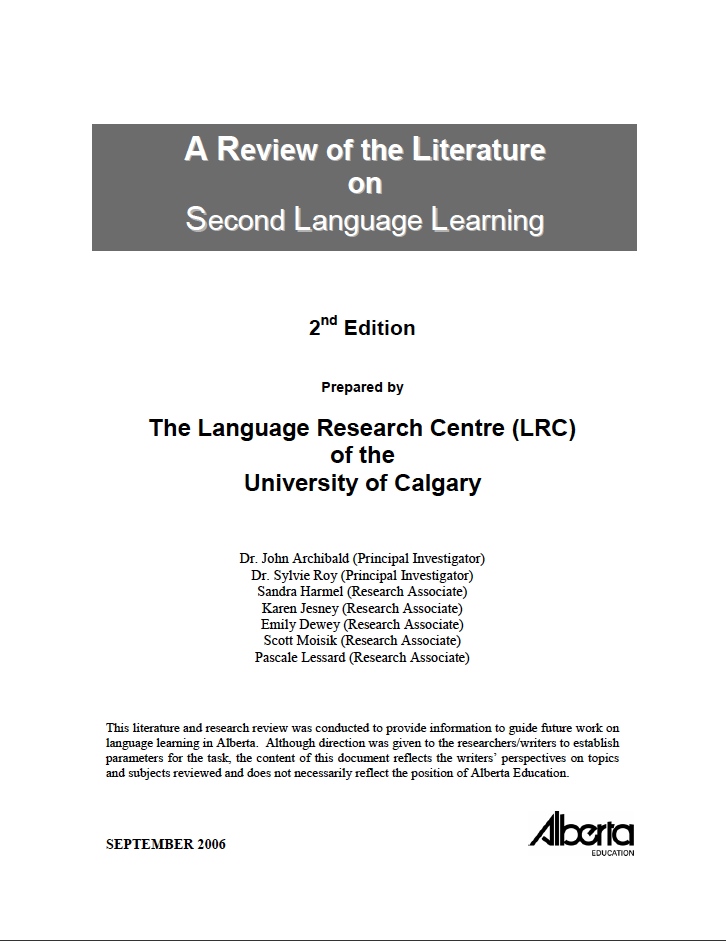
A Review of the Literature on Second Language Learning

July 19, 2010

Written Dr. John Archibald,  Dr. Sylvie Roy and other researchers at from the Language Research Centre (LRC), of the University of Calgary, A Review of the Literature on Second Language Learning, 2nd ed. Published in 2006, this study examines 4 key areas:

  1. Effects of a second language on a person’s first language
  2. The role of content instruction in offering a second language
  3. Effects of second language learning on students with special needs
  4. Effects of learning and third language on students for whom English is a second language.

Some key findings of this research are:

  • Exposure to a second language can enhance non-linguistic skills such as divergent thinking, attitudes towards others and math skills.
  • Acquiring knowledge in a second language does not impede first language development.
  • Significant time investment is required to acquire full fluency.
  • Content-based language teaching (e.g. teaching math or science in a second language) can increase students’ ability to make connections between second language study and the outside world.
  • Students with special needs can learn second languages.
  • Acquiring a third language is a common occurrence around the world.
  • It helps to learn a third language if you have a strong proficiency in a first language.

________

Share this post: A Review of the Literature on Second Language Learning https://wp.me/pNAh3-bO

Update – January 2018 – This blog has had over 1.8 million views thanks to readers like you. If you enjoyed this post, please “like” it or share it on social media. Thanks!

Sarah Elaine Eaton is a faculty member in the Werklund School of Education, University of Calgary, Canada.


Global Trends in Language Learning in the 21st Century

July 13, 2010

If you liked the post I did a while back called Trends in Language Learning: What’s hot, what’s not , you’ll like this even better. At the urging of a few trusted colleagues and readers, I conducted more in-depth research into current and emerging trends in language education. The result is this full-fledged report, with three-pages of references.

Here’s an overview:

Global Trends in Language Learning the Twenty-First Century
Author: Eaton, Sarah Elaine
Date: June 2010
ISBN: 978-0-9733594-6-6
Publication Type: monograph
Total number of pages: 21

Abstract

Today’s language classroom is vastly different from that of the mid- to late 20th century. The study is a meta-analysis of recent research which provided the means to identify current and emerging trends in the field. Informed by this research, some identified trends that are shaping the 21st century language classroom are:

What’s out:
1. Vague, hollow promises that can’t be proven.
2. Saying that learning languages is easy.
3. Authoritative teacher attitudes.
4. Complaining about cutbacks and lack of funding.
5. Language labs.

What’s in:
1. Clear, provable demonstrations of learning.
2. Frameworks, benchmarks and other asset-based approaches to assessment.
3. Individualized, customizable, learner-centred approaches.
4. Proving the value of language learning through stories and speech.
5. Using technology for language learning.
6. Linking language learning to leadership skills.
7. Showing funders the impact their investment has on students and communities.

In short, the focus in language education in the twenty-first century is no longer on grammar, memorization and learning from rote, but rather using language and cultural knowledge as a means to communicate and connect to others around the globe. Geographical and physical boundaries are being transcended by technology as students learn to reach out to the world around them, using their language and cultural skills to facilitate the connections they are eager to make.

The full report is available free of charge. It has been archived by:

Education Resources Information Center (ERIC) (Accession number ED510276)

European Association of Education for Adults (EAEA)

Library and Archives Canada’s Electronic Collection

I will also be hosting a free webinar on this new research on July 27 at 10:00 Mountain time. For more information on the webinar click here.

Like this post? Share or Tweet it: Global Trends in Language Learning in the 21st Century http://wp.me/pNAh3-8I

Update – January 2018 – This blog has had over 1.8 million views thanks to readers like you. If you enjoyed this post, please “like” it or share it on social media. Thanks!

Sarah Elaine Eaton is a faculty member in the Werklund School of Education, University of Calgary, Canada.


Latest research shows that language you speak affects your thoughts

July 12, 2010

HealthNewsDigest.com released a story today about a study published in Psychological Science that found that the “language a person speaks may influence their thoughts”. The study, conducted by researchers Shai Danziger of Ben-Gurion University and Robert Ward of Bangor University, tested Israeli Arabs who speak both Arabic and Hebrew fluently. HealthDigest.com reports that, “The study found that Israeli Arabs’ positive associations with their own people are weaker when they are tested in Hebrew than when they are tested in Arabic.”

Read the whole story here.

___________________

Like this story? Share or Tweet it: Latest research shows that language you speak affects your thoughts http://wp.me/pNAh3-bo

Update – January 2018 – This blog has had over 1.8 million views thanks to readers like you. If you enjoyed this post, please “like” it or share it on social media. Thanks!

Sarah Elaine Eaton is a faculty member in the Werklund School of Education, University of Calgary, Canada.