On April 22 I gave a workshop on academic integrity and assessment with generative AI to educational leaders, academics, and professional staff at the AI Leadership Summit. The next day, I delivered a keynote address on postplagiarism, education and artificial intelligence at a province-wide summit on AI and education attended by almost 250 people from across the province.
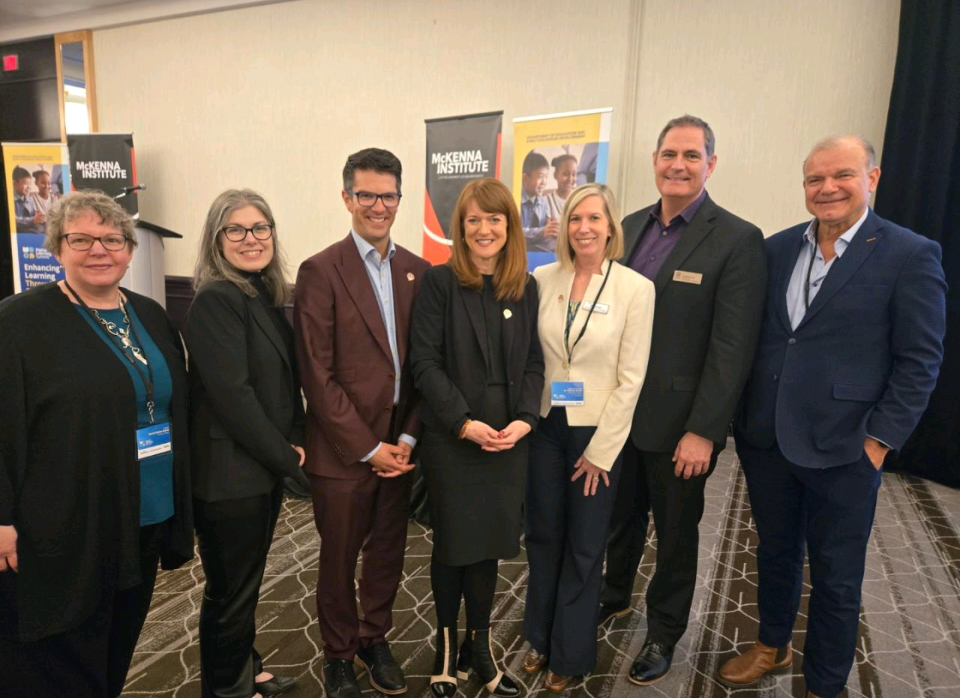
I had an opportunity to meet and speak with the Hon. Claire Johnson, Minister of Education and Early Childhood Development, Deputy Minister Ryan Donaghy, and Assistant Deputy Minister Tiffany Bastin, all of whom commented on how postplagiarism aligns with their provincial strategy and policy vision.
(Left to right: Sarah Elaine Eaton, Sarah Rankin, Ryan Donaghy, Hon. Claire Johnson, Tiffany Bastin, Geoff Edwards, Robert Martellaci – April 2026, New Brunswick AI and Education Summit)
It was announced during the event that preparations are underway to integrate artificial intelligence into the provincial digital literacy strategy and educational curricula across all levels and subjects, with a plan to have AI fully integrated in time for the beginning of the next school year, starting in September, 2026. Staff at the Department of Education and Early Childhood Development are in the midst of updating curricula as we speak.
To my knowledge, New Brunswick is the first province or territory in Canada to integrate AI across the K-12 curriculum. They are investing in professional learning for leaders, education specialists and developers, and educators, to improve and increase AI literacy levels throughout the education sector. Throughout the two days, I spoke with leaders and educators from across the province who repeated the same message to me, that postplagiarism was a refreshing and forward-thinking way to think about academic integrity, ethics, and student success in an AI-enabled world.
It was exciting and energizing to be brought into education conversations that connected policy, pedagogy, and postplagiarism. The real world applications of postplagiarism are taking shape and I am inspired to see how others are are findings ways to implement the framework as a future-focused roadmap for ethical learning and teaching with advanced technologies.
About the author: Sarah Elaine Eaton, PhD, is a Professor and the Director of the Postplagiarism Research Lab in the Werklund School of Education, University of Calgary.
On March 28, 2026, I had the pleasure of joining educators from across Canada for the National Day of Learning, hosted by Let’s Talk Science. This one-day, nation-wide professional learning event brought together K–12 teachers, post-secondary educators, and policy leaders to explore some of the most pressing issues shaping education today, with artificial intelligence high on the agenda.
I was invited to deliver a session titled “Interfacing with the Future: Wearable AI and Academic Integrity for K–12 and Higher Ed.” What follows are a few reflections and key ideas from that conversation, hosted by Dr. Alec Couros.
Moving into the Postplagiarism Era
One of the central ideas framing my talk is postplagiarism. In this reality, artificial intelligence is no longer an external tool that students occasionally use, but rather, it is embedded into everyday life and learning.
Students are already engaging with AI in ways that challenge traditional notions of authorship, originality, and academic work. The question is no longer if students will use AI, but how.
This shift requires a corresponding change in how we think about academic integrity. Detection and surveillance, long relied upon as primary strategies, are no longer sufficient. Instead, we must rethink how we design learning environments that foster integrity from the ground up.
From Tools to Wearables: How AI is Advancing
A key focus of my presentation was the rapid evolution from AI tools to AI wearables — particularly smart glasses and other forms of cosmetically invisible interfaces. The talk was based, in part, on our recent article in Canadian Perspectives on Academic Integrity.
Wearable technologies integrate AI directly into our physical experience of the world. Rather than pulling out a device, users can access real-time information, transcription, and prompts seamlessly through their field of vision.
This shift introduces both opportunities and tensions:
Enhanced presence: Wearables allow users to maintain eye contact and engagement without device distraction.
Efficiency gains: Tasks such as note-taking or translation can be automated in real time.
At the same time, these benefits come with real challenges including information overload, privacy concerns, and technical limitations. More importantly for educators, they fundamentally disrupt assumptions about what it means to “know” something independently.
New Technology ≠ Cheating
One of the most important messages I emphasized is this: new technology does not automatically equal academic misconduct.
If a tool is permitted, then its use is not cheating. The real issue lies in unauthorized use or misuse in ways that create unfair advantage.
We must also remain attentive to equity and accessibility. Some wearable technologies may be used as accommodations, making it essential that our integrity policies are inclusive and nuanced rather than rigid and punitive.
Designing for Integrity (Not Surveillance)
Rather than doubling down on detection, I encourage educators to shift their focus toward designing for integrity.
This means:
Prioritizing assessment validity: If an AI system can complete a task without genuine understanding, then the task itself needs to be rethought.
Moving beyond “gotcha” approaches: Surveillance-based strategies erode trust and are increasingly ineffective.
Building a culture of integrity: Integrity is not enforced; it is cultivated through meaningful learning experiences.
Bridging K–12 and Post-Secondary Education
Another key theme was the gap between K–12 and post-secondary expectations.
In K–12 environments, students are often encouraged to explore technology as part of their learning. In contrast, post-secondary institutions frequently operate under the assumption that students already understand complex academic integrity rules.
As AI continues to evolve, this gap becomes more pronounced. We need stronger alignment across educational sectors to ensure that students are supported, rather than being set up for failure, as they transition between systems. (Myke Healy has a great paper on the topic of GenAI in the K-12 context that is worth reading.)
Looking Ahead
If there is one takeaway from this experience, it is this: wearable AI is not a future scenario. It is already here.
As educators, we are being called to respond not with fear, but with thoughtful, research-informed approaches. The challenge is not simply to manage technology, but to reimagine teaching, learning, and assessment in ways that remain meaningful in an AI-integrated world.
Events like the National Day of Learning remind me of the power of community. Bringing educators together to share ideas, ask difficult questions, and explore new possibilities is essential as we navigate this rapidly changing landscape.
Thank you to Let’s Talk Science and to Dr. Alec Couros for the opportunity to be part of this important conversation, and to all the educators who continue to lead with curiosity, courage, and care.
Sarah Elaine Eaton, PhD, is a Professor and Research Chair in the Werklund School of Education at the University of Calgary, Canada. Opinions are my own and do not represent those of my employer.
Many people in the academic integrity world are already familiar with contract cheating websites, those that deal in the business of buying and selling exams, bespoke term papers, theses, and exam questions and answers.
But this business isn’t limited to the millions of K-12, high school and post-secondary students. The exam fraud business is alive and well for professional accreditation exams for folks who either want to bypass a formal university degree or to supplement existing credentials.
For example, in the IT industry credentials are often the golden key to new opportunities. Certifications and accreditations (allegedly) validate technical skills, offering (so-called) proof that a candidate has the expertise needed for a professional role.
Taking into account supply and demand, with job candidates being in high supply and well-paying jobs being in high demand, certification and accreditation fraud is alive and well in the IT industry, as well as other industries. This is a trend employers cannot afford to ignore.
Exposing the Fraud: How Buying and Selling of Certification Exam Questions Works
Certification fraud occurs when individuals falsify credentials, purchase counterfeit certifications, or misuse legitimate certifications obtained by others. But there’s this sneaky grey area that exists when a person actually sits a professional exam themselves, but they’ve prepared by buying the exam questions and/or the answers from an online vendor.
I won’t name specific companies that do this in this post, because I’m not in the habit of advertising for these fraudsters, but I want to show you how they work, so here are some screenshots:
Screenshot #1: Home page
At the top of this website, the company claims that 94% of the exam questions that they sold were “almost the same” and that 97% of customers passed the exam using their materials. (Who knows what happened to the other 3%…?) Finally, 98% of customers found the “study guides” effective and helpful.
There’s that phrase that we commonly see on contract cheating websites, “study guide”. For the uninitiated, this is a euphemism for “exam questions”.
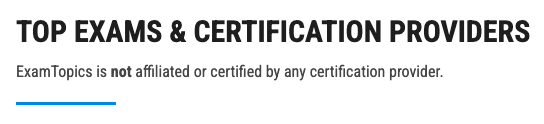
Screenshot #2: Saying it like it is: Not affiliated with any certification provider
In this screenshot the company states plainly that they are not affiliated or certified by any certification provider. Reading between the lines, the message is ‘caveat emptor’ or ‘buyer beware’. They are telling you upfront that they are in the business of selling exam questions and make no guarantees about their products.
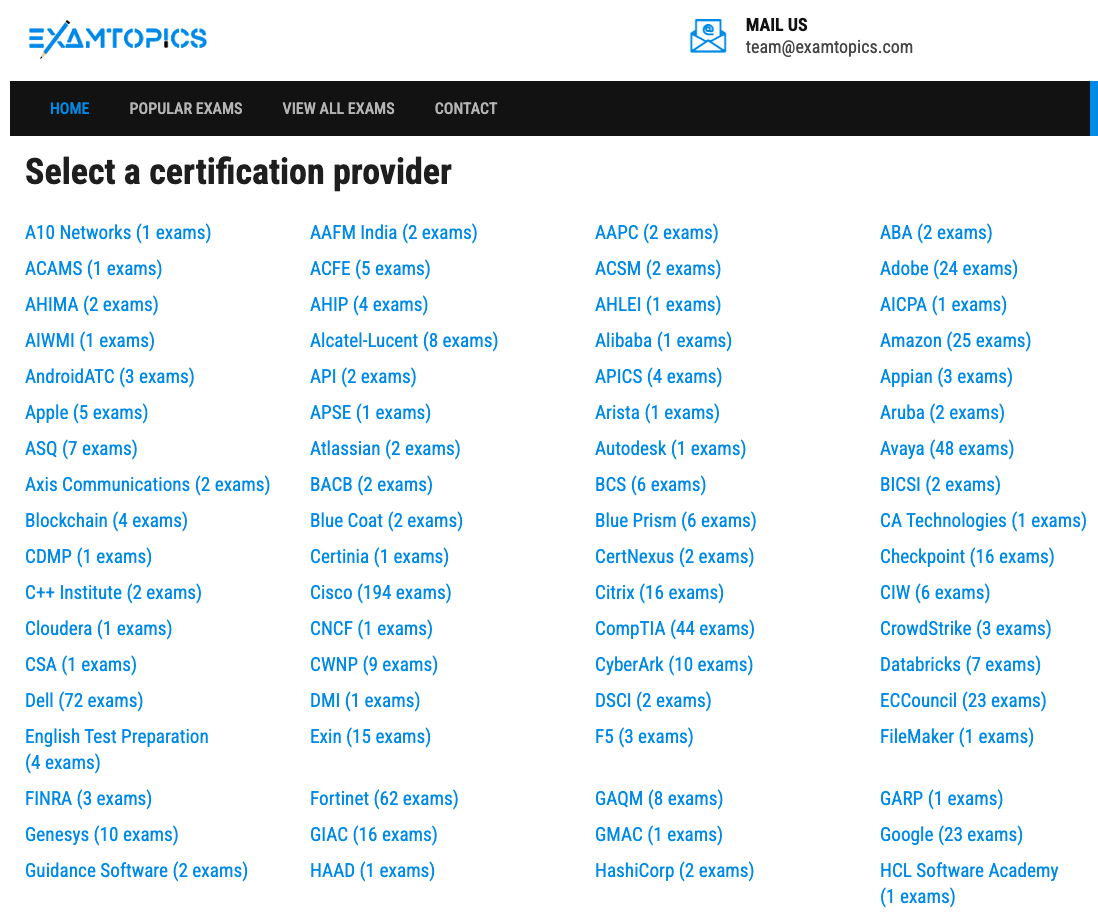
Screenshot #3: Samples of accreditation exam questions for sale
Look at all the options: You can buy exam questions for certifications offered by DELL, English language proficiency exams, Citrix, Adobe, and Amazon, and Google just to name a few.
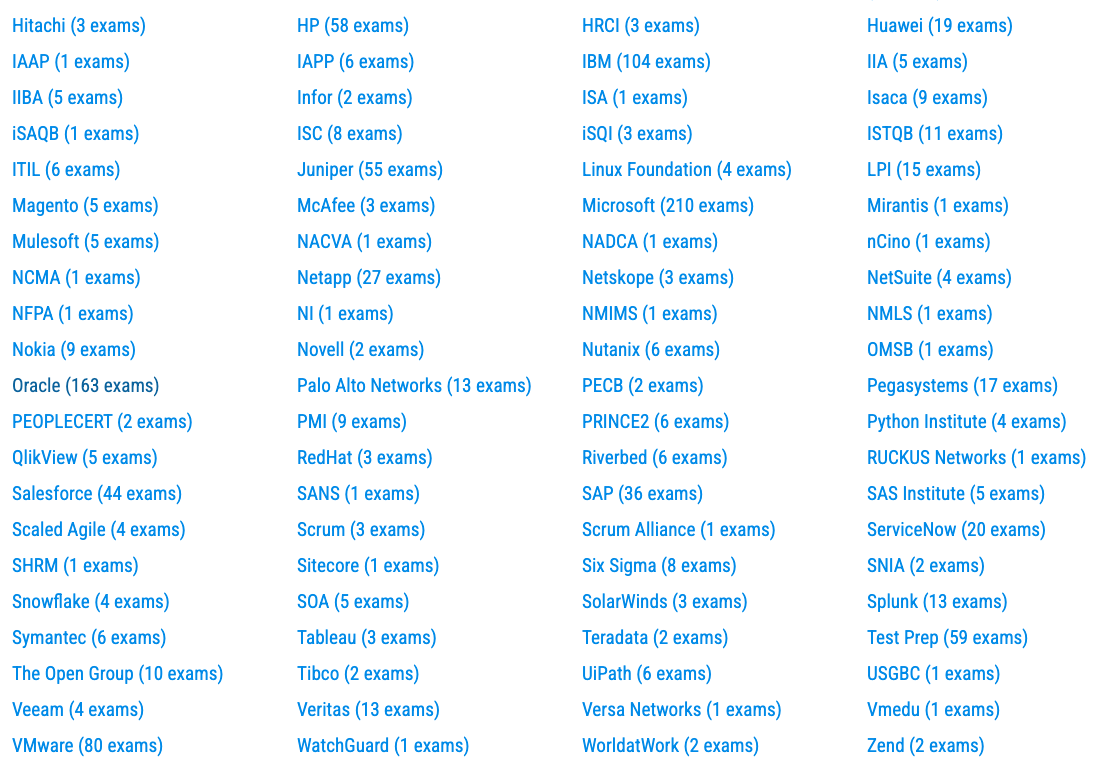
Screenshot #4: More samples of certification provider exam questions for sale.
But wait! There’s more! You can buy exam questions for certifications offers by Oracle, IBM, SAP, and others.
Businesses that buy and sell exam certification questions engage in fraudulent practices undermine trust in the certification system and create significant risks for employers.
Consequences for Employers
Hiring someone with counterfeit credentials can have dire consequences. Unqualified employees may lack the technical skills to handle complex tasks, leading to project delays, costly errors, or even security breaches. Beyond the financial impact, fraudulent certifications can erode team morale, as employees with genuine qualifications may feel undervalued when working alongside those who faked their way in.
What Employers and Hiring Managers can Do
Employers, and especially hiring managers and those working in HR, must take proactive steps to safeguard their hiring processes. Some of you may be asking if this kind of practice is actually illegal. I’m not a lawyer, but what I can say is that although contact cheating for students is illegal in countries like Australia, the UK, and Ireland, if you’re not a student, then you might get to live a proverbial grey zone. To the best of my knowledge, it is not actually illegal to buy and sell questions for professional certification exams in most countries of the world.
So, what can employers do? First, trust but verify! Verifying certifications directly with issuing organizations is one step. Many certification bodies offer easy online verification tools to confirm a candidate’s credentials. Additionally, employers should stay informed about recognized accreditation standards and avoid unverified institutions.
Having said this, verification of credentials and certification won’t help if someone has bought exam questions online and then taken the test themselves. Their results could be ‘verifiable’ in a sense, because there’s an assumption that a person who has passed an exam had the knowledge to do so. But when someone buys their exam questions before sitting the test, it means that they have prepared for an exam and may not necessarily have internalized the knowledge or skills that should match the certification they receive from passing an exam. An exam is one measure of knowledge, but it isn’t the only one.
Having prospective employees demonstrate their skills and respond to technical questions that could only be answered if the person has the knowledge to back up their documentation can also help. One possibility is to give an interviewee a real-world scenario that could happen at your organization. Ask them how they would go about problem-solving it. If they struggle or stumble, it could be a sign that they lack the necessary skills for the job. (It could also be a sign that they’re just nervous or that interviewing isn’t their strength. So let me also make a plug here for having an inclusive and equitable interviewing process.)
Investing in robust, inclusive, and equitable hiring practices not only protects an organization from the pitfalls of fraud but also helps to create a culture of accountability and excellence. By placing a premium on authentic certifications combined with demonstrable knowledge and skills and inclusive hiring practices, employers signal their commitment to integrity and ensure they are building a team of qualified professionals.
Bottom line: If you’re hiring someone who says they have an IT certification based on taking exams, it’s worth it to find out if they actually have the knowledge and skills to do the job.
And this is just one example of one site. Rest assured that it is not the only one out there. Exam cheating companies like this one don’t exist in isolation. They’re in the game to make money, and lots of it.
In an industry where skills and knowledge drive success, vigilance against certification and accreditation fraud is not optional—it is a driver of success.
Future Outlook
Fraud and corruption are alive and well education and industry. There is a growing community of sleuths, scholars, and activists who are ready to sniff out fraud and expose it and naïveté about these matters is quickly going out of fashion.
There may have been a time when it was acceptable—or even fashionable—to clutch your pearls, proclaim moral outrage, or just refuse to accept that educational and professional fraud are more commonplace than you might have previously thought. GenAI is here to stay, and so are companies whose business is educational, accreditation, scientific, and professional fraud. These companies are profitable because they have customers willing to pay for their goods and services.
Vigilance, sleuthing, and exposing fraud are very much on trend as we move ahead into the new year. And if you’re a hiring manager, taking steps to protect the integrity of your operations is definitely part of the job in 2025 and beyond.
Eaton, S. E., & Carmichael, J. (2022). The Ecosystem of Commercial Academic Fraud. In. Calgary, Canada: University of Calgary. https://dx.doi.org/10.11575/PRISM/40330
Eaton, S. E., Carmichael, J., & Pethrick, H. (Eds.). (2023). Fake degrees and credential fraud in higher education. Springer. https://doi.org/10.1007/978-3-031-21796-8
This blog has had over 3 million views thanks to readers like you. If you enjoyed this post, please “like” it or share it on social media. Thanks!
Sarah Elaine Eaton, PhD, is a Professor and Research Chair in the Werklund School of Education at the University of Calgary, Canada. Opinions are my own and do not represent those of my employer.
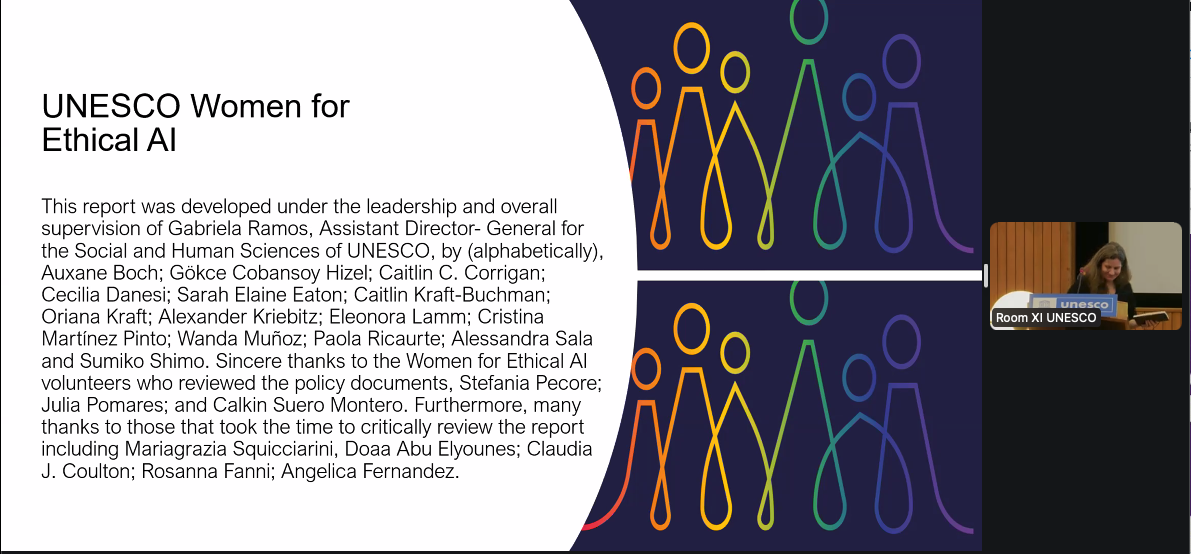
Over the past few months I have had the tremendous opportunity to work with an incredible group of women under the direction of Assistant Director-General (ADG) for Social and Human Sciences of UNESCO. Our collective produced this report that was launched today at a special conference in Paris:
UNESCO Women for Ethical AI: outlook study on artificial intelligence and gender
This blog has had over 3 million views thanks to readers like you. If you enjoyed this post, please “like” it or share it on social media. Thanks!
Sarah Elaine Eaton, PhD, is a Professor and Research Chair in the Werklund School of Education at the University of Calgary, Canada. Opinions are my own and do not represent those of my employer.
Lots of people have been asking me about using Zoom to proctor exams. I’ve taught over 100 online courses, between the graduate courses I’ve taught for the Werklund School of Education and dozens of continuing education courses.
Combining that experience with research expertise in academic integrity, I can say that using Zoom to proctor written exams is a bad idea. Here’s why:
1. Zoom is not a substitute for a professional proctoring service
Professional proctoring services are sophisticated, both in terms of technology and operations. Asking an individual professor to proctor an online exam using Zoom as a makeshift solution is a bad idea. Most instructors are not trained on how to proctor online exams.
Given that some instructors are also working from home, while managing child care and family responsibilities, it is even less likely that they could do an excellent job of online invigilation, especially for a large class.
2. Creates additional technology barriers for students
Not all students have web cams or reliable Internet service. Requiring students to have cameras on and stream video during an exam could put some students at a technological disadvantage. If you suddenly require them to buy a web cam, you could be adding financial stress to the equation as well.
At our university, we cannot penalize students if they do not have a video camera. If you did not tell students at the time they registered for the course that a web cam would be required for the course, it is unethical to suddenly make it a requirement partway through the course. If we want students to act with integrity, we must demonstrate integrity in how we run our courses… Changing the rules as you go along just isn’t ethical.
3. Things are not always as they seem
My colleague, D’Arcy Norman, shared this post on how and why the video feed is not necessarily trustworthy. Go read his post. Watch his video. They try it yourself and see how easy it is to create a video background that makes it look like you’re in front of your camera when you’re not. (Hint: It is really easy.)
Besides, if an instructor suspects exam misconduct are they going to use Zoom as their evidence? How would they actually be able to prove it? I mean unless a student has crib notes out in plain view, the case management for that could get messy fast. Chances are high, I would say, that an allegation of academic misconduct could be dismissed (in the student’s favour) if the evidence is not strong enough.
There are few benefits and many potential complications with using Zoom to proctor written exams, especially for large classes. Of course, the exception to this would be individual oral exam where the student interacts in real time with the examiner. That could be do-able via Zoom. In the case of graduate student thesis defences, it may be the only option, but the examination committee must take steps to verify the identity of the student if they are not personally known to at least one of the examiners.
My recommendation is to consider alternate assessments if possible. If it is not possible, then consider a professional online exam proctoring service. Trying to use Zoom to MacGyver your exam invigilation of written tests is probably not going to serve the purpose of upholding integrity.
Note: This post was updated on April 13, 2020 to clarify that I am specifically referring to written exams in this post.
Share or Tweet this: 3 Reasons why proctoring an exam using Zoom is a bad idea https://wp.me/pNAh3-2rO
This blog has had over 2 million views thanks to readers like you. If you enjoyed this post, please “like” it or share it on social media. Thanks!
Sarah Elaine Eaton is a faculty member in the Werklund School of Education, and the Educational Leader in Residence, Academic Integrity, University of Calgary, Canada. Opinions are my own and do not represent those of the University of Calgary.


 Posted by Sarah Elaine Eaton, Ph.D.



 Learning, Teaching and Leadership
You must be logged in to post a comment.