AI, Postplagiarism and K-12 Education in New Brunswick, Canada

April 25, 2026

This week, I had the opportunity to take part in two leadership events led by the New Brunswick Department of Education and Early Childhood Development focused on artificial intelligence and education. 

On April 22 I gave a workshop on academic integrity and assessment with generative AI to educational leaders, academics, and professional staff at the AI Leadership Summit. The next day, I delivered a keynote address on postplagiarism, education and artificial intelligence at a province-wide summit on AI and education attended by almost 250 people from across the province.

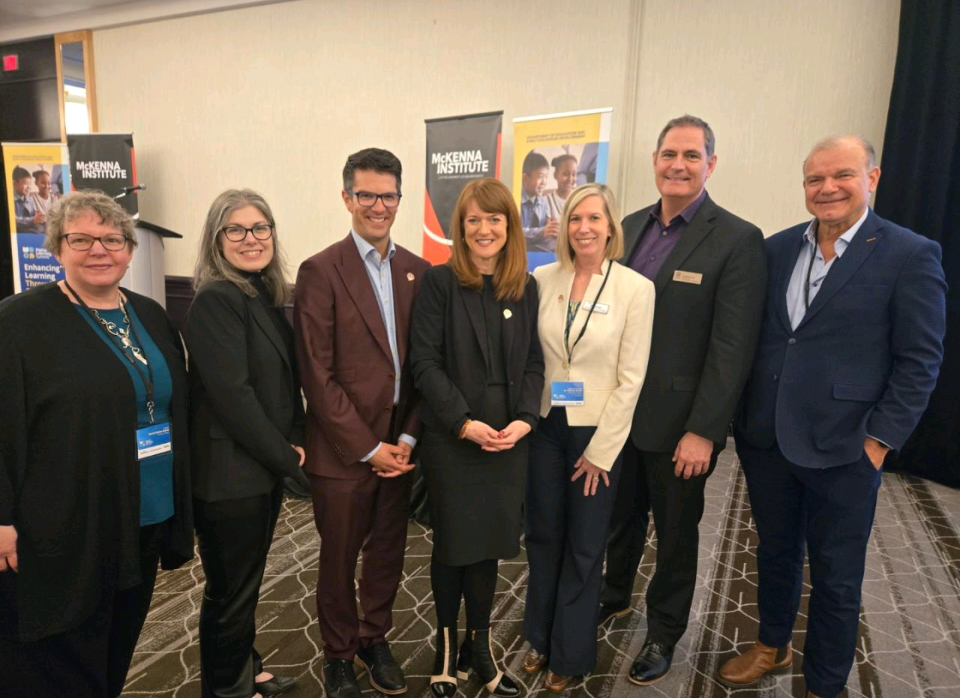
I had an opportunity to meet and speak with the Hon. Claire Johnson, Minister of Education and Early Childhood Development, Deputy Minister Ryan Donaghy, and Assistant Deputy Minister Tiffany Bastin, all of whom commented on how postplagiarism aligns with their provincial strategy and policy vision. 

A group of people standing together.
(Left to right: Sarah Elaine Eaton, Sarah Rankin, Ryan Donaghy, Hon. Claire Johnson, Tiffany Bastin, Geoff Edwards, Robert Martellaci – April 2026, New Brunswick AI and Education Summit)

It was announced during the event that preparations are underway to integrate artificial intelligence into the provincial digital literacy strategy and educational curricula across all levels and subjects, with a plan to have AI fully integrated in time for the beginning of the next school year, starting in September, 2026. Staff at the Department of Education and Early Childhood Development are in the midst of updating curricula as we speak. 

To my knowledge, New Brunswick is the first province or territory in Canada to integrate AI across the K-12 curriculum. They are investing in professional learning for leaders, education specialists and developers, and educators, to improve and increase AI literacy levels throughout the education sector. Throughout the two days, I spoke with leaders and educators from across the province who repeated the same message to me, that postplagiarism was a refreshing and forward-thinking way to think about academic integrity, ethics, and student success in an AI-enabled world.

It was exciting and energizing to be brought into education conversations that connected policy, pedagogy, and postplagiarism. The real world applications of postplagiarism are taking shape and I am inspired to see how others are are findings ways to implement the framework as a future-focused roadmap for ethical learning and teaching with advanced technologies.

About the author: Sarah Elaine Eaton, PhD, is a Professor and the Director of the Postplagiarism Research Lab in the Werklund School of Education, University of Calgary.

______________

Reposted from original: AI, Postplagiarism and K-12 Education in New Brunswick, Canada – https://postplagiarism.com/2026/04/25/ai-postplagiarism-and-k-12-education-in-new-brunswick-canada/


Call for Proposals: Special issue on Postplagiarism and Generativism: Human-AI Hybrid Approaches to Ethical Teaching, Learning, and Assessment

March 17, 2026

Special Issue Call for Papers

Postplagiarism and Generativism: Human-AI Hybrid Approaches to Ethical Teaching, Learning, and Assessment

For publication in the Journal of University Teaching and Learning Practice

Guest editors

Background

Every new technology brings with it societal and moral panic (Orben, 2020). When the Internet first became popular, concerns about plagiarism increased. Even though there is scant empirical evidence that the Internet was actually responsible for increases in rates of plagiarism, the perception that new technology resulted in more academic cheating persisted (Panning Davies & Howard, 2016).

Some plagiarism scholars have been emphatic that the majority of student plagiarism cases are not an intent to deceive, but rather a lack of academic literacy and poor academic practice, and have even advocated for disposing of plagiarism in academic misconduct policies in favour of increased student support (Howard, 1992; Jamieson & Howard, 2021). The idea that plagiarism could be decoupled from academic misconduct seems somewhat unlikely, but by the 2020s it was obvious to some that generative artificial intelligence (GenAI) would have an impact on writing, and by extension, on plagiarism (Mindzak & Eaton, 2021).

In response to these technological shifts, various frameworks have emerged to conceptualize academic integrity in the GenAI era. The postplagiarism framework, first introduced by Eaton (2021, 2023) and since discussed by scholars worldwide (Bali, 2023; Bagenal, 2024; Kenny, 2024), offers one approach. Other perspectives, such as Generativism (Pratschke, 2023), AI Literacy frameworks (Ng et al., 2021; Pretorius & Cahusac de Caux, 2024), and UNESCO’s Guidance for Generative AI in Education (2023), provide complementary or alternative viewpoints on similar phenomena.

Postplagiarism is based on six tenets (Eaton, 2023): (1) human-AI hybrid writing will become the norm; (2) creativity can be enhanced by AI; (3) AI can help to overcome language barriers; (4) we can outsource control of our writing to AI, but we do not outsource responsibility for what is written; (5) attribution remains important; and (6) historical definitions of plagiarism may require rethinking.

Empirical testing of these and related frameworks has shown differing levels of acceptance and application across educational contexts (Kumar, 2025).

Equity, Diversity, Inclusion, and Accessibility in a Postplagiarism Age

As higher education institutions aim to promote social justice through equity, diversity, and inclusion (EDI), GenAI holds the potential to either break down or reinforce barriers related to linguistic, cultural, socioeconomic, and ability differences requires critical examination.

Assessment practices should be designed proactively to enable all students to demonstrate their learning without being unfairly disadvantaged by their personal characteristics or circumstances (Tai et al., 2022). Similarly, McDermott (2024) highlights the importance of considering accessibility, equity, and inclusion in assessment and academic integrity.

GenAI offers opportunities to enhance equity by providing personalized support, overcoming language barriers, and assisting learners with diverse needs. However, without careful implementation, it may exacerbate existing inequities through unequal access to technology, algorithmic biases, or assessment designs that privilege certain ways of knowing and communicating.

In this special edition, we propose to examine the broader question: “How are pedagogies, learning, and teaching approaches evolving in response to GenAI, and what frameworks best support ethical academic practice in a postplagiarism landscape?”

We invite researchers and practitioners to submit their original research papers exploring the transformation of teaching, learning, and assessment in a GenAI age. We welcome both theoretical and empirical contributions, including positions that may present contrasting viewpoints. Potential topics of interest include, but are not limited to:

  • New developments in postplagiarism, generativism, and other emerging frameworks for understanding academic integrity in the GenAI era
  • Empirical studies testing these frameworks in different contexts and disciplines
  • The use of these frameworks to design or reform academic misconduct policies and procedures
  • The relationship between GenAI, academic literacies, and related competencies (e.g., digital literacy, information literacy)
  • Pedagogical approaches that embrace GenAI while maintaining academic integrity
  • Case studies of successful integration of GenAI into teaching, learning, and assessment
  • Critical perspectives on the limitations or challenges of current approaches to GenAI in education
  • Position papers presenting new or alternative frameworks for understanding GenAI in teaching and learning

We particularly encourage submissions that engage in dialogue with existing frameworks, offering either supportive evidence or critical alternatives. Our goal is to foster a robust debate about the future of teaching and learning in a GenAI (and even a post-GenAI) world.

We welcome submissions from both established researchers and early-career scholars from diverse academic and cultural backgrounds. All submissions will be peer-reviewed by an international panel of experts. Accepted papers will be published in a special issue of the Journal of University Teaching and Learning Practice.

Types of publications accepted into this Special Issue

The types of publications that are eligible for acceptance into this Special Issue include:

  • Research papers
  • Review articles (e.g., systematic review or meta-analysis)
  • Case studies and evidence-based good practice examples

Developing a high-quality proposal

We recommend the creation of a single document in Word (.doc or .docx) format that contains the following:

  • Proposed article title
  • Proposed authors names, affiliations, and ORCid
  • A clear evidence-based rationale for the line of inquiry proposed
  • Research question(s)
  • Proposed method (for both theoretical and empirical manuscripts)
  • Practice-based implications of the proposed research

The word limit for the proposal is 250 words (not including references) and is designed to give the Editorial Team a sense of the rigour of the manuscript proposed and the possible implications of such research. The Editorial Team may return with an invitation to combine similar manuscripts. Acceptance of proposals does not guarantee acceptance of final manuscripts.

Timeline

  • Proposals due – April 30, 2026
  • Proposal acceptance notifications: May 14, 2026
  • Full articles due: August 31, 2026

Submit your abstract via this online form: https://forms.gle/6sKjc2jkKGWCtGgw7

For further information contact Professor Sarah Elaine Eaton, University of Calgary.

References

Bali, M. (2023, March 3). Are We Approaching a Postplagiarism Era? https://blog.mahabali.me/educational-technology-2/are-we-approaching-a-postplagiarism-era/

Bagenal, J. (2024). Generative artificial intelligence and scientific publishing: Urgent questions, difficult answers. The Lancet, 403(10432), 1118–1120. https://doi.org/10.1016/S0140-6736(24)00416-1

Eaton, S. E. (2021). Plagiarism in Higher Education: Tackling Tough Topics in Academic Integrity. Bloomsbury.

Eaton, S. E. (2023). Postplagiarism: Transdisciplinary ethics and integrity in the age of artificial intelligence and neurotechnology. International Journal for Educational Integrity, 19(1), 1–10. https://doi.org/10.1007/s40979-023-00144-1

Orben, A. (2020). The Sisyphean cycle of technology panics. Perspectives on Psychological Science, 15(5), 1143–1157. https://doi.org/10.1177/1745691620919372

Howard, R. M. (1992). A plagiarism pentimento. Journal of Teaching Writing, 11(2), 233–245.

Stop wasting my time! AI Agents Infiltrate Scholarly Publishing

February 6, 2026

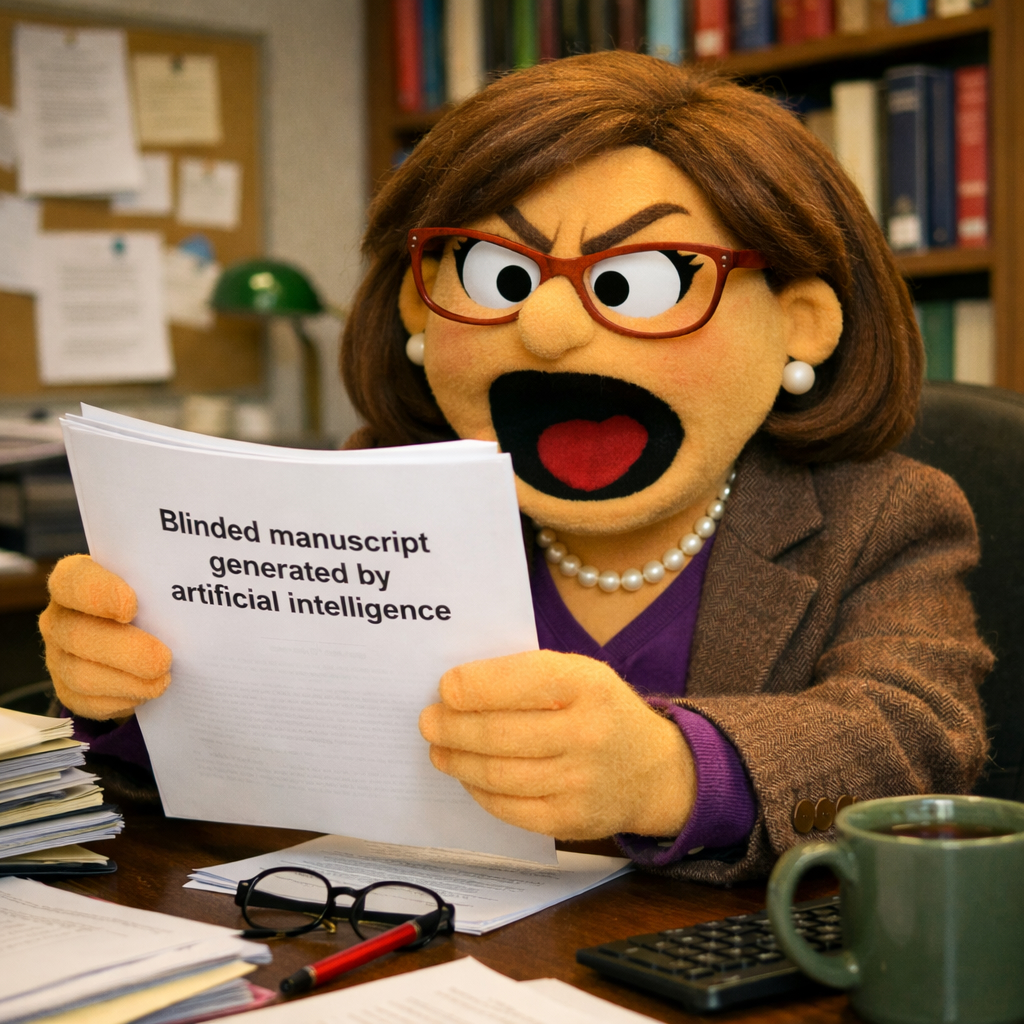
As the Editor-in-Chief of the International Journal for Educational Integrity, I have witnessed (and become super frustrated with) threats to academic publishing and research integrity from Gen AI. Don’t get me wrong, I am not opposed to AI, but I have been clear in my research and writing that technology can be used in good and helpful ways or ways that are unethical and inappropriate. Recently, our editorial office received a manuscript with the file name ‘Blinded manuscript generated by artificial intelligence.’

My reaction was, “Are you kidding me?! Well, that’s bold!” Although the honesty of the title may be rarity, the submission itself is symptomatic of a burgeoning crisis in academic publishing: the rise of ‘AI slop.’ Since the proliferation of large language models (LLMs), we have seen a dramatic increase in submissions. Now, I’m pretty sure that a portion of the manuscripts we are receiving are written entirely by AI agents or bots, sending submissions on behalf of authors.

ChatGPT generated image. A puppet seated at a desk in an office, holding a printed document titled “Blinded manuscript generated by artificial intelligence.” The desk is covered with papers, a pair of glasses, a pen, and a coffee mug, with bookshelves and a bulletin board visible in the background.

As a journal editor, let me be clear: The volume of manuscripts you send out does not equate to the value to the readership. It is not that I oppose the use of AI carte blanche, but I do object to manuscripts prepared and sent by bots, with no human interaction in the process. If a manuscript does not bring value to our readers, it gets an immediate desk rejections, and for good reason.

The Problem with AI Slop in Research

Academic journals exist to advance the frontiers of human knowledge. A manuscript is expected to contribute new and original findings to scholarship and science. AI-generated papers, by their very nature, struggle to meet this requirement.

  • Lack of Empirical Depth: AI excels at synthesizing existing information but cannot conduct original fieldwork, clinical trials, or archival research. It mimics the structure of a study without performing the substance of it.
  • Axiological Misalignment: There is a gap between the automated generation of text and the values-driven process of human inquiry. Research requires a commitment to truth, ethics, and accountability, qualities a machine cannot possess.
  • The Echo Chamber Effect: These submissions often present fabricated or corrupted  citations or circular logic that offers little to no utility to the reader. They clutter the ecosystem without moving the needle on critical conversations.

Upholding the Integrity of the Record

Our editorial board remains committed to a rigorous peer-review process, but let’s be clear: the ‘publish or perish’ culture, now supercharged by Gen AI, is threatening to overwhelm the very systems meant to ensure quality.

If an academic paper submitted for publication does not offer an original contribution or if it lacks the human oversight necessary to guarantee its validity, it has no place in a scholarly journal. We in a postplagiarism era where the focus must shift from merely detecting copied text to evaluating the originality of thought and the integrity of the research process. Postplagiarism does not mean that we throw out academic and research integrity or that ‘anything goes’. We recognize that co-creation with GenAI may be normal for some writers today. But having an AI agent write and submit manuscripts on your behalf wastes everyone’s time.

To our contributors: scholarship is a human endeavor. We value your insights, your unique perspectives, and your rigorous labour. In the meantime, we will continue with our commitment to quality, and I expect that the journal’s rejection rate will continue to be high as we focus on papers that bring value to our readership.

______________

Share this post: Stop wasting my time! AI Agents Infiltrate Scholarly Publishing – https://drsaraheaton.com/2026/02/06/stop-wasting-my-time-ai-agents-infiltrate-scholarly-publishing/

Sarah Elaine Eaton, PhD, is a Professor and Research Chair in the Werklund School of Education at the University of Calgary, Canada. Opinions are my own and do not represent those of my employer.


ChatGPT is in classrooms. What now?

February 2, 2026

“What should we be assessing exactly?” This was a question one of our research participants asked when we interviewed them as part of our project on artificial intelligence and academic integrity, sponsored by a University of Calgary Teaching Grant.

In an article published in The Conversation, we provide highlights of the results from our interviews with 28 educators across Canada, as well as our analysis of 15 years of research that looked at how AI affects education. (Spoiler alert: AI is a double-edged sword for educators and there are no easy answers.)

Alt text: Screenshot of The Conversation website showing a blurred smartphone screen with the ChatGPT app icon. Overlaid headline reads, “ChatGPT is in classrooms. How should educators now assess student learning?”
Screenshot from The Conversation.

We emphasize that, “in a post-plagiarism context, we consider that humans and AI co-writing and co-creating does not automatically equate to plagiarism.” Check out the full article in The Conversation.

You can check out the scholarly paper that we published in Assessment and Evaluation in Higher Education that goes into more detail about the methods and findings of our interviews.

I’d like to give a shoutout to all the project team members who worked with us on various aspects of this research: Robert (Bob) Brennan (Schulich School of Engineering, University of Calgary), Jason Weins (Faculty of Arts, University of Calgary), Brenda McDermott (Student Accessibility Services, University of Calgary), Rahul Kumar (Faculty of Education, Brock University), Beatriz Moya (Instituto de Éticas Aplicadas, Pontificia Universidad Católica de Chile) and the student research assistants who helped along the way (who have now all successfully graduated and moved on to the next phase of their careers): Jonathan Lesage, Helen Pethrick, and Mawuli Tay.

Related posts:

What Should We Be Assessing in a World with AI? Insights from Higher Education Educators – https://drsaraheaton.com/2025/11/25/what-should-we-be-assessing-in-a-world-with-ai-insights-from-higher-education-educators/

______________

Share this post: ChatGPT is in classrooms. What now? https://drsaraheaton.com/2026/02/02/chatgpt-is-in-classrooms-what-now/

Sarah Elaine Eaton, PhD, is a Professor and Research Chair in the Werklund School of Education at the University of Calgary, Canada. Opinions are my own and do not represent those of my employer.


A Brief History of Postplagiarism: Or, Why Fabrication is Not the New Flattery

October 13, 2025
Infographic titled "Postplagiarism: A Brief History" by Sarah Elaine Eaton, PhD, showing a timeline from 2021 to 2025 that highlights key milestones in the development of the concept of postplagiarism.
2021: Eaton introduces postplagiarism in her book Plagiarism in Higher Education, building on Rebecca Moore Howard’s work.
2023: Eaton explicitly defines postplagiarism in an article published in the International Journal for Educational Integrity.
2024: Eaton and Kumar launch www.postplagiarism.com, offering multilingual translations and open-access content.
2025: Rahul Kumar publishes the first empirical study on postplagiarism in the same journal, analyzing student reactions.

I am always excited to hear about new work that showcases postplagiarism. Imagine my dismay when I read a new article, published in an (allegedly) peer-reviewed journal, that foregrounded the tenets of postplagiarism, but was rife with fabricated sources, including references to work attributed to me, but that I never wrote.

I have opted not to ‘name and shame’ the authors. Anyone who is curious enough need only do an Internet search to find the offending article and those who wrote it.

Instead, I prefer to take a more productive approach. Here I provide a brief timeline of the development of postplagiarism as both a framework and a theory:

2021: Plagiarism in Higher Education: Tackling Tough Topics in Academic Integrity

The book begins with a history of plagiarism. Then, I discuss plagiarism in modern times. In the concluding chapter I contemplate the future of plagiarism. Building on the scholarship of Rebecca Moore Howard, I proposed that  the age of generative artificial intelligence (Gen AI) could launch us into a post-plagiarism era in which human-AI hybrid writing becomes the norm.

2023: Expanding on the ideas first presented in the final chapter of my book, I wrote my first article dedicated to the topic: “Postplagiarism: Transdisciplinary ethics and integrity in the age of artificial intelligence and neurotechnology”, published in the International Journal for Educational Integrity.

2024: Dr. Rahul Kumar (Brock University, Canada) and I launch our website, http://www.postplagiarism.com. We provide open access resources free of charge. Thanks to the generosity of colleagues and friends who speak multipole language, we offer translations of the postplagiarism infographic in multiple languages.

Also, in this year, Rahul Kumar begins a study to test the tenets of postplagiarism.

2025: Rahul Kumar publishes the results of the first empirical article on the tenets of postplagiarism. His article, “Understanding PSE students’ reactions to the postplagiarism concept: a quantitative analysis” is published in the International Journal for Educational Integrity.

If you see references to our work on postplagiairsm as we have conceptualized it that pre-date our work, dig deeper to see if the work is real. There are now fabricated sources published on the Internet that do not — and never did — exist.

Imitation is flattery, as the saying goes. This quip has been used as a way to dismiss plagiarism concerns, as students learn to imitate great writers by quoting them without attribution. The saying digs deep into cultural and historical understandings that are beyond the scope of a blog post. What I can say is that in the postplagiarism era, fabrication is not the new flattery.

One of the tenets of postplagiarism is that humans can relinquish control over what they write to an AI, but we do not relinquish responsibility. The irony of seeing fabricated references about postplagiarism in fabricated is as absurd as it is puzzling. There is no need to fabricate references to post plagiarism, especially since we provide numerous free and open access to resources and research on the topic.

______________

Share this post: A Brief History of Postplagiarism: Or, Why Fabrication is Not the New Flattery – https://drsaraheaton.com/2025/10/13/a-brief-history-of-postplagiarism-or-why-fabrication-is-not-the-new-flattery/

Sarah Elaine Eaton, PhD, is a Professor and Research Chair in the Werklund School of Education at the University of Calgary, Canada. Opinions are my own and do not represent those of my employer.