Interfacing with the Future: Reflections on the National Day of Learning 2026

April 1, 2026

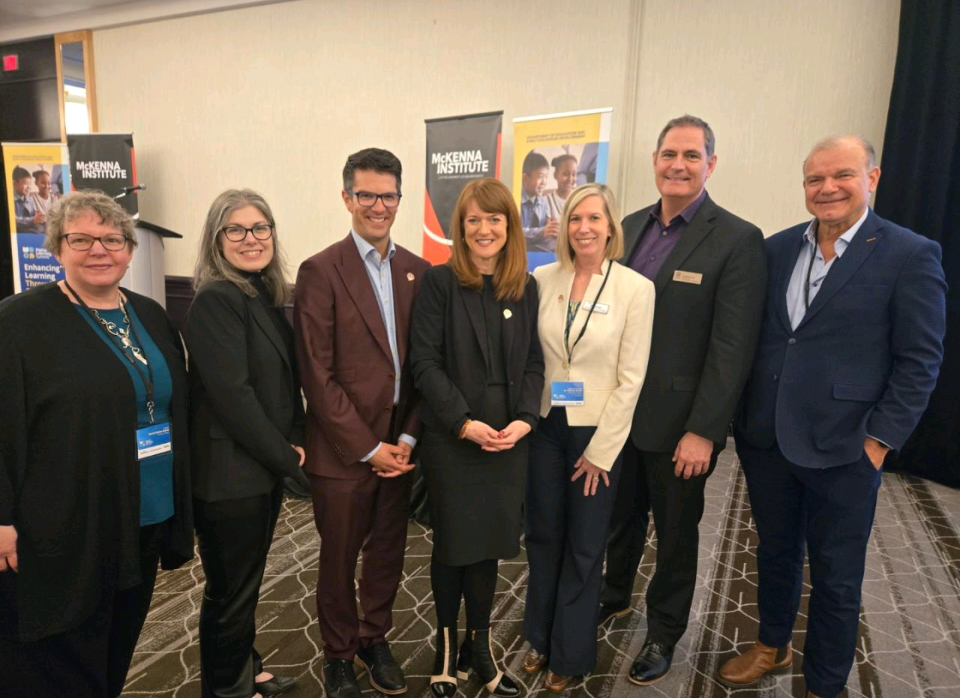
On March 28, 2026, I had the pleasure of joining educators from across Canada for the National Day of Learning, hosted by Let’s Talk Science. This one-day, nation-wide professional learning event brought together K–12 teachers, post-secondary educators, and policy leaders to explore some of the most pressing issues shaping education today, with artificial intelligence high on the agenda.

I was invited to deliver a session titled “Interfacing with the Future: Wearable AI and Academic Integrity for K–12 and Higher Ed.” What follows are a few reflections and key ideas from that conversation, hosted by Dr. Alec Couros.

Moving into the Postplagiarism Era

One of the central ideas framing my talk is postplagiarism. In this reality, artificial intelligence is no longer an external tool that students occasionally use, but rather, it is embedded into everyday life and learning.

Students are already engaging with AI in ways that challenge traditional notions of authorship, originality, and academic work. The question is no longer if students will use AI, but how.

This shift requires a corresponding change in how we think about academic integrity. Detection and surveillance, long relied upon as primary strategies, are no longer sufficient. Instead, we must rethink how we design learning environments that foster integrity from the ground up.

From Tools to Wearables: How AI is Advancing

A key focus of my presentation was the rapid evolution from AI tools to AI wearables — particularly smart glasses and other forms of cosmetically invisible interfaces. The talk was based, in part, on our recent article in Canadian Perspectives on Academic Integrity

Wearable technologies integrate AI directly into our physical experience of the world. Rather than pulling out a device, users can access real-time information, transcription, and prompts seamlessly through their field of vision.

This shift introduces both opportunities and tensions:

  • Cognitive offloading: Learners can reduce mental load by accessing information instantly. (Phill Dawson has done some great work on cognitive offloading that I recommend reading.)
  • Enhanced presence: Wearables allow users to maintain eye contact and engagement without device distraction.
  • Efficiency gains: Tasks such as note-taking or translation can be automated in real time.

At the same time, these benefits come with real challenges including information overload, privacy concerns, and technical limitations. More importantly for educators, they fundamentally disrupt assumptions about what it means to “know” something independently.

New Technology ≠ Cheating

One of the most important messages I emphasized is this: new technology does not automatically equal academic misconduct.

If a tool is permitted, then its use is not cheating. The real issue lies in unauthorized use or misuse in ways that create unfair advantage. 

We must also remain attentive to equity and accessibility. Some wearable technologies may be used as accommodations, making it essential that our integrity policies are inclusive and nuanced rather than rigid and punitive.

Designing for Integrity (Not Surveillance)

Rather than doubling down on detection, I encourage educators to shift their focus toward designing for integrity.

This means:

  • Prioritizing assessment validity: If an AI system can complete a task without genuine understanding, then the task itself needs to be rethought.
  • Moving beyond “gotcha” approaches: Surveillance-based strategies erode trust and are increasingly ineffective.
  • Supporting diverse learners: Students bring different technological access, needs, and experiences. Our designs must reflect that.
  • Building a culture of integrity: Integrity is not enforced; it is cultivated through meaningful learning experiences.

Bridging K–12 and Post-Secondary Education

Another key theme was the gap between K–12 and post-secondary expectations.

In K–12 environments, students are often encouraged to explore technology as part of their learning. In contrast, post-secondary institutions frequently operate under the assumption that students already understand complex academic integrity rules.

As AI continues to evolve, this gap becomes more pronounced. We need stronger alignment across educational sectors to ensure that students are supported, rather than being set up for failure, as they transition between systems. (Myke Healy has a great paper on the topic of GenAI in the K-12 context that is worth reading.) 

Looking Ahead

If there is one takeaway from this experience, it is this: wearable AI is not a future scenario. It is already here.

As educators, we are being called to respond not with fear, but with thoughtful, research-informed approaches. The challenge is not simply to manage technology, but to reimagine teaching, learning, and assessment in ways that remain meaningful in an AI-integrated world.

Events like the National Day of Learning remind me of the power of community. Bringing educators together to share ideas, ask difficult questions, and explore new possibilities is essential as we navigate this rapidly changing landscape.

Thank you to Let’s Talk Science and to Dr. Alec Couros for the opportunity to be part of this important conversation, and to all the educators who continue to lead with curiosity, courage, and care.

______________

Share this post: Interfacing with the Future: Reflections on the National Day of Learning 2026 –  https://drsaraheaton.com/2026/04/01/interfacing-with-the-future-reflections-on-the-national-day-of-learning-2026/

Sarah Elaine Eaton, PhD, is a Professor and Research Chair in the Werklund School of Education at the University of Calgary, Canada. Opinions are my own and do not represent those of my employer.


Breaking Barriers: Academic Integrity and Neurodiversity

November 20, 2025

When we talk about academic integrity in universities, we often focus on preventing plagiarism and cheating. But what if our very approach to enforcing these standards is unintentionally creating barriers for some of our most vulnerable students?

My recent research explores how current academic integrity policies and practices can negatively affect neurodivergent students—those with conditions like ADHD, dyslexia, Autism, and other learning differences. Our existing systems, structures, and policies can further marginalize students with cognitive differences.

The Problem with One-Size-Fits-All

Neurodivergent students face unique challenges that can be misunderstood or ignored. A dyslexic student who struggles with citation formatting isn’t necessarily being dishonest. They may be dealing with cognitive processing differences that make these tasks genuinely difficult. A student with ADHD who has trouble managing deadlines and tracking sources is not necessarily lazy or unethical. They may be navigating executive function challenges that affect time management and organization. Yet our policies frequently treat these struggles as potential misconduct rather than as differences that deserve support.

Yet our policies frequently treat these struggles as potential misconduct rather than as differences that deserve support.

The Technology Paradox for Neurodivergent Students

Technology presents a particularly thorny paradox. On one hand, AI tools such as ChatGPT and text-to-speech software can be academic lifelines for neurodivergent students, helping them organize thoughts, overcome writer’s block, and express ideas more clearly. These tools can genuinely level the playing field.

On the other hand, the same technologies designed to catch cheating—especially AI detection software—appear to disproportionately flag neurodivergent students’ work. Autistic students or those with ADHD may be at higher risk of false positives from these detection tools, potentially facing misconduct accusations even when they have done their own work. This creates an impossible situation: the tools that help are the same ones that might get students in trouble.

Moving Toward Epistemic Plurality

So what’s the solution? Epistemic plurality, or recognizing that there are multiple valid ways of knowing and expressing knowledge. Rather than demanding everyone demonstrate learning in the exact same way, we should design assessments that allow for different cognitive styles and approaches.

This means:

  • Rethinking assessment design to offer multiple ways for students to demonstrate knowledge
  • Moving away from surveillance technologies like remote proctoring that create anxiety and accessibility barriers
  • Building trust rather than suspicion into our academic cultures
  • Recognizing accommodations as equity, not as “sanctioned cheating”
  • Designing universally, so accessibility is built in from the start rather than added as an afterthought

What This Means for the Future

In the postplagiarism era, where AI and technology are seamlessly integrated into education, we move beyond viewing academic integrity purely as rule-compliance. Instead, we focus on authentic and meaningful learning and ethical engagement with knowledge.

This does not mean abandoning standards. It means recognizing that diverse minds may meet those standards through different pathways. A student who uses AI to help structure an essay outline isn’t necessarily cheating. They may be using assistive technology in much the same way another student might use spell-check or a calculator.

Call to Action

My review of existing research showed something troubling: we have remarkably little data about how neurodivergent students experience academic integrity policies. The studies that exist are small, limited to English-speaking countries, and often overlook the voices of neurodivergent individuals themselves.

We need larger-scale research, global perspectives, and most importantly, we need neurodivergent students to be co-researchers and co-authors in work about them. “Nothing about us without us” is not just a slogan, but a call to action for creating inclusive academic environments.

Key Messages

Academic integrity should support learning, not create additional barriers for students who already face challenges. By reimagining our approaches through a lens of neurodiversity and inclusion, we can create educational environments where all students can thrive while maintaining academic standards.

Academic integrity includes and extends beyond student conduct; it means that everyone in the learning system acts with integrity to support student learning. Ultimately, there can be no integrity without equity.

Read the whole article here:
Eaton, S. E. (2025). Neurodiversity and academic integrity: Toward epistemic plurality in a postplagiarism era. Teaching in Higher Educationhttps://doi.org/10.1080/13562517.2025.2583456

______________

Share this post: Breaking Barriers: Academic Integrity and Neurodiversity – https://drsaraheaton.com/2025/11/20/breaking-barriers-academic-integrity-and-neurodiversity/

Sarah Elaine Eaton, PhD, is a Professor and Research Chair in the Werklund School of Education at the University of Calgary, Canada. Opinions are my own and do not represent those of my employer.


New publication: Corruption in the post-plagiarism era: weaponizing reputation and morality in the name of integrity in higher education

September 20, 2025

When I was a student, I read works by Philip Altbach and Hans de Wit. Later, I became a fan of Elena Denisova-Schmidt and her work on fraud and corruption in higher education. Something very special happens when you actualy get to work with folks whom you have admired for years or even decades. When Elena invited me to contribute to a new edited volume she was working on with Philip Altbach and Hans de Wit, I jumped at the chance.

Their book, the Handbook on Corruption in Higher Education, has just been published. I am jittery with excitement!

My chapter is “Corruption in the post-plagiarism era: weaponizing reputation and morality in the name of integrity in higher education

“Introduction
In this chapter, I discuss corruption in the post-plagiarism era, focusing specifically on the weaponization of plagiarism and, by extension, the manipulation of reputation by moral judgment using intentionally orchestrated campaigns or selective disclosure with a focus on higher education. I begin by defining key terms such as corruption, plagiarism, and post-plagiarism. Then, I discuss the development of corruption in the age of artificial intelligence. I explore the weaponization of reputation and morality, and consider the impact of such tactics on society and democracy. Corruption, moral grandstanding, and virtue signaling are not new; however, technologies such as social media platforms and artificial intelligence can—and have—catalyzed some forms of corruption.
I conclude by considering the future of ethics and integrity in the post-plagiarism age, including a call to action to uphold and enact integrity going forward. While concerns about post-plagiarism extend to almost all areas of human life, in my chapter I deal only with the realm of higher education.”

Eaton, 2025, https://www.elgaronline.com/edcollchap-oa/book/9781035320240/chapter10.xml

The entire Handbook on Corruption in Higher Education is open access and free to download. Go grab a copy now!

______________

Share this post: New publication: Corruption in the post-plagiarism era: weaponizing reputation and morality in the name of integrity in higher education – https://drsaraheaton.com/2025/09/20/new-publication-corruption-in-the-post-plagiarism-era-weaponizing-reputation-and-morality-in-the-name-of-integrity-in-higher-education/

Sarah Elaine Eaton, PhD, is a Professor and Research Chair in the Werklund School of Education at the University of Calgary, Canada. Opinions are my own and do not represent those of my employer.


Bibliography of Equity, Diversity, Inclusion, and Accessibility Resources for Academic Integrity

September 12, 2025

This week I did an invited presentation for the European Network for Academic Integrity (ENAI) Integrity for All Working Group.

As part of my presentation, I shared this bibliography of resources that I’ve worked on over the past several years on academic integrity as it relates to equity, diversity, inclusion, accessibility, and decolonization. These topics have become increasingly important to me over the past half decade and it is more important now than it ever has been to elevate the importance of these topics, along with human rights and social justice, when addressing matters of student conduct.

This bibliography contains a list of academic integrity articles, presentations, and resources that focus on these topics. 

I’ve done my best to prepare this list according to APA 7 conventions, but please forgive any errors.

I aim to make as much of my content open access. If there is anything on this list that you cannot access, please contact me directly and I’ll see what I can do.

______________

Share this post: Bibliography of Equity, Diversity, Inclusion, and Accessibility Resources for Academic Integrity – https://drsaraheaton.com/2025/09/12/bibliography-of-equity-diversity-inclusion-and-accessibility-resources-for-academic-integrity/

Sarah Elaine Eaton, PhD, is a Professor and Research Chair in the Werklund School of Education at the University of Calgary, Canada. Opinions are my own and do not represent those of my employer.


New Open Access Chapter: “Pedagogical Ethics: Navigating Learning in a Generative AI-Augmented Environment in a Post-Plagiarism Era”

September 10, 2025
Book cover.

I am happy to share this new chapter, “Pedagogical Ethics: Navigating Learning in a Generative AI-Augmented Environment in a Post-Plagiarism Era”, that I co-wrote Mohammad Keyhani

The chapter is our contribution to the edited volume, Navigating Generative AI in Higher Education: Ethical, Theoretical and Practical Perspectives, edited by Soroush Sabbaghan.

Abstract

Chapter 10 explores the theoretical, policy, and practical aspects of navigating pedagogical ethics in learning environments augmented by generative artificial intelligence (GenAI). The chapter considers the role of higher education and the need to reconceptualize academic cheating in a post-plagiarism era. It discusses the role of learner agency, accountability, and responsibility within the context of learning and academic integrity. The chapter offers informed guidance for educators to incorporate GenAI in meaningful ways into teaching, learning, and assessment.

Here are some further details about the book:

Published: 21 Aug 2025

Print ISBN: 9781035337866

eISBN: 9781035337873

DOI: https://doi.org/10.4337/9781035337873

Pages: 278

Collection: Sociology, Social Policy and Education 2025

Our chapter is open access and free to read online and to download. We are really excited to continue the conversations happening about postplagiairsm and how we can can navigate teaching, learning, and assessment ethically in the age of generative AI.

________________________

Share this post: 
New Open Access Chapter: “Pedagogical Ethics: Navigating Learning in a Generative AI-Augmented Environment in a Post-Plagiarism Era” – https://drsaraheaton.com/2025/09/10/new-open-access-chapter-pedagogical-ethics-navigating-learning-in-a-generative-ai-augmented-environment-in-a-post-plagiarism-era/

Sarah Elaine Eaton, PhD, is a Professor and Research Chair in the Werklund School of Education at the University of Calgary, Canada. Opinions are my own and do not represent those of my employer.