 The word webinar is being used today to refer to all kinds of online training and virtual presentations.
More and more literacy organizations are adding a component of e-learning to their programs. It’s the 21st century way to learn!
Webinars are relatively easy to put on. Some of the language is a bit different from face-to-face environments, so it’s helpful to know that instructors, facilitators and teachers are mostly referred to as “presenters” in the webinar environment. Learners and clients are generally called “participants”.
Both presenters and participants need some technology and computer literacy in order to take part in a webinar. Current teachers and facilitators may require some training before moving into an e-learning environment. Your participants may benefit from an orientation prior to the content to familiarize them with how webinars work.
Assuming that both parties have the technology literacy to move forward, here are some ideas on how you can make the most of webinar technology in your organization.
For Participants
Online group classes
Bring participants together in an e-learning class not only to teach them new content and skills, but also to learn how to work together in an online environment. You can build two of the Essential Skills at once: Computer Use and Working with Others.
Online tutoring
Do you have learners in rural and remote areas? Or single parents who find it hard to get a sitter? Online tutoring provides a way for otherwise isolated learners to connect with tutors from the comfort and convenience of their own home. This is a super way to reach out to people who might otherwise not engage with learning.
Information sessions
If you offer information sessions about your programs in a live setting (your office space, a public library or elsewhere), you can adapt your content and host virtual information sessions. Information sessions are for prospective students and have a slight marketing component. A word of caution though… don’t try to “sell” in a webinar. Instead, demonstrate your expertise and what makes you unique.
Orientation sessions
When you bring new learners into your physical space, do you give them an orientation on what to expect and how things work there? Photos, maps, and other materials can also be used in an online environment to give a virtual orientation. Though I’m a big fan of doing live webinars, this is one that you could record and use over again.
Follow-up workshops
Webinars are a great way to keep relationships going once the opportunity for face-to-face interaction has passed. A value-added webinar one month after the course ends is a super way to stay connected. For example, if you have a work placement component in any of your programs, you can incorporate virtual sessions after work hours. Learners can share stories about their work experience and learn from one another. In cases where participants already know one another, the online interaction is usually fun and very dynamic.
For staff and volunteers
Volunteer information sessions
Do you like the idea of having virtual teachers or tutors? Then set the stage by offering online information sessions for prospective teachers and volunteers about your organization. Review the programs that you offer, the opportunities you and the benefits of working with your organization. This is a great time to have current staff members and volunteer tutors chime in with what they love about working with you!
Volunteer training
Do you train your staff in intensive sessions that jam in loads of information? You can break it up into a series of online training workshops. The material is easier to absorb if you divide it into “chunks”. If you have ongoing workshops, your volunteers get ongoing training, which keeps building their skills. As an organization, ongoing training for them means you give offering them something back for their time and expertise.
Staff development workshops
Do your staff currently get all their professional development at an annual conference? I love conferences because of the chance to connect with old friends. But wouldn’t it be great to offer ongoing training and development for your staff throughout the year? The cool thing about this is that you don’t have to organize all the sessions yourself. Check out the Centre for Interactive Learning and Collaboration (CILC). They specialize in offering online PD for educators. They have literally hundreds of programs to choose from, ranging from free to expensive.
For the community
A Virtual Open House
Share what you do with the community, your stakeholders and donors through a virtual open house. Include photos of your facilities and your staff. A video that uses digital storytelling to celebrate the success of your learners makes it even more dynamic.
These are just a few ideas for literacy and language programs to use webinars in their organizations. I’m a big fan of using this technology in the non-profit and educational sectors. It offers a lot of value for everyone – staff, volunteers, learners and students, as well as community stake holders. How many non-profits still lag behind when it comes to their own technology literacy? Implementing the use of webinars positions your organization as a leader in terms of technology. You lead by example, showing others how virtual and online learning is an important part of 21st century of education and professional capacity building.
___________________
Share or Tweet this post: How Literacy Programs Can use Webinars to Benefit Learners, Staff & Volunteers http://wp.me/pNAh3-sE
Update – January 2018 – This blog has had over 1.8 million views thanks to readers like you. If you enjoyed this post, please “like” it or share it on social media. Thanks!
Sarah Elaine Eaton is a faculty member in the Werklund School of Education, University of Calgary, Canada.
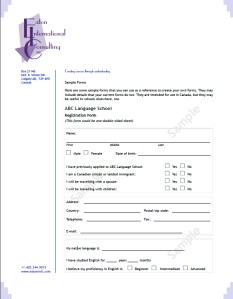 I’m often asked by clients how to build a registration form for a new school or program. The two most requested forms are:


 Posted by Sarah Elaine Eaton, Ph.D.


 Learning, Teaching and Leadership
You must be logged in to post a comment.