Digital Resource: Using Video with Adult Learners

September 27, 2011

The other day I stumbled across the Adult Literacy Education Wiki, which features dozens of free resources on how to use video with adult learners.

Topics include:

  • How to create videos
  • Video-making tools
  • How to incorporate videos in class
  • Video streaming
  • Ready-made video resources
  • Instructional videos useful for adult learners
  • Blogs
  • Samples of student-created videos

This is a great resource full of resources and ideas. Go check it out.

_________________________________

Update – January 2018 – This blog has had over 1.8 million views thanks to readers like you. If you enjoyed this post, please “like” it or share it on social media. Thanks!

Sarah Elaine Eaton is a faculty member in the Werklund School of Education, University of Calgary, Canada.


Happy Banned Books Week!

September 26, 2011

Did you know that September 24 to October 1, 2011 is Banned Books Week sponsored by the American Libraries Association and 5 other organizations.

In celebration of the week, I’m pledging to read at least one banned book (though I haven’t decided which one yet.) Lauren Davis reports in the Eye on Education blog that the Harry Potter series has been the most widely banned book series of the past decade.

My friend and mentor, Dr. Nicholas Zekulin, a professor of Russian at the University of Calgary has what we believe to be the world’s largest collection of Harry Potter books in translation. Maybe I’ll pick up the Spanish version and enjoy Potter en español.

Here’s my invitation to join me in reading a banned book this week, or at least have a conversation with someone else about censorship, freedom of speech or banned books.

Related posts:

_________

Share this post: Happy Banned Books Week! http://wp.me/pNAh3-U9

Update – January 2018 – This blog has had over 1.8 million views thanks to readers like you. If you enjoyed this post, please “like” it or share it on social media. Thanks!

Sarah Elaine Eaton is a faculty member in the Werklund School of Education, University of Calgary, Canada.


The Best Time of Day to Tweet, When to Post to Facebook and other Social Media Insights

September 25, 2011

KISS Metrics has done some serious research into social media. Their stats are for the U.S., but they make those of us in Canada and other parts of the world think about when we tweet, too. KISS metrics notes that nearly 50% of the US population lives in the Eastern Time Zone. If you add in those who live in the Central time zone, you get to 80% of the population.

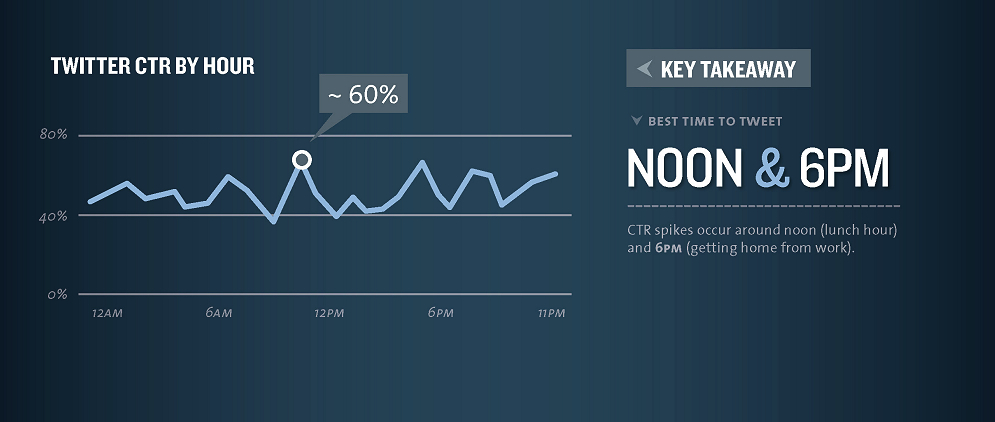
So what? For maximum effectiveness, post to Twitter and other social media when people in the Eastern and Central Time Zones are likely to be on line.

Top Facts about Twitter

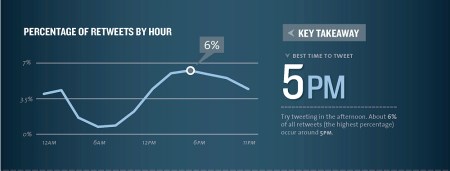
If you want to be re-Tweeted, the best time to Tweet is 5:00 p.m. Eastern Time. That’s 3:00 p.m. for those of us living in Calgary and other parts of Alberta. Figure that out in your local time zone by converting the time at TimeandDate.com.
If your purpose isn’t to be re-Tweeted, but rather to have followers click on your links, the statistics change a bit. The report says that the highest click through rate (CTR) is noon and 6:00 p.m., Eastern time.

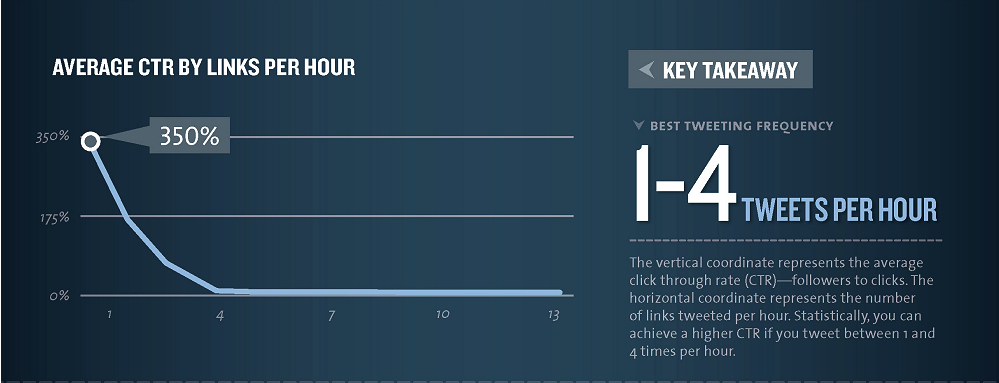
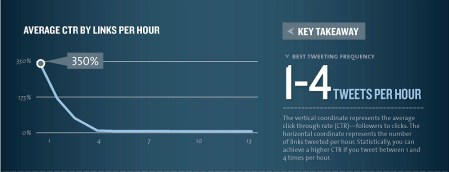
How often should you Tweet if you want people to click through to your links? Survey says… 1 to 4 times per hour. The click through rate (CTR) is apparently highest for those who Tweet their links every 15 to 60 minutes. If you tweet links more than 4 times per hour, your followers are likely to become numbed to your barage of Tweets. Personally, I never Tweet with links that much. I guess I need to start Tweeting more!
KISS Metrics2

People are most likely to click on your links mid-week and on the weekends. That is when the click through rate (CTR) is highest.

Top Facts about Facebook

The best day to share on Facebook is Saturday. That’s when the most sharing is done. This offers good food for thought for companies, schools and non-profits who only share on Facebook during the work week. Maybe it is worth using a tool such as Hootsuite to schedule your FB updates so you are sharing when employees are off the clock.

And if you’re wondering when on Saturday (or any day) to post things that are most likely to be shared, the best time of day to post on Facebook is at noon.

If you have a Facebook page, the KISS metrics show that one post every day will help you build the most “likes”.

Check out the full post by KISS Metrics.

So, what’s the moral of the story? Use social media regularly and consistently, but don’t jam it down anyone’s throat. Share information when others are likely to share your links. Pay attention to when people are on line and post at times when your links and “shareables” are likely to be seen.

_______________

Share this post: The Best Time of Day to Tweet, When to Post to Facebook and other Social Media Insights http://wp.me/pNAh3-TN

Update – January 2018 – This blog has had over 1.8 million views thanks to readers like you. If you enjoyed this post, please “like” it or share it on social media. Thanks!

Sarah Elaine Eaton is a faculty member in the Werklund School of Education, University of Calgary, Canada.


Family Literacy in Canada: What it means in terms of Formal, Non-Formal and Informal Learning

September 24, 2011

In March I was invited to speak on a Family Literacy Panel at the National Metropolis Conference. The conference focused on “the role of immigration in connecting Canada with the rest of the world.” Our panel looked like this:

Family Literacy and the New Canadian

Description: This Workshop will bring together a panel of language experts from across Canada that will outline the importance and value of heritage / international languages and illustrate how schools, academics, community organizations and government policies can assist in maintaining and developing the multiple literacies of all Canadians.

Organizer | Organisateur
Bernard Bouska, Canadian Languages Association
Khatoune Temisjian, Québec Heritage Languages Association / Association québécoise des langues d’origine

Participants

Sarah Eaton, University of Calgary
Formal, Non-Formal and Informal Learning: The Case of Literacy, Essential Skills and Language Learning in Canada

Maria Makrakis, TESOL International and International Languages Educators’ Association (ILEA), Ontario
Language and Literacy for New Canadian Families

Constantine Ioannou, Government of Ontario
Ontario Schools and Communities Can Reflect the Languages of our Families

Khatoune Temisjian, Québec Heritage Languages Association / Association québécoise des langues d’origine
Literacy and Heritage/international Languages in Quebec: An Overview

Michael Embaie, Southern Alberta Heritage Languages Association (SAHLA)
Successful Implementation of Heritage / International Language Programs in Canada: Selected Strategies and Case-Studies

Chair | Modérateur
Marisa Romilly, Society For The Advancement of International Languages (SAIL British Columbia)

Discussant | Commentateur

Bernard Bouska, Canadian Languages Association

I promised to post the paper once it was available. It’s now been archived in the ERIC database. Download a copy here.

__________________

Share this post: Family Literacy in Canada: What it means in terms of Formal, Non-Formal and Informal Learning http://wp.me/pNAh3-TD

Update – January 2018 – This blog has had over 1.8 million views thanks to readers like you. If you enjoyed this post, please “like” it or share it on social media. Thanks!

Sarah Elaine Eaton is a faculty member in the Werklund School of Education, University of Calgary, Canada.


6 Things You Probably Didn’t know About Social Media and the WWW

September 23, 2011

Did you know…?

In 1978 authors Roxanne Hiltz and Murray Toroff envisioned a future in which computer-mediated communication (CMC) would have a major effect on people’s every day lives. Their book,”The Network Nation”, is published by MIT Press in Cambridge, MA. It has been updated and revised since its original printing and is now considered a classic book in the field of CMC.

In 1992 the World Wide Web was officially launched to the public. (Can you believe that the Web is only 20 years old?!)

In 1997 SixDegrees was established as the first social networking site that most resembles the sites we use today, but users were skeptical and reluctant to interact with strangers. The company was sold in 2000 and today many people believe that the original company was too ahead of its time.

LinkedIn was created in 2002 and publicly launched in 2003 (before Facebook!)

In 2004 Facebook was launched.

Two years later, in 2006, Twitter was launched.

______________

Share this post: 6 Things You Probably Didn’t know About Social Media and the WWW http://wp.me/pNAh3-Qi

Update – January 2018 – This blog has had over 1.8 million views thanks to readers like you. If you enjoyed this post, please “like” it or share it on social media. Thanks!

Sarah Elaine Eaton is a faculty member in the Werklund School of Education, University of Calgary, Canada.