
Call for chapter proposals
Editors: Sarah Elaine Eaton (University of Calgary, Canada) and Jamie Carmichael (Carleton University, Canada)
Fraudulent credentials have existed since the days of hand-scribed parchments. However, in recent years, scandals such as Operation Varsity Blues in 2019 and 2020 in the United States have drawn renewed attention to the topic of fake credentials, university admissions fraud, and diploma mills. The issue of fraudulent credentials is a global one, and there are no academic disciplines or professions that are immune to the problem.
The Internet has made it even easier for individuals to obtain fraudulent credentials online in a matter of minutes. The platform economy that underpins this nefarious activity churns out both the good and the ugly. However, it is predicted that the ugly will diminish as technical tools become more accessible and easier to manipulate. Therefore, it can be challenging for college admissions staff to spot fake credentials given the changing landscape, particularly during admissions season, when workloads surge and demands to meet deadlines to process admissions applications are unrelenting.
The purpose of this book is to analyze the issue of fraudulent credentials and their impact on higher education admissions, as well as in professional and industry contexts. This volume offers a scholarly examination and discussion of the issues. Evidence-based submissions are also welcomed by higher education professionals and practitioners. We welcome a variety of contributions from case studies to preferred practices, historical inquiries, empirical studies, literature reviews, and conceptual papers. Chapters will include substantive references to credible sources.
Topics:
- History of credential fraud: Chapters delve into this history of credential fraud, during ancient times, as well as modern times.
- Admissions fraud in higher education: Chapters focus on issues particular to admissions fraud in higher education, including admissions test fraud and other fraudulent activities related to admissions fraud, including: transcripts, reference letters, and previous educational credentials.
- Credential forgery: Chapters on this topic explore forged credentials (i.e., fake diplomas, degrees, and transcripts) from legitimate and reputable educational institutions.
- Diploma mills: Chapters on this topic investigate low-quality for-profit colleges and universities, as well as business selling credentials from institutions that do not actually exist.
- Impact on industry and the professions: Chapters on this topic address the impact of credential fraud in professional contexts and industry.
- Introduction of technology to circumvent credential fraud: Chapters on this topic examine how technology can be employed to thwart the risk of credential fraud. This topic can span the spectrum of data protection, and the use of technologies like blockchain, to computer vision, which has the potential to detect “fake” documents or outliers.
Contributor guidelines:
If you are interested in submitting a book chapter, send a 500-word proposal in Word format by November 1, 2020.
Chapter proposals should clearly indicate:
- Proposed title
- Purpose statement
- Methodology or submission type (i.e., empirical research, historical inquiry, literature review, etc.)
- Overview of topic(s) to be addressed
- Originality and significance of the work
- Reference list (APA 7th edition) (Minimum of 3 references)
- Full contributor information (name, institution, e-mail, phone, address, ORCid) and brief bio (~50 words)
Proposals will be reviewed for suitability using the following criteria:
- Substance and quality of the proposal, including the proposed source material (i.e., references)
- English language proficiency
- Clarity and feasibility
- Alignment with the proposed chapter topics
- Note that chapters with excessive self-citations will not be favourably received.
Decisions on chapter proposals will be made by February 1, 2021.
Full chapters are to be 5000-8000 words, including abstract and references (APA, 7th ed.). Chapter drafts will undergo rigorous peer review. Deadline for full chapters is June 1, 2021.
Submit your proposal in Word format to:
- seaton (at) ucalgary.ca
- Jamie.carmichael (at) carleton.ca
About the editors
 Sarah Elaine Eaton, PhD, is an Associate Professor of Education at the University of Calgary, Canada, where she also serves as the inaugural Educational Leader in Residence, Academic Integrity. Eaton’s research focuses on academic ethics in higher education. Her work can be found in the British Educational Research Journal, Journal of Academic Ethics, the Journal of Educational Thought and Interchange, among other places. She is the co-Editor-in-Chief of the International Journal for Educational Integrity (Springer Nature) and co-founder and co-editor of Canadian Perspectives on Academic Integrity. In 2020 she received the Research and Scholarship award from the Canadian Society for the Study of Higher Education (CSSHE) for her contributions to research on academic integrity in Canadian higher education.
Her previous books include: Women Negotiating Life in the Academy (Eaton & Burns, Eds., Springer, 2020); Academic Integrity in Canada (Eaton & Christensen Hughes, Eds, Springer, 2021) and Plagiarism in Higher Education: Tackling Tough Topics in Academic Integrity (ABC Clio / Libraries Unlimited, 2021).
 Jamie Carmichael is the Associate Registrar of Scheduling and Systems at Carleton University. She is accountable for the construction of the university timetable, scheduling and administration of formally scheduled examinations, the operation of two examination centres for students with disabilities, a university-wide space management system, implementation and maintenance of core student administrative systems (from the audit to CRM), and production of the graduate and undergraduate calendars. Since 2009, she has received eight service excellence nominations for her work that range from information technology projects (i.e., timetabling data collection utility tool to secure exam upload system), team acknowledgement to innovation.
Carmichael is completing her Masters in Applied Science candidate in Technology Information Management (Engineering) and her research area is contract cheating and machine learning. She has presented or co-presented her work at the International Society for Professional Innovation Management (ISPIM) conference (2019) and the International Center for Academic Integrity annual conference (2020).
_________________________________
Share or Tweet this: CFP: Degrees of Deceit – Impact of Counterfeit Credentials and Admissions Fraud – https://drsaraheaton.wordpress.com/2020/09/09/cfp-degrees-of-deceit-impact-of-counterfeit-credentials-and-admissions-fraud/
This blog has had over 2 million views thanks to readers like you. If you enjoyed this post, please “like” it or share it on social media. Thanks!
Sarah Elaine Eaton, PhD, is a faculty member in the Werklund School of Education, and the Educational Leader in Residence, Academic Integrity, University of Calgary, Canada. Opinions are my own and do not represent those of the University of Calgary.
This blog has had over 2 million views thanks to readers like you. If you enjoyed this post, please “like” it or share it on social media. Thanks!
Sarah Elaine Eaton, PhD, is a faculty member in the Werklund School of Education, and the Educational Leader in Residence, Academic Integrity, University of Calgary, Canada. Opinions are my own and do not represent those of the University of Calgary.


 Posted by Sarah Elaine Eaton, Ph.D.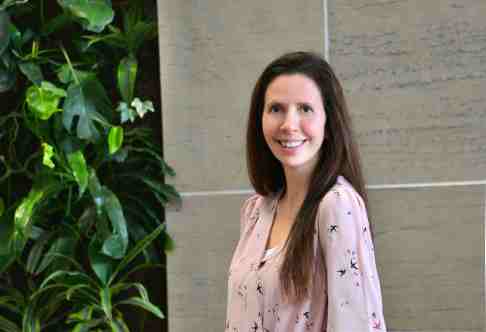


 Learning, Teaching and Leadership
You must be logged in to post a comment.