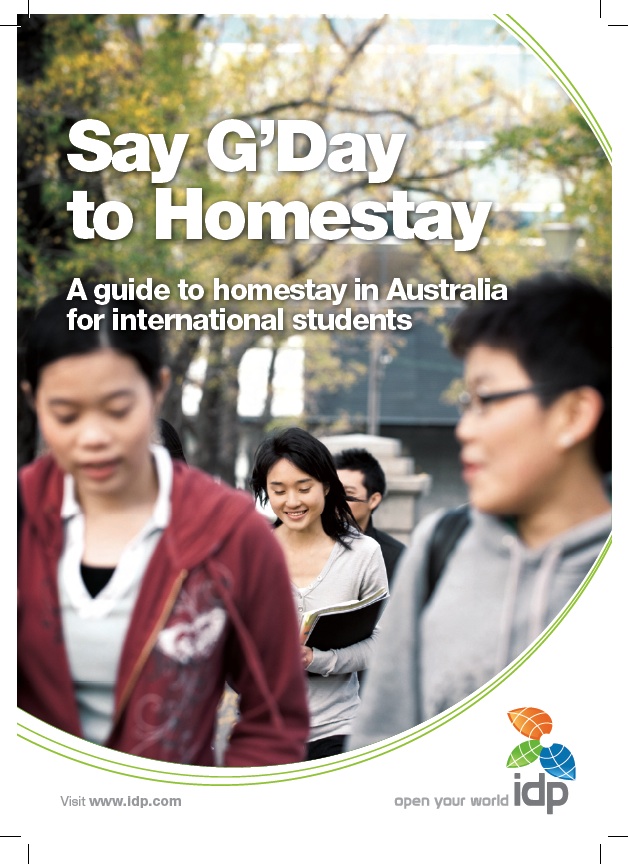
Resource: “Say G’Day to Homestay”

July 27, 2011

G'Day to HomestayIDP is an Australian organization specializing in international education services for Australia. One of those resources is a homestay guide called Say G’Day to Homestay. It is for Australia-bound international students who will be living with a local family.  This is a brilliant guide. It answers questions about everyday life in Australia that foreigners may not know such as:

  • How do I get to school?
  • What will I eat?
  • How do I dispose of household waste?

It also offers tips on laundry, lights, heating, using the telephone, home security, smoking and pets.

These are topics that locals take for granted because they seem second nature to us. The same issues confound and confuse the foreigner who may have no idea of what is expected or appropriate.

This guide is specifically for students going to Australia. If you’re not in Australia, go check it out anyway. Then ask yourself how you can provide a similar guide to your international students that will help them understand the same issues in your local area.

Here’s the link to the guide: http://www.idp.com/PDF/Say%20Gday%20to%20Homestay.pdf

Related posts:

___________________

Share this post: Resource: “Say G’Day to Homestay” http://wp.me/pNAh3-PP

Update – January 2018 – This blog has had over 1.8 million views thanks to readers like you. If you enjoyed this post, please “like” it or share it on social media. Thanks!

Sarah Elaine Eaton is a faculty member in the Werklund School of Education, University of Calgary, Canada.


Resource: Developing EAL services: A guide for communities

July 19, 2011

Prairie Global Management has written this 17-page guide on how to develop services for English as an Additional Language (EAL, also referred to as ESL). The guide covers topics such as:

  • How to start a language program in your community
  • Overcoming the challenges small communities face
  • Criteria for provincial funding
  • How to place and assess students
  • Using Volunteers in EAL delivery
  • and more…

Download your copy of this free resource from: http://www2.immigratemanitoba.com/asset_library/en/resources/pdf/EALguide0208.pdf

______________

Share this post: Resource: Developing EAL services: A guide for communities http://wp.me/pNAh3-Pb

Update – January 2018 – This blog has had over 1.8 million views thanks to readers like you. If you enjoyed this post, please “like” it or share it on social media. Thanks!

Sarah Elaine Eaton is a faculty member in the Werklund School of Education, University of Calgary, Canada.


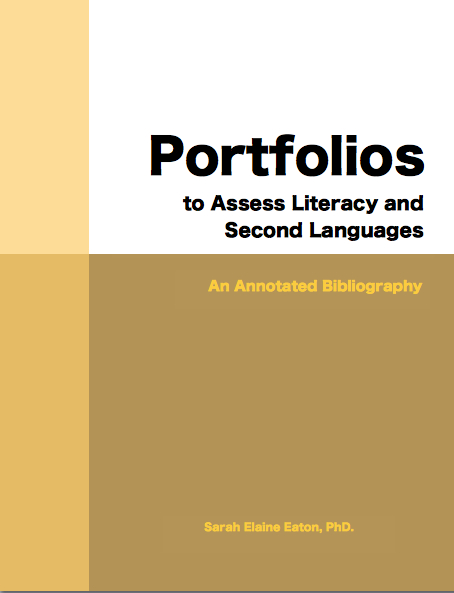
Portfolios to Assess Literacy and Second Languages: An Annotated Bibliography

July 5, 2011

Portfolios to assess literacy and second languages by Sarah EatonFor a few years now I’ve been interested in the topic of using portfolios and asset-based (also known as strength-based) approaches to assessment. Significant theoretical research and applied classroom practice has been done in the field of alternative assessment, and specifically in area of using portfolios and e-portfolios.

The practice of using portfolios for second and foreign language teaching has increased in popularly, with an increased understanding and adoption of the Common European Framework of Reference for Languages. Almost simultaneously, there has been a rise in the use of similar frameworks in the field of literacy. However, there is little collaboration between those who work in literacy and those who teach second and modern languages.

This annotated bibliography is an attempt to collect, select and share resources that may be relevant, helpful and useful to professionals working in both the second language and literacy sectors. The deeper values that guide this work are predicated on the belief that researchers and practitioners working in both fields have much in common and would benefit greatly from increased dialogue and shared resources.

Download a copy here: http://hdl.handle.net/1880/51923

Check out these related posts:

Student portfolios for Language Learning: What They Are and How to Use Them

Using Portfolios for Effective Learning

_____________

Share this post: Portfolios to Assess Literacy and Second Languages: An Annotated Bibliography http://wp.me/pNAh3-NB

Update – January 2018 – This blog has had over 1.8 million views thanks to readers like you. If you enjoyed this post, please “like” it or share it on social media. Thanks!

Sarah Elaine Eaton is a faculty member in the Werklund School of Education, University of Calgary, Canada.


New Report: The Economic ROI of Adult Education Programs

July 1, 2011

A new policy paper published by the McGraw-Hill Research Foundation that was developed in collaboration with the United States’ National Council of State Directors of Adult Education and the U.S. National Adult Education Professional Development Consortium states that “a preemptive focus on adult education actually saves governments money by reducing societal healthcare, public assistance, and incarceration costs”.

The report, “The Return on Investment from Adult Education and Training: Measuring the Economic Impact of a Better Educated and Trained U.S. Workforce,” put it in plain simple language by saying that adult education “improves and expands the nation’s available pool of human capital by helping motivated but under educated people achieve gainful employment in today’s increasingly high-tech and global job market, and at a far lower cost per learner when compared to either K-12 or higher education.”

The co-authors Dr. Lennox McLendon (Executive Director, National Council of State Directors of Adult Education and the National Adult Education Professional Development Consortium), Debra Jones (California Director of Adult Education and Chair, NAEPDC Research Workgroup) and Mitch Rosin (Editorial Director, McGraw-Hill School Education Group) have put together a solid 26-page report that is a brilliant combination of statistics and related evidence that ultimately constructs a clear picture of the economic return on investment (ROI) of adult education and literacy programs. The culmination of the evidence they present  fully supports their closing argument:

“Current federal adult education and workforce skills programs need to be better funded, but they also need to be redesigned and connected more effectively to state and local programs. We must have an integrated system of adult education and workforce development that serves millions of Americans in accessible, affordable, and accountable ways – on the job, online, and in the classroom.”

Although this report is focused on the U.S.A. it provides compelling evidence for programs in other countries, too.

This is a report that is worth looking at and sharing.  Download your free copy from here: http://www.mcgraw-hillresearchfoundation.org/wp-content/uploads/the-return-on-investment-from-adult-education-and-training.pdf

Related posts:

The economic impact of language programs on communities

Research: ESL programs boost Calgary’s economy by $26M+ per year

________________

Share this post: New Report: The Economic ROI of Adult Education Programs http://wp.me/pNAh3-Mm

Update – January 2018 – This blog has had over 1.8 million views thanks to readers like you. If you enjoyed this post, please “like” it or share it on social media. Thanks!

Sarah Elaine Eaton is a faculty member in the Werklund School of Education, University of Calgary, Canada.


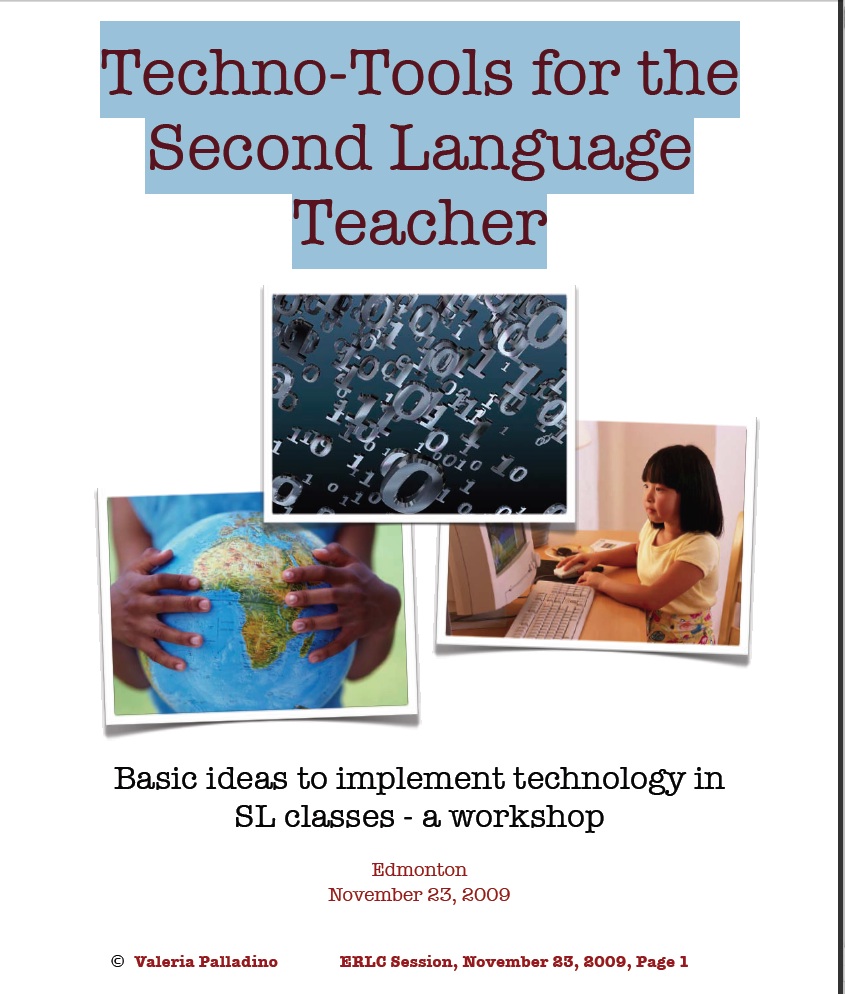
Techno-Tools for the Second Language Teacher

June 27, 2011

Valeria Palladino, a language teacher in Edmonton, Canada, has a great wiki on technology tools for second languages: http://technotoolsforslclasses.wikispaces.com/

She has also done a useful and easy to follow 29-page guide called “Techno-Tools for the Second Language Teacher“. It contains ideas on how to implement technology into second language classes. This guide is particularly useful for teachers who want to integrate tech into their second language classrooms, but are not sure where to start. Palladino explains the basics in language that is easy to understand and easy to follow.

_____________

Related posts:

Cool Apps for Language Learning http://wp.me/pNAh3-mQ

MALL (Mobile-Assisted Language Learning) http://wp.me/pNAh3-6U

__________

Share this post: Techno-Tools for the Second Language Teacher http://wp.me/pNAh3-M7

Update – January 2018 – This blog has had over 1.8 million views thanks to readers like you. If you enjoyed this post, please “like” it or share it on social media. Thanks!

Sarah Elaine Eaton is a faculty member in the Werklund School of Education, University of Calgary, Canada.