Global Trends in Language Evaluation and Assessment

September 4, 2011

Next week I am team-teaching a block week course at the University of Calgary on Global Trends in Language Education. Part of my session has been structured as a public lecture that is open to the public. It is a morning presentation, which may not be ideal for teachers, but nevertheless, if you’re in Calgary you’re invited you to join us for the event.

Here are the details:

Public lecture: Global Trends in Language Evaluation and Assessment*

Thursday, September 8, 2011

Dr. Sarah Eaton

Major shifts in educational evaluation and assessment have been happening since the 1980s. There is an international trend (evidenced by the Common European Framework of Reference for Languages and the International Adult Literacy Skills Survey) towards asset-based or strength-based approaches to evaluating a person’s language competence.

These international frameworks point towards a major paradigm shift in how we value and assess competence. Traditional “deficit-based” models of evaluation are being replaced. Are we ready, as 21st century educators, to translate this policy shift into our teaching practice?

08:30 – Welcome
09:00 – 10:15 – Presentation

University of Calgary
Language Research Centre
Craigie Hall, D-420

This event is free of charge and open to the public.
* This presentation is part of the LANG 599 / 699 block week course.

Global Trends in Language Evaluation and Assessment – invitation

_______________

Share this post: Global Trends in  Language Evaluation and Assessment http://wp.me/pNAh3-Ry

Update – January 2018 – This blog has had over 1.8 million views thanks to readers like you. If you enjoyed this post, please “like” it or share it on social media. Thanks!

Sarah Elaine Eaton is a faculty member in the Werklund School of Education, University of Calgary, Canada.


Marketing tip: Ask your students where they heard about you

August 20, 2011

This is a simple way of determining which method of marketing works for your language or literacy program: Ask your students how they heard about you. Do most of your students find out about you through the Internet? …word of mouth? …your brochure? … trade fairs? Once you figure out what has proven most successful, you will know where to focus more of your marketing dollars.

I suggest getting this valuable information in writing. Whether it is through an evaluation form or an exit interview where the results are recorded, get the information in concrete written form. Compare it from year to year. See if your most successful marketing strategy changes over time.

Of course, we know that word of mouth is the most powerful way to market your program. If the majority of your students come to you through word of mouth, then you are very lucky. Most language schools need to combine word of mouth with other marketing efforts.

But what other marketing efforts are successful for you? You may be surprised. You may be pouring thousands of dollars into a fancy brochure and find out that 85% of your students used the Internet to find you. If that is the case, you would want to drive more of your marketing dollars into the Internet (maybe pay for a higher ranking on a search engine or get a banner ad onto other people’s sites). Once you know what has proven successful, you can use that information to generate even more interest and registrations.
Marketing materials: tools and tips to do the job better

This post is adapted from “Idea #18” in 101 Ways to Market Your Language Program

________________

Share or Tweet this post: Marketing tip: Ask your students where they heard about you http://wp.me/pNAh3-wA

Update – January 2018 – This blog has had over 1.8 million views thanks to readers like you. If you enjoyed this post, please “like” it or share it on social media. Thanks!

Sarah Elaine Eaton is a faculty member in the Werklund School of Education, University of Calgary, Canada.


Does language learning make us racist?

August 18, 2011

Language and culture are often lumped together, spoken of in the same breath, as if they were one in the same. Language teachers revel in the cultures of the languages they teach. But does learning another language really make you any less racist? Some researchers caution that if we rely on cultural stereotypes, we may be adding to our students’ myopic view of the world and that we’re not really doing them any favours.

Researchers Byram and Feng (2004) say that language teachers need to get out there and connect with those who work in the field of cross-cultural training in the business world.  They argue that language and culture are value-laden and socially and politically constructed, and that language teachers often rely heavily on stereotypes to teach culture.

Starkey (2007) agrees with that point, only he takes it a step further by saying that language teachers may unintentionally promote stereotypes or narrow views of other cultures by talking only about “food, fashion, festivals and folklore” as representations of culture. He even goes so far as to say that language teachers can become so enamoured with the positive aspects of the target culture (particularly if they have lived or studied in that culture) that they develop a kind of cultural idealism, to the extent that they dismiss their students’ latent prejudices.

That article struck a chord with me. As a Spanish teacher who has lived in Spain and worked for short periods in Mexico, Honduras, Venezuela and Cuba, I can honestly admit that I am somewhat enamored with the people and cultures of the places I have personally visited. In my classes, I have tended to focus on the “positive” aspects of these places and I have been known to avoid or gloss over questions around poverty, drug cartels, the Basque separatist group ETA, or lack of clean water and electricity in some of the areas I have been.

Rarely do I tell students about the time I was working alongside a Cuban professor and when coffee was served, I asked if he drank his coffee with milk. He replied that he loved milk, but that he saved his weekly ration for his two year old daughter because he felt she needed it more than he did.

Nor do I tell them about being in Honduras a year after Hurricane Mitch and seeing shelters made of twigs where houses had been instantly destroyed. The makeshift shelters were hardly enough to protect anyone from the elements.

Nor do I tell them about the homeless man at the bottom of the stairs in a Madrid metro station who started to smell after three days because while passers-by thought he was drunk or asleep, he had in fact died, with thousands of people (including me, I am ashamed to say) passing him by. None of us knew… and personally, it had never occurred to me as a young, naive 20-something student from abroad, that someone could actually die in a subway station. Such a thing was so far out of my personal experience at that point in my life, that the shock of the nameless Spaniard’s death is something I’ll never forget.

I don’t share those stories with my students. Not ever.

I try to present the happy side of culture in my classes. I only start to “dig deep” or share stories that could be shocking or distressing when I am working one-on-one with students or in small groups with students whom I think can “handle” the other side of the reality I have lived and seen.

As I read these articles, I can’t help but ask myself if I have done the right thing all these years? Who am I to judge what my students can and cannot “handle”? Should I have pushed “the dark side” a little more, I wonder? Have I glossed over some of the more complex realities of real world culture in order to encourage my students to become as enamored with language learning as I am?

Starkey paired up with another scholar, Audrey Osler and together they wrote an article about how representations of culture in language learning textbooks has an effect on students’ understanding of that culture. While positive representations of culture can often be found in textbooks, culture goes beyond photos depicting national dress or typical food.

Researchers who specialize in the area of intercultural education and competence are calling on us language teachers to engage our students in deep conversations about identity, cultural integration, race and social values. They are also calling on us to engage with teachers of global citizenship and cross-cultural trainers who work in the business world, to help our students develop deeper understandings of culture and the idea that a person can have multiple cultural identities.

I grew up in a bi-cultural family, with a Canadian father and a British mother. I have lived in Canada, England and Spain. I’ve studied Spanish, French, German and American Sign Language. I sometimes rely on my national Canadian identity, which is firmly grounded in multiculturalism, to explain my own sense of multiple cultural identities. I think I do this sometimes just because it is easier than trying to “drill deep” into questions of identity. I am starting to realize that having parents from different cultures may very well have influenced my own cultural identity and fascination with the world outside the small city of 65,000 where I was born.

What about you? What elements have constructed your sense of culture and identity? If you’re a language teacher, are you enamored with language(s) you teach and the cultures you have experienced? Is it important to you that your students develop the same love of language that you have?

How do we “dig deep” into culture in a beginner-level language courses and engage our students in critical and reflective dialogue to help them develop true intercultural sensitivity and competence?

References

Byram, M., & Feng, A. (2004). Culture and Language Learning: Teaching, Research and Scholarship. Language Teaching, 37, 149-168.

Osler, A., & Starkey, H. (2000). Intercultural Education and Foreign Language Learning: Issues of racism, identity and modernity. Race Ethnicity and Education, 3(2), 207-221.

Starkey, H. (2007). Language Education, Identities and Citizenship: Developing Cosmopolitan Perspectives. Language and Intercultural Communication, 7(1), 56-71.

_________________________

Share this post: Does language learning make us racist? http://wp.me/pNAh3-QS

Update – January 2018 – This blog has had over 1.8 million views thanks to readers like you. If you enjoyed this post, please “like” it or share it on social media. Thanks!

Sarah Elaine Eaton is a faculty member in the Werklund School of Education, University of Calgary, Canada.


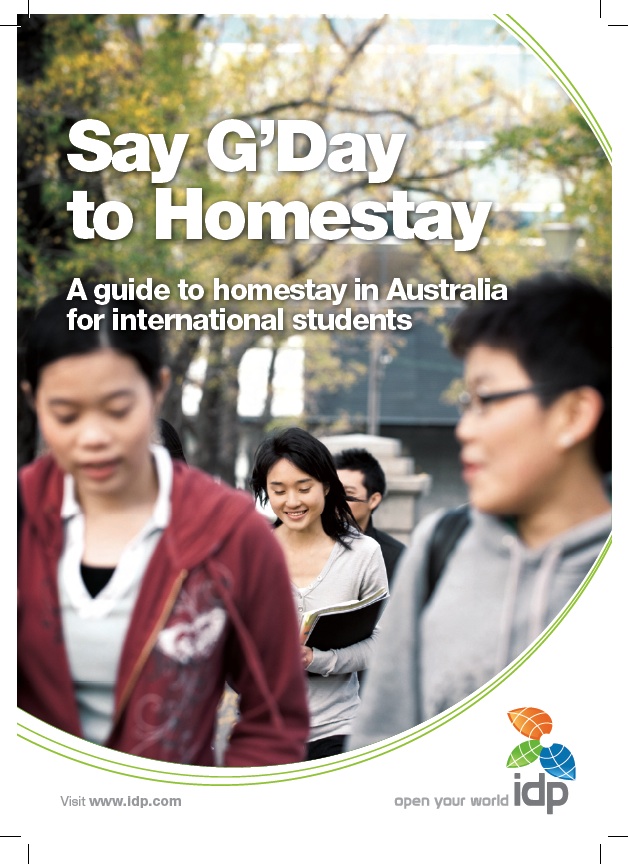
Resource: “Say G’Day to Homestay”

July 27, 2011

G'Day to HomestayIDP is an Australian organization specializing in international education services for Australia. One of those resources is a homestay guide called Say G’Day to Homestay. It is for Australia-bound international students who will be living with a local family.  This is a brilliant guide. It answers questions about everyday life in Australia that foreigners may not know such as:

  • How do I get to school?
  • What will I eat?
  • How do I dispose of household waste?

It also offers tips on laundry, lights, heating, using the telephone, home security, smoking and pets.

These are topics that locals take for granted because they seem second nature to us. The same issues confound and confuse the foreigner who may have no idea of what is expected or appropriate.

This guide is specifically for students going to Australia. If you’re not in Australia, go check it out anyway. Then ask yourself how you can provide a similar guide to your international students that will help them understand the same issues in your local area.

Here’s the link to the guide: http://www.idp.com/PDF/Say%20Gday%20to%20Homestay.pdf

Related posts:

___________________

Share this post: Resource: “Say G’Day to Homestay” http://wp.me/pNAh3-PP

Update – January 2018 – This blog has had over 1.8 million views thanks to readers like you. If you enjoyed this post, please “like” it or share it on social media. Thanks!

Sarah Elaine Eaton is a faculty member in the Werklund School of Education, University of Calgary, Canada.


The 21st century book report: How to make a digital book trailer using free technology

July 26, 2011

Here’s a great article about how to make a book trailer. The idea behind it is to get kids revved up about reading by having them make a book trailer using Photo Story 3 (free software). The idea can easily be transferred to young adults or even adults who are into technology, but not really into reading. The beauty of it is that they reader becomes the creator of the book trailer. As they create, so they become involved and invested in the processes of reading and comprehension.

They’ll need to read the book in order to choose images that properly represent the book.

This is a 21st century form of a book report. It doesn’t have to just be for a book. You can make a book trailer using Photo Story 3 for short stories, too.

The beauty of it is that it can be used for children building their reading skills, teens who need to read more and second and foreign language students of all ages. Apparently the software doesn’t handle all foreign languages very well, so you may want to check it out before using it in your class.

What a great way to get readers engaged with the material they are reading in a modern, creative way.

_____________

Share this post: The 21st century book report: How to make a digital book trailer using free technology http://wp.me/pNAh3-PL

Update – January 2018 – This blog has had over 1.8 million views thanks to readers like you. If you enjoyed this post, please “like” it or share it on social media. Thanks!

Sarah Elaine Eaton is a faculty member in the Werklund School of Education, University of Calgary, Canada.