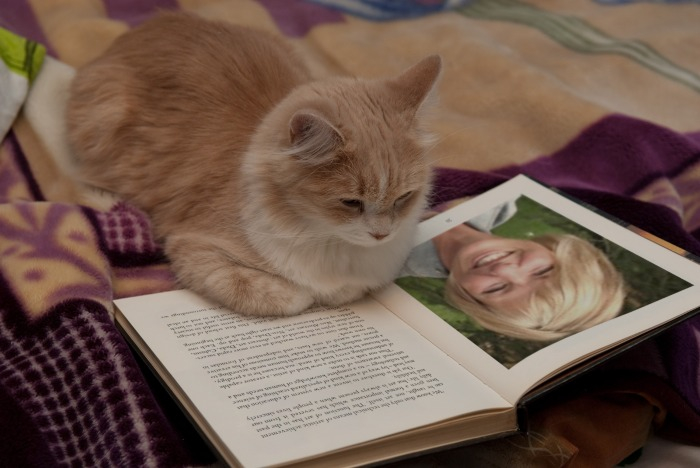
Excuses people will use to avoid learning, literacy and social media

May 16, 2011

Are you a literacy practitioner, tutor or coordinator? Have you ever heard excuses like these from your learners?

Photl - Blonde girl with book “I didn’t want to admit that I needed help.”

“I felt I was too old to learn.”

“I thought people would laugh at me for not knowing the basics.”

“It’s more important to work than to learn new things.”

“I don’t have time.”

Learners may:

  • Become agitated when they’re asked to use their literacy skills.
  • Walk away or disengage.
  • Show no interest in the situation.

These excuses aren’t my words. They’re in a nifty little .pdf handout from Hawaii literacy.

Literacy professionals work hard to help learners overcome their own personal, mental and emotional barriers to help them improve their literacy skills and experience the joy of learning new skills.

In my work with literacy and educational organizations, I’m often asked to give workshops on marketing and social media. I’ll be honest, it’s hard work.

In Guerrilla Marketing for Non-Profits, Jay Conrad Levinson, Frank Adkins and Chris Forbes make some insightful observations about marketing in non-profit organizations. They note that:

Some non-profit organizations treat marketing as something that is beneath their dignity or even against their core values. (p. 6)

I have found that to be true in some cases, but not all.

With more demand for social media marketing in literacy organizations, over the past 12-24 months, I’ve noticed something very curious. Some times when I talk with Executive Directors or program coordinators, I hear lots of reasons why they’re not “into” social media. The reasons go something like this:

Older woman“We don’t have time to market our programs or use social media.”

“It’s more important to do the work work than to learn about social media.”

“People might laugh at me for not knowing the basics. I don’t need to know that stuff anyway.”

“I’m a professional! I’m a leader. People look up to me. I don’t want to admit that I needed help.”

“I’m too old to learn this social media stuff.”

Interesting correlations, no? The reasons are the same… It’s just the context that’s different. The excuses learners use to avoid engaging in literacy learning are the same ones some educators and non-profit professionals use to avoid engaging with social media and marketing.

The excuses learners use to avoid getting help with reading, writing and literacy skills are the very same excuses I hear in my work with educators, non-profit professionals and sometimes parents, when it comes to engaging with social media.

Michael Fullan, one of my favorite educational leadership gurus, says, “Leaders learning from each other, raises the bar for all.” I encourage everyone to learn new things every day.

If you work with adults who are choose to make themselves vulnerable and allow themselves to be ripped out of their comfort zones and have the courage to take new steps into unknown territory, don’t just applaud them. Stand in solidarity with them by making yourself equally vulnerable and pushing yourself out of your own comfort zone.

Oh, and just so you don’t think I’m preaching without practicing, here’s a picture of me, last November at the Kennedy Space Centre, on an reduced-gravity training wall. It was part of a full-day of an Astronaut Training Experience Day that included getting strapped in and learning to maneuver up that wall, just like NASA astronauts do as part of their training. Saying I was ripped out of my comfort zone was an understatement. I do things like that every now and again… just for the experience. The older and more expert we become, the more important it is, I think, to remember what it’s like to be a complete novice, to throw the excuses out the window and just put ourselves out there to learn something new.

Social media doesn’t hurt half as much as that harness giving me a wedgie did. I’d put money on it.

Go on. Try something new this month. Just because you can.

_______________

Share this post: Excuses people will use to avoid learning, literacy and social media http://wp.me/pNAh3-EY

Update – January 2018 – This blog has had over 1.8 million views thanks to readers like you. If you enjoyed this post, please “like” it or share it on social media. Thanks!

Sarah Elaine Eaton is a faculty member in the Werklund School of Education, University of Calgary, Canada.


7 Things That Make Me Want to Unfollow You on #Twitter

May 2, 2011

I’ve been on Twitter for just over 2 years now. I had my account for well over a year before I actually got “into” it. For the longest time, I wasn’t really sure what it was all about or why anyone would Tweet. I’ve made a concerted effort over the past six months to learn more about Twitter and to engage others in conversations. It’s been a fabulous way to discover amazing work being done by people! I find Twitter to be a fountain of inspiration and great resources. There, however, a number of things that make me want to “unfollow” others…

1) Tweets that are trying to sell me stuff – all the time.

I don’t mind the occasional sales pitch now and then. But really, if there’s no content there and your tweets are just a barage of “buy my stuff!” it’s a turn-off.

2) Tweets that try to get me to your website – all the time.

Like a sales pitch, I can see that you’re trying to drive traffic to your website. Everyone wants website traffic. I’m OK with Tweets that share new blog posts or offer resources, but messages that just tell me to visit a website for no reason? Yawn… I’m more interested in real content. And there’s plenty of that on Twitter.

3) Tweets that are trying to get me to donate to your cause – all the time.

Much like the Tweets that try to sell me stuff, I get tired of the messages asking me to donate money. I follow a lot of non-profit organizations. I’ve worked with clients in the non-profit sector for the past decade. I believe in the causes of the organizations I follow… and I may already donate money to them. Really, I’m more interested in finding out about the good work you do… Share some success stories. Tell me about that latest grant you just got. Share a news article about something interesting in the non-profit sector or your particular cause.

4) If you follow me… and I follow you back… and then you promptly unfollow me.

Hello?! Do you think people don’t notice that you’re just trying to stack your following that way? If you’re really not interested in my tweets, that’s cool with me. It’s a personal choice that I reciprocate when people follow me. But stacking your followers, meh… Not a game I’m interested in. I will unfollow you back. 🙂

5) Direct messages (DMs) (especially the automated kind) trying to sell me you stuff or get me to your website.

Really? You think you can send me an automated direct message telling me to buy something and I’m really going to rush to your site and do that, just because you DMed me? If you think that, you’re DuMb… and annoying… and it makes me want to unfollow you for presuming I’m that gullible.

6) Foul language.

It’s not that I’m a prude. I’ve been known to make the air blue with my words on occasion. But there’s a time and a place. (You know, like when you get a flat tire in -40 Celcius and your cell phone battery is dead and you have no idea how to change a flat tire.) Twitter is not that place. Take your #%^&( foul language elsewhere.

7) Tweets that are you, pontificating. Incessantly.

There are a few people who can legitimately pontificate. The Pope. The Dalai Lama. But really, if you’re more or less just like me… I’ll probably like you more if you share other interesting stuff you find, too. I am interested in your opinions and what you have to say, but if all you ever Tweet about are your own pearls of wisdom, your own little sayings and your own bits of advice… I will probably lose interest at some point. If you never re-Tweet others or have conversations, you’re not really engaging… Though I do follow the Dalai Lama, overall, I’m not here to be a virtual disciple… Basically, if you’re interested in others, I’m more likely to find you interesting, too.

This post is dedicated to all my wonderful Tweeps… the ones who engage me, inspire me, feed my brain, make me laugh and make the Twitterverse a joy to be part of. You know who you are. 🙂

_____________

Share this post: 7 Things That Make Me Want to Unfollow You on #Twitter http://wp.me/pNAh3-E1

Update – January 2018 – This blog has had over 1.8 million views thanks to readers like you. If you enjoyed this post, please “like” it or share it on social media. Thanks!

Sarah Elaine Eaton is a faculty member in the Werklund School of Education, University of Calgary, Canada.


Social Media for Language Programs – Free conference

April 22, 2011

Yup, you read that right. My friend, Evan Rubin, and his colleagues at San Diego State University’s Language Acquisition Resource Centre (LARC) are busy planning the 2011 Social Media Workshop. They invited me to present at the 2010 Social Media conference where I gave a session on Using Skype in the Second and Foreign Language Classroom. I also attended a number of other sessions and their quality was outstanding.

This year, Evan has put together a stellar line-up that includes 5 full days of sessions, August 8-12, 2011. There will be everything from keynotes and presentations to hands-on practice and exchanges of ideas. We’ll be looking at performance-based assessment, e-portfolios, blogging and a whole host of other social media for language education.

The best part? It’s free, all of it! People in San Diego can attend the live sessions and the rest of us can join in via webinar from all around the globe.

This is a fantastic way to get yourself revved up for the new school year, get energized, share and learn. Go. Register now. Tell Evan I sent you. (It’s not like I get a commission or anything… It’s free after all.)

_________

Share this post: Social Media for Language Programs – Free conference http://wp.me/pNAh3-Dc


Interview with Sandy Hirtz: Leading by Example

February 16, 2011

The Literacy and Language Professionals Who Lead by Example Series is dedicated to highlighting the impact made by exemplary literacy and language professionals who lead by example. They share their inspirational tips and stories. Check out those who were honoured in the 2010 series.

I’m thrilled to start off the 2011 series by showcasing the work of a leader who works tirelessly from her home base in British Columbia, Canada. She’s a leader when it comes to literacy, technology and collaboration. A true inspiration!

What is your name, affiliation, and connection to language learning?

My name is Sandy Hirtz.  I am an independent e-learning and social media advisor. I primarily work from home juggling a plethora of projects. I moderate online forums for the BC Ministry of Education: Literacy branch, E-learning branch and Leadership branch.  I am involved in an Open Educational Resources for open schooling project with the Commonwealth of Learning.  I am project manager and editor of two books collaboratively authored by professionals from around the globe—Education for a Digital World, Edition 1 and soon to be released, Edition 2.0.

What are your thoughts about leadership and literacy?

I think the age-old philosophy of autonomous leadership is no longer adequate for dealing with the complex problems inherent in communities and organizations today. The current intensity and speed of globalization compounds the urgency of addressing the issue of literacy for all, especially among the poor and marginalized on as many fronts as possible.

As people concerned with education, literacy leaders have a critical role to play in fostering, supporting, encouraging and, above all, equipping learners with the values and skill-set necessary to be successful in the 21st century. What better way than by modeling and mirroring this world in our own practice.

Today’s leaders need to be tech savvy, think globally, collaborate, and create partnerships. They need to have the ability to anticipate, envision, maintain flexibility, think strategically, share responsibility, and build community.

In your opinion, what’s the most important aspect of a language or literacy professional’s job?

Raising literacy levels! Illiteracy is a critical problem that affects all corners of the earth. It has no boundaries and exists among every race and ethnicity, age group, and economic class. This silent epidemic threatens over 785 million adults worldwide; one in five adults is still not literate, two-thirds of them are women.

Improving literacy is a commitment to taking on a collaborative, cohesive, coordinated and holistic approach that involves families, communities, and government. It means taking the best of what is happening and making it accessible to all. It means looking at literacy as a lifelong skill. It means considering where and when we can best reach those in need of resources, training, and opportunities — in school, at work, at home, in healthcare environments, and in the community. Literacy is everybody’s business.

What are some of the projects you’ve been involved with that you would like to share?
BC Literacy Forum – advancing literacy and learning
The Literacy Forum showcases literacy initiative, innovation, experience, and best practice. Our goal is to engage in dialogue about literacy and improve literacy education.  Literacy is the key to opportunity for individuals, families, and communities. Come join us! If we band together, we can boost literacy levels from coast to coast to coast.

Community of Expertise in Educational Technology (CEET)
CEET is an online community for educators interested in teaching with technology.

Collaborative Authoring
Education for a Digital World: Advice, Guidelines, and Effective Practice from Around the Globe, was published by the Commonwealth of Learning and BCcampus in July 2008. It can be downloaded at the CoL website: http://www.col.org/digitalworld.
Education for a Digital World 2.0: Innovations in Education is being published by the Ministry of Education and will be available in print, pdf and as an e-book in March 2011.

The collaboratively authored books represent a shift in how educators are sharing their research, experiences and best practices in online teaching and learning. Facilitated completely through virtual interactions, this new model of authoring went beyond writing and editing to become an international effort in community building and professional growth.

Open Educational Resources for Open Schools An initiative of the Commonwealth of Learning in collaboration with the William and Flora Hewlett Foundation and Ministries of Education and Open Schools in Zambia, Lesotho, Namibia, Botswana, Seychelles and Trinidad and Tobago.

Professional Learning Potlucks

I host free and open Moodle Meets or Professional Learning Potlucks.  Ursula Franklin says that an analogy of the perfect society is a potluck supper. “A society in which all can contribute, and all can find friendship, that those who bring things, bring things that they do well and in the end there is a variety of things. All share their talents and all belong. ” Her analogy fits perfectly with these collaborative professional learning events.

What keeps you inspired?

Working collaboratively to create meaningful, relevant and accessible learning opportunities.  I envision a world classroom, whereby people from every country; regardless of age, color, race, gender or wealth, have equitable access to completely free, on demand, personalized education.

James Martin (The Meaning of the 21st Century: A Vital Blueprint for Ensuring Our Future) says the people of today will, “more than at any other time in history, make a spectacular difference to what happens this century – and there needs to be an absolute crusading determination to bring change about.” (James Martin, page 398).  It is change, and the promise of global unrestricted access to knowledge, that is inherent in my professional activities.

_______________

Share this post: Interview with Sandy Hirtz: Leading by Example http://wp.me/pNAh3-wP


How a Video Yearbook Creates Great Memories & Promotes an ESL Program

January 29, 2011

My friend, Felix Wöhler, Director of English Encounters recently shared his school’s 2010 video yearbook with me. It’s an amazing example of:

  • How to capture excellent memories for your students
  • How to promote a language school with the use of video (without any hint of a hard sales approach)
  • How to use digital media to showcase your work.

Check it out. It’s worth watching. English Encounters 2010 Video Yearbook.

_____________________

Share this post: How a Video Yearbook Creates Great Memories & Promotes an ESL Program http://wp.me/pNAh3-sQ

Update – January 2018 – This blog has had over 1.8 million views thanks to readers like you. If you enjoyed this post, please “like” it or share it on social media. Thanks!

Sarah Elaine Eaton is a faculty member in the Werklund School of Education, University of Calgary, Canada.