How to Get a Spectacular Speaker for Your Next Literacy or Language PD Event

April 26, 2011

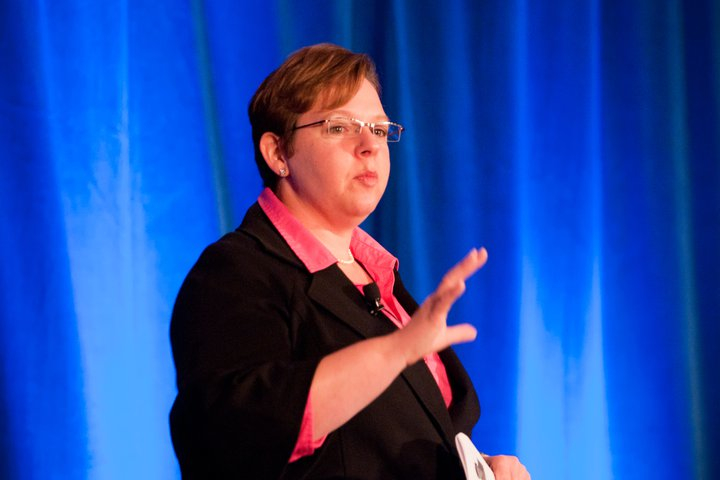
Sarah Elaine Eaton - Ontario Literacy Conference speaker 2010I’ve had some conversations recently with colleagues looking for speakers for conferences, professional development (PD) events or workshops. They’ve said that they don’t really know where to start looking and find themselves in that classic quandary… “We need someone good… Really, really good… And we have a limited budget!” Where to start?

In 2010 I was inducted into the Canadian Association of Professional Speakers (CAPS) and I realized that there’s a big gap, a chasm almost, between the world of corporate meeting planners and the non-profit volunteer conference organizing committees. I talk to dozens of professional speakers who are aching to speak at more non-profit and educational events… and volunteer organizers who just don’t know where to find great speakers. There must be a way to get both groups connected!

Here are some tips that may help…

Decide on your budget

Whether you’re working with an entire committee or you’re one person charged with the responsibility of finding an amazing speaker, you’ll want to figure out how much you have to spend. Your budget will generally include two parts:

  • Speaking fee
  • Travel and accommodation

Some speakers have an “all in” fee that includes travel, meals and accommodation. Keynote speeches for non-profit events start at about $500 and go up to $10,000. The fee is often a combination of what the organization can afford and the speaker’s rates. $5000 for a keynote speaking fee is about average, but there is a great deal of variance.

Prospective clients sometimes ask me if I will speak for free. The answer is yes, but there are some rules.

Have a clear idea of what kind of speaker you want

Every event wants someone “good”, but what does that mean to you? Do you want your speaker to entertain, educate or both? Usually, it’s a good idea to get someone who is knowledgeable or an advocate of your subject area. Don’t get in a mechanics expert for a group of literacy practitioners. Make sure your speaker has either worked in the field or is a champion of it.

Beware of the “I need to work” types who will claim to be a supporter of your cause just because they need a gig. A quick Google search can help you figure out who’s really in your corner.

Use your networks to find good speakers

Ask your colleagues, teachers and others for recommendations. Keynoters often get work due to referrals and word of mouth. Don’t be afraid to ask people around you who comes to mind when they think of an engaging presenter. Use professional listservs, Twitter and other social media to get recommendations, too.Auditorum seats

Put out a call for keynotes or plenary speakers

Conferences put out calls for presenters, but don’t often do the same for keynotes or plenaries because they fear that the quality of those who might apply would be lower than if they conducted the search themselves. That’s kind of like saying that a university only accepts students they seek out and they don’t accept applications. Putting out a call for keynotes is a great way to find high quality speakers who are building a reputation – particularly if your budget is very limited. Do an RFP (Request for Proposals) and be clear in your call what fee range you’re looking for, then speakers who are working in that range are likely to apply.

Check out your local professional speaking organization

Really, professional speakers are not as expensive as you may think! There is a stereotype about professional speakers that they have a certain approach (a la Tony Robbins, for example). While it’s true that there are many motivational or inspirational professional speakers, there are also hundreds who specialize in speaking to non-profit and educational audiences.

Professional speaking organizations are usually national organizations. Members must meet a strict set of professional criteria (such as a minimum number of paid speaking engagements per year, letters of reference, etc.) before being inducted into a major national organization. These big organizations are often divided further into state or provincial chapters.

Look for evidence of past success

Good speakers have a track record of success.

In the United States, it is pretty much de rigueur that speakers will have a demo video in the form of a CD, a DVD or a YouTube video. In Canada this may be true for corporate speakers, but has yet to fully catch on for non-profit and philanthropic speakers.

At the very least, a speaker should have testimonials and a list of past clients. Ask for recommendations. Check for a calendar of past or upcoming events. With or without a video, a good indicator of success is a full speaking schedule.

Travel and Accommodation

If there’s one thing that is non-negotiable, it’s travel and accommodation. Your speaker may have traveled all day to get to your event. A hot shower, a clean room and a good meal are a relief after a long day of travel.

Having a greeter at the airport is a nice touch that many non-profit conference organizers overlook.

If you’re trying to save on costs, here’s a tip: Hotel food is often high in calories and not very interesting. Many speakers will appreciate a home cooked meal at the home of a conference organizer. This gives your speaker a chance to get to know you and enjoy some social time.

Allow speaker product sales

I’m baffled by conferences that require speakers to rent a booth in order to sell their products. I suspect that thousands, if not tens of thousands of dollars a year are lost at non-profit events because the conference has a policy against product sales. Unless the speaker travels with an assistant, they likely won’t have the time to set up a booth and sell product.

An experienced speaker will likely be busy reviewing their notes or doing other preparations before the presentation – as they should. Once a speaker factors in the cost of a booth, plus the cost of an assistant to set up that booth and sell the product, most, if not all of the revenue they would have made is gone. So, speakers abide by conference policies and leave their books, workbooks, CDs and DVDs at home.

A better option: Set up a table at the back of the room where the speaker is giving his or her presentation. Have a conference volunteer work at that table in exchange for a percentage of the gross sales (20% to 30% of total sales is common). If a speaker sells $500 in books and splits the revenue 70/30 with the conference, then the conference makes $150. The speaker takes away $350, from which he or she will need to pay the costs of production (book printing), packaging and shipping. In the end, it works out to a pretty fair split.

Develop a relationship with your speaker

Don’t think of this as one-time gig. This is your opportunity to develop an on-going relationship with someone. Your speaker may help to promote your event by posting about it on Twitter, Facebook or other social media. They may mention you on their blog or find other ways to drive traffic to your website and positive attention to your organization. Non-profit speakers usually have a deep emotional attachment to their field. They want to get to know you and those you serve. If you develop a relationship, that same person may join you again for future events. Figure out how you can help each other succeed and I guarantee you that you’ll get quality speakers that your audiences will love.

_____________

Share this post: How to Get a Spectacular Speaker for Your Next Literacy or Language PD Event http://wp.me/pNAh3-Di

Update – January 2018 – This blog has had over 1.8 million views thanks to readers like you. If you enjoyed this post, please “like” it or share it on social media. Thanks!

Sarah Elaine Eaton is a faculty member in the Werklund School of Education, University of Calgary, Canada.


Breathtaking Impact of Volunteers’ Contribution to Non-formal and Informal Literacy Education in Alberta

March 28, 2011

At the National Metropolis 2011 conference this year in Vancouver, I was part of a panel of experts presenting on Family Literacy and the New Canadian. My paper focused on the research I’ve done on Formal, Non-Formal and Informal Learning: The Case of Literacy, Essential Skills and Language Learning in Canada. I’ll post the entire paper shortly, but for now, I wanted to highlight one bit from it that generated some significant discussion.

My point was that when informal and non-formal learning for literacy and language learning are tracked and recorded, we can better see the impact. The example I gave was that in 2009, Alberta Advanced Education and Training, produced Living Literacy: A Literacy Framework for Alberta’s Next Generation Economy. The 19-page report talks about why literacy matters and outlines priority actions for 2009-2013.

Buried on page 12 of the 19-page report is a gem of information that deserves to be highlighted and explored, which is what I did at my presentation in Vancouver. It states that in Alberta,

“In 2008, 2,000 adults were matched with a volunteer tutor who assisted them with basic reading, writing and/or math. On average, these learners received 39 hours of tutoring. “

So what does this mean?

It means that volunteers collectively spent 78,000 hours assisting adults with literacy in non-formal and informal learning contexts.

78,000 hours. In one year. In one province.

Let’s put this into perspective.

According to the Government of Alberta, the average student will receive 950 to 1000 hours of instruction per year. Let’s look at that number of 1000 hours for a minute.

A student in school gets 1000 hours per year of instruction.

That means, collectively in Alberta, volunteers contributed the equivalent of 78 years of school, in the form of non-formal and informal education, helping other adults to improve their literacy skills.

That’s over three-quarters of a century in the equivalent of school years.

Doesn’t that just take your breath away?

Often when people think of adult non-formal and informal education, they think of developing countries, where formal education is harder to access than in developed nations. But the impact of non-formal and informal education in nations like Canada is significant. The problem is that we don’t track it. At least, not very often. And not very systematically.

What would we discover if every Canadian province, every US state and every developed country tracked the contributions made to language learning and literacy in the way that the Alberta government did in 2008? We’d be blown away by the results.

There’s a big push in the non-profit and education world to capture learner stories. I completely agree with that. But it’s not the whole picture. There’s a saying in evaluation: No numbers without stories; no stories without numbers.

The equivalent of 78 years of schooling, contributed completely by volunteers in one year alone is staggering.

One call to action in my presentation in Vancouver is that we must make a concerted effort to track the number of hours contributed by our volunteers – particularly those working in rural and remote areas – in order to understand the impact of volunteer literacy tutoring programs.

Stay tuned for the whole paper. It’ll be posted on line in a few days.

Related posts:

Formal, non-formal and informal learning: The case of literacy and language learning in Canada

Formal, non-formal and informal education: What Are the Differences?

Formal, Non-formal and Informal Learning: A podcast

Formal, Non-formal and Informal Learning (Infographic) https://wp.me/pNAh3-266

_____________

Share this post: Breathtaking Impact of Volunteers’ Contribution to Non-formal and Informal Literacy Education in Alberta http://wp.me/pNAh3-AK

Update – January 2018 – This blog has had over 1.8 million views thanks to readers like you. If you enjoyed this post, please “like” it or share it on social media. Thanks!

Sarah Elaine Eaton is a faculty member in the Werklund School of Education, University of Calgary, Canada.


Free Webinar – How to Use Google Forms

February 9, 2011

How to Use Google Forms
Tuesday, February 22, 2011
08:00 Pacific / 09:00 Mountain / 10:00 Central / 11:00 Eastern / noon Atlantic

Learn how to use Google forms to:

  • Create evaluation forms for your online events
  • Create sign-up sheets for volunteers or participants
  • Survey your stakeholders

Google forms are free to use. I’ll give you a demo of:

  • how to create your own form
  • how to e-mail others a link to your online form
  • how to embed the form on a website
  • what the data from the form look like in a Google spreadsheet.

Intended audience: teachers, trainers, speakers, workshop facilitators, non-profit communications and marketing professionals, webinar hosts and anyone else with an interest.

A big thank you to Learn Central and Elluminate for sponsoring the event.

___________________________
Share this post: Free Webinar – How to Use Google Forms http://wp.me/pNAh3-vM

Update – January 2018 – This blog has had over 1.8 million views thanks to readers like you. If you enjoyed this post, please “like” it or share it on social media. Thanks!

Sarah Elaine Eaton is a faculty member in the Werklund School of Education, University of Calgary, Canada.


11 Ways to Promote Your Literacy Program

January 5, 2011

I’m sharing 11 of my top tips to market and promote literacy! These tips are for literacy organizations, programs and other non-profits who focus on literacy.

1. Tweet! – Don’t have a Twitter account yet? Get one – and learn how to use it. Follow other literacy programs. Ask your members to follow you. Don’t just ask for donations in tweets. (In fact, I’d say never ask for donations via Twitter, but that’s just me.) Interact, retweet, have fun.

2. Get a Facebook page – Ask your members to like your page. Post notes, learner success stories, policy news and other tidbits of interest for those who are fans of what you’re doing.

3. Get business cards for your staff – Cards have been used for both personal and business use for over a century now. I am amazed how many literacy programs don’t have cards for their staff. Really, you can’t afford not to have business cards for the people who work for you.

4. Update your website – Are you still using a website that you can’t update yourself? You want a crisp, clean looking site that uses a content management system that allows you to update your site yourself. Remember to use your logo and “brand” your website.

5. Get a YouTube Channel – Post slideshows, “how to” videos, learner success stories and testimonials. Video is part of 21st century marketing. YouTube has an excellent program for nonprofits that’s worth checking out.

6. Collect stories and testimonials – Get learners to share their success stories using audio or video. Use their stories on your website and YouTube channel. Collect one learner testimonial per month and by the end of the year you will have a dozen success stories that will help you promote the good work you do.

7. Set marketing goals – If you can collect one testimonial per month, by the end of the year, you have twelve. What else can you do every month to promote literacy? Set specific, measurable and realistic goals, share them, post them and refer back to them throughout the year.

8. Accept donations and membership fees on line – If you’re not already accepting donations using PayPal or some other online method, now is the time to set it up. Have links from your website. People should be able to join your organization or make a donation with the click of the button. Build it and they will come.

9. Connect with local authors to promote literacy. Collaborate with local authors / bookstores for reading events. At least every other month have the event in your space to get people through your door. Authors can do book signings and read from their books. Sell books and share the revenue.

10. Plan a celebration of learning and literacy – Showcase the success of your learners. Invite funders, members and supporters of your organization and local politicians who champion literacy. Send out press releases and get it catered.

11. Take an asset-based approach to marketing – Focus on the good work you’re doing, the positive impact your work is making and the resources you have. Find creative ways to highlight your successes.

___________________

Related post: 27 Ways to Celebrate Family Literacy Day

Share or Tweet this post:  11 ways to promote your literacy program https://wp.me/pNAh3-qr

Update – January 2018 – This blog has had over 1.8 million views thanks to readers like you. If you enjoyed this post, please “like” it or share it on social media. Thanks!

Sarah Elaine Eaton is a faculty member in the Werklund School of Education, University of Calgary, Canada.


Using Video for Non-Profit Marketing

November 1, 2010

If your literacy or other non-profit organization has a website, adding video is the 21st century way to promote your programs, demonstrate your successes and generate more awareness and interest in the work you do. Online videos:

  • demonstrate an awareness of 21st century marketing
  • have the potential to reach more people in more places
  • help you incorporate social media into your advocacy work

YouTube has a program for non-profits to help them promote their programs better.The service is available in the US, Canada, the UK and Australia. They say that they plan on adding more countries soon:

YouTube Non-profit program in the US

YouTube Non-profit program in Canada

YouTube Non-profit program in the UK

YouTube Non-profit program in Australia

The program includes a listing on the Nonprofit video channel, and the ability to post opportunities on the Volunteer Platform.

Even if you don’t live in one of those countries check out the website. They have links to globally available resources such as:

  • Nonprofit tip sheet
  • Adding a call to action in your videos
  • Tips on how to run video campaigns on YouTube
  • Ideas on how to use other Google tools (and YouTube is one of them) to promote your non-profit or charity

__________

Share or Tweet this post: Using Video for Non-Profit Marketing http://wp.me/pNAh3-mB

Update – January 2018 – This blog has had over 1.8 million views thanks to readers like you. If you enjoyed this post, please “like” it or share it on social media. Thanks!

Sarah Elaine Eaton is a faculty member in the Werklund School of Education, University of Calgary, Canada.