CFP: Transformative Approaches to Academic Integrity in Online Learning: Perspectives in Higher Education

April 22, 2022

Book Editor: Alysia Wright (University of Calgary, Canada)
Contact: Please send any related inquiries to aihigheredbook@ucalgary.ca

Update: Deadline for proposals extended to July 15, 2022

The nature of online learning is changing rapidly, necessitating agility and creativity among educators who strive to ensure academic integrity in their courses and programs. While the principles of academic integrity remain the same across modalities, the way that these principles are enacted vary according to delivery modes, learning technologies, disciplinary pedagogies and standards, and institutional contexts.

This call is intended to identify chapters for an edited book that will elucidate diverse perspectives and ways of promoting academic integrity in post-secondary online learning courses and programs. This book offers both scholarly and pedagogical examinations and discussions of transformative approaches to academic integrity in online learning, and submissions are welcomed from higher education professionals, practitioners, and scholars. We welcome a variety of contributions from case studies to preferred practices, historical inquiries, empirical studies, literature reviews, and conceptual papers. Chapters will include substantive references to credible sources.

Potential Topics:

Pedagogy and Course Design: Chapters on this topic explore course design strategies, frameworks, and pedagogies that improve academic integrity and reduce academic misconduct in online courses and programs.

Ethical and Moral Problems: Chapters on this topic address the moral and ethical problems of academic integrity in online learning, presenting novel solutions or considerations to ameliorate these problems in online courses and programs.

Use of Learning Technologies: Chapters on this topic investigate the selection, adoption, and use of learning technologies to promote academic integrity in online learning, such as the use of proctoring software and plagiarism-checking tools.

Community-building: Chapters on this topic focus the use of community-building, networking, and shared inquiry to promote academic integrity in online learning.

Academic Integrity Literacy: Chapters on this topic discuss approaches or strategies for increasing students’ understanding of academic integrity in online learning environments in diverse institutional contexts, including departmental and disciplinary norms and expectations.

Deadline to submit a proposal: If you are interested in submitting a book chapter, send a 500-word proposal by July 15, 2022. Submit your proposal via this form for review.

Chapter proposals should clearly indicate:

  • Proposed title (Maximum 12 words, including sub-title, if applicable)
  • Purpose statement
  • Methodology or submission type (i.e., empirical research, historical inquiry, literature review, etc.)
  • Overview of topic(s) to be addressed
  • Originality and significance of the work
  • Reference list (APA 7th edition) (Minimum of 3 references)
  • Full contributor information (name, institution, e-mail, social media handles, ORCid, alternative contact information) and brief bio (~50 words)
  • Names and contact information for up to 3 potential reviewers for peer-review Proposals will be reviewed for suitability using the following criteria:
  • Substance and quality of the proposal, including the proposed source material (i.e., references)
  • English language proficiency
  • Clarity and feasibility
  • Alignment with the proposed chapter topics

Note that chapters with excessive self-citations will not be favourably received. Decisions on chapter proposals will be made by September 1, 2022 (or before) and sent to the primary contributor as indicated on the proposal submission form. Accepted chapter proposals will be used to develop the full book proposal and contributors will be notified about deadlines for full chapter submissions upon acceptance of the book proposal. Full chapters are to be 5000-8000 words, including abstract, keywords, and references (APA, 7th ed.). Chapter drafts will undergo rigorous peer review. Deadline for full chapters will be mid-2023, with an exact deadline to be confirmed once the book proposal has been approved by the publisher.

About the book editor

Alysia Wright, PhD Candidate, is an Educational Development Consultant at the University of Calgary, Canada, where she also teaches at the Faculty of Social Work as a sessional instructor. She brings more than a decade of community and educational development experience to her teaching and consultation practice. Alysia is currently the academic lead for a three-year initiative to catalyze blended and online learning at the University of Calgary, which has included the development and delivery of faculty development initiatives with a focus on pedagogy, academic integrity, and intentional use of learning technologies to promote student-centered learning.

_________________________________

Share or Tweet this: CFP: Transformative Approaches to Academic Integrity in Online Learning: Perspectives in Higher Education – https://drsaraheaton.wordpress.com/2022/04/22/cfp-transformative-approaches-to-academic-integrity-in-online-learning-perspectives-in-higher-education/

This blog has had over 3 million views thanks to readers like you. If you enjoyed this post, please “like” it or share it on social media. Thanks!

Sarah Elaine Eaton, PhD, is a faculty member in the Werklund School of Education, and the Educational Leader in Residence, Academic Integrity, University of Calgary, Canada. Opinions are my own and do not represent those of the University of Calgary.


Academic Integrity in Large Classes: A Reading and Resource List

July 14, 2020

To prepare for take part in this online panel discussion on Assessment Design and Integrity in Large Classes, hosted by the Dalhousie University Centre for Learning and Teaching, I’ve curated a reading and resource list on:

  • Academic Integrity in Large Online Classes
  • Academic Integrity in Large Face-to-Face Classes

I have cast a particular eye to locating resources for large online courses, but have included resources on face-to-face classes as well, since the values and principles of academic integrity apply regardless of the learning mode.

There is no single definition of what a “large” class is. Other terms used more or less synonymously include:

  • Large classes / courses / lectures
  • Mega classes / courses / lectures

I intentionally do not define what a large lecture is. I have included resources where the authors or creators themselves have identified that their focus is on academic integrity in large courses.

This resource is intended to be comprehensive, but may not be exhaustive. I have personally reviewed and curated resources that I think are high quality, relevant and useful. Not all them are peer-reviewed, but I am confident that they have been written or created by experts with relevant qualifications and expertise.

At this point, I have limited my search to sources published from 2000 onwards. I will continue to update this list on a regular basis, noting the date of the most recent update at the top.

You can check out and download the list here:

Related posts:

_________________________________

Share or Tweet this: Academic Integrity in Large Classes: A Reading and Resource List https://wp.me/pNAh3-2wu

This blog has had over 2 million views thanks to readers like you. If you enjoyed this post, please “like” it or share it on social media. Thanks!

Sarah Elaine Eaton, PhD, is a faculty member in the Werklund School of Education, and the Educational Leader in Residence, Academic Integrity, University of Calgary, Canada. Opinions are my own and do not represent those of the University of Calgary.


E-Proctoring: Understanding the debate about invigilating remote exams

May 12, 2020

There has been a lot of talk in the news recently about the rush for secondary and post-secondary institutions to implement digital solutions for proctoring of remote and online exams. In this post, I share helpful resources, articles and news to help you better understand the current debate about what’s good, what’s bad and what’s ugly. This post is not meant to be exhaustive, but instead to curate and share some of the key resources I have found particularly helpful.

Back to the future

Interestingly, the debate is not entirely new. In 2018, Rory McCorkle predicted more students would be taking exams remotely in the future. Welcome to 2020, where the Coronavirus has changed everything.

Students stressed out

Math students at Laurier University were described as furious after their department required them to buy external web cams for their exams. Rebecca Heilweil shares the perspective of University of Washington student, Marium Raza, who shared concerns about the lack of transparency about how their recorded video will be used or who will see it. The heightened use of surveillance to monitor students’ every move is a recurring theme in these stories.

Faculty disgruntled

Faculty are also concerned about surveillance and an invasion of students’ privacy. References to George Orwell’s 1984 have been made in more than one news article, such as this one by Colleen Flaherty in Inside Higher Ed, and this one by Shawn Hubler in the New York Times.

Michael Sankey of Griffith University has described the rapid move to e-exams as driving headlong towards a cliff.

Human rights considerations

An article in the Washington Post describes how some students get so stressed out by the heightened surveillance of remote proctoring that they throw up into their waste bins while on camera because they have been told they cannot leave the room during the exam. (This begs the question: Is there a human rights violation here? I mean, shouldn’t students be allowed to vomit into a toilet?)

Concordia University has included guidance in their rollout of e-proctoring that: “Any proctored online exam that goes beyond two hours may include a break for students.” They are basically sending a message to faculty to have exams of a reasonable and humane duration, which is a good place to start.

Glitches in the matrix

A recent news story out of Australia detailed how over 250 candidates taking a TAXAU120 required special consideration after their remote exam provider, ProctorU reported that they experienced “a momentary connectivity issue”, leading to them being disconnected from their exam.

Hacking the system

There are ample resources available to students about how to beat or hack e-proctoring software. This post talks about how easy it is for students to load up a virtual machine to beat the system. There are also plenty of online videos dedicated to showing students how to beat e-proctoring system. Let’s be clear: There is no completely foolproof way to ensure students do not cheat on exams. There will always be a small percentage of students who spend more time and effort trying to find creative ways to cheat instead of putting that same effort into preparing for their exams.

Resources: Webinar Recordings

A couple of publicly accessible webinar recordings you might find useful are:

Academic Integrity in Online Exams – This session was presented by Tod Denham and the team at Thompson Rivers University (TRU) Open Learning did for us at the University of Calgary.

Implementing remotely invigilated online exams at scale, presented by Kylie Day as part of the  Transforming Assessment Webinar Series is also worth a watch.

Additional Resources

E-CampusOntario – ProctorTrack Instructor Support Guide (open access pressbook)

Fourteen Simple Strategies to Reduce Cheating on Online Examinations – Excellent article by Stephanie Smith Budhai

What the research says

For those interested in scholarly perspectives on the topic, a couple of journal articles worth looking up include:

Cramp et al. (2019) – Lessons learned from implementing remotely invigilated online exams.

González-González et al. (2020) – Implementation of E-Proctoring in Online Teaching: A Study about Motivational Factors

I will update this post as I collect and curate more information that I think will be helpful to educators and administrators as we learn more about this brave new world of remote learning during COVID-19. (All literary and cultural references to sci fi and dystopian future(s) are most definitely intentional).

Related posts:

_________________________________________

Share or Tweet this: E-Proctoring: Understanding the debate about invigilating remote exams https://wp.me/pNAh3-2sH

This blog has had over 2 million views thanks to readers like you. If you enjoyed this post, please “like” it or share it on social media. Thanks!

Sarah Elaine Eaton is a faculty member in the Werklund School of Education, and the Educational Leader in Residence, Academic Integrity, University of Calgary, Canada. Opinions are my own and do not represent those of the University of Calgary.

Last updated: 8 June 2020


3 Reasons why proctoring an exam using Zoom is a bad idea

March 31, 2020

Lots of people have been asking me about using Zoom to proctor exams. I’ve taught over 100 online courses, between the graduate courses I’ve taught for the Werklund School of Education and dozens of continuing education courses.

Combining that experience with research expertise in academic integrity, I can say that using Zoom to proctor written exams is a bad idea. Here’s why:

1. Zoom is not a substitute for a professional proctoring service

Professional proctoring services are sophisticated, both in terms of technology and operations. Asking an individual professor to proctor an online exam using Zoom as a makeshift solution is a bad idea. Most instructors are not trained on how to proctor online exams.

Given that some instructors are also working from home, while managing child care and family responsibilities, it is even less likely that they could do an excellent job of online invigilation, especially for a large class.

2. Creates additional technology barriers for students

Not all students have web cams or reliable Internet service. Requiring students to have cameras on and stream video during an exam could put some students at a technological disadvantage. If you suddenly require them to buy a web cam, you could be adding financial stress to the equation as well.

At our university, we cannot penalize students if they do not have a video camera. If you did not tell students at the time they registered for the course that a web cam would be required for the course, it is unethical to suddenly make it a requirement partway through the course. If we want students to act with integrity, we must demonstrate integrity in how we run our courses… Changing the rules as you go along just isn’t ethical.

3. Things are not always as they seem

My colleague, D’Arcy Norman, shared this post on how and why the video feed is not necessarily trustworthy. Go read his post. Watch his video. They try it yourself and see how easy it is to create a video background that makes it look like you’re in front of your camera when you’re not. (Hint: It is really easy.)

Besides, if an instructor suspects exam misconduct are they going to use Zoom as their evidence? How would they actually be able to prove it? I mean unless a student has crib notes out in plain view, the case management for that could get messy fast. Chances are high, I would say, that an allegation of academic misconduct could be dismissed (in the student’s favour) if the evidence is not strong enough.

There are few benefits and many potential complications with using Zoom to proctor written exams, especially for large classes. Of course, the exception to this would be individual oral exam where the student interacts in real time with the examiner. That could be do-able via Zoom. In the case of graduate student thesis defences, it may be the only option, but the examination committee must take steps to verify the identity of the student if they are not personally known to at least one of the examiners.

My recommendation is to consider alternate assessments if possible. If it is not possible, then consider a professional online exam proctoring service. Trying to use Zoom to MacGyver your exam invigilation of written tests is probably not going to serve the purpose of upholding integrity.

Note: This post was updated on April 13, 2020 to clarify that I am specifically referring to written exams in this post.

Related posts:

_________________________________________

Share or Tweet this: 3 Reasons why proctoring an exam using Zoom is a bad idea https://wp.me/pNAh3-2rO

This blog has had over 2 million views thanks to readers like you. If you enjoyed this post, please “like” it or share it on social media. Thanks!

Sarah Elaine Eaton is a faculty member in the Werklund School of Education, and the Educational Leader in Residence, Academic Integrity, University of Calgary, Canada. Opinions are my own and do not represent those of the University of Calgary.


The Impact of COVID-19 on Academic Integrity

March 10, 2020

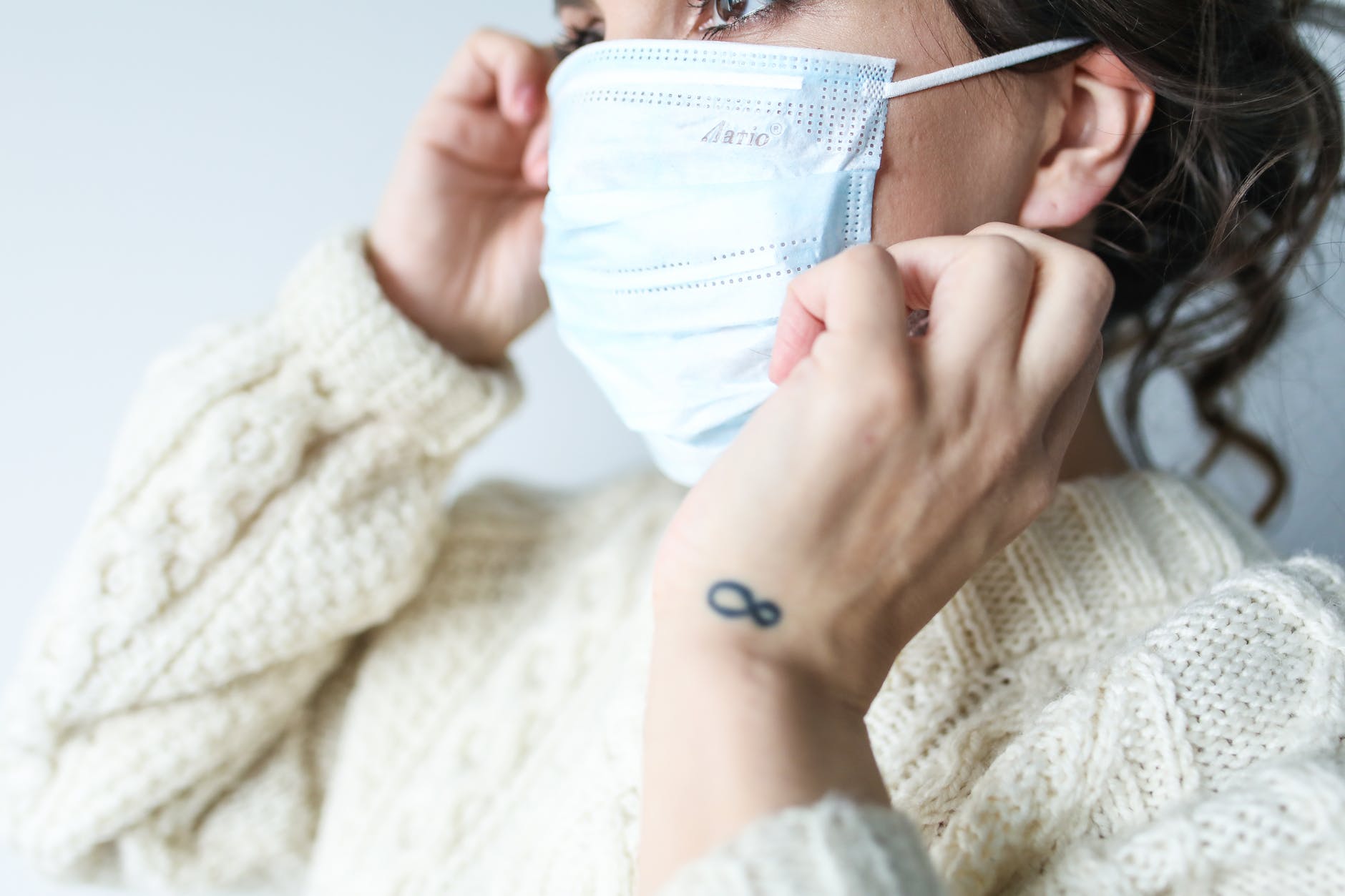
woman wearing face mask

Photo by Polina Tankilevitch on Pexels.com

This past week I attended the annual conference of the International Center for Academic Integrity in Portland, OR. Participants shared news stories and websites such as Worldometer Coronavirus, which gives daily updates on COVID-19. During our stay last week, both California and Washington states, which flank Oregon to the south and north respectively, declared states of emergency. And on the last day of the conference, Oregon followed suit, as many of us headed to the airport for our already scheduled flights home.

We followed news stories with interest about large schools such as Washington State University closed to undertake “deep cleaning”. Within days it became clear that the university would not be re-opening for on campus classes, but instead would be moving all spring classes online, effective immediately.

An abrupt shift to online learning at this scale is unheard of in the history of education. No doubt educational historians of the future will look back on this as a pivotal and challenging time in terms of a rapid re-think of education, with online learning being seen as a viable alternative at a time of this global health crisis. Resources such as this one from the Chronicle of Higher education are quickly popping up about how schools and educators can move to online learning quickly.  As one news report points out, there are implications for academic integrity when teaching and learning approaches shift dramatically in a short time.

Proctoring services are available for online exams, but they are not free. Instructors who lack skills and experience with online teaching may find themselves at a loss with how to re-design assessments such as quizzes and tests that they have only ever given in a face-to-face classroom. Students may find themselves confused and frustrated as their learning environments and assignments change quickly and without sufficient communication about what is expected of them.

There is no doubt that institutions that choose to move away from traditional classroom-based learning to online learning quickly will experience growing pains, but hope is not lost. As this article from a group of researchers at the University of Maryland University College reminds us, academic misconduct is not necessarily more prevalent in online courses. It is important to keep the focus on teaching and learning, rather than on cheating, as Tricia Bertram Gallant points out.

In this paper I wrote with some graduate students a few years ago, we offer practical tips to take pro-active approaches to upholding academic integrity. Many of the ideas can be used in online courses.

The key thing to remember is that as educators, our focus should always be on  students’ learning. If you find yourself in a situation where you are moving to an online environment very quickly, it is OK to tell students that you are learning as you go, too. Remind them that you are all part of a learning community together and you are there to support them.

Even if the world is shifting rapidly around us, teachers are in a unique position to encourage students and help them focus on the positive. Convey through your words and actions a sense of calm to reassure learners that you are still focussed on helping them learn in ways that are productive and future-focused. The world may be changing quickly, but the fundamental values that underpin academic integrity can continue to guide us in times of uncertainty:

Courage

Have the courage to talk about COVID-19 and how it is impacting teaching and learning at your school. Share facts, and have courageous conversations. COVID-19 presents learning opportunities not only about the virus itself, but also about prevention, and impact. If students are feeling anxious or scared, that is normal. Have the courage to acknowledge the mental health impacts and reassure students that it is OK to feel unsure or overwhelmed. Also, have the courage to share facts. Now is also a great time to talk about fake news and how to look for accuracy in news reports.

Fairness

In times of crisis may be fairer to incorporate some flexibility into how you assess your students, as well as how you handle the impact of trauma on students’ lives. If learners find themselves quarantined or personally know people who have been affected by the virus, they may be experiencing trauma. Take this into account when you interact with them.

Honesty

Be honest with your learners if you find yourself in a position of having to teach online for the very first time with no preparation. Sometimes being vulnerable with your students can help them to understand that you are human, too.

Respect

As institutions and educational bodies make decisions quickly in a rapidly changing environment, it is important to respect those decisions. Avoid openly criticizing decision-makers who are also trying to do their best in a situation they have never faced before. Instead, honour their decisions by adapting as quickly as you can, as best as you can. Remind students that they also show respect by adapting. Be patient with questions and remind students that you still expect them to conduct themselves respectfully even if learning happens in a virtual classroom.

Responsibility

As an educators, we have a responsibility to lead by example. Remind students of what their learning responsibilities are. Take the time to explain your expectations of them, even if classes are quickly moving to an online environment. Let them know you still expect them to be responsible for their learning, but also show compassion if they are experiencing trauma or anxiety.

Trust

It is important to trust that your students are doing the best they can; and so are their parents, school administrators and everyone else. Trust that things will get better. Trust in yourself as an educator.

As an educator, you’ve got what it takes to see your students through this!

Related post:

COVID-19, Contract Cheating and Academic Integrity in Online Courses: What you need to know https://wp.me/pNAh3-2rx

______________________________________________________

Share or Tweet this: The Impact of COVID-19 on Academic Integrity https://wp.me/pNAh3-2ra

This blog has had over 2 million views thanks to readers like you. If you enjoyed this post, please “like” it or share it on social media. Thanks!

Sarah Elaine Eaton is a faculty member in the Werklund School of Education, and the Educational Leader in Residence, Academic Integrity, University of Calgary, Canada. Opinions are my own and do not represent those of the University of Calgary.