 Excited to share this long-overdue annotated bibliography. We started working on this one a while ago and then COVID hit. We are excited to have completed this and be able to share this with you. We hope it will be particularly helpful for those studying academic integrity in STEM fields.
Eaton, S.E., Crossman, K., & Anselmo, L. (2021). Plagiarism in Engineering Programs: An Annotated Bibliography. Calgary, University of Calgary. http://hdl.handle.net/1880/112969
Purpose
This report documents research and related materials concerning plagiarism in STEM and engineering programs to inform and guide future work in the field. It provides an overview of the literature up to and including 2019 related to plagiarism in STEM and engineering programs.
Methods
Two research questions guided this literature review: 1. What scholarly, research, and professional literature explores and examines plagiarism in STEM and engineering programs? 2. What major themes emerge from scholarly and research literature about plagiarism in engineering? To this end, a methodical research of databases was undertaken, relevant research was compiled, and articles were summarized and categorized.
Results
Our review and search of the literature resulted in more than 30 sources, which we organized into 7 categories: (a) Background: AI in engineering; (b) student perceptions and attitudes; (c) faculty perceptions and attitudes; (d) cheating and collusion; (e) text-matching software and plagiarism detection; (f) international students and (g) interventions and reparations.
We found that plagiarism in STEM and engineering, as in other fields, is widespread among students and faculty, while policies and their implementation are often inconsistent. Calls for clearer guidelines and greater support for students and faculty resound as a consistent theme in the literature.
Implications
Plagiarism in STEM and engineering research has been slow to develop, but is a continuing field of growth. As more stakeholders become aware of the scope and complexities of plagiarism, many researchers are making recommendations for policy, policy implementation, and support through technology, education, and intervention programs.
Additional materials: 36 References
Keywords: Academic integrity, academic dishonesty, academic misconduct, plagiarism, cheating, engineering
_____
Share or Tweet this: Plagiarism in Engineering Programs: An Annotated Bibliography – https://drsaraheaton.wordpress.com/2021/01/13/plagiarism-in-engineering-programs-an-annotated-bibliography/
This blog has had over 2 million views thanks to readers like you. If you enjoyed this post, please “like” it or share it on social media. Thanks!
Sarah Elaine Eaton, PhD, is a faculty member in the Werklund School of Education, and the Educational Leader in Residence, Academic Integrity, University of Calgary, Canada. Opinions are my own and do not represent those of the University of Calgary.


 Posted by Sarah Elaine Eaton, Ph.D.
  We are excited to share this new article:
 This session will bring to fore (or highlight) the oft-neglected discord between equity and integrity in high-stakes standardized language tests. The equity issues surrounding these so-called standardized language tests can potentially precipitate and predispose academic dishonesty. This presentation will discuss the ramifications of inherent inequities in high stakes language proficiency tests for academic integrity and will call for a more critical consideration of commercialized high stakes language tests. Redressing equity issues in language assessment can serve to promote academic integrity and reduce academic dishonesty.
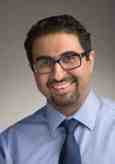 Ismaeil Fazel is a Lecturer at the Faculty of Education of Simon Fraser University. He has a PhD in TESL and a sub-specialization in Measurement and Evaluation from the University of British Columbia. His main research interests include English for Academic and Professional Purposes, academic discourse socialization, and language assessment. His publications have appeared in the Journal of English for Academic Purposes, English for Specific Purposes Journal, and TESL Canada Journal, among others.
 Soroush Sabbaghan is a Senior Instructor at the Werklund School of Education at the University of Calgary. He holds two PhDs, one in TESL and the other in Curriculum and Learning with a focus in Mathematics Education. His main research interests include language and mathematics education of bilingual and multilinguals, Language Learning and Technology, and ecological complexity discourses. He has publications in both Language and mathematics education journals and books.
 The latest article in our project,

 Learning, Teaching and Leadership
You must be logged in to post a comment.