COVID-19, Contract Cheating and Academic Integrity in Online Courses: What you need to know

March 16, 2020
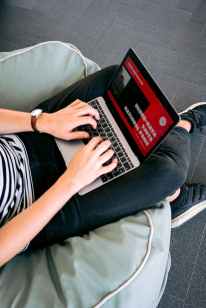
man creating a presentation on laptop

Photo by Canva Studio on Pexels.com

With the increased response to COVID-19 there has been a concurrent escalation in predatory and unethical practices such as price gouging on hand sanitizer and cleaning products on Amazon and online books suddenly popping up for sale about COVID-19, with material entirely plagiarized from free online news sources.

Of particular concern for academic integrity has been a notable spike in aggressive contract cheating marketing. To stay focused on teaching and learning, here are some strategies to help:

Talk to your students about academic integrity.

Emphasize that it is important for them not to engage with any third party offering “help”. Be straight with your students: Contract cheating and “homework help” companies do not care about students! Educators and family members care about students. Tell your students: “Do not hire a third party to complete your academic work for you. Ever!”

Remind students not to give their login credentials for learning management system (LMS) to anyone.

We know that contact cheating companies pay students in exchange for their login credentials. The companies then go in and harvest whatever they can – notes, slide decks, exemplars from previous students, and whatever else they can find. They will do this for every course the student is registered in, plus any previous courses to which the student still has access. Downloading this material takes only a few minutes. The companies then re-sell these items on their own websites.

Refrain from posting sample work from previous students!

Because of the predatory nature of contract cheating companies, I recommend that you avoid posting examples of students’ work anywhere online, even with their permission. If you wish to share examples of work, do it during a live synchronous session by sharing your own screen. Do not share entire papers this way, but rather a couple of pages, preferably with random sections redacted.

This way students can still get an idea of what a model paper looks like, while simultaneously engaging in conversation with you about your expectations for the assignment.

This does not prevent people from downloading the work because a motivated individual could still take screen shots and share them; but it does make unauthorized or predatory re-sharing more difficult.

Align your teaching practices with what your institution already has in place.

Many institutions have, or are rapidly developing, resources to help instructors. Now is not the time to create your own personal honor code and require students to sign it. That could cause issues of unfair assessment or unanticipated appeals later on. If your institution does not have what you are looking for, ask them for it, or better yet, work with colleagues to develop it.

Although you may be worried about students cheating in online courses, rest assured that there is plenty of highly credible evidence to support that there is not necessarily more cheating in online courses. (See Harris et al., 2019, for very recent research on this topic.) What we DO need to be prepared for though, is a barrage of companies who want to prey on our learners at a time of rapid change and vulnerability. Now is the time to exercise care and caution. Protect your learners from predators!

Related posts:

The Impact of COVID-19 on Academic Integrity https://wp.me/pNAh3-2ra

How to Deal with Contract Cheating: A Collection of Resources – https://wp.me/pNAh3-2u5

______________________________________________________

Share or Tweet this: COVID-19, Contract Cheating and Academic Integrity in Online Courses: What you need to know https://wp.me/pNAh3-2rx

This blog has had over 2 million views thanks to readers like you. If you enjoyed this post, please “like” it or share it on social media. Thanks!

Sarah Elaine Eaton is a faculty member in the Werklund School of Education, and the Educational Leader in Residence, Academic Integrity, University of Calgary, Canada. Opinions are my own and do not represent those of the University of Calgary.


The Impact of COVID-19 on Academic Integrity

March 10, 2020
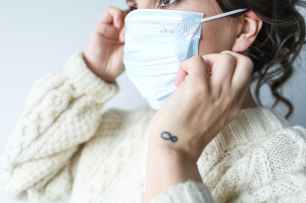
woman wearing face mask

Photo by Polina Tankilevitch on Pexels.com

This past week I attended the annual conference of the International Center for Academic Integrity in Portland, OR. Participants shared news stories and websites such as Worldometer Coronavirus, which gives daily updates on COVID-19. During our stay last week, both California and Washington states, which flank Oregon to the south and north respectively, declared states of emergency. And on the last day of the conference, Oregon followed suit, as many of us headed to the airport for our already scheduled flights home.

We followed news stories with interest about large schools such as Washington State University closed to undertake “deep cleaning”. Within days it became clear that the university would not be re-opening for on campus classes, but instead would be moving all spring classes online, effective immediately.

An abrupt shift to online learning at this scale is unheard of in the history of education. No doubt educational historians of the future will look back on this as a pivotal and challenging time in terms of a rapid re-think of education, with online learning being seen as a viable alternative at a time of this global health crisis. Resources such as this one from the Chronicle of Higher education are quickly popping up about how schools and educators can move to online learning quickly.  As one news report points out, there are implications for academic integrity when teaching and learning approaches shift dramatically in a short time.

Proctoring services are available for online exams, but they are not free. Instructors who lack skills and experience with online teaching may find themselves at a loss with how to re-design assessments such as quizzes and tests that they have only ever given in a face-to-face classroom. Students may find themselves confused and frustrated as their learning environments and assignments change quickly and without sufficient communication about what is expected of them.

There is no doubt that institutions that choose to move away from traditional classroom-based learning to online learning quickly will experience growing pains, but hope is not lost. As this article from a group of researchers at the University of Maryland University College reminds us, academic misconduct is not necessarily more prevalent in online courses. It is important to keep the focus on teaching and learning, rather than on cheating, as Tricia Bertram Gallant points out.

In this paper I wrote with some graduate students a few years ago, we offer practical tips to take pro-active approaches to upholding academic integrity. Many of the ideas can be used in online courses.

The key thing to remember is that as educators, our focus should always be on  students’ learning. If you find yourself in a situation where you are moving to an online environment very quickly, it is OK to tell students that you are learning as you go, too. Remind them that you are all part of a learning community together and you are there to support them.

Even if the world is shifting rapidly around us, teachers are in a unique position to encourage students and help them focus on the positive. Convey through your words and actions a sense of calm to reassure learners that you are still focussed on helping them learn in ways that are productive and future-focused. The world may be changing quickly, but the fundamental values that underpin academic integrity can continue to guide us in times of uncertainty:

Courage

Have the courage to talk about COVID-19 and how it is impacting teaching and learning at your school. Share facts, and have courageous conversations. COVID-19 presents learning opportunities not only about the virus itself, but also about prevention, and impact. If students are feeling anxious or scared, that is normal. Have the courage to acknowledge the mental health impacts and reassure students that it is OK to feel unsure or overwhelmed. Also, have the courage to share facts. Now is also a great time to talk about fake news and how to look for accuracy in news reports.

Fairness

In times of crisis may be fairer to incorporate some flexibility into how you assess your students, as well as how you handle the impact of trauma on students’ lives. If learners find themselves quarantined or personally know people who have been affected by the virus, they may be experiencing trauma. Take this into account when you interact with them.

Honesty

Be honest with your learners if you find yourself in a position of having to teach online for the very first time with no preparation. Sometimes being vulnerable with your students can help them to understand that you are human, too.

Respect

As institutions and educational bodies make decisions quickly in a rapidly changing environment, it is important to respect those decisions. Avoid openly criticizing decision-makers who are also trying to do their best in a situation they have never faced before. Instead, honour their decisions by adapting as quickly as you can, as best as you can. Remind students that they also show respect by adapting. Be patient with questions and remind students that you still expect them to conduct themselves respectfully even if learning happens in a virtual classroom.

Responsibility

As an educators, we have a responsibility to lead by example. Remind students of what their learning responsibilities are. Take the time to explain your expectations of them, even if classes are quickly moving to an online environment. Let them know you still expect them to be responsible for their learning, but also show compassion if they are experiencing trauma or anxiety.

Trust

It is important to trust that your students are doing the best they can; and so are their parents, school administrators and everyone else. Trust that things will get better. Trust in yourself as an educator.

As an educator, you’ve got what it takes to see your students through this!

Related post:

COVID-19, Contract Cheating and Academic Integrity in Online Courses: What you need to know https://wp.me/pNAh3-2rx

______________________________________________________

Share or Tweet this: The Impact of COVID-19 on Academic Integrity https://wp.me/pNAh3-2ra

This blog has had over 2 million views thanks to readers like you. If you enjoyed this post, please “like” it or share it on social media. Thanks!

Sarah Elaine Eaton is a faculty member in the Werklund School of Education, and the Educational Leader in Residence, Academic Integrity, University of Calgary, Canada. Opinions are my own and do not represent those of the University of Calgary.


2021 Canadian Symposium on Academic Integrity

February 21, 2020

I am excited to share that our friends at Thompson Rivers University (TRU) have released the dates for the 2021 Canadian Symposium on Academic Integrity! Mark your calendar for June 22-23, 2021 so you can join us in beautiful Kamloops, British Columbia (BC).

This will be the 2nd Canadian symposium. The first one was hosted by the University of Calgary in 2019. You can see an archive of presentations here. The next symposium promises to be even better. I can’t wait to attend and I hope to see you there!

Related posts:

______________________________________________________

Share or Tweet this: 2021 Canadian Symposium on Academic Integrity https://wp.me/pNAh3-2r4

This blog has had over 2 million views thanks to readers like you. If you enjoyed this post, please “like” it or share it on social media. Thanks!

Sarah Elaine Eaton is a faculty member in the Werklund School of Education, and the Educational Leader in Residence, Academic Integrity, University of Calgary, Canada. Opinions are my own and do not represent those of the University of Calgary.


Alberta Council on Academic Integrity: Spring 2020 Meeting

February 18, 2020

I am excited to share that the Alberta Council on Academic Integrity is planning its spring 2020 meeting!

The council was created in 2019 following the Canadian Symposium on Academic Integrity. We are comprised of a group of like-minded individuals committed to supporting academic integrity in Alberta. The council hosted its inaugural meeting in August 2019 at the University of Calgary, followed by a second meeting in October at Norquest College.

Our work is aligned with other provincial groups such as the Academic Integrity Council of Ontario (AICO), the Manitoba Academic Integrity Network (MAIN), and the BC Academic Integrity Day.

Steering Committee

There are a number of individuals committed to guiding the work of the council as it develops in its first few years. (Members listed alphabetically by institution):

  • Margaret Toye, Bow Valley College
  • Melanie (Mel) Hamilton, Lethbridge College
  • Marg Olfert, Mount Royal University
  • Nazanin Teymouri, Norquest College
  • Sheryl Boisvert, Norquest College
  • Cheryl Kier, Athabasca University
  • Sarah Elaine Eaton, University of Calgary

Lethbridge College will host the spring meeting on April 24, 2020. This will be an important meeting as we will seek approval on our council’s charter, which was presented in draft form at the fall 2019 meeting.We welcome colleagues from Alberta post-secondary institutions to join us in Lethbridge. At this point, participation is limited to those working at a recognized Alberta educational institution.

For questions about the spring meeting, contact Melanie Hamilton, Lethbridge College – melanie.hamilton (at) lethbridgecollege (dot) ca

Registration is required. Click here to register.

______________________________________________________

Share or Tweet this: Alberta Council on Academic Integrity: Spring 2020 Meeting

This blog has had over 2 million views thanks to readers like you. If you enjoyed this post, please “like” it or share it on social media. Thanks!

Sarah Elaine Eaton is a faculty member in the Werklund School of Education, and the Educational Leader in Residence, Academic Integrity, University of Calgary, Canada. Opinions are my own and do not represent those of the University of Calgary.


Workshop: Teaching for and with integrity

February 10, 2020

Screen Shot 2020-02-05 at 7.18.28 AMJoin Natasha Kenny and me for this interactive and engaging workshop at the University of Calgary.

Teaching for and with integrity

February 25, 2020

1:00 p.m. – 2:30 p.m.

Click on this link to register. Workshop location (room) is provided in the registration confirmation. No cost to attend. All are welcome.

Workshop Description

Academic integrity is fundamental to the value, role and function of universities. How is academic integrity demonstrated in our teaching and learning environments?

Join us for an interactive and insightful workshop focused on positive aspects of supporting academic integrity from a teaching and learning perspective.

Learning outcomes

In this session participants will:

  • Explore what academic integrity is in a postsecondary context
  • Evaluate teaching and learning practices that support or hinder academic integrity
  • Reflect on fundamental values of academic integrity and how they are reflected throughout the academic community.

We are excited to engage members of our campus community in this work. In the spirit of taking a multi-stakeholder approach to academic integrity, welcome academic staff (of all ranks), teaching assistants, staff, students and others who are interested to join us for this workshop.

This workshop is just one aspect of our ongoing commitment to build a campus culture of academic integrity. We look forward to engaging with you at this event. If you have any questions about academic integrity initiatives at the University of Calgary, contact Sarah Elaine Eaton.

______________________________________________________

Share or Tweet this: Workshop: Teaching for and with integrity

This blog has had over 2 million views thanks to readers like you. If you enjoyed this post, please “like” it or share it on social media. Thanks!

Sarah Elaine Eaton is a faculty member in the Werklund School of Education, and the Educational Leader in Residence, Academic Integrity, University of Calgary, Canada. Opinions are my own and do not represent those of the University of Calgary.