What is the International Adult Literacy Skills Survey (IALSS)? A Canadian perspective

May 1, 2011

IALS was a ground-breaking, trans-national survey of adults “designed to profile and explore the literacy distributions among participating countries. It was a collaborative effort involving several international organizations, intergovernmental agencies, and national governments.” (Kirsch, 2001).

Known as both the International Adult Literacy Survey (IALS) the name used by the Organisation for Economic Co-operation and Development (OECD) and Human Resources Development Canada (HRDC), 1997),  became later known as the International Adult Literacy and Skills Survey (IALSS) (Statistics Canada, 2005b).

They were, in effect, two different surveys. The first was developed in the late 1990s and the second in the early years of the new millennium. Both have been used extensively in literacy research, both at the provincial and federal levels in Canada. We find references to them in documents dating back to 1998:

  • Ministry of Training Colleges and Universities (Ontario), 1998
  • Yamamoto & Kirsch, 2002
  • D. Willms, 2003
  • Statistics Canada, 2005
  • J. D. Willms & Murray, 2007
  • Murray, 2009 and Murray, et al., 2009

IALSS offers 5 general benchmarks for literacy:

Level one – Basic identification of words and numbers. Basic decoding.

Level two – Identifying words and numbers in a context and being able to respond with simple information e.g. Being able to fill in a form.

Level three – Identify, understand, synthesize and respond to information. Be able to match given information which corresponds to a question. This level corresponds roughly with high school completion levels.

Level four – Have sufficient skills to decode, comprehend, synthesize and interpret information and respond accordingly. Higher level skills in understanding and interpreting information, responding and problem solving.

Level five – Understand and verify the sufficiency of the information, synthesize, interpret, analyze and discuss the information. Sophisticated skills in handling information.

Adapted from: Kirsch (2001) and Statistics Canada (2005) and Alberta Advanced Education and Technology (2009)

The 2003 version of IALSS “tested more than 23,000 Canadians on their proficiency in four domains: prose literacy, document literacy, numeracy and problem-solving.”

IALSS is an asset-based framework. It measures what people can do, rather than what their deficiencies are. The Statistics Canada website says:

The IALSS did not measure the absence of competence. Rather it measured knowledge and skills in the four domains across a range of abilities. Consequently, the results cannot be used to classify population groups as either “literate” or “illiterate”.

Put another way, IALSS is not intended to classify people as either illiterate or literate, but rather to conceptualize proficiency along a continuum that denotes “how well adults use information to function in society and the economy” (Statistics Canada, 2005a).

IALSS allows us to understand literacy in a functional way.

“The 2003 International Adult Literacy and Skills Survey found a clear link between proficiency in literacy and an individual’s employability. People with low proficiency in literacy tend to have lower rates of employment, and they tend to work in occupations with lower skill requirements.” (Statistics Canada, 2005b)

Because of IALLS we can start to correlate what literacy skills mean in economic and employability terms.

IALSS has become such a common way of understanding literacy skills that often when researchers and other experts talk about “literacy scores”, what they are referring to is IALSS. For example, T. Scott Murray and his team of researchers assert that “Literacy is economically and socially important to individuals, with differences in literacy score explaining a significant proportion of social inequality in a range of outcomes.” (Murray, et al., 2009, p. 3).

IALSS offers a breakthrough approach, gives us a way to understand literacy in a broader context. Because of its scope and the fact that it values skills rather than pointing deficiencies, it’s applicability extends beyond literacy itself.

References

Alberta Advanced Education and Technology. (2009). Living Literacy: A Literacy Framework for Alberta’s Next Generation Economy.

Kirsch, I. (2001). The International Adult Literacy Survey (IALS): Understanding What Was Measured: Educational Testing Service (ETS).

Ministry of Training Colleges and Universities (Ontario). (1998). Adult Literacy in Ontario: The International Adult Literacy Survey Results.   Retrieved October 18, 2009, from http://www.nald.ca/library/research/ontario/cover.htm

Murray, T. S. (2009). Understanding  literacy markets in  Alberta: What a segmentation  analysis reveals.

Murray, T. S., McCracken, M., Willms, D., Jones, S., Shillington, R., & Stucker, J. (2009). Addressing Canada’s Literacy Challenge: A Cost/ Benefit Analysis.   Retrieved October 20, 2009, from http://www.nald.ca/library/research/cost_benefit/cover.htm

Organisation for Economic Co-operation and Development / Organisation de Coopération et de Développement Economiques, & Human Resources Development Canada. (1997). Literacy Skill for the Knowledge Society: Further results of the International Adult Literacy Survey. Paris and Ottawa.

Statistics Canada. (2005a). International Adult Literacy and Skills Survey.   Retrieved November 20, 2009, from http://www.statcan.gc.ca/daily-quotidien/051109/dq051109a-eng.htm

Statistics Canada. (2005b). International Adult Literacy and Skills Survey: Building on our competencies.   Retrieved November 15, 2009, from http://www.statcan.gc.ca/daily-quotidien/051130/dq051130b-eng.htm

Willms, D. (2003). Literacy proficiency of youth: evidence of converging socioeconomic gradients. International Journal of Educational Research, 39(3), 247-252.

Willms, J. D., & Murray, T. S. (2007). Gaining and Losing Literacy Skills Over the Lifecourse.   Retrieved October 20, 2009, from http://www.nald.ca/library/research/gaining/cover.htm

Yamamoto, K., & Kirsch, I. (2002). Scaling TOWES and Linking to IALS. Calgary: Bow Valley College.

To learn more about asset-based frameworks, check out these related posts:

_______________

Share this post:  What is the International Adult Literacy Skills Survey (IALSS)? A Canadian perspective http://wp.me/pNAh3-E3

Update – January 2018 – This blog has had over 1.8 million views thanks to readers like you. If you enjoyed this post, please “like” it or share it on social media. Thanks!

Sarah Elaine Eaton is a faculty member in the Werklund School of Education, University of Calgary, Canada.


How to Get a Spectacular Speaker for Your Next Literacy or Language PD Event

April 26, 2011

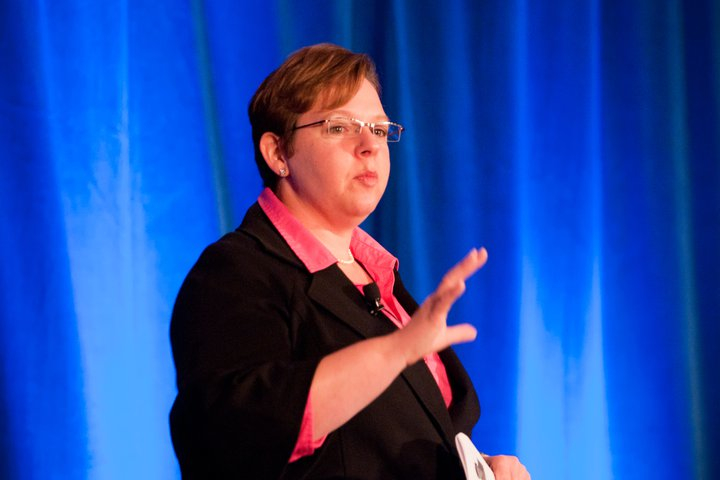
Sarah Elaine Eaton - Ontario Literacy Conference speaker 2010I’ve had some conversations recently with colleagues looking for speakers for conferences, professional development (PD) events or workshops. They’ve said that they don’t really know where to start looking and find themselves in that classic quandary… “We need someone good… Really, really good… And we have a limited budget!” Where to start?

In 2010 I was inducted into the Canadian Association of Professional Speakers (CAPS) and I realized that there’s a big gap, a chasm almost, between the world of corporate meeting planners and the non-profit volunteer conference organizing committees. I talk to dozens of professional speakers who are aching to speak at more non-profit and educational events… and volunteer organizers who just don’t know where to find great speakers. There must be a way to get both groups connected!

Here are some tips that may help…

Decide on your budget

Whether you’re working with an entire committee or you’re one person charged with the responsibility of finding an amazing speaker, you’ll want to figure out how much you have to spend. Your budget will generally include two parts:

  • Speaking fee
  • Travel and accommodation

Some speakers have an “all in” fee that includes travel, meals and accommodation. Keynote speeches for non-profit events start at about $500 and go up to $10,000. The fee is often a combination of what the organization can afford and the speaker’s rates. $5000 for a keynote speaking fee is about average, but there is a great deal of variance.

Prospective clients sometimes ask me if I will speak for free. The answer is yes, but there are some rules.

Have a clear idea of what kind of speaker you want

Every event wants someone “good”, but what does that mean to you? Do you want your speaker to entertain, educate or both? Usually, it’s a good idea to get someone who is knowledgeable or an advocate of your subject area. Don’t get in a mechanics expert for a group of literacy practitioners. Make sure your speaker has either worked in the field or is a champion of it.

Beware of the “I need to work” types who will claim to be a supporter of your cause just because they need a gig. A quick Google search can help you figure out who’s really in your corner.

Use your networks to find good speakers

Ask your colleagues, teachers and others for recommendations. Keynoters often get work due to referrals and word of mouth. Don’t be afraid to ask people around you who comes to mind when they think of an engaging presenter. Use professional listservs, Twitter and other social media to get recommendations, too.Auditorum seats

Put out a call for keynotes or plenary speakers

Conferences put out calls for presenters, but don’t often do the same for keynotes or plenaries because they fear that the quality of those who might apply would be lower than if they conducted the search themselves. That’s kind of like saying that a university only accepts students they seek out and they don’t accept applications. Putting out a call for keynotes is a great way to find high quality speakers who are building a reputation – particularly if your budget is very limited. Do an RFP (Request for Proposals) and be clear in your call what fee range you’re looking for, then speakers who are working in that range are likely to apply.

Check out your local professional speaking organization

Really, professional speakers are not as expensive as you may think! There is a stereotype about professional speakers that they have a certain approach (a la Tony Robbins, for example). While it’s true that there are many motivational or inspirational professional speakers, there are also hundreds who specialize in speaking to non-profit and educational audiences.

Professional speaking organizations are usually national organizations. Members must meet a strict set of professional criteria (such as a minimum number of paid speaking engagements per year, letters of reference, etc.) before being inducted into a major national organization. These big organizations are often divided further into state or provincial chapters.

Look for evidence of past success

Good speakers have a track record of success.

In the United States, it is pretty much de rigueur that speakers will have a demo video in the form of a CD, a DVD or a YouTube video. In Canada this may be true for corporate speakers, but has yet to fully catch on for non-profit and philanthropic speakers.

At the very least, a speaker should have testimonials and a list of past clients. Ask for recommendations. Check for a calendar of past or upcoming events. With or without a video, a good indicator of success is a full speaking schedule.

Travel and Accommodation

If there’s one thing that is non-negotiable, it’s travel and accommodation. Your speaker may have traveled all day to get to your event. A hot shower, a clean room and a good meal are a relief after a long day of travel.

Having a greeter at the airport is a nice touch that many non-profit conference organizers overlook.

If you’re trying to save on costs, here’s a tip: Hotel food is often high in calories and not very interesting. Many speakers will appreciate a home cooked meal at the home of a conference organizer. This gives your speaker a chance to get to know you and enjoy some social time.

Allow speaker product sales

I’m baffled by conferences that require speakers to rent a booth in order to sell their products. I suspect that thousands, if not tens of thousands of dollars a year are lost at non-profit events because the conference has a policy against product sales. Unless the speaker travels with an assistant, they likely won’t have the time to set up a booth and sell product.

An experienced speaker will likely be busy reviewing their notes or doing other preparations before the presentation – as they should. Once a speaker factors in the cost of a booth, plus the cost of an assistant to set up that booth and sell the product, most, if not all of the revenue they would have made is gone. So, speakers abide by conference policies and leave their books, workbooks, CDs and DVDs at home.

A better option: Set up a table at the back of the room where the speaker is giving his or her presentation. Have a conference volunteer work at that table in exchange for a percentage of the gross sales (20% to 30% of total sales is common). If a speaker sells $500 in books and splits the revenue 70/30 with the conference, then the conference makes $150. The speaker takes away $350, from which he or she will need to pay the costs of production (book printing), packaging and shipping. In the end, it works out to a pretty fair split.

Develop a relationship with your speaker

Don’t think of this as one-time gig. This is your opportunity to develop an on-going relationship with someone. Your speaker may help to promote your event by posting about it on Twitter, Facebook or other social media. They may mention you on their blog or find other ways to drive traffic to your website and positive attention to your organization. Non-profit speakers usually have a deep emotional attachment to their field. They want to get to know you and those you serve. If you develop a relationship, that same person may join you again for future events. Figure out how you can help each other succeed and I guarantee you that you’ll get quality speakers that your audiences will love.

_____________

Share this post: How to Get a Spectacular Speaker for Your Next Literacy or Language PD Event http://wp.me/pNAh3-Di

Update – January 2018 – This blog has had over 1.8 million views thanks to readers like you. If you enjoyed this post, please “like” it or share it on social media. Thanks!

Sarah Elaine Eaton is a faculty member in the Werklund School of Education, University of Calgary, Canada.


Panel Speaker at Metropolis 2011 – Vancouver, British Columbia

March 14, 2011

If you’re in Vancouver, BC, come and join us at the Metropolis 2011: Bringing the World to Canada, March 23-26 at the Sheraton Vancouver Wall Centre.

This National Metropolis Conference focuses on “the role of immigration in connecting Canada with the rest of the world.” Organizers are expecting over 1000 participants from Canada and abroad. The main conference website says:

A recent report by Statistics Canada projects that, by 2031, at least one in four Canadians will have been born in another country. With this remarkable feature of our society as a backdrop, the conference will discuss the scale and nature of Canada’s immigration system and the policies and practices that have emerged to foster the socio-economic inclusion of new Canadians. Immigration and emigration are transforming the populations of most countries, and in this conference we will consider the place of Canada in this global process by asking speakers from elsewhere in the world to explain the migration and integration dynamics of their regions, thereby allowing us to understand better the effects of these trends on Canada.

I’m delighted to be speaking on a panel on Saturday, March 26. Here are the details:

E4 WORKSHOP | ATELIER (English | Anglais) Junior Ballroom D – Level 3 – North Tower | Niveau 3 – Tour Nord

Family Literacy and the New Canadian

This Workshop will bring together a panel of language experts from across Canada that will outline the importance and value of heritage / international languages and illustrate how schools, academics, community organizations and government policies can assist in maintaining and developing the multiple literacies of all Canadians.

Organizer | Organisateur
Bernard Bouska, Canadian Languages Association
Khatoune Temisjian, Québec Heritage Languages Association / Association québécoise des langues d’origine

Participants

Sarah Eaton, University of Calgary
Formal, Non-Formal and Informal Learning: The Case of Literacy, Essential Skills and Language Learning in Canada

Maria Makrakis, TESOL International and International Languages Educators’ Association (ILEA), Ontario
Language and Literacy for New Canadian Families

Constantine Ioannou, Government of Ontario
Ontario Schools and Communities Can Reflect the Languages of our Families

Khatoune Temisjian, Québec Heritage Languages Association / Association québécoise des langues d’origine
Literacy and Heritage/international Languages in Quebec: An Overview

Michael Embaie, Southern Alberta Heritage Languages Association (SAHLA)
Successful Implementation of Heritage / International Language Programs in Canada: Selected Strategies and Case-Studies

Chair | Modérateur
Marisa Romilly, Society For The Advancement of International Languages (SAIL British Columbia)

Discussant | Commentateur
Bernard Bouska, Canadian Languages Association

If you’re planning to attend the conference, please come and join us at the session!

_________________________

Share this post: Panel Speaker at the Metropolis Conference 2011 – Vancouver, British Columbia http://wp.me/pNAh3-A4

Update – January 2018 – This blog has had over 1.8 million views thanks to readers like you. If you enjoyed this post, please “like” it or share it on social media. Thanks!

Sarah Elaine Eaton is a faculty member in the Werklund School of Education, University of Calgary, Canada.


Interview with Sandy Hirtz: Leading by Example

February 16, 2011

The Literacy and Language Professionals Who Lead by Example Series is dedicated to highlighting the impact made by exemplary literacy and language professionals who lead by example. They share their inspirational tips and stories. Check out those who were honoured in the 2010 series.

I’m thrilled to start off the 2011 series by showcasing the work of a leader who works tirelessly from her home base in British Columbia, Canada. She’s a leader when it comes to literacy, technology and collaboration. A true inspiration!

What is your name, affiliation, and connection to language learning?

My name is Sandy Hirtz.  I am an independent e-learning and social media advisor. I primarily work from home juggling a plethora of projects. I moderate online forums for the BC Ministry of Education: Literacy branch, E-learning branch and Leadership branch.  I am involved in an Open Educational Resources for open schooling project with the Commonwealth of Learning.  I am project manager and editor of two books collaboratively authored by professionals from around the globe—Education for a Digital World, Edition 1 and soon to be released, Edition 2.0.

What are your thoughts about leadership and literacy?

I think the age-old philosophy of autonomous leadership is no longer adequate for dealing with the complex problems inherent in communities and organizations today. The current intensity and speed of globalization compounds the urgency of addressing the issue of literacy for all, especially among the poor and marginalized on as many fronts as possible.

As people concerned with education, literacy leaders have a critical role to play in fostering, supporting, encouraging and, above all, equipping learners with the values and skill-set necessary to be successful in the 21st century. What better way than by modeling and mirroring this world in our own practice.

Today’s leaders need to be tech savvy, think globally, collaborate, and create partnerships. They need to have the ability to anticipate, envision, maintain flexibility, think strategically, share responsibility, and build community.

In your opinion, what’s the most important aspect of a language or literacy professional’s job?

Raising literacy levels! Illiteracy is a critical problem that affects all corners of the earth. It has no boundaries and exists among every race and ethnicity, age group, and economic class. This silent epidemic threatens over 785 million adults worldwide; one in five adults is still not literate, two-thirds of them are women.

Improving literacy is a commitment to taking on a collaborative, cohesive, coordinated and holistic approach that involves families, communities, and government. It means taking the best of what is happening and making it accessible to all. It means looking at literacy as a lifelong skill. It means considering where and when we can best reach those in need of resources, training, and opportunities — in school, at work, at home, in healthcare environments, and in the community. Literacy is everybody’s business.

What are some of the projects you’ve been involved with that you would like to share?
BC Literacy Forum – advancing literacy and learning
The Literacy Forum showcases literacy initiative, innovation, experience, and best practice. Our goal is to engage in dialogue about literacy and improve literacy education.  Literacy is the key to opportunity for individuals, families, and communities. Come join us! If we band together, we can boost literacy levels from coast to coast to coast.

Community of Expertise in Educational Technology (CEET)
CEET is an online community for educators interested in teaching with technology.

Collaborative Authoring
Education for a Digital World: Advice, Guidelines, and Effective Practice from Around the Globe, was published by the Commonwealth of Learning and BCcampus in July 2008. It can be downloaded at the CoL website: http://www.col.org/digitalworld.
Education for a Digital World 2.0: Innovations in Education is being published by the Ministry of Education and will be available in print, pdf and as an e-book in March 2011.

The collaboratively authored books represent a shift in how educators are sharing their research, experiences and best practices in online teaching and learning. Facilitated completely through virtual interactions, this new model of authoring went beyond writing and editing to become an international effort in community building and professional growth.

Open Educational Resources for Open Schools An initiative of the Commonwealth of Learning in collaboration with the William and Flora Hewlett Foundation and Ministries of Education and Open Schools in Zambia, Lesotho, Namibia, Botswana, Seychelles and Trinidad and Tobago.

Professional Learning Potlucks

I host free and open Moodle Meets or Professional Learning Potlucks.  Ursula Franklin says that an analogy of the perfect society is a potluck supper. “A society in which all can contribute, and all can find friendship, that those who bring things, bring things that they do well and in the end there is a variety of things. All share their talents and all belong. ” Her analogy fits perfectly with these collaborative professional learning events.

What keeps you inspired?

Working collaboratively to create meaningful, relevant and accessible learning opportunities.  I envision a world classroom, whereby people from every country; regardless of age, color, race, gender or wealth, have equitable access to completely free, on demand, personalized education.

James Martin (The Meaning of the 21st Century: A Vital Blueprint for Ensuring Our Future) says the people of today will, “more than at any other time in history, make a spectacular difference to what happens this century – and there needs to be an absolute crusading determination to bring change about.” (James Martin, page 398).  It is change, and the promise of global unrestricted access to knowledge, that is inherent in my professional activities.

_______________

Share this post: Interview with Sandy Hirtz: Leading by Example http://wp.me/pNAh3-wP


How Literacy Programs Can use Webinars to Benefit Learners, Staff & Volunteers

January 28, 2011

The word webinar is being used today to refer to all kinds of online training and virtual presentations.

More and more literacy organizations are adding a component of e-learning to their programs. It’s the 21st century way to learn!

Webinars are relatively easy to put on. Some of the language is a bit different from face-to-face environments, so it’s helpful to know that instructors, facilitators and teachers are mostly referred to as “presenters” in the webinar environment. Learners and clients are generally called “participants”.

Both presenters and participants need some technology and computer literacy in order to take part in a webinar. Current teachers and facilitators may require some training before moving into an e-learning environment. Your participants may benefit from an orientation prior to the content to familiarize them with how webinars work.

Assuming that both parties have the technology literacy to move forward, here are some ideas on how you can make the most of webinar technology in your organization.

For Participants

Online group classes

Bring participants together in an e-learning class not only to teach them new content and skills, but also to learn how to work together in an online environment. You can build two of the Essential Skills at once: Computer Use and Working with Others.

Online tutoring

Do you have learners in rural and remote areas? Or single parents who find it hard to get a sitter? Online tutoring provides a way for otherwise isolated learners to connect with tutors from the comfort and convenience of their own home. This is a super way to reach out to people who might otherwise not engage with learning.

Information sessions

If you offer information sessions about your programs in a live setting (your office space, a public library or elsewhere), you can adapt your content and host virtual information sessions. Information sessions are for prospective students and have a slight marketing component. A word of caution though… don’t try to “sell” in a webinar. Instead, demonstrate your expertise and what makes you unique.

Orientation sessions

When you bring new learners into your physical space, do you give them an orientation on  what to expect and how things work there? Photos, maps, and other materials can also be used in an online environment to give a virtual orientation. Though I’m a big fan of doing live webinars, this is one that you could record and use over again.

Follow-up workshops

Webinars are a great way to keep relationships going once the opportunity for face-to-face interaction has passed. A value-added webinar one month after the course ends is a super way to stay connected. For example, if you have a work placement component in any of your programs, you can incorporate virtual sessions after work hours. Learners can share stories about their work experience and learn from one another. In cases where participants already know one another, the online interaction is usually fun and very dynamic.

For staff and volunteers

Volunteer information sessions

Do you like the idea of having virtual teachers or tutors? Then set the stage by offering online information sessions for prospective teachers and volunteers about your organization. Review the programs that you offer, the opportunities you and the benefits of working with your organization. This is a great time to have current staff members and volunteer tutors chime in with what they love about working with you!

Volunteer training

Do you train your staff in intensive sessions that jam in loads of information? You can break it up into a series of online training workshops. The material is easier to absorb if you divide it into “chunks”. If you have ongoing workshops, your volunteers get ongoing training, which keeps building their skills. As an organization, ongoing training for them means you give offering them something back for their time and expertise.

Staff development workshops

Do your staff currently get all their professional development at an annual conference? I love conferences because of the chance to connect with old friends. But wouldn’t it be great to offer ongoing training and development for your staff throughout the year? The cool thing about this is that you don’t have to organize all the sessions yourself. Check out the Centre for Interactive Learning and Collaboration (CILC). They specialize in  offering online PD for educators. They have literally hundreds of programs to choose from, ranging from free to expensive.

For the community

A Virtual Open House

Share what you do with the community, your stakeholders and donors through a virtual open house. Include photos of your facilities and your staff. A video that uses digital storytelling to celebrate the success of your learners makes it even more dynamic.

These are just a few ideas for literacy and language programs to use webinars in their organizations. I’m a big fan of using this technology in the non-profit and educational sectors. It offers a lot of value for everyone – staff, volunteers, learners and students, as well as community stake holders. How many non-profits still lag behind when it comes to their own technology literacy? Implementing the use of webinars positions your organization as a leader in terms of technology. You lead by example, showing others how virtual and online learning is an important part of 21st century of education and professional capacity building.

___________________

Share or Tweet this post: How Literacy Programs Can use Webinars to Benefit Learners, Staff & Volunteers http://wp.me/pNAh3-sE

Update – January 2018 – This blog has had over 1.8 million views thanks to readers like you. If you enjoyed this post, please “like” it or share it on social media. Thanks!

Sarah Elaine Eaton is a faculty member in the Werklund School of Education, University of Calgary, Canada.