Re-Released as a Free Open Access Resource: 101 Ways to Market Your Language Program (2002)

December 6, 2024

In 2002, I published the first edition of 101 Ways to Market Your Language Program. I have just re-released the book as a free open access resource under a Creative Commons (CC BY-NC-ND 4.0). The full book is now available as a free download.

How to cite this work:
Eaton, S. E. (2002/2024). 101 Ways to Market Your Language Program: A Practical Guide for Language Schools and Programs (2024 OA ed.). Eaton International Consulting Inc. https://hdl.handle.net/1880/120145

Abstract

2024 Re-release of the 2002 first edition of this book. The author and copyright holder has released this work under a Creative Commons (CC BY-NC-ND 4.0) license.

This book provides 101 ideas and strategies to empower overall marketing efforts: (1) “Put On Your Thinking Cap” (e.g., define the problem before marketing it, set reasonable goals, and create a niche); (2) “Secrets to Boost Your Marketing Power” (e.g., emphasize the benefits, check out the competition, and sell oneself in as many languages as possible); (3) “Marketing Materials: Tools and Tips to Do the Job Better” (e.g., make a brochure, get mentioned in other brochures, and make it easy to phone for information); (4) “Going Beyond the Basics to Increase Enrollment” (e.g, offer volume discounts and guarantees and give away tuition); (5) “Specialty Tips for Programs at Large Institutions” (e.g., make sure the Web site is easy to find, partner with other educational programs, and get the program mentioned in the calendar); (6) “The Power of People: A Human Touch to Increase Enrollment and Polish Your Image” (e.g., build loyalty with host families, establish win-win relationships, and follow exceptional service standards); (7) “Continue Marketing While Your Students are Enrolled” (e.g., meet students at the airport, partner with local businesses, and create happy memories); and (8) “How to Keep Marketing Once Your Program is Finished” (e.g., create an alumni network, review successes and failures, and plan ahead for next year).

Why Am I Re-Releasing This Work?

I have been invited to deliver the Werklund School of Education 2024-2025 Distinguished Research Lecture.

As part of the lead-up to the lecture, I have decided to make as much of my work as I can available as free, open access resources. This is recognition is a once-in-a-career kind of award and I’m working hard to make sure I can deliver. It is a hybrid public event and you can attend in person or online on March 20, 2025. If you’re interested, you can register here.

Since I am both the author and the copyright holder for this book, I can share it however I want. I am more committed now than ever to make as much of my work as possible freely available to others. Over the coming weeks, I’ll be sharing more links to more freely downloadable resources.

I am super grateful to the University of Calgary digital resources team who are helping me to archive these works.

If you know of someone working in second languages who could use a resource on marketing and recruitment for their program, feel free to share this with them.

________________________

Share this post: Re-released as a Free Open Access Resource: 101 Ways to Market Your Language Program (2002) – https://drsaraheaton.com/2024/12/06/re-released-as-a-free-open-access-resource-101-ways-to-market-your-language-program-2002/

This blog has had over 3 million views thanks to readers like you. If you enjoyed this post, please “like” it or share it on social media. Thanks!

Sarah Elaine Eaton, PhD, is a Professor and Research Chair in the Werklund School of Education at the University of Calgary, Canada. Opinions are my own and do not represent those of my employer.


5 Questions to ask before taking a contract teaching job in the languages or literacy field

April 24, 2014

Too many language and literacy professionals grovel for work. They’ll take teaching, editing or translating jobs that require long hours, lousy pay and poor working conditions because they are afraid that if they don’t they might not get another offer.

Nothing could be further from the truth. When you exude confidence to your school or the organization who is contracting you (e.g. the client), you earn their respect. Here are 5 questions to ask yourself when you are considering a contract job as a language or literacy professional:

Business - Group - team hands

#1: Will I like working with these people?

Let’s face it, people who work in languages and literacy often have a vested interest in the students or clients they serve. It’s not just the learners you want to think about though. How does the management treat its staff? If the Executive Director is a micro-manager and you are a big picture thinker, is that really going to be a good fit for you? If the office staff are miserable because they hate their jobs, are you really going to like working in that environment?

You owe it to yourself to find out what the people are like that you would be working with. If you get that nagging feeling that these folks aren’t “your peeps”, do yourself a favour and walk away. Chances are you’ll be miserable if you take the job. In the kind of work we do, people matter. At least, they should. If people don’t matter, why would you want to work there?

#2: How do the organization’s values align with my own?

This is a big one. You need to be honest with yourself about what matters to you deep down. If you believe that genuine effort, commitment and participation are the most meaningful aspects of learning, then you’d hate working in an organization that bases marks on standardized testing.

I was once raked over the coals by a department head because my final grades didn’t fit  onto a bell curve. My students’ marks were too high. It happened that it was a particularly good group of students.  The department head didn’t care. She wanted a statistically perfect bell curve for the final grades “to maintain the integrity of the department”. (Baloney. The integrity of a language teaching department can never be represented by a bell curve of marks.) I was told in no uncertain terms that the next semester my class record book needed to reflect grades that fit onto a standard bell curve. There was no “next” semester. I choose never to teach for them again.

If an organization’s values are not aligned with your own, you’ll hate the work and you’ll hate yourself for working there. Seek out schools and clients who believe what you believe.

#3: How are the working conditions?

Are you given your own desk or work space or are you required to share? Are the facilities where you work clean and sanitary? Is parking readily available (at a fair price)?

How are the psychological and emotional conditions of the workplace? Is there a culture of oppression? Do the folks who work there constantly feel demoralized, grumpy or stressed out?

I recall one client who didn’t pay their staff particularly well, but the “extras” they offered them included free parking, a catered lunch every Friday and a work environment where laughter filled the hallways during break time and folks enjoyed a genuine sense of camaraderie and friendship. As a result, they had staff who never wanted to leave and a long line of applicants who would give anything to work there.

The working conditions, environment and relationships at a workplace matter.

#4: How are the hours?

It is not uncommon for teaching organizations to fail to pay for the time required for you to prep your classes, grade student work or perform associated administrative duties. But what if they did? That would definitely be worth considering.

Are you required (or implicitly expected) to sit on committees as part of your professional volunteer service to the organization? Are you constantly being asked to help develop (or revise or “refresh”) curricula for no additional pay?

All of these extra tasks add up. Time is a limited resource. Every extra volunteer task you are asked to take on is time you can not spend doing something of our own choosing, such as spending more time with your family, engaging in leisure activities or even taking on more paid work elsewhere.

Your employer (or client, depending on your relationship with you) may not intend to “suck you dry” in terms of your time, but it happens more often than it should. Contract employees want to say, “Yes” because they think it will help position them for a full-time job should one arise. That may be the case… but it may not. Be honest with yourself and ask if all these “extras” you are taking on are really worth it.

 #5: How will this work maximize or help me develop my professional skills?

Would you be doing the “same old, same old”, teaching a subject you’ve taught for 20 years and if you are honest, are kind of bored of?

Conversely, are you being asked to teach courses that you’ve never taught before and the work would require you to put in dozens of hours of development time?

Is the work challenging for you in a way that you find inspiring and engaging? Are you growing as a result of your work? Are you learning new skills that will make you more marketable?

I’ve seen too many adjuncts, sessionals or contractors take any job they’re offered because they are afraid that if they don’t, the sky will fall in and they’ll never get hired again anywhere. You’re not “just a contract teacher”. Schools need you as much as you need them. Finding the right fit is more important to your long-term health and professional growth than taking any old job that might come along.

You are a language (or literacy) professional. And professionals don’t grovel or beg for work.

Treat every opportunity as a two way street. Interview the organization to see if they are a good fit for you. Make sure the work aligns with your areas of expertise and interests. If not, walk away. If you don’t, you could miss a real opportunity that’s just around the corner.

It’s your career. Be in charge of it.

____________________________________________________

If you enjoyed this post, please “like” it or share it on social media. Thanks!

Share or Tweet this: 5 Questions to ask before taking a contract teaching job in the languages or literacy field http://wp.me/pNAh3-1Ic

Update – January 2018 – This blog has had over 1.8 million views thanks to readers like you. If you enjoyed this post, please “like” it or share it on social media. Thanks!

Sarah Elaine Eaton is a faculty member in the Werklund School of Education, University of Calgary, Canada.


Free, online resources for learning Romanian

May 13, 2012

Sarah Eaton, blog, Sarah Elaine EatonIf you’re looking to learn Romanian, here are some free, downloadable resources that may be helpful:

Romanian Reference Grammar (1989) – by Christina N. Hoffman, published by the U.S. Department of State Foreign Service Institute. – This guide is 109 pages and is written in English. Great resource for native English speakers wanting to learn Romanian. Available from: http://fsi-language-courses.org/Courses/Romanian/FSI%20-%20Romanian%20Reference%20Grammar%20-%20Student%20Text.pdf

Romanian Grammar – (n.d.) – Unknown author. – This is a highly detailed and technical grammar manual, spanning 183 pages. Available from: http://www.seelrc.org:8080/grammar/pdf/stand_alone_romanian.pdf

Forvo – Romanian – Online site to help with pronunciation. See: http://www.forvo.com/languages/ro/

Quizlet – A site to make your own flash cards in Romanian. See: http://quizlet.com/5937063/romanian-phrases-flash-cards/#

Note: These resources were originally shared by Paul Widergren on the FLTEACH listserv.

Do you know of other free online resources to learn Romanian? If so, please leave a comment.

__________________________

Share or Tweet this post: Free, online resources for learning Romanian http://wp.me/pNAh3-1oj

Update – January 2018 – This blog has had over 1.8 million views thanks to readers like you. If you enjoyed this post, please “like” it or share it on social media. Thanks!

Sarah Elaine Eaton is a faculty member in the Werklund School of Education, University of Calgary, Canada.


Marketing tip: Ask your students where they heard about you

August 20, 2011

This is a simple way of determining which method of marketing works for your language or literacy program: Ask your students how they heard about you. Do most of your students find out about you through the Internet? …word of mouth? …your brochure? … trade fairs? Once you figure out what has proven most successful, you will know where to focus more of your marketing dollars.

I suggest getting this valuable information in writing. Whether it is through an evaluation form or an exit interview where the results are recorded, get the information in concrete written form. Compare it from year to year. See if your most successful marketing strategy changes over time.

Of course, we know that word of mouth is the most powerful way to market your program. If the majority of your students come to you through word of mouth, then you are very lucky. Most language schools need to combine word of mouth with other marketing efforts.

But what other marketing efforts are successful for you? You may be surprised. You may be pouring thousands of dollars into a fancy brochure and find out that 85% of your students used the Internet to find you. If that is the case, you would want to drive more of your marketing dollars into the Internet (maybe pay for a higher ranking on a search engine or get a banner ad onto other people’s sites). Once you know what has proven successful, you can use that information to generate even more interest and registrations.
Marketing materials: tools and tips to do the job better

This post is adapted from “Idea #18” in 101 Ways to Market Your Language Program

________________

Share or Tweet this post: Marketing tip: Ask your students where they heard about you http://wp.me/pNAh3-wA

Update – January 2018 – This blog has had over 1.8 million views thanks to readers like you. If you enjoyed this post, please “like” it or share it on social media. Thanks!

Sarah Elaine Eaton is a faculty member in the Werklund School of Education, University of Calgary, Canada.


Resource: “Say G’Day to Homestay”

July 27, 2011

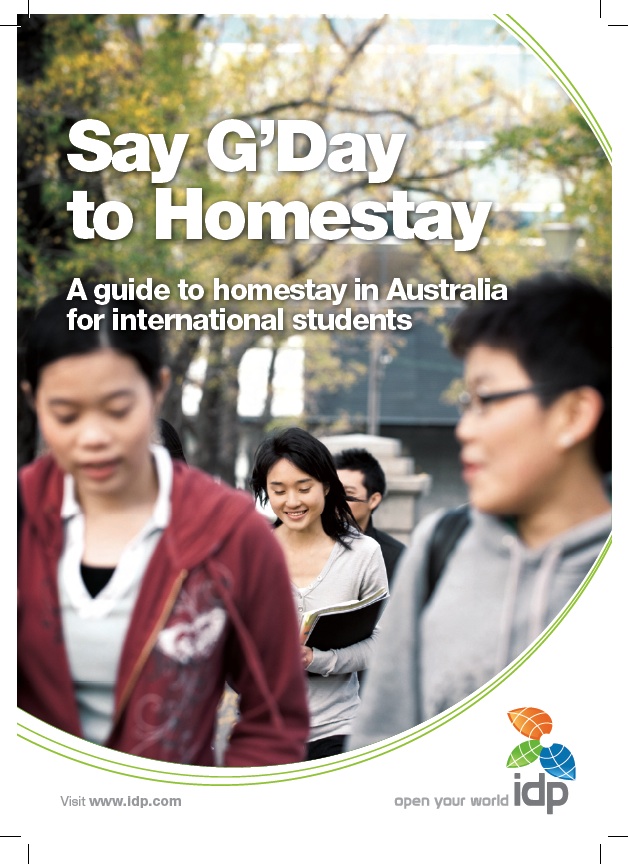
G'Day to HomestayIDP is an Australian organization specializing in international education services for Australia. One of those resources is a homestay guide called Say G’Day to Homestay. It is for Australia-bound international students who will be living with a local family.  This is a brilliant guide. It answers questions about everyday life in Australia that foreigners may not know such as:

  • How do I get to school?
  • What will I eat?
  • How do I dispose of household waste?

It also offers tips on laundry, lights, heating, using the telephone, home security, smoking and pets.

These are topics that locals take for granted because they seem second nature to us. The same issues confound and confuse the foreigner who may have no idea of what is expected or appropriate.

This guide is specifically for students going to Australia. If you’re not in Australia, go check it out anyway. Then ask yourself how you can provide a similar guide to your international students that will help them understand the same issues in your local area.

Here’s the link to the guide: http://www.idp.com/PDF/Say%20Gday%20to%20Homestay.pdf

Related posts:

___________________

Share this post: Resource: “Say G’Day to Homestay” http://wp.me/pNAh3-PP

Update – January 2018 – This blog has had over 1.8 million views thanks to readers like you. If you enjoyed this post, please “like” it or share it on social media. Thanks!

Sarah Elaine Eaton is a faculty member in the Werklund School of Education, University of Calgary, Canada.