The Ed Podcast: Do the Right Thing

May 1, 2020

edlogo_smA while ago I had the chance to talk with Shane, creator and producer of The Ed Podcast. In an episode he’s titled, “Do the Right Thing“, we talk about academic integrity, contract cheating and what educators need to know.

We recorded the episode, pre-COVID, after Shane heard about the cheating incident at the University of Alberta, involving 40 computer science students.

You can find the Ed Podcast on Twitter and Instagram

You can also subscribe to the podcast by searching in your podcast app for “ed conversations”.

_________________________________________

Share or Tweet this: The Ed Podcast: Do the Right Thing

This blog has had over 2 million views thanks to readers like you. If you enjoyed this post, please “like” it or share it on social media. Thanks!

Sarah Elaine Eaton is a faculty member in the Werklund School of Education, and the Educational Leader in Residence, Academic Integrity, University of Calgary, Canada. Opinions are my own and do not represent those of the University of Calgary.

Microsoft’s new “Rewrite” feature: A challenge to academic integrity?

April 20, 2020

Microsoft has just announced a new feature in Word: “Rewrite”. Microsoft shared details of the feature in this blog post last Friday.  The feature is designed to provide “sentence-level suggestions” to help users improve their writing. Microsoft reports that, “This feature is powered by cutting-edge, neural-network, machine learning models, which are trained on millions of sentences.” Zhang Li of Microsoft writes that the new feature:

Improves fluency: These suggestions aim to improve the flow of the wording, including mechanics like grammar and spelling.

Concise phrasing: The goal of these suggestions is to express an idea clearly, without extra words.
Paraphrased sentence: These suggestions offer synonyms for alternative wording.

Improves readability: The goal of these suggestions is to make the writing easier to read for people with different reading abilities. In general, suggestions will include shorter, simpler wording.”

Reading through the blog post comments, users are anticipating this will replace services such as Grammarly. People in the tech world are already calling it a “game changer”.

From an academic integrity perspective, it certainly could change the game. Drastically. Scholars such as Ann Rogerson and Grace McCarthy started publishing articles about the impact of paraphrasing software a few years ago. Their article “Using Internet based paraphrasing tools: Original work, patchwriting or facilitated plagiarism” prompts us to consider how paraphrasing software impacts our notion of writing, plagiarism and “originality”.

Microsoft reports that the new feature is currently only available in English and requires a subscription to Microsoft Office 365.

My prediction is that this new feature will change writing as much as spell check has, but in ways that are infinitely more complex. Spell check offers suggestions on individual words. Grammar check highlights possible grammar errors. A feature designed to re-write entire sentences has the potential to shift writing in significant new ways.

This may challenge our notions of “original writing” in ways we cannot yet predict. Educators and administrators will have to figure out how, if at all, this will impact our understanding of plagiarism, authorship and originality. Only time will if assisted and augmented writing will become the new normal.

_________________________________________

Share or Tweet this: Microsoft’s new “Rewrite” feature: A challenge to academic integrity? https://wp.me/pNAh3-2ss

This blog has had over 2 million views thanks to readers like you. If you enjoyed this post, please “like” it or share it on social media. Thanks!

Sarah Elaine Eaton is a faculty member in the Werklund School of Education, and the Educational Leader in Residence, Academic Integrity, University of Calgary, Canada. Opinions are my own and do not represent those of the University of Calgary.


Tenure in the time of COVID-19

April 2, 2020

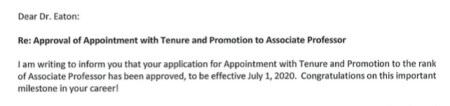
T&P excerpt

The e-mail came amidst a bunch of others, all with words like “COVID-19” or “urgent” or “time-sensitive” in the subject line. I almost missed it, to be honest. Then there it was: A simple two-line e-mail from Human Resources: “Please see the attached e-mail from the Provost. Should you have any questions regarding the attached, please do not hesitate to contact us.”

I bawled when I opened the letter. It wasn’t the reaction I was expecting to have, but then again, nothing about getting tenure during the middle of a global pandemic is what I expected it would be like… Staying at home, practicing social distancing, and unable to go out and celebrate.

My mind immediately went to those who are losing their jobs, have already lost them or are still struggling to get one. A wave of guilt swept over me. I moved past it. Each of us is on our own journey. My journey has involved working for 26 years in higher education – 22 years as a sessional (or for friends outside of Canada, as an “adjunct” or “part-time lecturer”) and 4 years full-time, so to say the road has been long is an understatement. To paraphrase Gabriel Garcí­a Márquez, I have grown old waiting.

I moved past the tears, then the guilt, and finally felt happy.

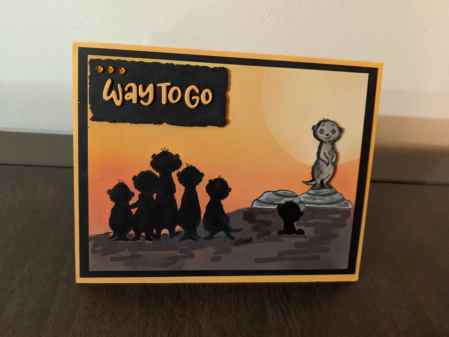
Old or not, we find ways to celebrate. A quiet glass of wine at home. A virtual happy hour with the family. A hand-made card from a dear friend that arrived via “snail mail” because we can’t go out to celebrate. The card shows how we practice social / physical distancing… and still celebrate. (Of course, I washed my hands after opening it.)

card

So, this is what getting tenure in the time of COVID-19 looks like.

_________________________________________

Share or Tweet this: Tenure in the time of COVID-19 https://wp.me/pNAh3-2rU

This blog has had over 2 million views thanks to readers like you. If you enjoyed this post, please “like” it or share it on social media. Thanks!

Sarah Elaine Eaton is a faculty member in the Werklund School of Education, and the Educational Leader in Residence, Academic Integrity, University of Calgary, Canada. Opinions are my own and do not represent those of the University of Calgary.


3 Reasons why proctoring an exam using Zoom is a bad idea

March 31, 2020

Lots of people have been asking me about using Zoom to proctor exams. I’ve taught over 100 online courses, between the graduate courses I’ve taught for the Werklund School of Education and dozens of continuing education courses.

Combining that experience with research expertise in academic integrity, I can say that using Zoom to proctor written exams is a bad idea. Here’s why:

1. Zoom is not a substitute for a professional proctoring service

Professional proctoring services are sophisticated, both in terms of technology and operations. Asking an individual professor to proctor an online exam using Zoom as a makeshift solution is a bad idea. Most instructors are not trained on how to proctor online exams.

Given that some instructors are also working from home, while managing child care and family responsibilities, it is even less likely that they could do an excellent job of online invigilation, especially for a large class.

2. Creates additional technology barriers for students

Not all students have web cams or reliable Internet service. Requiring students to have cameras on and stream video during an exam could put some students at a technological disadvantage. If you suddenly require them to buy a web cam, you could be adding financial stress to the equation as well.

At our university, we cannot penalize students if they do not have a video camera. If you did not tell students at the time they registered for the course that a web cam would be required for the course, it is unethical to suddenly make it a requirement partway through the course. If we want students to act with integrity, we must demonstrate integrity in how we run our courses… Changing the rules as you go along just isn’t ethical.

3. Things are not always as they seem

My colleague, D’Arcy Norman, shared this post on how and why the video feed is not necessarily trustworthy. Go read his post. Watch his video. They try it yourself and see how easy it is to create a video background that makes it look like you’re in front of your camera when you’re not. (Hint: It is really easy.)

Besides, if an instructor suspects exam misconduct are they going to use Zoom as their evidence? How would they actually be able to prove it? I mean unless a student has crib notes out in plain view, the case management for that could get messy fast. Chances are high, I would say, that an allegation of academic misconduct could be dismissed (in the student’s favour) if the evidence is not strong enough.

There are few benefits and many potential complications with using Zoom to proctor written exams, especially for large classes. Of course, the exception to this would be individual oral exam where the student interacts in real time with the examiner. That could be do-able via Zoom. In the case of graduate student thesis defences, it may be the only option, but the examination committee must take steps to verify the identity of the student if they are not personally known to at least one of the examiners.

My recommendation is to consider alternate assessments if possible. If it is not possible, then consider a professional online exam proctoring service. Trying to use Zoom to MacGyver your exam invigilation of written tests is probably not going to serve the purpose of upholding integrity.

Note: This post was updated on April 13, 2020 to clarify that I am specifically referring to written exams in this post.

Related posts:

_________________________________________

Share or Tweet this: 3 Reasons why proctoring an exam using Zoom is a bad idea https://wp.me/pNAh3-2rO

This blog has had over 2 million views thanks to readers like you. If you enjoyed this post, please “like” it or share it on social media. Thanks!

Sarah Elaine Eaton is a faculty member in the Werklund School of Education, and the Educational Leader in Residence, Academic Integrity, University of Calgary, Canada. Opinions are my own and do not represent those of the University of Calgary.


COVID-19, Contract Cheating and Academic Integrity in Online Courses: What you need to know

March 16, 2020
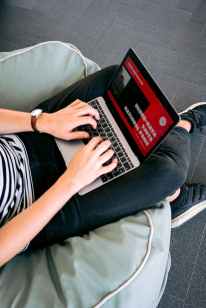
man creating a presentation on laptop

Photo by Canva Studio on Pexels.com

With the increased response to COVID-19 there has been a concurrent escalation in predatory and unethical practices such as price gouging on hand sanitizer and cleaning products on Amazon and online books suddenly popping up for sale about COVID-19, with material entirely plagiarized from free online news sources.

Of particular concern for academic integrity has been a notable spike in aggressive contract cheating marketing. To stay focused on teaching and learning, here are some strategies to help:

Talk to your students about academic integrity.

Emphasize that it is important for them not to engage with any third party offering “help”. Be straight with your students: Contract cheating and “homework help” companies do not care about students! Educators and family members care about students. Tell your students: “Do not hire a third party to complete your academic work for you. Ever!”

Remind students not to give their login credentials for learning management system (LMS) to anyone.

We know that contact cheating companies pay students in exchange for their login credentials. The companies then go in and harvest whatever they can – notes, slide decks, exemplars from previous students, and whatever else they can find. They will do this for every course the student is registered in, plus any previous courses to which the student still has access. Downloading this material takes only a few minutes. The companies then re-sell these items on their own websites.

Refrain from posting sample work from previous students!

Because of the predatory nature of contract cheating companies, I recommend that you avoid posting examples of students’ work anywhere online, even with their permission. If you wish to share examples of work, do it during a live synchronous session by sharing your own screen. Do not share entire papers this way, but rather a couple of pages, preferably with random sections redacted.

This way students can still get an idea of what a model paper looks like, while simultaneously engaging in conversation with you about your expectations for the assignment.

This does not prevent people from downloading the work because a motivated individual could still take screen shots and share them; but it does make unauthorized or predatory re-sharing more difficult.

Align your teaching practices with what your institution already has in place.

Many institutions have, or are rapidly developing, resources to help instructors. Now is not the time to create your own personal honor code and require students to sign it. That could cause issues of unfair assessment or unanticipated appeals later on. If your institution does not have what you are looking for, ask them for it, or better yet, work with colleagues to develop it.

Although you may be worried about students cheating in online courses, rest assured that there is plenty of highly credible evidence to support that there is not necessarily more cheating in online courses. (See Harris et al., 2019, for very recent research on this topic.) What we DO need to be prepared for though, is a barrage of companies who want to prey on our learners at a time of rapid change and vulnerability. Now is the time to exercise care and caution. Protect your learners from predators!

Related posts:

The Impact of COVID-19 on Academic Integrity https://wp.me/pNAh3-2ra

How to Deal with Contract Cheating: A Collection of Resources – https://wp.me/pNAh3-2u5

______________________________________________________

Share or Tweet this: COVID-19, Contract Cheating and Academic Integrity in Online Courses: What you need to know https://wp.me/pNAh3-2rx

This blog has had over 2 million views thanks to readers like you. If you enjoyed this post, please “like” it or share it on social media. Thanks!

Sarah Elaine Eaton is a faculty member in the Werklund School of Education, and the Educational Leader in Residence, Academic Integrity, University of Calgary, Canada. Opinions are my own and do not represent those of the University of Calgary.