All Posts
by: Sarah Elaine Eaton and Beatriz Moya Figueroa
Abstract
In this brief report we explore linguistic differences in how contract cheating has been explained and translated into Spanish.
Keywords: academic integrity, academic misconduct, terminology, contract cheating
Palabras clave: integridad académica, mala conducta académica, terminología
Overview
Academic integrity is a concern across the world. Contract cheating, which is the outsourcing of academic work to third parties is a growing problem. We know that contract cheating happens in a multitude of languages, including Spanish (Eaton & Dressler, 2019). In order to address a problem, we must first have a common language to talk about it. The term “contract cheating” was coined by Clarke and Lancaster (2006), as a more updated way and comprehensive term to address academic outsourcing in text-based as well as non-text-based disciples. “Contract cheating” is now preferred over “essay mill” or “term paper mills”, though all of these terms remain in use in various contexts.
In this brief report we explore linguistic differences in how contract cheating has been explained and translated into Spanish.
We acknowledge and applaud the work done by the European Network for Academic Integrity (ENAI) (n.d.) to produce a multilingual glossary of terms relating to academic integrity. The glossary is available in ten languages; but currently, Spanish is not one of them. We consulted the glossary in the closest language, Portuguese, (see Taúginienė et al., 2019) and found contract cheating referenced as, “fraude no contrato” (p. 23), explained as, “Forma de má conduta que existe quando uma pessoa utiliza uma entidade terceira para a assistir a produzir trabalho, independentemente de envolver um pagamento ou favor” (p. 23).
Although the accompanying explanation describes contract cheating well, to translate “fraude no contrato” (Portuguese) into Spanish would result in “el fraude de contrato”, the meaning of which could be misconstrued as contractual fraud in a legal sense, rather than an academic one. For this reason, we contend that “el fraude de contrato” is not an appropriate translation of the English term, “contract cheating”.
In Search of a Spanish Translation
Having eliminated that possibility, we continued our inquiry, but we found no standardized translation of the term. Instead, we encountered a variety of phrases used in the literature. Some examples of translations we found include:
- “realización por parte de un tercero de trabajos escritos” (Gómez Córdoba & Pinto Bustamante, 2017, p. 170)
Gómez Córdoba & Pinto Bustamante (2017) self-identified in their paper as being in Columbia.
- “comprar ensayos finales (u otros ensayos) en agencias específicas o de otros estudiantes” (Denisova-Schmidt, 2016, p. 6)
Denisova-Schmidt (2016) self-identified as working in Switzerland.
- La “compraventa de trabajos académicos” (Comas, Sureda, Casero, & Morey, 2011, p. 209)
These researchers self-identified as being in Spain.
- La “compra de textos” (Armesto, 2016, p. 6)
A review of the front matter of the publication in which Armesto’s article was published showed she works in Mexico.
We found the term used by Comas et al. (2011), “compraventa de trabajos académicos” to be the closest translation to the English phrase contract cheating if one is speaking about the commercial industry, including aspects of both buying and selling. However, we acknowledge that the term “compraventa de trabajos académicos” excludes those who complete academic work on behalf of others who do not receive payment (e.g. family members, partners, friends, etc.).
To convey the idea that a third party who is not part of the commercial cheating industry is completing work on behalf of a student, the phrase used by Gómez Córdoba & Pinto Bustamante (2017), “realización por parte de un tercero de trabajos escritos” might be more accurate. However, we point out that this phrase specifically addresses text-based disciplines and excludes fields where the academic work produced does not necessarily include prose writing, including computer code.
We do not claim that our search was exhaustive. We have highlighted particular examples from the extant literature to illustrate the inconsistency in how contract cheating is discussed in scholarship written in the Spanish language.
Conclusion: Call to Action
In order to effectively address a problem, we must first be able to name it; to talk about it in ways that others will understand. Only then can we, as community of educators, advocates, and scholars, be as unified in our actions against the problem as we are in the way we talk about it. Therefore, we conclude with a call to action to our colleagues across the Spanish-speaking world to produce a Spanish-language glossary for academic integrity that includes a precise phrase to convey contract cheating that can be used with confidence as a common term.
References
Armesto, G. (2016). El plagio académico: ¿Qué es y cómo distinguirlo? Revista de integridad académica, 1(1), 5-7.
Clarke, R., & Lancaster, T. (2006). Eliminating the successor to plagiarism: Identifying the usage of contract cheating sites. Paper presented at the Second International Plagiarism Conference, The Sage Gateshead, Tyne & Wear, United Kingdom.
Comas, R., Sureda, J., Casero, A., & Morey, M. (2011). La integridad académica entre el alumnado universitario español. Estudios Pedagógicos, 37(1), 2007-2225.
Denisova-Schmidt, E. (2016). El desafío global de la integridad académica. International Higher Education (Spanish edition), 87, 5-7. Retrieved from http://ceppe.uc.cl/images/stories/recursos/ihe/Numeros/87/art_03.pdf
Eaton, S. E., & Dressler, R. (2019). Multilingual essay mills: Implications for second language teaching and learning. Notos, 14(2), 4-14. Retrieved from http://hdl.handle.net/1880/110695
European Network for Academic Integrity (ENAI). (n.d.). Glossary. Retrieved from http://www.academicintegrity.eu/wp/glossary/
Gómez Córdoba, A., & Pinto Bustamante, B. (2017). La integridad académica: el dilema de la formación médica / Academic integrity: The dilemma of medical education. Revista Educación y Desarrollo Social, 11(2). doi:org/10/18359/reds.3248
Taúginienė, L, Gaižaúskaitė, I, Glendinning, I, Kravjar, J, Ojsteršek, M, Ribeiro, L, Odiņeca, T, Marino, F, Cosentino, M, Sivasubramaniam, S. Glossary for Academic Integrity (Portuguese). ENAI Report 3G [online]. Tradução de: Malaquias, A, Fachada, B, Ribeiro, L. 2019. http://www.academicintegrity.eu/wp/wp-content/uploads/2019/09/Glossary_PT.pdf
__________________________
Note: This post is a re-print of our short paper. Here is how to cite this content:
Eaton, S. E., & Moya Figueroa, B. (2020). ¿Cómo se dice “contract cheating”?: Exploring academic integrity terminology in Spanish-speaking contexts. University of Calgary. http://hdl.handle.net/1880/112526
_________________________________
Share or Tweet this: ¿Cómo se dice “contract cheating”? Exploring Academic Integrity Terminology in Spanish-speaking contexts https://drsaraheaton.wordpress.com/2020/09/15/como-se-dice-contract-cheating-exploring-academic-integrity-terminology-in-spanish-speaking-contexts/
This blog has had over 2 million views thanks to readers like you. If you enjoyed this post, please “like” it or share it on social media. Thanks!
Sarah Elaine Eaton, PhD, is a faculty member in the Werklund School of Education, and the Educational Leader in Residence, Academic Integrity, University of Calgary, Canada. Opinions are my own and do not represent those of the University of Calgary.
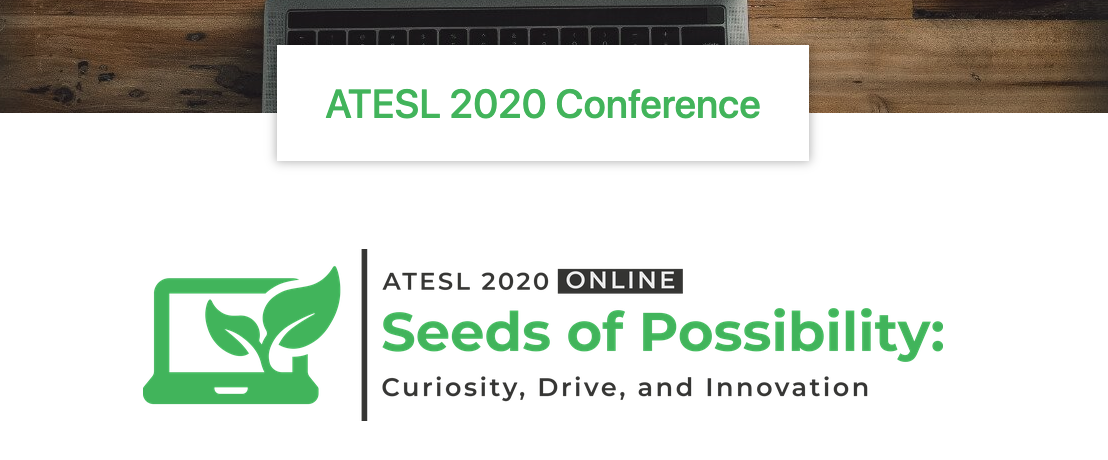 I’m excited to partner with colleagues from Norquest College and the Alberta Council on Academic Integrity to present this workshop at the Alberta Teachers’ of English as a Second Language (ATESL) 2020 E- Conference: Seeds of Possibility: Curiosity, Drive, and Innovation.


 Posted by Sarah Elaine Eaton, Ph.D.
 This session will review inequitable practices related to academic integrity. These practices threaten to undermine the vital work of celebrating and affirming a diverse academic community. This presentation will consider the ramifications for students, teachers, and researchers, and offer research-based solutions to refine current approaches to teaching and upholding academic integrity.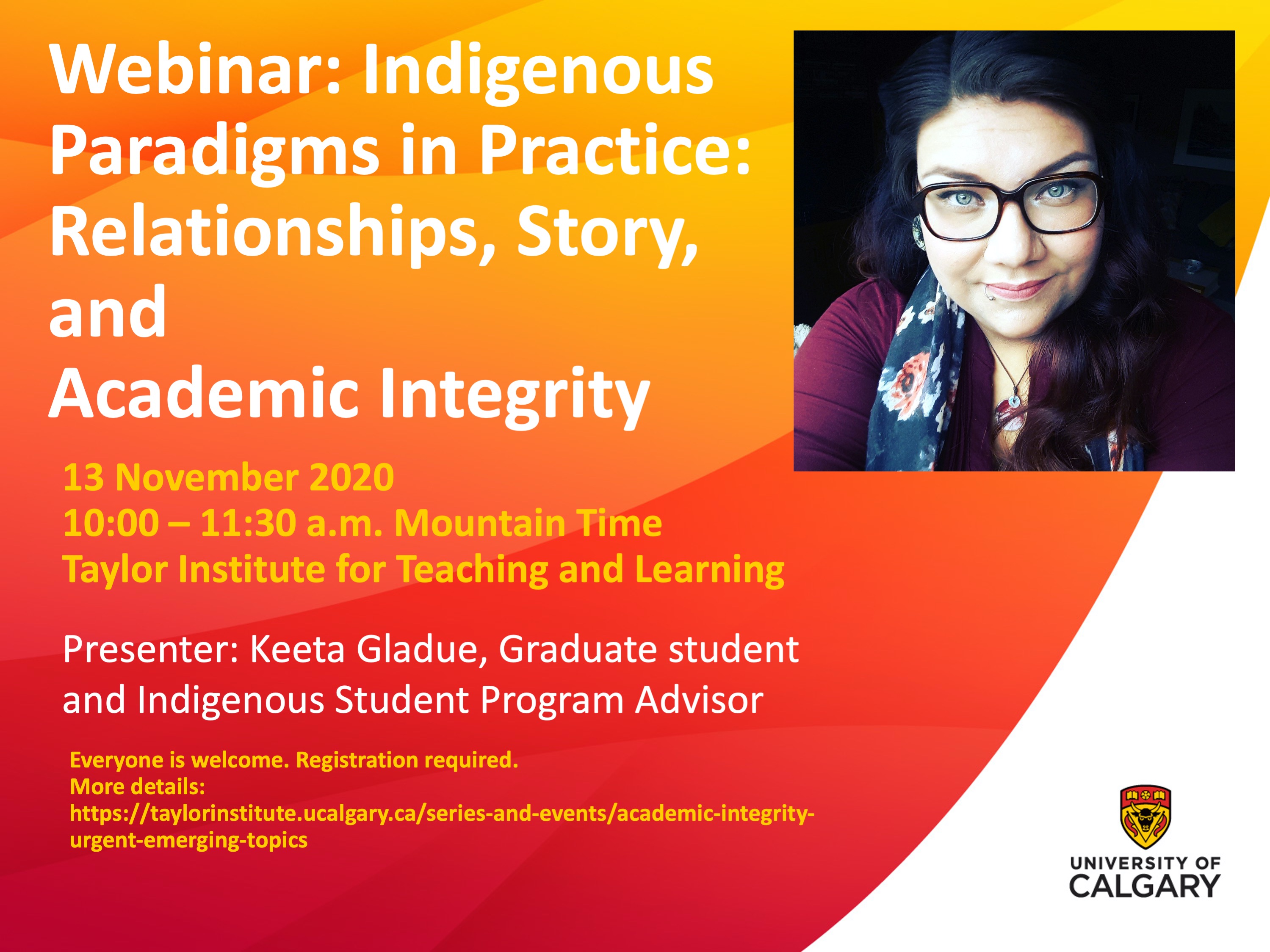
 Presenter bio: Keeta Gladue is a proud professional Indigenous nerd (IndigENerd), who believes in changing the world through pop culture references, humour and storytelling. When we explore the stories we tell, ask who told them and why, and look for the stories that remain untold, we better understand the world around us. Holding degrees in English, psychology and social work, Keeta is a current graduate student at the University of Calgary in the social work leadership program. She is the current Indigenous Student Program Advisor at Writing Symbols Lodge (The University of Calgary’s Indigenous student support centre) supporting diversity, equity and inclusion. A recent
 Learning, Teaching and Leadership
You must be logged in to post a comment.