Blogging workshop for ESL Teachers

January 7, 2013

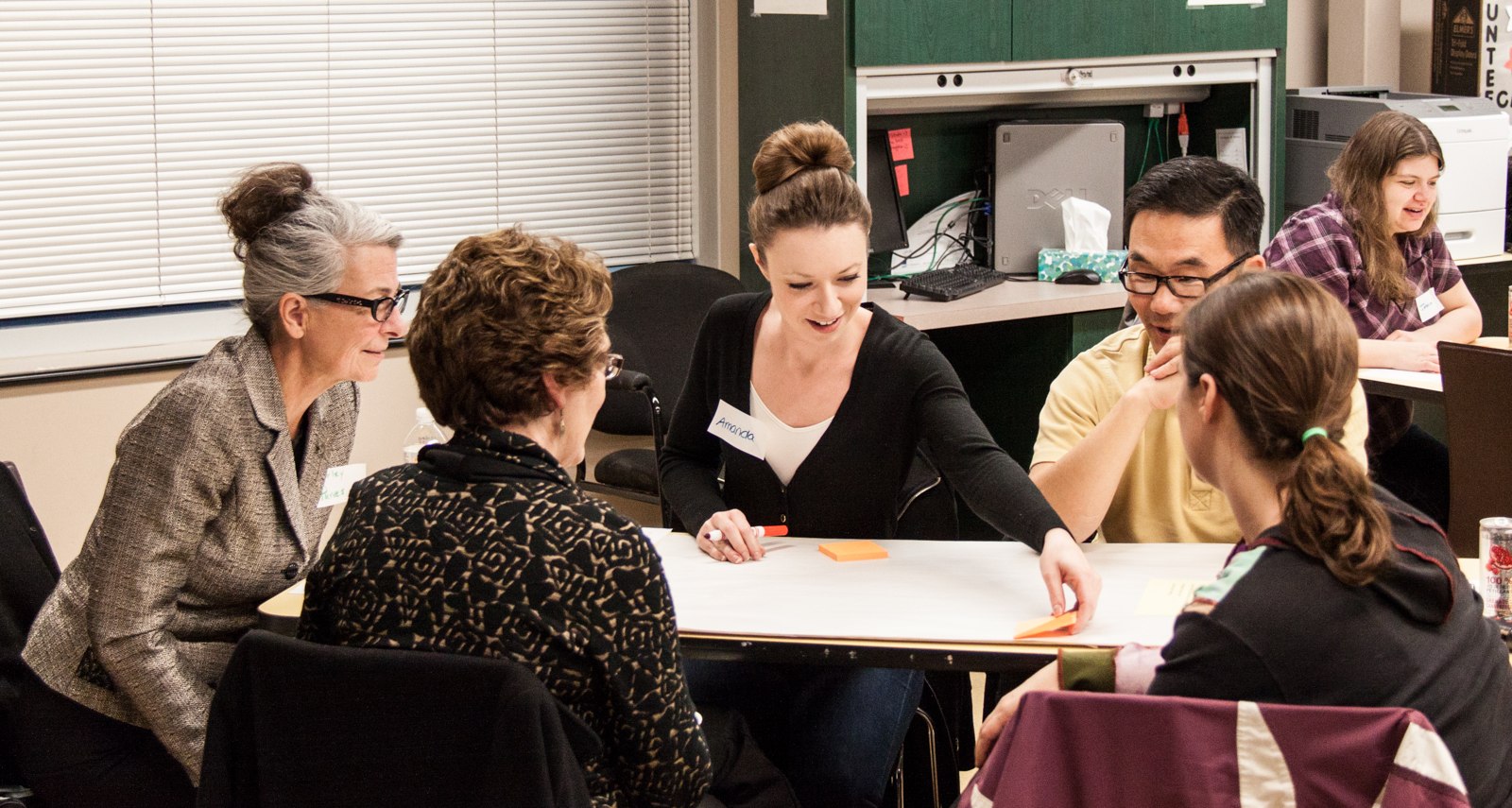
iStock-woman at laptopI am super excited about an upcoming workshop I am doing. I get to combine two of my favorite passions: working with language teachers and blogging. Here’s our tentative agenda:

Introduction

  • What is a blog?
  • Why do we blog?

Getting Ready to Blog

  • Tips for creating excellent blog posts
  • Using multimedia in your blog
  • Blogging for and with students

Write on! Hands-on blogging

  • Setting up your blog
  • Writing your first blog post
  • Adding categories, tags and excerpts
  • Creating visual interest with photos

What do you think? Have I missed anything? What words of wisdom would you have for teachers who are learning how to blog for the first time? I’d love to hear your comments and thoughts.

_________________

If you enjoyed this post, please “like” it or leave a comment. Thanks!

Share or Tweet this: Blogging workshop for ESL Teachers http://wp.me/pNAh3-1yl

Update – January 2018 – This blog has had over 1.8 million views thanks to readers like you. If you enjoyed this post, please “like” it or share it on social media. Thanks!

Sarah Elaine Eaton is a faculty member in the Werklund School of Education, University of Calgary, Canada.


Easy 3-step process to evaluate a volunteer board

January 4, 2013

Business - Group - team hands

In April of 2012 I became president of our condo board, where I had served as a director for about 5 years. We had some returning board members, some new members and we had also recent changed to a new management company.

One of the issues we had with the previous condominium management company was that projects were either not completed or they took a very long time to get done. This new company seems to get tasks completed more quickly, but nevertheless, there was growing discontent that “nothing is happening” or “things are not moving fast enough”.

Using an asset-based approach to community development (ABCD), I conducted a brief appreciative assessment and presented it to the board as a report at our last meeting. They were able to see how far we had come in a few short months. One board member said that it should be sent out to all the residents as a newsletter. I am in the process of preparing that now. The technique was so simple and successful, I wanted to share it with you.

If you work with a volunteer group who is feeling, here are the steps to prepare your own ABCD evaluation of your work:

Step 1: Take an inventory of what your group has achieved

Review old meeting agendas and minutes. Review your e-mail history. Think of yourself panning for gold. Let’s face it, community work is muddy at best. Finding the little nuggets tucked into all the mud takes a bit of time and patience, but it is worth it.

As you find a significant task that has been completed add it to your list. I didn’t minor items such as light bulbs being replaced. Instead, I focused on more significant projects or tasks that we would be proud to tell our owners that we had achieved.

Step 2: Categorize your group’s achievements

For our condo board, I used these categories:

  • Policy and governance achievements
  • Major projects completed
  • Major projects initiated
  • Repairs completed
  • Additional achievements

Step 3: Organize your achievements under each category heading

I used numbered lists. The minimum I had in any category was four. The most I had was nine.

In total, we had 23 noteworthy achievements in a six-month period. Pretty impressive for a group of six volunteers, don’t you think?

When we work with condo boards, volunteer or community groups the feeling that goals are not being accomplished fast enough is more common than many of us would like to admit.

Taking an inventory of recent achievements helps you to stay accountable to those you serve. It also helps volunteers see how their contributions make a difference. Even when progress is slow, it still counts. Sometimes, it is not as slow as our perceptions might have us believe.

This type of strength-based evaluation works well with a disgruntled group who fails to recognize how far they have come in a short period of time. It is easy to focus on needs, gaps and challenges. An asset-based approaches seeks first to identify what is working well and use that as as starting point to build on. Don’t get me wrong. We still have a very long “to do” list and we have some problems that we need to solve. Sometimes, when you stop focusing obsessively on the problems and take an inventory of what is going right (as opposed to everything that is wrong), motivation levels increase, focus is renewed and people begin to enjoy their volunteer service again. That is all the more reason to take a step back and assess what we have actually done to meet the goals we set and make our community better.

This technique would work well for a team of staff, volunteers or any group who comes together to work towards a common goal.

_________________

If you enjoyed this post, please “like” it or leave a comment. Thanks!

Share or Tweet this: Easy 3-step process to evaluate a volunteer board http://wp.me/pNAh3-1ye

Update – January 2018 – This blog has had over 1.8 million views thanks to readers like you. If you enjoyed this post, please “like” it or share it on social media. Thanks!

Sarah Elaine Eaton is a faculty member in the Werklund School of Education, University of Calgary, Canada.


5 Great resources on asset-based community development (ABCD)

December 17, 2012

Creating space for strength in Calgary - Eaton International Consulting Inc.I have been working with two other consultants on a project called “Creating Space for Strength: An Asset-Based Community Development (ABCD) and Research Project Focussed on Calgary’s North Central Communities”. Our approach to the work is strength-based, using the ABCD model. We are working with some amazing people and organizations who are deeply committed to making to the lives of the people who live in their communities better.

As part of our work, we are helping them to build their understanding and capacity around the ABCD approach. Here are 5 of our favorite resources on asset-based community development:

  1. Coady Institute. (n.d.). An asset-based approach to community development: A manual for village organizers Available from http://coady.stfx.ca/tinroom/assets/file/resources/abcd/SEWA%20ABCD%20Manual.pdf
  2. Kretzmann, J. P., & McKnight, J. L. (1993). Building Communities from the Inside Out: A Path Toward Finding and Mobilizing a Community’s Assets. Skokie, IL: ACTA Publications.
  3. Kretzmann, J. P., McKnight, J. L., Dobrowolski, S., & Puntenney, D. (2005). Discovering Community Power: A Guide to Mobilizing Local Assets and Your Organization’s Capacity. from the Asset-Based Community Development Institute, School of Education and Social Policy, Northwestern University: http://www.abcdinstitute.org/docs/kelloggabcd.pdf
  4. Nelson, B., Campbell, J., & Emanuel, J. (2011). Development of a method for asset based working Available from http://www.nwph.net/phnw/writedir/da0dNW%20JSAA.pdf
  5. Miller, S. (n.d.). Asset-based community development.   Retrieved October 15, 2012, from http://www.slideshare.net/sadierynmiller/asset-based-community-development

We gratefully acknowledge the organizations who have made this project possible:

  • Project Origins – NorthernHills Constituency
  • Project Funders – Government of Alberta (CFEP Grant); United Way of Calgary and Area; Aspen Family and Community Network Society; NorthernHills Community Association
  • Project Supporters – NorthernHills Constituency; City of Calgary; Aspen Family and Community Network Society; NorthernHills Community Association; United Way of Calgary and Area

Related post: Webinar recording: Creating Space for Strength http://wp.me/pNAh3-1wI

_________________

Share or Tweet this: 5 Great resources on asset-based community development (ABCD) http://wp.me/pNAh3-1xJ

Update – January 2018 – This blog has had over 1.8 million views thanks to readers like you. If you enjoyed this post, please “like” it or share it on social media. Thanks!

Sarah Elaine Eaton is a faculty member in the Werklund School of Education, University of Calgary, Canada.


How checking things off your “to do” list is different than solving problems

December 7, 2012

I am in the middle of a small war with the management company of our condo complex. As the board president, I constantly liaise with our property manager about problems that need to be solved on the property. A recent issue is an excellent example of the difference between management and leadership.

There are 110 town homes in our condo complex that are approaching 40 years old. Structural wear and tear is starting to be a problem. This year, one unit had a major ant infestation. We got an exterminator to deal with the problem immediately. He said that the ants were entering through small holes under the kitchen window and in addition to his extermination services, he recommended that we fix the exterior by plugging up the holes that the ants use as entry points to the house.

Since the beginning of August I have been sending in requests to get the holes around the exterior of the windows fixed. I am not an expert in windows or building envelopes or exterior structures, but it was pretty clear where the holes were. I sent in a request to have the caulking around the outside of the window

The property manager has a construction company that they send out on a regular basis to do jobs on the property. I have met them and they are actually great guys. They know what they are doing. They arrive on time, they do a good job, they clean up after themselves, and they are pleasant to all the residents who live here. It doesn’t really get much better than that.

But this ant issue has recently turned into an all out war.

Last month I said, “I have been asking for this to be done for 3 months. Please have the work done.”

His reply, “I have talked to the contractor. He says the work has been done.”

Yesterday I looked at the unit. The entry points for the ants are still visible.

I wrote again, saying “Four months have now passed since I sent in this work request. This work has not yet been completed. Please have the work done.”

The reply came back, “The contractor assures me that he has caulked around the window. Can I give the contractor your phone number and you can deal with him directly?”

I went outside and looked. Indeed, the area around the metal frame had been caulked, but the entry points for the ants were still wide open. I took some pictures. I highlighted the areas where ants were entering:

Ant photos.001

Here is the second photo:

Ant photos.002

I sent the photos together with this letter:

Dear John:

I’ve been thinking about this. If you say to a guy, “Go caulk around the window.” He’s going to come over and caulk around the window. The job is done because the job was “to caulk around the window”.

 If you say to the guy, “This place has an ant problem. The kitchen wall is covered with thousands of ants. The exterminator says they are coming in from outside, specifically from around the kitchen window. Go over there and have a look at the outside of the kitchen window. Figure out every possible entry point for the ants to get in around that window. Plug each and every last one of those holes up, so the little buggers can’t get in.”

The job is done when the window is turned into an ant version of Fort Knox. No one — not one little ant — gets in.

That is an entirely different job than, “Go caulk around this window.”

The job we need to have done is the second one — plug up every possible entry point for ants from around that kitchen window.

If you need to give the contractor my number to explain that, then go ahead, but I’m pretty sure you get the idea about what we are after here, which is a solution to the problem of blocking how the ants get into the unit.

Every time you send a guy — or a couple of guys — to our property to do a job, they are not just checking off items from a “to do” list. They are solving problems for the people who live here. In doing that, they are making their life better.

I’m not trying to be melodramatic here, but every time one of your guys comes to our property to fix a problem for a resident, they get a chance to be somebody’s hero. They do that by solving a problem that the owner can not solve by themselves, because they either do not know how or they do not have the skills, expertise, materials, or maybe just the time. That’s one reason people live in condos.

I guarantee you that the single lady who lives in that unit does not have the skills or materials to fix this problem herself — or she would have already.

Your guys have all that — skills, talent, expertise and materials. We rely on you to hire smart guys and you do that. We see it time and time again. They’re smart, they’re capable and they can solve problems. In a small way, they can be somebody’s hero.

So tell your guy that this is his chance to be a hero for Marilyn, the lady who lives there.

Thanks,

Sarah

When it comes to leadership, it is important to give people all the information they need to solve a problem. If you hire smart people, then do not simply give them items to check off their “to do” list. Engage people’s skills, expertise and problem-solving abilities to make them part of the solution. In doing so, you are likely to make their work more meaningful… and both they — and their work — will have a greater impact on those they are helping.

I believe deeply in people’s capacity to solve problems, help others and do meaningful work.

Checking items off a “to do” list does very little to connect the work to the people who may benefit from it. Besides, work that only involves checking items off a “to do” list often lacks meaning, especially when that list is assigned to you by someone else.

Engaging smart people to develop sustainable solutions helps everyone over the long term.

_________________

Share or Tweet this: How checking things off your “to do” list is different than solving problems http://wp.me/pNAh3-1×6

Update – January 2018 – This blog has had over 1.8 million views thanks to readers like you. If you enjoyed this post, please “like” it or share it on social media. Thanks!

Sarah Elaine Eaton is a faculty member in the Werklund School of Education, University of Calgary, Canada.


Webinar recording: Creating Space for Strength

November 30, 2012

Our research team is thrilled to share the recording of our webinar “An Introduction to Creating Space for Strength: An Asset-Based Community Development and Research Project Focused on Calgary’s North Central Communities”.

We had over 40 people sign up for the webinar. The program lasted approximately 45 minutes and included chat dialogue from many community participants.

Thank you to everyone who attended and contributed. As promised, here is the recording. Feel free to share it with others.

5 Great resources on asset-based community development (ABCD) http://wp.me/pNAh3-1xJ
______________

Share or Tweet this: Webinar recording: Creating Space for Strength http://wp.me/pNAh3-1wI

Update – January 2018 – This blog has had over 1.8 million views thanks to readers like you. If you enjoyed this post, please “like” it or share it on social media. Thanks!

Sarah Elaine Eaton is a faculty member in the Werklund School of Education, University of Calgary, Canada.