 The Andover Public School board in Massachusetts, U.S.A. has established a World Language Task Force, reports the Andover Townsman. The purpose of the task force is to seek input from the community on what languages they would like to see taught in their schools and why. The task force is comprised of teachers, parents, community members, and administrators. The purpose of the task force is to:
Study the K-12 programming model and trends in world language teaching and learning.
Develop goals and strategies for a K-12 World Language program for inclusion in the Andover Public Schools Strategic Plan.
Produce recommendations relative to which one language will be taught on the elementary school level, which two languages will be taught on the middle school level, and which languages will be taught at Andover High School.
The task force is soliciting input from the public through a public online survey developed by the school board. The survey asks respondents to rank the importance of such factors as cultural competence, writing and testing skills in a first language and preparing students for global society. It also asks for input on what languages the board should offer, including popular languages such as Spanish and Chinese, as well as less popular languages such as Hmong, Khmer and Creolo Haitian.
I believe that this is a commendable initiative for a variety of reasons:
- Generating dialogue between school boards and the community promotes a culture of open communication. It gives a voice to parents, grandparents and even students about that is important to them. It gives a voice to the community.
- In addition to giving a voice to the community, it also seeks to uncover what is important to the community, digging deeper into the values, beliefs and opinions of those who live in the local area. Then, it would assume, the task force would consider these values as part of its criteria when it comes to making its decisions.
- It downplays the traditional authoritarian nature of school boards. Instead of propagating the ideas that “school boards know best”, it levels the playing field (at least in terms of the optics) and sends the message that “We’re here to serve you, not dictate to you.” This is a strategy that the Calgary Board of Education would have done well to employ when it arbitrarily decided to cut French programs without engaging the community in any dialogue about it.
- It generates community involvement and interest in language programs at the local schools. At a time when cutbacks to language programs, particularly in the United States, are mercilessly targeting world language programs, initiatives such as this will draw importance to language programs. After people have contributed to the discussion and have had some say into the decision-making process they are emotionally and psychologically invested in the outcome and are more likely to support foreign and world language programs in general.
One comment posted on the Andover news article pointed out that the survey is an imperfect tool, since respondents can answer as many times as they like, potentially skewing the results. This is relatively easy to overcome, depending on which survey tool is used. Nevertheless, the concept is brilliant. Opening up discussions about education and in particular, language learning, to the public and ultimately involving the community in the decision making process is innovative, respectful of the community and downright brilliant.
________________
Share this post: U.S. School district asks for public input on world language program http://wp.me/pNAh3-ZV
Update – January 2018 – This blog has had over 1.8 million views thanks to readers like you. If you enjoyed this post, please “like” it or share it on social media. Thanks!
Sarah Elaine Eaton is a faculty member in the Werklund School of Education, University of Calgary, Canada.
 A number of years ago I had the pleasure of participating in a professional development workshop in Cuba for English teachers there. Due to the large numbers of Canadian tourists in Cuba, the teachers were intensely interested in “Canadian” English. They asked, “What is Canadian English?”, “How does it differ from British English? Or American English?” and “Is there really such a thing as ‘Canadian’ words?”


 Posted by Sarah Elaine Eaton, Ph.D.
  What would you do if your favorite little child begged you to write down the story you had told him or her orally? Would you go to the computer and start typing? Would you print it out on paper? Turn it into a slide presentation with engaging visuals? Put it onto an iPad to share together as you sit on the sofa?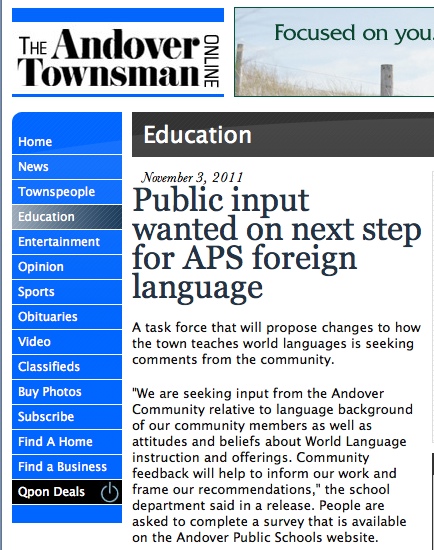

 Learning, Teaching and Leadership
You must be logged in to post a comment.