21 Characteristics of 21st Century Learners

December 7, 2011

Whether you are a teacher, a parent, an aunt or an uncle, it is important to know that today’s students are wildly different in some ways, from past generations.

21st Century learners…

  1. Want to have a say in their education. They’ll respond better when their voices are heard.
  2. Often have higher levels of digital literacy than their parents or teachers. They don’t know a world without computers.
  3. Expect transparency in their parents, teachers and mentors. They’ll see right through you. (Makes it really hard to plan a surprise birthday party for them!)
  4. Want you to tell them when you have messed up, apologize for it, and move on. Everyone messes up. No big deal. Just don’t try to hide it. If you do, they are likely to post it on Facebook.
  5. Don’t care as much about having a job as they do about making a difference. The very concept of a “job” has changed so much in the past decade, the future is about making a difference.
  6. Demand the freedom to show their wild creativity. 21st century learners balk at rote learning and memorizing. They’ll do it if you make them, but be prepared to let them loose to be creative, too.
  7. Want to connect with others in real time on their own terms. They want their social media, their phones and their mobile technology. They want to be connected. All the time. In a way that makes sense to them (not necessarily to you).
  8. Collaborate amazingly well. They love teamwork and figuring things out with their friends.
  9. Really can multi-task. To do other wise is… yawn! Bo-ring!
  10. Appreciate a “trial and error” approach to learning new skills. Thank you, video-game industry.
  11. Learn by doing. Just try making them sit down and learn from you by watching. See what happens.
  12. Have a “can do” attitude. Of course, they can do it, silly! There is nothing to be afraid of.
  13. Thrive in an atmosphere of controlled challenge. They must be challenged or they zone out, but they need structure, too.
  14. Have multicultural awareness and appreciation. This generation is more aware of a variety cultures, countries and ways of life than any generation before them.
  15. Open to change. Really, what’s the big deal?
  16. Are equal parts “consumer” and “creator”. Today’s learners download their own songs and apps from iTunes… and then they create their own stuff and upload it to share with others.
  17. Increasingly aware of the world around them. From the environment to politics, today’s learners are asking questions and demanding answers.
  18. Know where to go to find information. Google was first incorporated in 1998. 21st century learners have never known a world without Google.
  19. Are better educated than any generation before them. (See #17.) 21st century learners really do know more than their parents (but that doesn’t necessarily make them wiser!)
  20. Expect inter-disciplinarity. It is we, the older generation, who organize topics into “subjects”. The 21st century learner understands that subjects are inherently interconnected. Like, duh!
  21. Know that they are the future. They look at their parents and their peers and understand that the world’s future rests in their hands. (Wouldn’t it make you just a little bit cocky, too?)

________________

Like this post? Share or Tweet it: 21 Characteristics of 21st Century Learners http://wp.me/pNAh3-14d

Update – January 2018 – This blog has had over 1.8 million views thanks to readers like you. If you enjoyed this post, please “like” it or share it on social media. Thanks!

Sarah Elaine Eaton is a faculty member in the Werklund School of Education, University of Calgary, Canada.


4 ways to engage learners without losing your mind

December 5, 2011

StudentsThere’s no doubt about it. Schools, universities and adult education training classrooms of today look very different than they did half a century ago.

Heck, they look different than they did 20 years ago. Twenty-first century learning is all about “engaging” the learner. What does that mean, exactly? There is not a single, concrete definition (at least as far as I have found). Here are a few common characteristics:

  • The teacher’s authoritative role is downplayed. Teachers are expected to be guides and collaborators, rather than the “ultimate authority” on a subject.
  • The “lecture” style of teaching is considered ineffective. Instead, group work and models that involve learners interacting with each other are preferred.
  • Students are encouraged to share their own ideas and opinions, not just regurgitate information. In an ideal situation, students also learn to back up their arguments with data and research.
  • Students discover meaning for themselves (often through a process guided by the teacher).
  • The one-way transmission of the teacher imparting knowledge and the students madly writing down everything the teacher says in order to absorb it all, is considered outdated and ineffective.

Let me be honest about my bias and say that I believe whole heartedly in engaging learners in this way. However, this way of teaching requires a substantial “re-wiring” of an instructor’s brain. If you were raised during a time or in a place where teachers could — and did — use the strap or a ruler to discipline students who misbehaved, you know what I am talking about. When I went to school, the strap had been outlawed, but rulers were still used.

Certain nuns in my school were particularly fond of whacking a ruler on a desk to grab the attention of a student who was daydreaming. Instantly, 25 students felt fear rush through them. I may be dating myself a bit here, but really, I am not as old as that statement might lead you to believe I am. My point is that education has changed dramatically in the past couple of decades.

The problem for many people like me is that we find it hard to reconcile 21st century ways of teaching and learning with the model that we know. Not only do we know it, it is all we knew growing up. Teaching in a way that supposedly “engages learners” seems “airy fairy” or “a waste of valuable classroom time” to some people. Some of those same people are very well educated. They have taken years to develop their expertise and they know their stuff darned well.

The problem is that no one really cares what teachers know any more. The whole concept of “teacher” has changed. Now, the person leading a class guides their students along a learning journey that neither begins, nor ends in their classroom. The model is unsettling and uncomfortable for educational professionals who feel that their worth and value as teachers is undermined unless they are imparting and actively transmitting their knowledge they carry within them.

So, what is the solution? Here are some easy ways to begin to transform your teaching practice, while still being true to who you are:

1. Start in the hallway. This may seem counterintuitive, but if the classroom is your sacred space where you teach and students learn, then acknowledge that bias and begin your exploration of new ways in a more neutral setting. Instead of rushing from your classroom to the teacher’s lounge or your office right away after a class, linger in the hallway. Ask students what they thought of the class today. Ask them how they might apply what they learned in the real world. Engaging students in these kinds of conversations gives you insights into your students’ abilities to engage in reflective thinking. It will also give you an idea of how they are making sense of what they learn.

2. Temporarily relinquish control of the chalkboard. Traditionally, the chalk board or white board is where the teacher writes down the information they want students’ to copy into their notebooks. It is part of the teacher’s “sacred space”. Traditionally, a teacher’s desk is located in front of the chalk board and there is an invisible field of authority around this space that includes the chalkboard or white board. Try this review activity in the last 20 minutes of class. Ask students to form teams of 4 or 5 students. Give the teams 2 minutes to write down the 10 most important aspects of the lesson. Draw vertical lines down your board so that the number of columns equals the number of teams (5 teams = 5 columns). Give each team a piece of chalk or a white board marker. Have them simultaneously go to the board and write down their 10 points. Then, have them find the common denominators among their lists. Talk about why those points rose to the top as being the most important. Then, review the points the teams did not agree on. Do all this while students are gathered at the front of the classroom in front of the board. At no point in this activity does the teacher write on the board. Let the students do the writing and circling of common denominators.

3. Include a group “discovery” or “creativity” project or activity. The project should not include going through a rote set of exercises and coming up with standardized answers. Instead, choose an activity that forces students to think “out of the box” and use their resourcefulness to create something new, using what they have learned. For example, in a foreign language class, group work might traditionally be done read through a dialogue. Each student would read the part of a different character. Together, students figure out the meaning of the conversation and answer standard questions. Instead of that traditional activity, an alternative would be to give students a list of key words or phrases in the chapter they are studying and have them create sentences using their new words. Groups trade copies of their work with each other and correct one another’s sentences. The teacher used to traditional classroom instruction needs to be aware that this type of activity will take much longer than a traditional group activity. A brief verbal survey after the activity is over will let you know which type of activity the students prefer more. Encourage them to articulate why they prefer one over the other.

4. Incorporate metacognitive activities. One aspect of creating “engaged” learning is challenging students to become more self-aware about their own learning process and increase their levels of personal responsibility. In order for this to happen, learners must become aware of the processes involved in acquiring new knowledge. Then, they can determine which methods are most effective for them. An example of how to do this in a language classroom would be to give pairs or small groups of students an assignment asking them to determine what is the most effective method to learn new verb conjugations. This activity begins with the assumption that there is more than one method. Students then embark on a journey of discovery to determine what those methods are. Part of the assignment might include testing a variety of different methods to determine which they feel works best. Then, they must use analytical thinking and research skills to determine which method is most effective. This not only helps them learn their verbs while focussing on the effectiveness of their method, it also increases their awareness of themselves as learners.
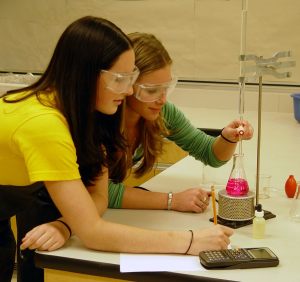
Evangelists of 21st century learning will tell you that traditional ways of teaching are bad and that your methods are arcane and do nothing to help students learn.

There may be some truth in that, but if you have been raised and trained to think and teach a certain way, becoming a 21st century teacher is not something that happens overnight. If you are interested in learning what will keep your students engaged, incorporating small, incremental changes to your teaching practice might be the most effective way to go. You don’t have to throw away everything that has worked for you over the past ten, fifteen or more years. Take stock of what you do very well and take pride in it. Incorporate new strategies slowly, in a way that makes sense for you. Observe how your students react and most importantly, if they are learning and absorbing new material in an effective manner.

Personally, I believe that most teaching methods have some merit. Certain methods work better with certain students. There is no absolute right way. Having said that, the teaching profession has changed… and continues to change. Our students and our world have changed. If we are to be not just teachers, but also role models, it is up to us to challenge ourselves to try new ways of doing things, too.

____________________________

Share this post: How to engage learners without losing your mind http://wp.me/pNAh3-13p

Update – January 2018 – This blog has had over 1.8 million views thanks to readers like you. If you enjoyed this post, please “like” it or share it on social media. Thanks!

Sarah Elaine Eaton is a faculty member in the Werklund School of Education, University of Calgary, Canada.


Kids and Gaming: Let’s Talk About It

February 25, 2011

Technology and gaming can cause tension in families. Some parents become exasperated at what they believe to be their children’s over-use of technology. Gamers enjoy the sense of achievement, exhilaration and “flow” they experience.

The notion of “flow” has been documented by scholars such as Mihály Csíkszentmihályi and others. It is difficult to explain, but when you experience it, you know.

Objectives

  • To watch an educational video focused on technology as a family.
  • To discuss the pros and cons of gaming for individuals, families and communities.
  • To explore the notion of responsible gaming and how to use technology skills for the benefit of others.
  • To offer perspectives on what activities offer a sense of achievement, exhilaration and “flow” to both children and parents.

Activity

Watch Jane McGonigal’s 2010 TED talk “Gaming Can Make a Better World” (20:02) together as a family.

Conversation questions

  • What do you think of McGonigal’s idea that gaming can make a better world? Do you agree or disagree? Why?
  • How are you using technology now in your daily life? Do you over-use technology? Under-use technology? What do these terms mean, anyway?
  • How can you use technology to help others? (This can include things like helping family members improve their technology literacy, using technology skills in volunteer and community work, etc.)
  • What other activities in your life give you a sense of achievement and exhilaration?

Further reading for parents

Csíkszentmihályi, Mihály (1996), Creativity: Flow and the Psychology of Discovery and Invention, New York: Harper Perennial.
Csíkszentmihályi, Mihály (1996), Finding Flow: The Psychology of Engagement With Everyday Life, Basic Books.
Csíkszentmihályi, Mihály (2003), Good Business: Leadership, Flow, and the Making of Meaning, New York: Penguin Books.

Download a 1-page copy of this activity from Scribd:

View this document on Scribd

_________________
Share this: Kids and Gaming: Let’s Talk About It http://wp.me/pNAh3-yR

Update – January 2018 – This blog has had over 1.8 million views thanks to readers like you. If you enjoyed this post, please “like” it or share it on social media. Thanks!

Sarah Elaine Eaton is a faculty member in the Werklund School of Education, University of Calgary, Canada.


Thoughts on literacy issues in Cameroon

June 2, 2010

Recently a colleague suggested to me that I put together an abstract for an upcoming conference in Cameroon. I’ve never been to Cameroon, so naturally I did some research. Research, of course, leads to more thinking. Here’s a thought-piece on literacy in Cameroon, just because I’m a thinker.

_________________________

Learning is changing in the 21st century at a global level. There is a rise in the importance and recognition of non-formal and informal learning. This is particularly important in the case of literacy and languages, not only in Canada, but in other countries as well. Let’s take Cameroon as one example. The Republic of Cameroon is located in central and western Africa. Bordered by Nigeria, Chad, the Central African Republic, Equatorial Guinea, Gabon and the Republic of the Congo, it is home to almost 19 million people.

UNICEF reports that the total literacy rate for Cameroon from 2003-2008 was 68% of the population, with 77% of the males and less than 60% of the females having basic literacy skills. That’s significant.

I ask myself what countries in the west can do to improve the situation in countries like this? What are the implications for the 21st century if we do not? Literacy today includes more than just reading and writing. It includes thinking skills, technology and information literacy and the ability to communicate with others. Together these skills allow us to work together, build partnerships and continue to improve collectively, rather than having the gap between those who “have” and those who “have not” widen even further. It is time to close this gap, or at least narrow it. This is more possible today than it has ever been in any point in human history. It is a possibility in the 21st century, if we work towards it being so.

There is a movement in the west to link second language learning to leadership. How can people in the developed nations, particularly the youth, use their own skills in literacy and second languages to improve the lives of those in developing nations? There are those who would argue that we must work first to improve literacy conditions in our own country. I don’t disagree. I also know that 20-somethings get itchy feet. They want to travel, backpack and see the world. What would happen if we created a world where literacy was so important and so “cool” that youth with itchy feet from developed nations were inspired, of their own volition, to combine their travels with a deeply-rooted personal desire to help others in developing nations improve their literacy skills? Wow.

Educational leadership guru Michael Fullan states that “leaders learning from each other raises the bar for all”. The youth of today are the leaders of the 21st century. They live in a globalized, technologically progressive world unlike that of their parents and grandparents. How can we, in the 21st century, mobilize youth on a global level to transcend geographical, political and economic barriers to raise the bar for each other, using the improvement of literacy skills as a starting point?

Literacy is the key to improved education, skills, and employment. These, in turn, build the capacity to improve our situation, increase our human dignity, provide for our families and contribute to our communities. I believe that it is the responsibility of developed nations such as Canada and the United States to work together with other nations to “raise the bar” for everyone across the globe. I believe that literacy and improved language skills are foundational skills for leadership in the 21st century, a century where technology will change at rapid rate. I also believe that the youth from western developed nations must be mobilized to use their skills to help others from around the world.

Bibliography
Eaton, S. E. (2010a). Formal, non-formal and informal education: The case of literacy, essential skills and language learning in Canada. Calgary. Retrieved from http://library.nald.ca/research/item/8549

Eaton, S. E. (2010b). Leading Through Language Learning and Teaching: The Case of Gandhi. Paper presented at the Interdisciplinary Language Research: Relevance and Application Series, Language Research Centre. Retrieved from http://www.eric.ed.gov/ERICWebPortal/Home.portal?_nfpb=true&ERICExtSearch_SearchValue_0=Eaton%2C+Sarah&searchtype=keyword&ERICExtSearch_SearchType_0=kw&_pageLabel=RecordDetails&objectId=0900019b80400b42&accno=ED508664&_nfls=false

Fullan, M. (2006). Turnaround leadership. San Francisco: Jossey-Bass.

Index Mundi. (n.d.). Cameroon Literacy. Retrieved June 1, 2010, from http://www.indexmundi.com/cameroon/literacy.html

UNICEF. (n.d.). Cameroon: Statistics. Retrieved May 31, 2010, 2010, from http://www.unicef.org/infobycountry/cameroon_statistics.html

__________

Like this post? Share or Tweet it: Thoughts on Literacy Issues in Cameroon http://wp.me/pNAh3-7N

Update – January 2018 – This blog has had over 1.8 million views thanks to readers like you. If you enjoyed this post, please “like” it or share it on social media. Thanks!

Sarah Elaine Eaton is a faculty member in the Werklund School of Education, University of Calgary, Canada.


Trends in language learning: What’s hot, what’s not

May 14, 2010

The world is changing quickly. Old ways of promoting language learning are not going to fly any more. Here’s what’s hot and what’s not, in language learning and education.

What’s out
**************

Vague, hollow promises that can’t be proven. Students see right through vague promises that language learning will get them better jobs. Today’s job market requires more than knowledge of another language. Vague promises are down. Unless you can prove it, don’t claim it.

Authoritative “I know best because I’m your teacher” attitudes. In today’s world where technology is moving at the speed of light, young people are very aware that they know more than the “over-30s”, as we are affectionately known. Old, traditional, hierarchical attitudes are definitely out.

Saying that learning languages is easy. Because it’s really hard work. Students can see right through claims that language learning is easy, or that if they play an audio program in their car or on their iPod they’ll achieve fluency. They know that achieving competence takes dedication, time and effort. Lying to students when deep down they know better, is out.

Complaining and grumbling about cutbacks and lack of funding. Students don’t care that their teachers have a big pile of corrections on their desk. Or that they’re overworked and underpaid. Or that language programs are the underdog of the institution. Really, they just don’t care. Complaining about it makes us, their mentors, look stuffy and jaded. Face it, folks, grumbling is down.

What’s in

**************

Clear, provable demonstrations of how learning a language can have a significant impact on our students. If vague promises from “authorities” are out, then irrefutable evidence from learners themselves is most definitely in. We’re not talking about general-knowledge building here. We’re talking about clear demonstrations of the impact language learning has on our students. Projects that challenge students to ask themselves how they themselves have grown and changed in positive ways are definitely in. Sharing the results of those projects in ways that demonstrate student learning through showcases, school days, and presentations to parents and community members are also up.

Using technology to demonstrate language learning and its impact. Take the projects mentioned above and show the results through technology and you’re very, very in. Demonstrations of work through portfolios, student-made videos, student blogs, Wikis, podcasts. All of it is in. We’re not talking about using technology for the sake of using technology. We’re talking about using technology to demonstrate students’ learning and show how they themselves reflect upon the impact language learning has had on them. And then sharing it with others through technology. Very, very in.

Proving the value of language learning through stories and speech. Public speaking and presentation skills are enjoying new levels of prestige in the Obama era. For the first time in years, there is a U.S. President who is wooing young people with his power to communicate verbally. Today, it’s cool to be articulate. Debate club is no longer for the nerds. Second language speech contests, debates, poetry readings, and story telling are hot, hot, hot.

Linking language learning to leadership and changing the world in amazingly positive ways. All around the world people are quietly learning other languages as a means not only to become self-empowered, but also to empower others.  They are choosing to learn another language in order to go to a country where they can make a difference, for however short a time. Housing projects. Clean water projects. Health-related projects. Projects that help children and families in the developing world. These are more common place today than they have ever been. Learning a language in order to reach out to others and make a difference in the world is “in”.

Showing funders the impact their investment has on our students, our communities and our world. If students are tired of hearing teachers grumble, funders – and that includes government or other funders – are definitely tired of it. Today savvy educators and program directors are saying, “We’re going to show you how your funding makes a difference.” Then you show them through all those provable demonstrations that were mentioned earlier. Then you say, “See the impact your contribution has made? Thank you.  Thank you for investing in our students and our future. Their future. Now let’s see what can accomplish with your continued support…” Seeing government and funders as partners and “investors in the future” is totally in.

__________

Post update (July 124, 2010) – This post led to a full-fledged research report on these topics. Check it out:

Global Trends in Language Learning in the 21st Century http://wp.me/pNAh3-8I

____________

Share this post: Trends in Language Learning: What’s hot, what’s not http://wp.me/pNAh3-5o

Update – January 2018 – This blog has had over 1.8 million views thanks to readers like you. If you enjoyed this post, please “like” it or share it on social media. Thanks!

Sarah Elaine Eaton is a faculty member in the Werklund School of Education, University of Calgary, Canada.