Institutions across Alberta and other provinces, as well as in Europe, are hosting a simultaneous Academic Integrity Week, October 18-22, 2021. At the University of Calgary we are pleased to be running multiple events, some of which are run for and by students, and others designed for educators and staff. The Taylor Institute for Teaching and Learning at the University of Calgary is hosting three webinars, which are free and open to the public. Note that all times listed are in Calgary (Mountain) time.
The Intersection of Academic Integrity and Mental Health: From Resources to Policies
Through discussions and activities, participants will examine academic integrity through a mental health lens. One of the topics addressed in this session include the impact of the academic misconduct process on student and faculty mental health. At a structural level, one of the topics highlighted will be bringing a mental health perspective to the development or review of academic integrity-related policies, processes and procedures. The session will conclude with Q&A, as well as resources to support student and faculty mental health and wellbeing.
Facilitator: Andrew Szeto, PhD
Date: Tuesday, October 19, 2021
Time: 12 – 1 p.m.
Contract Cheating in Alberta and Beyond
Join us for an eye-opening webinar about contract cheating in Alberta. We will talk about essay mills, homework completion services, unethical tutoring services, and thesis consultation services that all cross the line into academic misconduct. Learn about the size and scope of this predatory industry and how it preys on our students, including engaging in blackmail and extortion.
Facilitator: Sarah Elaine Eaton, PhD and Sheryl Boisvert
Date: Wednesday, October 20, 2021
Time: 4 – 5:30 p.m.
Locations: Online via Zoom
FOIP Training for Academic Integrity
Learn how the Freedom of Information and Protection of Privacy Act (FOIP) applies when there are suspected or actual breaches of academic integrity. Learn what information can be shared, with whom and why.
Facilitator: Katharine Kinnear (FOIP Coordinator, Legal Services) and Jennifer Sinclair (FOIP Advisor, Legal Services)
Date: Friday, October 22, 2021
Time: 12 – 1 p.m.
Location: Online via Zoom
This blog has had over 2 million views thanks to readers like you. If you enjoyed this post, please “like” it or share it on social media. Thanks!
Sarah Elaine Eaton, PhD, is a faculty member in the Werklund School of Education, and the Educational Leader in Residence, Academic Integrity, University of Calgary, Canada.
Opinions are my own and do not represent those of the University of Calgary or anyone else.
In Part 1 of this series I talked about how contract cheating companies are now targeting professors and teaching assistants (TAs) to offer grading services. Since then, I have done a bit of digging into whether it is legal, or even permissible to outsource one’s grading responsibilities.
I figure if you are hired to for an academic role that includes teaching that would also including taking responsibility for grading and other duties related to assessment. Of course there are provisions to work with a TA in some courses, but TAs are also employees of the university and their work is approved by the institution. In cases like this, working with a TA is a perfectly legitimate activity and there is no deception. Ghost grading is different because it can happen without the knowledge or permission of the employer.
Ghost graders are unauthorized individuals, hired under the table, to perform academic duties that would otherwise be conducted by academic staff or teaching assistants.
Employing ghost graders also deceives students because they have no idea who is assessing their work or who has access to it. Just as educators expect students to complete their assignments themselves, without engaging a third party, so too, should students be able to expect their professors and teaching assistants to assess their work. If a professor or TA hires a ghost grader, the student has no idea what that individual or company might do with their work without their knowledge, such as re-sell it or share it to the contract cheating company or any other additional third party. You can start to see how the practice of using unauthorized ghost graders gets complicated fast. By hiring a ghost grader, educators are breaking trust with their students and their employers.
University faculty members at publicly-funded universities in Canada are often unionized. To my surprise, I found several examples of collective agreements and employment contracts that do not strictly prohibit the outsourcing or sub-contracting of one’s duties. I started with my own university. I searched for the terms “outsource”, “outsourcing”, “subcontract”, and “sub-contract” in our collective agreement for academic staff. I found no matches for these search terms. I reviewed the collective agreement and it was not immediately evident to me that there was any clause that specifically prohibits faculty members from outsourcing their job duties to a third party. (Please note: I am not a lawyer or an expert in contract law.)
I found this puzzling. I am the first to admit that I am not a lawyer, and nor am I an expert on labour laws, collective agreements or contracts. So, I reached out to the University of Calgary Faculty Association (TUCFA) on August 12, 2021 via e-mail to ask for clarification regarding outsourcing in University of Calgary’s collective agreement, but yet to receive a response. To be fair, I am quite sure they remain very busy with matters related to COVID-19 and I will update this blog post if I receive a reply from them.
Out of curiosity, I repeated the search and scan with the collective agreements for academic staff at the University of Alberta (Alberta, Canada), the University of British Columbia (British Columbia, Canada), and Queen’s University (Ontario, Canada) with similar results. As a non-expert, I could find no immediate evidence in any of them that it is prohibited to outsource one’s grading responsibilities, or any other employment duties, for that matter.
I should point out that I have not conducted an in-depth investigation into this. I am situated in Canada and I cannot speak to what happens in any other country. I did not conduct a scan of the collective agreements that cover teaching assistants, but I would not be surprised if the situation was the same.
Following my first blog post on this topic, I received a number of e-mails from individuals telling me stories of professors at their university (in Canada and elsewhere) who regularly outsource their grading duties, paying for services out of their own pocket or under a research grant, classifying them as “professional services”. This is all anecdotal and I cannot substantiate any of it.
What I can say is that it seems there may be a legal loophole, at least in Canada, that would allow contract cheating companies to wiggle into this new line of business of offering grading services to professors and teaching assistants. As with student contract cheating, the companies would not be at fault, particularly since there are no laws in Canada prohibiting these kinds of companies from operating. In other jurisdictions, were laws against contract cheating have been enacted, the focus has been on academic cheating, so there may be loopholes elsewhere that legally allow companies to reach out to faculty and teaching assistants to provide sub-contracting services.
Of course, no collective agreement or employment contract can be exhaustive of all the ways that an employee can engage in misconduct. It could be that there is no clause in these agreements that strictly prohibits outsourcing of work because it falls under a general category of employee misconduct that might be addressed on a case-by-case basis, with investigators considering numerous pieces of evidence and details. It seems bizarre to me that this particular loophole exists, because it has left post-secondary institutions vulnerable to exploitation from commercial third-party providers who profit from various forms of misconduct. And if faculty and teaching assistants do not know that it is unacceptable to outsource their work, then it seems reasonable to expect that some of them might fall prey to companies who promise to ease their stress and relieve them of aspects of their work that they find unrewarding or too time-consuming.
Contract cheating companies are infiltrating higher education faster than ever before; and they may have just found a whole new market for illicit academic outsourcing services with professors and teaching assistants being their target customer base.
This blog has had over 2 million views thanks to readers like you. If you enjoyed this post, please “like” it or share it on social media. Thanks!
Sarah Elaine Eaton, PhD, is a faculty member in the Werklund School of Education, and the Educational Leader in Residence, Academic Integrity, University of Calgary, Canada.
Opinions are my own and do not represent those of the University of Calgary or anyone else.
You likely already know about commercial contract cheating (e.g., term paper mills, essay mills, assignment completion services, and so on.) It seems some companies behind these services are pursuing a new line of business, targeting educators. Companies are targeting graduate student teaching assistants (TAs) and faculty members offering “grading” assistance. Grading is a term we use a lot in Canada, but it can also be called marking or assessing. Although this is a new twist on contract cheating, it would stand to reason that this type of service might be called contract grading, but that term already exists in Canada and the United States and it has an entirely different meaning, so I have dubbed this service “ghost grading”.
With ghost grading, third party commercial entities offer to do grading for TAs and profs on their behalf.
It seems to work like this: a company approaches the TA or instructor individually, often via e-mail. The company offers to provide grading services for a fee. The company operates as a third party to complete grading work on behalf of instructors, who pay a fee to outsource this work.
Instructors and TAs are being pitched on the idea that the rate they pay for sub-contracting out grading duties is less than their own hourly rate would be, so they are gaining back time to work on other, more interesting projects.
The prof or TA makes a private side deal with a third party company. The educators give the company their learning management system (LMS) login credentials and their grading is “taken care of” by the contractor.
These companies sometimes allege or insinuate they are reaching out to the TA or the prof with the permission of the administration or the school. Of course, this isn’t at all the case. The school administration might have no idea this is happening, or at least, not until after it has been discovered. By that point, might be considered misconduct on the part of the TA or academic staff member who has engaged with one these companies and dealt with as such.
Remember, contract cheating companies are predatory and they care about one thing: generating profit, lots and lots of profit.
They are known for having sophisticated marketing and they know exactly what messages to send to get new customers. A naïve teaching assistant who actually believed that the company is operating with the permission of the administration can be completely duped and even though they might be committing an act of misconduct by engaging with the company, they might also be a victim of the scam.
So far, I can find little documented about this phenomenon, but I am hearing increasing reports of it happening. If you have been approached by a company offering such services, please feel free to reach out to me. In Part 2, I’ll share more about this practice and its impact.
This blog has had over 2 million views thanks to readers like you. If you enjoyed this post, please “like” it or share it on social media. Thanks!
Sarah Elaine Eaton, PhD, is a faculty member in the Werklund School of Education, and the Educational Leader in Residence, Academic Integrity, University of Calgary, Canada.
Opinions are my own and do not represent those of the University of Calgary or anyone else.
Last year, my friend and colleague, Ann Nakaska, invited me to contribute an article to a special issue of the Career Planning & Adult Development Journal for which she was serving as guest editor.
The theme of this special issue is: “How we will work in the future”. This is a robust issue, spanning 291 pages, and is divided into 3 parts:
Part 1: The impact of technology on the workplace
Part 2: Working in the fourth industrial revolution
Part 3: How career practitioners will work in the future
My contribution to this robust publication is in included in Part 2. My piece is, “Career development, academic integrity and counterfeit credentials: Understanding the connections” (pp. 98 – 106).
Ann’s invitation challenged me to write for a different audience: career development professionals. This piece is for a professional practitioner audience, though it may also be of interest to others interested in the topic of fake degrees and fraudulent or faulty credentials.
Abstract
The purpose of this article is to highlight ethical aspects of career development through the lens of academic integrity. I begin with an overview of academic integrity and the fundamental values that underpin it. Then I discuss fake and faulty academic credentials, including degrees, diplomas, transcripts, and related documents. I explore the impact of fake credentials on society, highlighting a few significant examples that have been featured by mainstream media. Finally, I examine the role that career development professionals play in promoting academic integrity and professional ethics to their clients. I conclude with concrete recommendations for career development professionals to inform themselves and their clients, and in doing so, to become partners in integrity and advocates of ethical education.
The issue has just been released and Ann shared with all of the contributors that just before the issue was published, her co-guest editor, Steven Beasley, who had served as managing editor of the journal for 20 years passed away. My deepest condolences to Steven and all who knew him.
This blog has had over 3 million views thanks to readers like you. If you enjoyed this post, please “like” it or share it on social media. Thanks!
Sarah Elaine Eaton, PhD, is a faculty member in the Werklund School of Education, and the Educational Leader in Residence, Academic Integrity, University of Calgary, Canada. Opinions are my own and do not represent those of the University of Calgary or anyone else.
To celebrate the release of Plagiarism in Higher Education: Tackling Tough Topics in Academic Integrity, I’m doing a series of blog posts. Each post highlights key ideas from various chapters. I’ll also share some extra trivia and tidbits, so even if you’ve read the book, you’ll get some insider info that isn’t in the book itself. I’ve done a video to accompany today’s post and it has different content than the written blog post, so be sure to check out the video, too.
In today’s post, I share a story a conversation with one of my mentors that had an influence on my writing. I also share you an overview of how the book is organized.
Dedication & Preface
Normally, I wouldn’t talk about the dedication, but in this case, it is worth mentioning. When Libraries Unlimited / ABC Clio approached me in January 2019 about writing a book, at first I wasn’t sure. I wasn’t familiar with the press, but after consulting with some library colleagues whom I trust, they assured me that in the field of library sciences, they are a very well respected and have more than 60 years of experience in academic publishing. After some back and forth with the publisher, I sent in a proposal and in March 2019, I signed the contact.
The next month Tracey Bretag visited us at the University of Calgary to keynote the inaugural Canadian Symposium on Academic Integrity. While she was here, I told her I’d just signed a book contract. Our exchange went something like this:
Tracey: “A book! That’s a big project!”
Me: “I know…”
Tracey: “What will you say that is new?! I’ll be excited to read it… but you’ve got to bring something new to the table!”
Tracey wasn’t the only one to make such a comment. Those words rang in my head at every stage of the writing process. I have learned over the years that two of my strengths as a writer are synthesizing existing information in a straightforward way and also forecasting emerging trends. In this book, I do both of these things, and I also propose a new framework for understanding plagiarism in higher education that goes beyond the traditional notions of text and ideas.
I submitted the full manuscript to the book publisher in May 2020, where it then underwent a rigorous process of editing and feedback. Tracey never got to read the book manuscript, as she was already ill when I submitted it. The academic integrity world reeled in grief when she passed in October, 2020.
I realized that I needed to acknowledge Tracey’s passing in the book itself. Thankfully, my editor at Libraries Unlimited, Jessica Gribble, was gracious and understanding. Jessica and the publishing team allowed changes to the book after it had gone into the copy editing phase of production. I was able to make some updates to the text and add a dedication. The book is dedicated to Tracey and I will remain forever grateful for her constant encouragement, and also her challenge to bring something new to the field.
Table of Contents
Here’s an overview of what’s in the book:
Introduction: Overview of the book
Chapter 1: A brief history of plagiarism
Chapter 2: Contextualizing and defining plagiarism in higher education
Chapter 3: Intentionality, textuality, and other complicating factors
Chapter 4: A multi-stakeholder systems approach to plagiarism: The 4M framework
Chapter 5: Evaluation and assessment
Chapter 6: Self-plagiarism
Chapter 7: Academic file-sharing: Sharing is caring, and other myths
Chapter 8: Contract cheating: Outsourced academic work
Chapter 9: Diversity, equity, and inclusion
Chapter 10: Recognizing, reporting, and resolving plagiarism
Chapter 11: Plagiarism by professors and researchers
Chapter 12: Conclusion: Contemplating the future of plagiarism
The structure of the book changed somewhat as I was writing it. For example, in the proposal the title of Chapter 9 was “Tackling the taboo: Plagiarism and international students”. Even though I knew I wanted to address the complexities and bust some myths related to international students, that title never really felt comfortable. As I was writing, my university was engaged in a search for its first ever Vice-Provost of Equity, Diversity, and Inclusion. Like so many others during the spring of 2020, I became ever more aware of the need to address bias and discrimination on our campuses and in society. So, the chapter evolved quickly. In the end, it realized it was not a chapter about international students, but about equity. Once I committed to that, the chapter went in an entirely different direction; one I think that is ultimately stronger, more relevant, and more timely.
Other topics I address it the book that I had not anticipated include COVID-19 (see Chapter 5 and Chapter 12), machine learning (see Chapter 12), and the role parents play in how well their children act with integrity in school (see Chapter 4 and Chapter 8).
In the end, although this is a book about plagiarism in higher education, I also wanted it to address academic integrity (and misconduct) more generally. The community of scholars who study academic integrity has been a small one. It has been growing in recent years, and my intention for this book is to provide a solid and interesting book for current and future students, scholars, practitioners, and others who care about academic integrity in their professional practice.
Related posts:
The unboxing: Plagiarism in Higher Education: Tackling Tough Topics in Academic Integrity – https://wp.me/pNAh3-2FZ
This blog has had over 3.7 million views thanks to readers like you. If you enjoyed this post, please “like” it or share it on social media. Thanks!
Sarah Elaine Eaton, PhD, is a faculty member in the Werklund School of Education, and the Educational Leader in Residence, Academic Integrity, University of Calgary, Canada.
Opinions are my own and do not represent those of the University of Calgary or anyone else.
 Institutions across Alberta and other provinces, as well as in Europe, are hosting a simultaneous Academic Integrity Week, October 18-22, 2021. At the University of Calgary we are pleased to be running multiple events, some of which are run for and by students, and others designed for educators and staff. The Taylor Institute for Teaching and Learning at the University of Calgary is hosting three webinars, which are free and open to the public. Note that all times listed are in Calgary (Mountain) time.


 Posted by Sarah Elaine Eaton, Ph.D.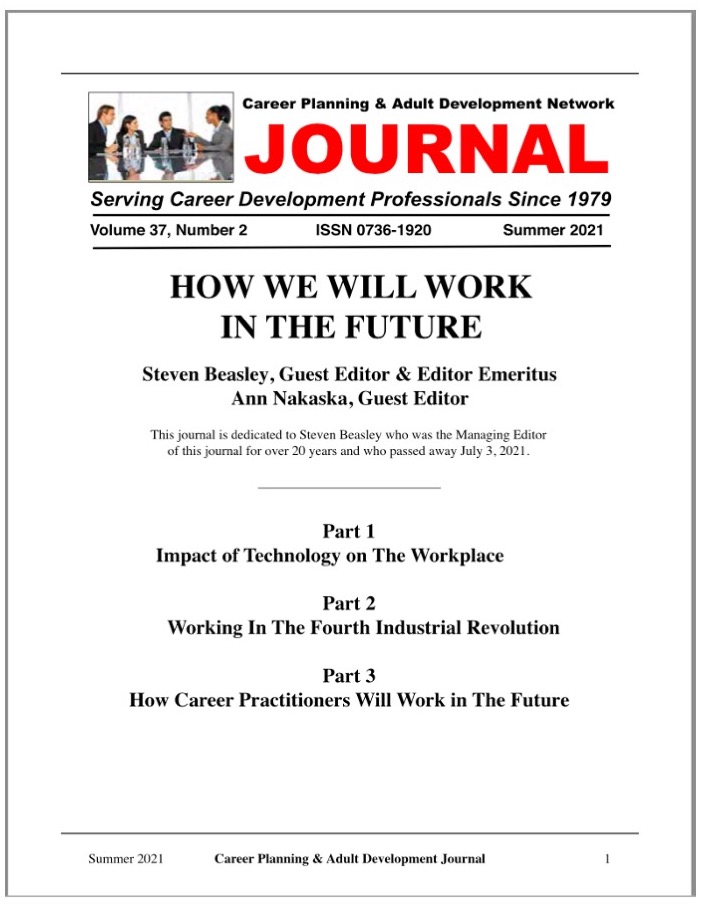

 Learning, Teaching and Leadership
You must be logged in to post a comment.