Forthcoming book: Fake Degrees and Fraudulent Credentials in Higher Education

October 16, 2022
Front cover of the book, Fake Degrees and Fraudulent Credentials in Higher Education, edited by Sarah Elaine Eaton, Jamie Carmichael, and Helen Pethrick. Published 2023 by Springer.

We are pleased to share the news that our edited book, Fake Degrees and Fraudulent Credentials in Higher Education, has been submitted for publication (Eaton, Carmichael, and Pethrick, eds.) to Springer Nature. The book is slated for publication in early 2023.

Book description

This book addresses an important topic in higher education: credential fraud. This includes, but is not limited to, fake degrees, diploma mills, admissions fraud, and cheating on standardized admissions tests. The book directly addresses fake and fraudulent credentials in higher education. It explores transcript tampering and fraud in varsity athletics and discusses lazy practices in the higher education hiring processes that open the door for professors without proper credentials to get jobs in post-secondary institutions. 

The book also discusses how technology is being used to stop the proliferation of fake and fraudulent credentials in a variety of ways, including blockchain technology.

Table of Contents

Here is a sneak preview of the table of contents:

Chapter 1: Fake Degrees and Credential Fraud, Contract Cheating, and Paper Mills: Overview and Historical Perspectives – Sarah Elaine Eaton & Jamie Carmichael

Chapter 2: Admissions Fraud in Canadian Higher Education – Jamie Carmichael & Sarah Elaine Eaton

Chapter 3: Yesterday, Today, and Tomorrow: A Tour of Axact, the “World’s Largest Diploma Mill” – Allen Ezell

Chapter 4: Bridging Today to Tomorrow: A Historical and Technological Review of Credential Exchange in Higher Education within Canada – Joanne Duklas

Chapter 5: Fair play, Fraud, or Fixed? Athletic Credentials in US Higher Education – Kirsten Hextrum

Chapter 6: Corruption in Admissions, Recruitment, Qualifications and Credentials: from Research into Quality Assurance – Stella-Maris Orim & Irene Glendinning

Chapter 7: Avoiding Favouritism in the Recruitment Practice of Turkish Higher Education Institutions Özgür Çelik & Salim Razı

Chapter 8: None of the Above: Integrity Concerns of Standardized English Proficiency Tests – Soroush Sabbaghan & Ismaeil Fazel

Chapter 9: Examining the Problem of Fraudulent English Test Scores: What Can Canadian Higher Education Institutions Learn? – Angela Clark

Chapter 10: There is no culture? A Framework for Addressing Admissions Fraud – Brendan DeCoster

Chapter 11: Security Risks, Fake Degrees, and Other Fraud: A Topic Modelling Approach – Jamie Carmichael & Sarah Elaine Eaton 

Chapter 12: Are You for Real? Lessons for the Academy About Professors with Fake or Fraudulent Degrees – Sarah Elaine Eaton & Jamie Carmichael

Chapter 13: Fake Degrees and Fake Degrees and Fraudulent Credentials in Higher Education: Conclusions and Future Directions – Jamie Carmichael & Sarah Elaine Eaton

About the editors

Sarah Elaine Eaton

Werklund School of Education, University of Calgary, Calgary, Alberta, Canada.

Sarah Elaine Eaton, PhD, is an Associate Professor of Education at the University of Calgary, Canada, where she also serves as the inaugural Educational Leader in Residence, Academic Integrity. Eaton’s research focuses on academic ethics in higher education. Her work can be found in the British Educational Research Journal, the Journal of Academic Ethics, the Journal of Educational Thought and Interchange, among other places. She is the Editor-in-Chief of the International Journal for Educational Integrity (Springer Nature) and co-founder and co-editor of Canadian Perspectives on Academic Integrity. In 2020 she received the national Research and Scholarship award from the Canadian Society for the Study of Higher Education (CSSHE) for her contributions to research on academic integrity in Canadian higher education.

Jamie J. Carmichael

Carleton University, Ottawa, Ontario, Canada.

Jamie Carmichael is the Associate Registrar of Scheduling and Systems at Carleton University. She is responsible for the construction of the university timetable, scheduling and administration of examinations, the operation of two examination centres for students with disabilities, a university-wide space management system, and other core student administrative systems. Since 2009, she has received ten service excellence nominations for her work that ranges from information technology projects, team acknowledgment to innovation.

Carmichael’s research lies at the intersection of academic integrity and machine learning, with graduate education in Applied Science in Technology Information Management (Engineering). She has presented or co-presented at national and international conferences and is often called up on by specialized groups in higher education to present on her work.

Helen Pethrick

University of Calgary, Calgary, Alberta, Canada.

Helen Pethrick, MA, is a researcher and educator in Calgary, Alberta, Canada. Research areas include academic integrity in higher education, post-secondary student mental health and well-being, and peer mentorship in educational settings.

Related posts:

Fake Degrees and Fraudulent Credentials: Research Project Update

Scholarships Without Scruples: 3 Signs of Bogus Scholarships and Scams

Why Universities and Colleges Need Clear Policies to Deal with Fake COVID-19 Vaccination Records and Test Results

Degrees of Deceit: A Webinar

_________________________________

Share or Tweet this: Forthcoming book: Fake Degrees and Fraudulent Credentials in Higher Education – https://drsaraheaton.wordpress.com/2022/10/16/forthcoming-book-fake-degrees-and-fraudulent-credentials-in-higher-education/

This blog has had over 3 million views thanks to readers like you. If you enjoyed this post, please “like” it or share it on social media. Thanks!

Sarah Elaine Eaton, PhD, is a faculty member in the Werklund School of Education, and the Educational Leader in Residence, Academic Integrity, University of Calgary, Canada. Opinions are my own and do not represent those of the University of Calgary.


Fake Degrees and Fraudulent Credentials: Research Project Update

February 3, 2022

close up shot of paper money and numbers on a gray surface

Photo by Tara Winstead on Pexels.com

Since 2020, Jamie Carmichael (Carleton University, Ottawa, Canada) and I have been partnering on research related to fake degrees and fraudulent credentials in Canada. We presented our preliminary findings last year at the 2021 European Conference on Academic Integrity and Plagiarism. Later in 2021, I contributed an invited article on fake degrees and credential fraud to a special issue of the Career Planning & Adult Development Journal focusing on the future of work.

Now Jamie and I are working on an edited book to be published by Springer Nature later this year.

We have noticed more and more discussions of qualification fraud and impersonation in the news, such as this article that talks about a situation in which the person who showed up for an interview and was hired was not the same person who showed up for the job after the hiring process was complete.

Since starting this project almost two years ago our eyes have been opened to the massive global market that exists for fake and fraudulent degrees, diplomas, and other credentials. We’ll keep you updated as our research evolves, but for now we just wanted to let you know we are still working on this and learning more every day.

Related posts:

_________________________________

Share or Tweet this: Fake Degrees and Fraudulent Credentials: Research Project Update –  https://drsaraheaton.wordpress.com/2022/02/03/fake-degrees-and-fraudulent-credentials-research-project-update/

This blog has had over 3 million views thanks to readers like you. If you enjoyed this post, please “like” it or share it on social media. Thanks!

Sarah Elaine Eaton, PhD, is a faculty member in the Werklund School of Education, and the Educational Leader in Residence, Academic Integrity, University of Calgary, Canada. Opinions are my own and do not represent those of the University of Calgary.


New article: “Career development, academic integrity and counterfeit credentials: Understanding the connections”

July 26, 2021

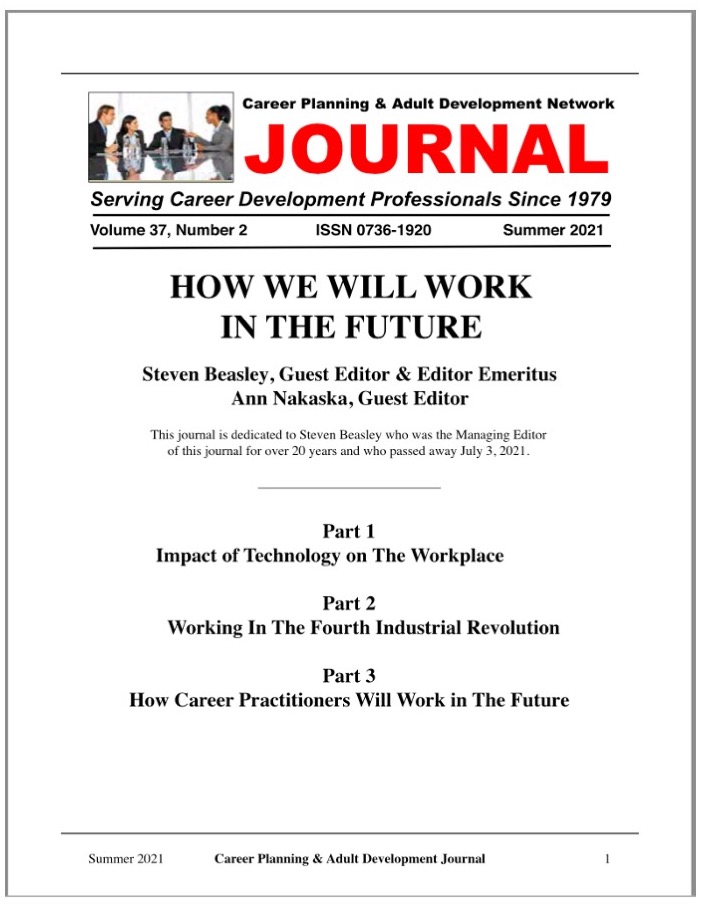
Last year, my friend and colleague, Ann Nakaska, invited me to contribute an article to a special issue of the Career Planning & Adult Development Journal for which she was serving as guest editor.

CPAD Journal

The theme of this special issue is: “How we will work in the future”. This is a robust issue, spanning 291 pages, and is divided into 3 parts:

  • Part 1: The impact of technology on the workplace
  • Part 2: Working in the fourth industrial revolution
  • Part 3: How career practitioners will work in the future

My contribution to this robust publication is in included in Part 2. My piece is, “Career development, academic integrity and counterfeit credentials: Understanding the connections” (pp. 98 – 106).

Ann’s invitation challenged me to write for a different audience: career development professionals. This piece is for a professional practitioner audience, though it may also be of interest to others interested in the topic of fake degrees and fraudulent or faulty credentials.

Abstract

The purpose of this article is to highlight ethical aspects of career development through the lens of academic integrity. I begin with an overview of academic integrity and the fundamental values that underpin it. Then I discuss fake and faulty academic credentials, including degrees, diplomas, transcripts, and related documents. I explore the impact of fake credentials on society, highlighting a few significant examples that have been featured by mainstream media. Finally, I examine the role that career development professionals play in promoting academic integrity and professional ethics to their clients. I conclude with concrete recommendations for career development professionals to inform themselves and their clients, and in doing so, to become partners in integrity and advocates of ethical education.

The issue has just been released and Ann shared with all of the contributors that just before the issue was published, her co-guest editor, Steven Beasley, who had served as managing editor of the journal for 20 years passed away. My deepest condolences to Steven and all who knew him.

The entire issue can be accessed free of charge here: https://files.ctctusercontent.com/56f4bf3f301/4ffe3e3a-9252-46b4-b19c-c9913e1fec19.pdf?rdr=true

 #AcademicIntegrity #FakeDegrees

Related posts

_____

Share or Tweet this: New article: “Career development, academic integrity and counterfeit credentials: Understanding the connections” https://drsaraheaton.wordpress.com/2021/07/26/new-article-career-development-academic-integrity-and-counterfeit-credentials-understanding-the-connections/

This blog has had over 3 million views thanks to readers like you. If you enjoyed this post, please “like” it or share it on social media. Thanks!

Sarah Elaine Eaton, PhD, is a faculty member in the Werklund School of Education, and the Educational Leader in Residence, Academic Integrity, University of Calgary, Canada. Opinions are my own and do not represent those of the University of Calgary or anyone else.


CFP: Degrees of Deceit – Impact of Counterfeit Credentials and Admissions Fraud

September 9, 2020

CFP

Call for chapter proposals

Editors: Sarah Elaine Eaton (University of Calgary, Canada) and Jamie Carmichael (Carleton University, Canada)

Fraudulent credentials have existed since the days of hand-scribed parchments. However, in recent years, scandals such as Operation Varsity Blues in 2019 and 2020 in the United States have drawn renewed attention to the topic of fake credentials, university admissions fraud, and diploma mills. The issue of fraudulent credentials is a global one, and there are no academic disciplines or professions that are immune to the problem.

The Internet has made it even easier for individuals to obtain fraudulent credentials online in a matter of minutes. The platform economy that underpins this nefarious activity churns out both the good and the ugly. However, it is predicted that the ugly will diminish as technical tools become more accessible and easier to manipulate. Therefore, it can be challenging for college admissions staff to spot fake credentials given the changing landscape, particularly during admissions season, when workloads surge and demands to meet deadlines to process admissions applications are unrelenting.

The purpose of this book is to analyze the issue of fraudulent credentials and their impact on higher education admissions, as well as in professional and industry contexts. This volume offers a scholarly examination and discussion of the issues. Evidence-based submissions are also welcomed by higher education professionals and practitioners. We welcome a variety of contributions from case studies to preferred practices, historical inquiries, empirical studies, literature reviews, and conceptual papers. Chapters will include substantive references to credible sources.

Topics:

  • History of credential fraud: Chapters delve into this history of credential fraud, during ancient times, as well as modern times.
  • Admissions fraud in higher education: Chapters focus on issues particular to admissions fraud in higher education, including admissions test fraud and other fraudulent activities related to admissions fraud, including: transcripts, reference letters, and previous educational credentials.
  • Credential forgery: Chapters on this topic explore forged credentials (i.e., fake diplomas, degrees, and transcripts) from legitimate and reputable educational institutions.
  • Diploma mills: Chapters on this topic investigate low-quality for-profit colleges and universities, as well as business selling credentials from institutions that do not actually exist.
  • Impact on industry and the professions: Chapters on this topic address the impact of credential fraud in professional contexts and industry.
  • Introduction of technology to circumvent credential fraud: Chapters on this topic examine how technology can be employed to thwart the risk of credential fraud. This topic can span the spectrum of data protection, and the use of technologies like blockchain, to computer vision, which has the potential to detect “fake” documents or outliers.

 Contributor guidelines:

If you are interested in submitting a book chapter, send a 500-word proposal in Word format by November 1, 2020.

Chapter proposals should clearly indicate:

  • Proposed title
  • Purpose statement
  • Methodology or submission type (i.e., empirical research, historical inquiry, literature review, etc.)
  • Overview of topic(s) to be addressed
  • Originality and significance of the work
  • Reference list (APA 7th edition) (Minimum of 3 references)
  • Full contributor information (name, institution, e-mail, phone, address, ORCid) and brief bio (~50 words)

Proposals will be reviewed for suitability using the following criteria:

  • Substance and quality of the proposal, including the proposed source material (i.e., references)
  • English language proficiency
  • Clarity and feasibility
  • Alignment with the proposed chapter topics
  • Note that chapters with excessive self-citations will not be favourably received.

Decisions on chapter proposals will be made by February 1, 2021.

Full chapters are to be 5000-8000 words, including abstract and references (APA, 7th ed.). Chapter drafts will undergo rigorous peer review. Deadline for full chapters is June 1, 2021.

Submit your proposal in Word format to:

  • seaton (at) ucalgary.ca
  • Jamie.carmichael (at) carleton.ca

About the editors

Sarah Elaine EatonSarah Elaine Eaton, PhD, is an Associate Professor of Education at the University of Calgary, Canada, where she also serves as the inaugural Educational Leader in Residence, Academic Integrity. Eaton’s research focuses on academic ethics in higher education. Her work can be found in the British Educational Research Journal, Journal of Academic Ethics, the Journal of Educational Thought and Interchange, among other places. She is the co-Editor-in-Chief of the International Journal for Educational Integrity (Springer Nature) and co-founder and co-editor of Canadian Perspectives on Academic Integrity. In 2020 she received the Research and Scholarship award from the Canadian Society for the Study of Higher Education (CSSHE) for her contributions to research on academic integrity in Canadian higher education.

Her previous books include: Women Negotiating Life in the Academy (Eaton & Burns, Eds., Springer, 2020); Academic Integrity in Canada (Eaton & Christensen Hughes, Eds, Springer, 2021) and Plagiarism in Higher Education: Tackling Tough Topics in Academic Integrity (ABC Clio / Libraries Unlimited, 2021).

Jamie Carmichael, Carleton University, Ottawa, CanadaJamie Carmichael is the Associate Registrar of Scheduling and Systems at Carleton University. She is accountable for the construction of the university timetable, scheduling and administration of formally scheduled examinations, the operation of two examination centres for students with disabilities, a university-wide space management system, implementation and maintenance of core student administrative systems (from the audit to CRM), and production of the graduate and undergraduate calendars. Since 2009, she has received eight service excellence nominations for her work that range from information technology projects (i.e., timetabling data collection utility tool to secure exam upload system), team acknowledgement to innovation.

Carmichael is completing her Masters in Applied Science candidate in Technology Information Management (Engineering) and her research area is contract cheating and machine learning. She has presented or co-presented her work at the International Society for Professional Innovation Management (ISPIM) conference (2019) and the International Center for Academic Integrity annual conference (2020).

_________________________________

Share or Tweet this: CFP: Degrees of Deceit – Impact of Counterfeit Credentials and Admissions Fraud – https://drsaraheaton.wordpress.com/2020/09/09/cfp-degrees-of-deceit-impact-of-counterfeit-credentials-and-admissions-fraud/

This blog has had over 2 million views thanks to readers like you. If you enjoyed this post, please “like” it or share it on social media. Thanks!

Sarah Elaine Eaton, PhD, is a faculty member in the Werklund School of Education, and the Educational Leader in Residence, Academic Integrity, University of Calgary, Canada. Opinions are my own and do not represent those of the University of Calgary.

This blog has had over 2 million views thanks to readers like you. If you enjoyed this post, please “like” it or share it on social media. Thanks!

Sarah Elaine Eaton, PhD, is a faculty member in the Werklund School of Education, and the Educational Leader in Residence, Academic Integrity, University of Calgary, Canada. Opinions are my own and do not represent those of the University of Calgary.


Scholarships Without Scruples: 3 Signs of Bogus Scholarships and Scams

September 4, 2020

In 2019 Operation Varsity Blues shed light on organized admissions fraud in the United States. Although that scandal focused on the American context, the problem of counterfeit credentials, fake degrees, and other kinds of academic fraud is a global issue.

My colleague, Jamie Carmichael, from Carleton University (Ottawa, Canada), and I have begun some systematic inquiry into these topics. Among them, the issue of scholarship scams has come up repeatedly. We wanted to share some telltale signs of bogus scholarships we have found as part of our work.

Signs of a Scholarship Scam

#1 Credit card required

Legitimate scholarships do not require students, parents, or anyone else to submit credit card information as part of an application. If an application requires you to include this information, it might not be a legitimate scholarship at all.

#2 Discount in disguise

We have found an increasing number of so-called scholarships offered by businesses that are merely a discount for their services. In order to receive the alleged scholarship, students must purchase products or services (e.g., editing of academic work) in order to be eligible for the funds (a.k.a. discount).

Legitimate scholarships do not require students to pay for goods or services in order to receive the funding.

#3 Tax Trickery

In many countries, including Canada, legitimate scholarships and bursaries fall under different tax regulations than earned income. Canadian citizens and permanent residents can find out more on the Canada Revenue Agency website. If the organization awarding the so-called scholarship cannot or will not issue you tax documentation that follows federal taxation requirements, it is likely not a scholarship at all.

Scholarships without scruples: 3 signs of scholarship scams

We are finding increasing evidence of aggressive marketing from organizations promoting various kinds of scholarship scams. This includes sending direct e-mails to students, professors, and university administrators proclaiming how their “opportunity” (i.e., scam) benefits students.

If you are unsure about whether a funding offering might be legitimate or not, consult with an academic advisor at your school.

If you are a faculty member or administrator, ensure that you have checked the credibility of any organization asking you to promote alleged scholarships on their behalf.

The old adage applies: If something seems too good to be true, it probably is.

Want to learn more about admissions fraud, fake degrees, fraudulent credentials and scholarship scams? Join Jamie Carmichael and me for our upcoming webinar, “Degrees of Deceit” scheduled for 11 September 2020.

Related posts:

_________________________________

Share or Tweet this: Scholarships Without Scruples: 3 Signs of Bogus Scholarships and Scams – https://drsaraheaton.wordpress.com/2020/09/04/scholarships-without-scruples-3-signs-of-bogus-scholarships-and-scams/

This blog has had over 2 million views thanks to readers like you. If you enjoyed this post, please “like” it or share it on social media. Thanks!

Sarah Elaine Eaton, PhD, is a faculty member in the Werklund School of Education, and the Educational Leader in Residence, Academic Integrity, University of Calgary, Canada. Opinions are my own and do not represent those of the University of Calgary.

This blog has had over 2 million views thanks to readers like you. If you enjoyed this post, please “like” it or share it on social media. Thanks!

Sarah Elaine Eaton, PhD, is a faculty member in the Werklund School of Education, and the Educational Leader in Residence, Academic Integrity, University of Calgary, Canada. Opinions are my own and do not represent those of the University of Calgary.