He writes that, “Roughly 85 per cent of clinical trials in Canada are privately funded” and that research undergoes very little scrutiny by anyone.
One of the cases Geoff wrote about involved a research study that ran from 2014-2016 involving Indigenous children in Saskatchewan, aged 12-15, who were research subjects in a study that monitored their brainwaves. Student participants were recruited with the help of a Canadian school board.
The study was led by James Hardt, who runs something called the Biocybernaut Institute, a privately run business. According to Leo, James Hardt claims that “brainwave training can make participants smarter, happier and enable them to overcome trauma. He said it can also allow them to levitate, walk on water and visit angels.”
Geoff Leo digs deep into some of the ethical issues and I recommend reading his article.
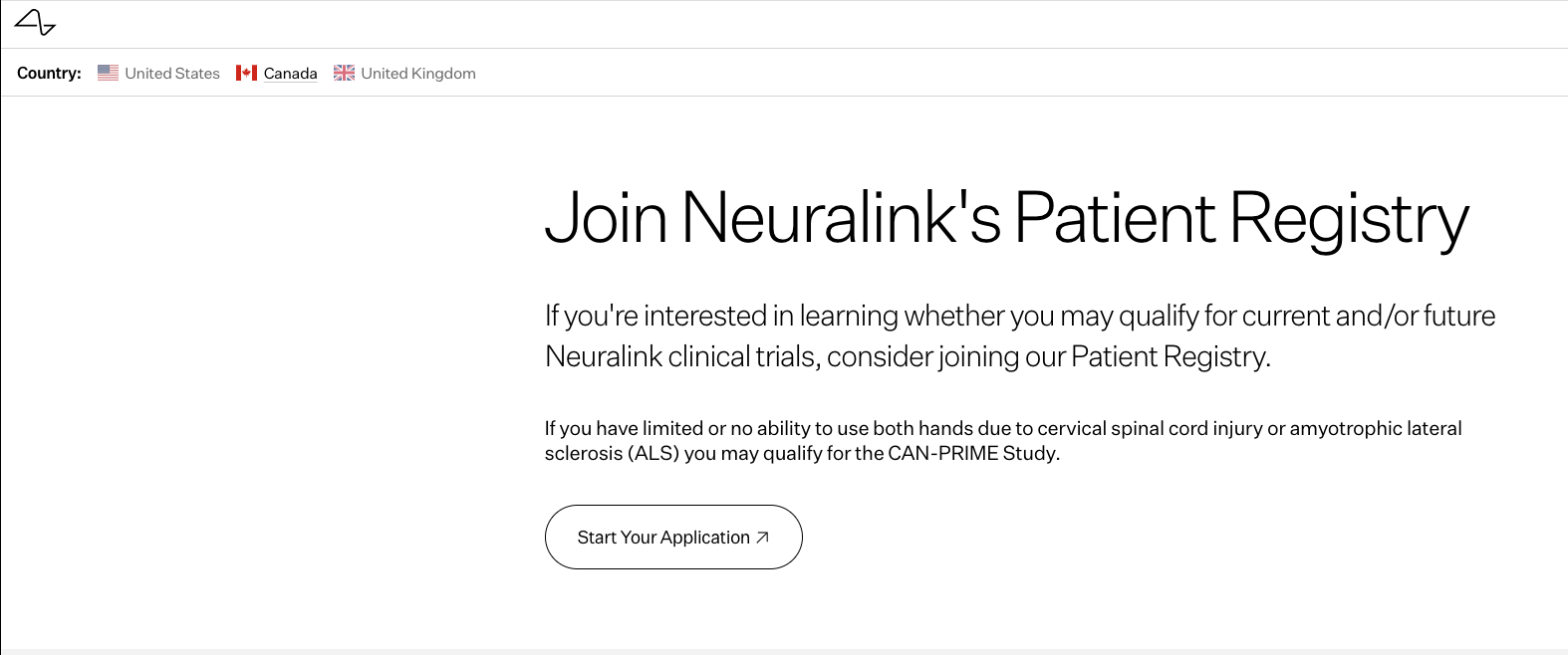
So, that was last month. This month, I happened to notice that according to Elon Musk’s Neuralink website, Musk’s product has now been approved by Health Canada to recruit research participants. There’s a bright purple banner at the top of the Neuralink home page showing a Canadian flag that says, “We’ve received approval from Health Canada to begin recruitment for our first clinical trial in Canada”.
When you click on the link, you get to another page that shows the flags for the US, Canada, and the UK, where clinical trials are either underway or planned, it seems.
The Canadian version is called CAN-PRIME. There’s a YouTube video promo/recruitment video for patients interested in joining, “this revolutionary journey”.
According to the website, “This study involves placing a small, cosmetically invisible implant in a part of the brain that plans movements. The device is designed to interpret a person’s neural activity, so they can operate a computer or smartphone by simply intending to move – no wires or physical movement are required.”
Now we have Elon Musk’s company actively recruiting people from across Canada, the US, and the UK, for research that would involve implanting experimental technology into people’s brains without, it seems, much research ethics oversight at all.
This blog has had over 3.7 million views thanks to readers like you. If you enjoyed this post, please ‘Like’ it using the button below or share it on social media. Thanks!
Sarah Elaine Eaton, PhD, is a Professor and Research Chair in the Werklund School of Education at the University of Calgary, Canada. Opinions are my own and do not represent those of my employer.
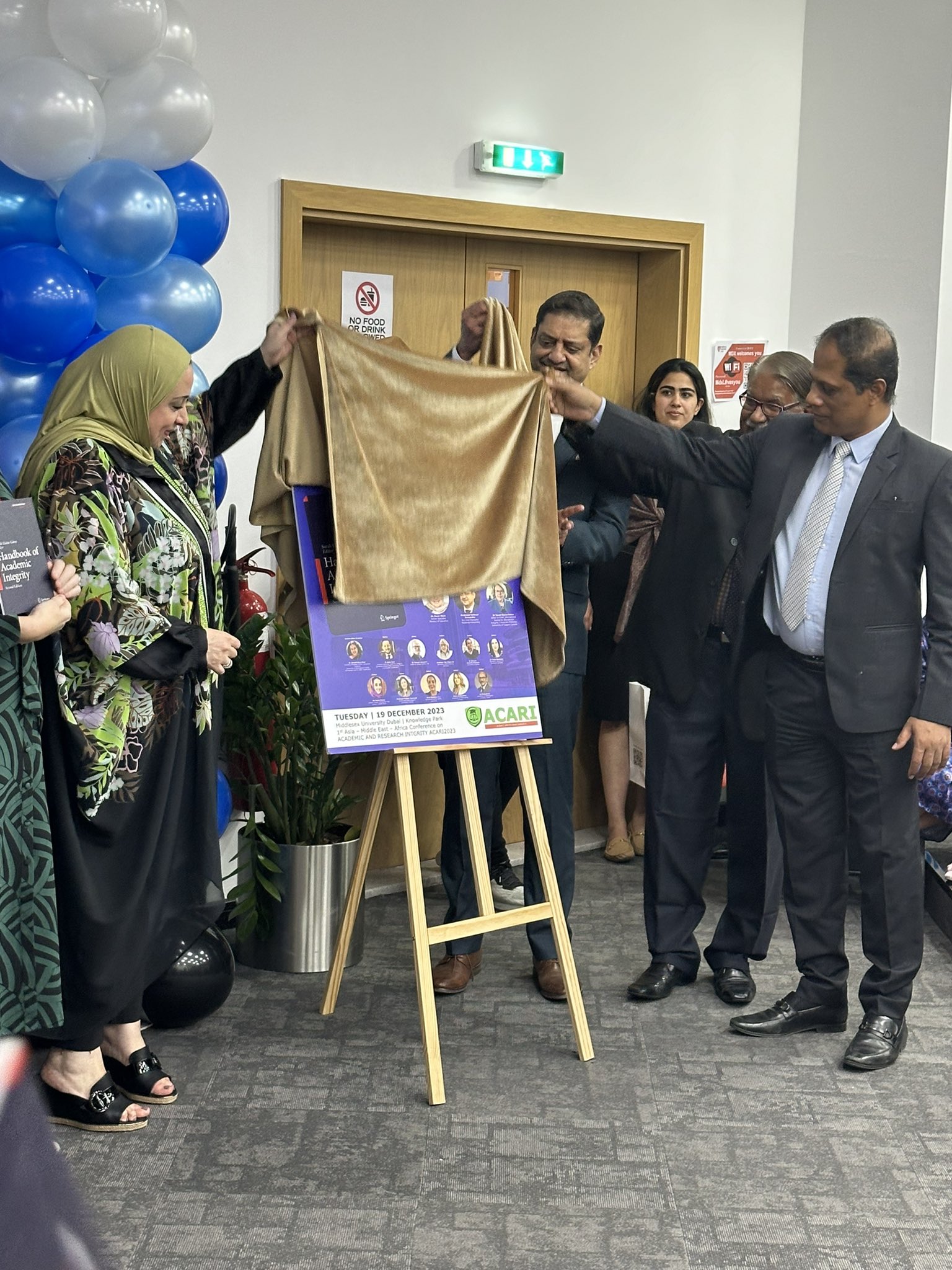
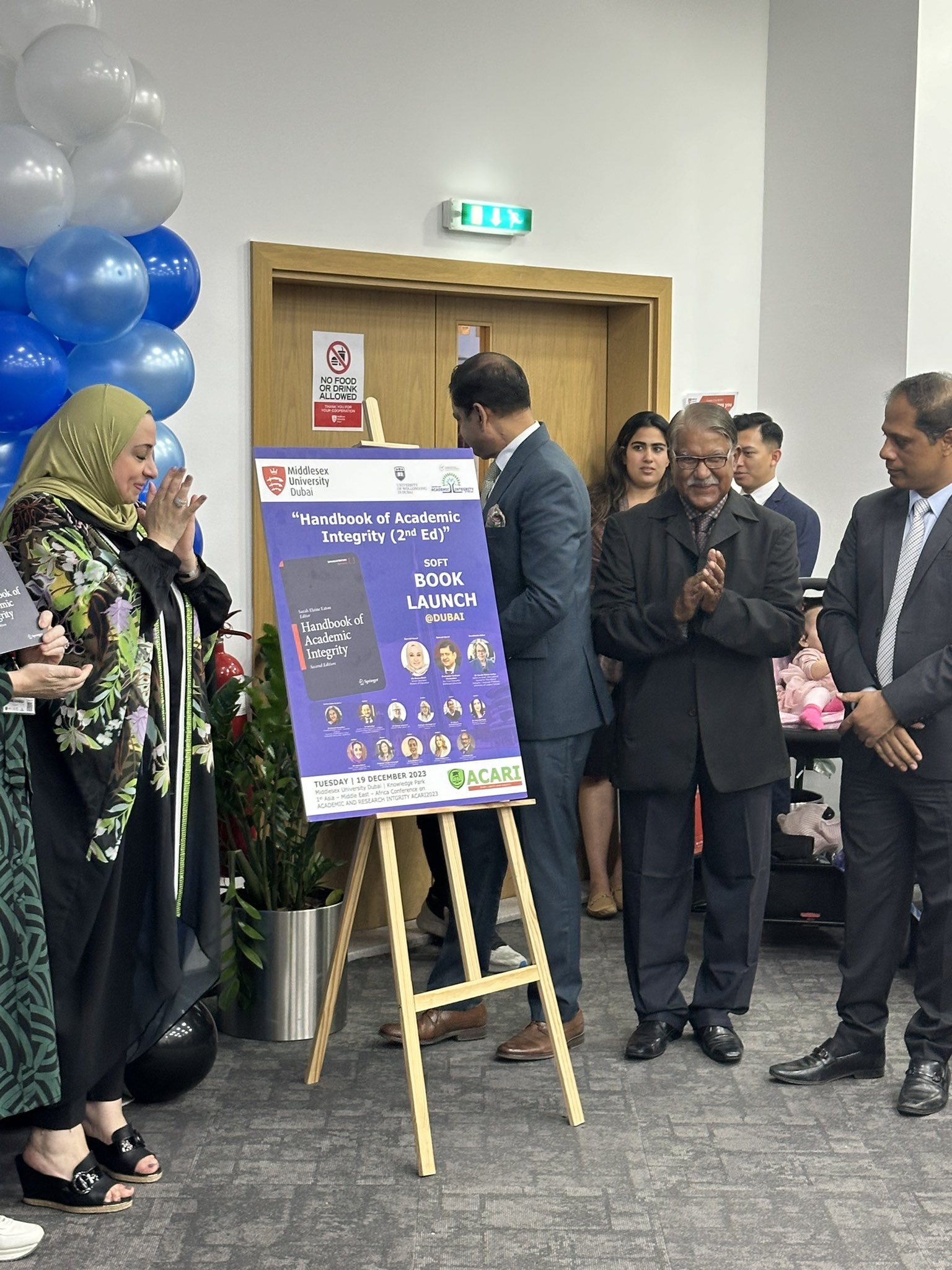
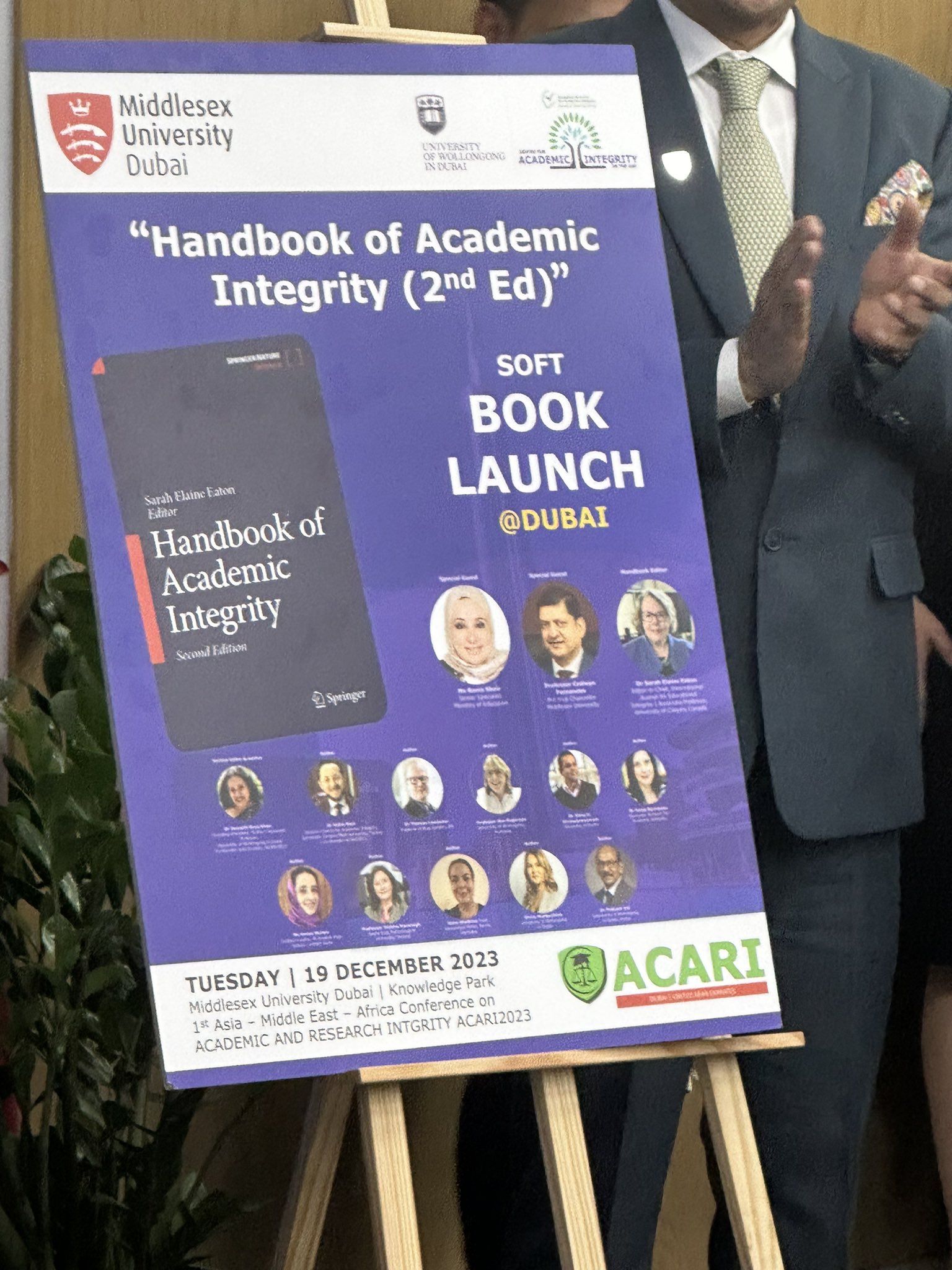
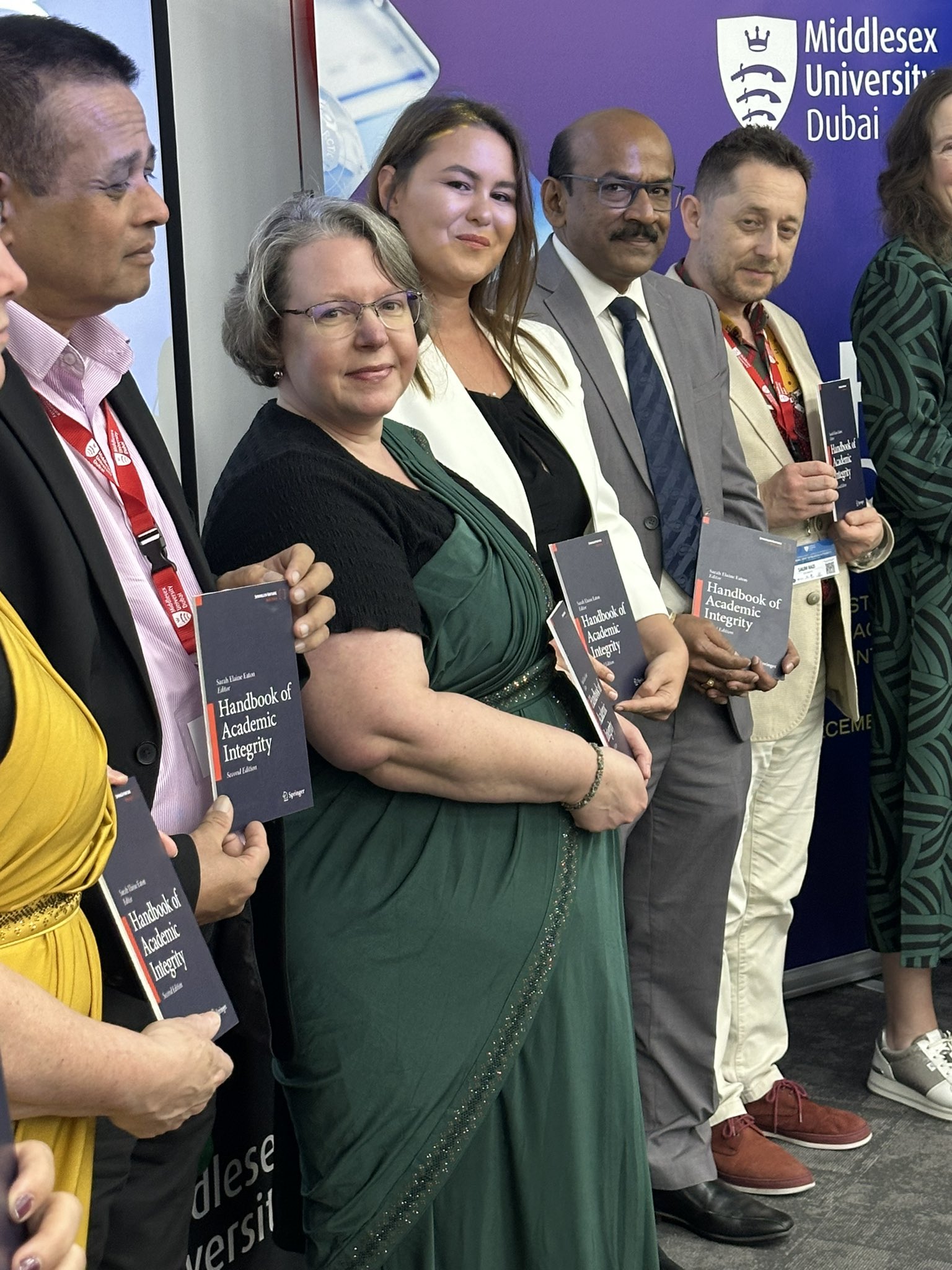
The handbook is now in its final stages of production, and the standalone second edition will be released in hard copy in January, 2024. To celebrate, Dr. Zeenath Reza Khan, who serves as one of the handbook’s section editors and contributors, and was a co-chair of the 1st Asia -Middle East – Africa Conference on Academic and Research Integrity (ACARI) 2023, 17-19 December led the organization of the soft launch for the handbook during the conference.
The launch was held during the closing ceremony of the conference on the final day in an auditorium at the prestigious Middlesex University Dubai, was both festive and scholarly, as it brought together educators, researchers, and advocates for academic integrity. In addition to conference delegates, a number of esteemed dignitaries attended including, His Excellency, Jamal Hossain, Consul General of Bangladesh to UAE; Dr. Mohammad Ali Reza Khan, Award-winning Expert Wildlife Specialist, Dubai Municipality, along with Professor Cedwyn Fernandes, Pro Vice Chancellor of Middlesex University and Director of Middlesex University Dubai. Special thanks to Ms. Rania Sheir, Senior Specialist, Entrepreneurship and Innovation, Ministry of Education, UAE, who not only attended the launch, but also posted about it on LinkedIn.
The Handbook, meticulously curated by leading experts in the field, is a compendium of insights, strategies, and best practices aimed at upholding the ethical practices in academia and research. It covers a diverse range of topics, from plagiarism to artificial intelligence, to the promotion of ethical behaviour in academic research, and much more. The multidimensional approach of the Handbook of Academic Integrity ensures that it caters to the needs of educators, administrators, and students alike.
A number of contributing authors were in attendance, including:
Dr. Zeenath generously gifted two colleagues and me with authentic saris that we wore during the closing ceremony and the launch. As you can see from the photo below, I was given one in dark green and I just love it! I had an opportunity to say a few words about the book and its importance in the field, and to thank the organizers and authors. Each contributor was gifted a symbolic souvenir cut-out of the front cover of the handbook and following the formalities, we signed the back of one another’s covers.
The book launch culminated in a celebratory atmosphere, with attendees leaving inspired. The Handbook of Academic Integrity (2nd ed.), now poised to be a cornerstone in the field, builds on the first edition and stands as a testament to the collective commitment to nurturing a culture of integrity throughout every level of education and research.
This blog has had over 3 million views thanks to readers like you. If you enjoyed this post, please “like” it or share it on social media. Thanks!
Sarah Elaine Eaton, PhD, is a faculty member in the Werklund School of Education at the University of Calgary, Canada. Opinions are my own and do not represent those of my employer.
As I write this, the Handbook of Academic Integrity (2nd ed.) is well underway. All the chapters have been submitted and are at various stages of review, revision, and production. Page proofs should start going out to contributing authors this month. This has been a massive project: 150+ authors, 109 chapters, 9 section editors, and me herding all the cool cats who have made it happen.
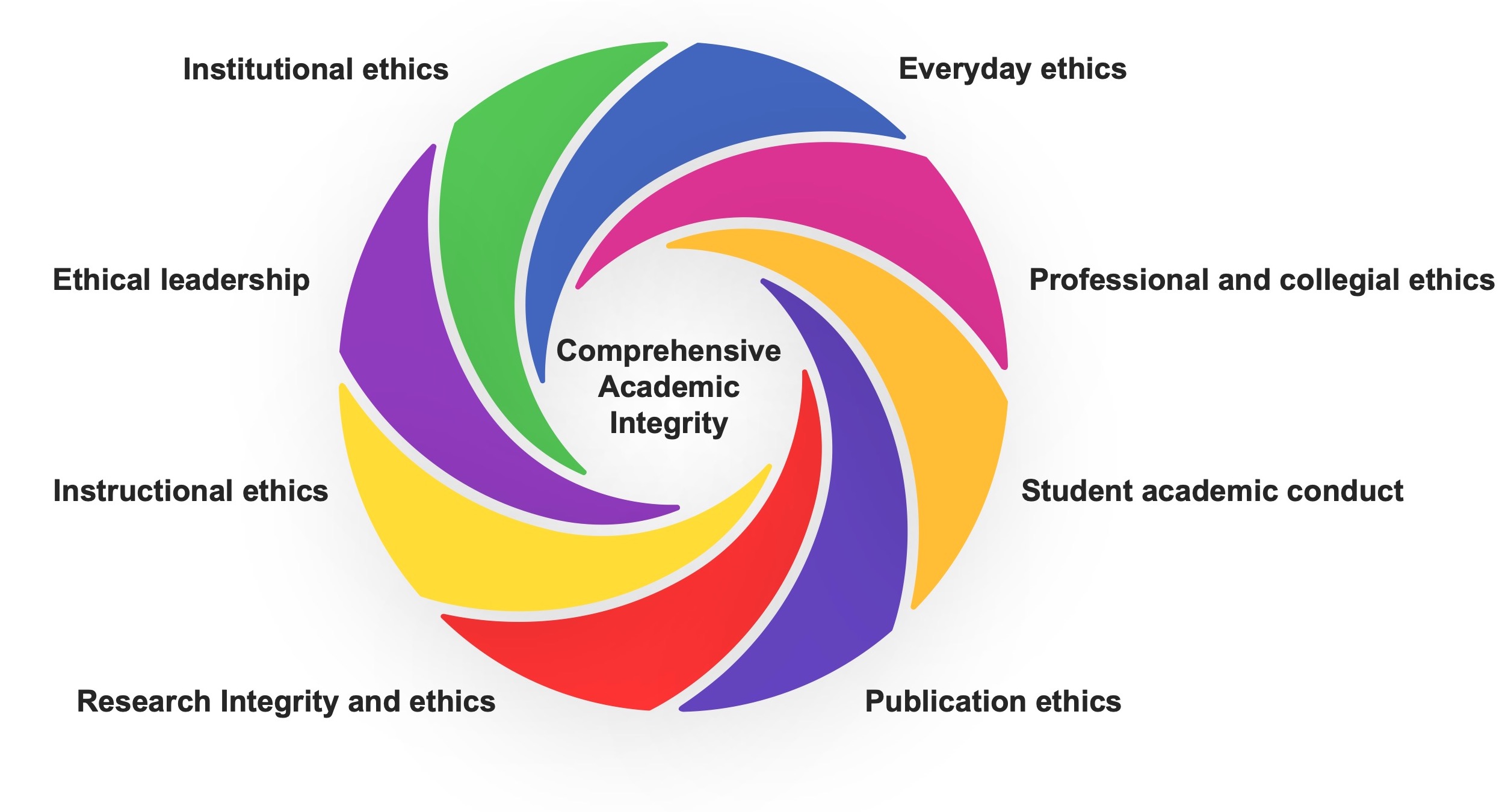
After all the chapters had been submitted, I realized that we had something new and fresh with this edition. We have pushed the boundaries beyond persistently historical ideas about academic integrity only as a matter of student conduct. So, I wrote an introduction for the handbook that synthesizes some its through lines. The common threads of this updated edition are summed up in this Comprehensive Academic Integrity (CAI) framework.
I wrote this intro in two epic writing sessions, fuelled by gallons of coffee, Vegemite on toast, and a pizza that a friend had delivered to my house because he felt sorry for me eating Vegemite on toasted bread crusts. (I am not kidding.) Anyway, first, I drafted the chapter in full. Then I asked a couple of other section editors and contributors to the handbook to provide me with an open peer review of the draft. In the chapter I acknowledge them by name and I re-iterate my gratitude to them here. Thanks are due to Guy Curtis, Brenda M. Stoesz, Rahul Kumar, Beatriz Moya, and Bibek Dahal for their feedback that helped me to improve the chapter. In the second writing session, I incorporated just about all of their suggestions and completely re-vamped the visual image to the one you see below. The CAI Framework is a high-level synthesis of all the chapters in the handbook and as such, every single author who has contributed to the handbook (as well as those they have cited in their respective chapters) all deserve credit.
According to the publisher’s rules around self-archiving and pre-prints, I am not allowed to share the entire chapter with you ahead of publication. But I can share a summary of it, so I’m doing that here. I’ve also self-archived a copy of this overview (minus the background commentary about Vegemite and pizza) in our university’s digital repository. On the off-chance you want to cite the “official” version of the summary, I have included instructions below. You’ll have to wait for the Handbook to be published to read the full chapter, but in the meantime, I hope this overview is useful.
For years scholars and other experts have called for a more holistic approach to academic integrity (e.g., Bertram Gallant, 2008; Boud & Bearman, 2022; Bretag et al, 2014; Carrol & Duggan, 2005; Löfström et al., 2015; Morris & Carrol, 2016; Turner & Beemsterboer, 2003). The CAI framework synthesizes ideas that have been repeated for decades in various iterations.
The central argument behind a wholistic framework is that academic integrity must encompass, but extend beyond, notions of student conduct, and should be considered a foundation of all aspects of education. In this framework, I do not propose a new definition of academic integrity in part, because several useful definitions already exist (see Bretag, 2016; ICAI, 2021; Tauginienė et al., 2018). Instead, this framework can be used with existing definitions.
The Comprehensive Academic Integrity (CAI) framework includes eight (8) essential elements that includes, and extends beyond traditional notions of academic integrity merely as a student responsibility:
Appreciation to Kieran Forde at the University of British Columbia for his most awesome interpretation of the graphic as a “colourful swirly donut”. Who doesn’t love donuts?! Thanks, Kieran!
References
Bertram Gallant, T. (2008). Academic integrity in the twenty-first century: A teaching and learning imperative. Wiley.
Boud, D., & Bearman, M. (2022). The assessment challenge of social and collaborative learning in higher education. Educational philosophy and theory, 1-10. https://doi.org/10.1080/00131857.2022.2114346
Bretag, T. (2016). Educational integrity in Australia. In T. A. Bretag (Ed.), Handbook of Academic Integrity (pp. 1-13). Springer Singapore.https://doi.org/10.1007/978-981-287-079-7_2-1
Bretag, T., Mahmud, S., Wallace, M., Walker, R., McGowan, U., East, J., Green, M., Partridge, L., & James, C. (2014). ‘Teach us how to do it properly!’ An Australian academic integrity student survey. Studies in higher education, 39(7), 1150-1169. https://doi.org/10.1080/03075079.2013.777406
Carroll, J., & Duggan, F. (2005, December 2-5). Institutional change to deter student plagiarism: What seems essential to a holistic approach? 2nd Asia-Pacific Educational Integrity Conference, University of Newcastle, Callaghan, Australia.
Eaton, S. E. (forthcoming). Comprehensive academic integrity (CAI): An ethical framework for educational contexts. In S. E. Eaton (Ed.), Handbook of Academic Integrity (2nd ed.). Springer.
Löfström, E., Trotman, T., Furnari, M., & Shephard, K. (2015). Who teaches academic integrity and how do they teach it? Higher Education, 69(3), 435-448. https://doi.org/10.1007/s10734-014-9784-3
Morris, E. J., & Carroll, J. (2016). Developing a sustainable holistic institutional approach: Dealing with realities “on the ground” when implementing an academic integrity policy. In T. Bretag (Ed.), Handbook of Academic Integrity (pp. 449-462). Springer Singapore. https://doi.org/10.1007/978-981-287-098-8_23
This blog has had over 3 million views thanks to readers like you. If you enjoyed this post, please “like” it or share it on social media. Thanks!
Sarah Elaine Eaton, PhD, is a faculty member in the Werklund School of Education, and the Educational Leader in Residence, Academic Integrity, University of Calgary, Canada. Opinions are my own and do not represent those of the University of Calgary.
The notion of “integrity sciences” stuck with me. Those of you who know me will no doubt remember a story I share often in my presentations. In 2017, after applying for an internal research grant at my university, I was informed that the application was rejected on the basis that academic integrity is an administrative matter not a research topic. This was just one grant application and I am, of course, grateful to the University of Calgary, for the tremendous support they have provided for my work, including research funding that, since 2016, now exceeds $100,000 CAD across various projects. But that one grant application rejection has stuck with me because of the reasons provided for why the project did not receive funding. Since then, I have dedicated part of my work to showing that not only is academic integrity a topic, it is a field of research, policy, and professional practice.
When I first read the term “integrity sciences” it piqued my interest. I began contemplating the various areas of the field of integrity sciences: systematic and scientific inquiry investigating academic integrity; research integrity; research ethics; publication ethics; plagiarism; fraud and corruption in education and science; and so on. Similar to the way in which learning sciences studies the “an interdisciplinary field that studies teaching and learning” (Sawyer, p. 1), integrity sciences studies is a multi-, inter-, and transdiciplinary field that studies ethics and integrity.
I pointed out during my keynote speech at the 2021 European Conference on Academic Integrity and Plagiarism (ECAIP), hosted by the European Network for Academic Integrity (ENAI), that academic integrity research is transdisciplinary and multi-faceted. The idea of approaching the investigations we conduct under the umbrella of integrity sciences fits in with this notion. The term “integrity sciences” provides us with language to describe the transdisciplinary nature of academic integrity research.
I am still very much learning what Dr. Bergadaà’s conceptualization of integrity sciences might include, and I think this notion is worth discussing with colleagues not only in Europe, but also beyond, to include scholars and scientists across the world.
This blog has had over 3 million views thanks to readers like you. If you enjoyed this post, please “like” it or share it on social media. Thanks!
Sarah Elaine Eaton, PhD, is a faculty member in the Werklund School of Education, and the Educational Leader in Residence, Academic Integrity, University of Calgary, Canada. Opinions are my own and do not represent those of the University of Calgary.




 Posted by Sarah Elaine Eaton, Ph.D.





 Learning, Teaching and Leadership
You must be logged in to post a comment.