As I prepare for the 2024-2025 Werklund Distinguished Research Lecture, I’ve been reflecting about how important it is to make scholarly work accessible to all. Open access (OA) is more than just a publishing model—it is a philosophy that challenges traditional barriers to knowledge dissemination and embodies the true spirit of academic scholarship.
Breaking Down Barriers to Knowledge
Historically (at least in my lived historical experience in higher education), academic research has been locked behind expensive paywalls, creating a significant divide that extends far beyond academic institutions. This exclusionary model particularly impacts researchers and knowledge seekers who find themselves on the margins of academic privilege. Researchers in middle and low-income countries (LMICs) often struggle to access scholarly and scientific literature and independent scholars and community practitioners face substantial financial barriers to staying current in their fields. Students and educators with limited institutional resources find themselves cut off from the latest scholarly insights, and curious members of the public are shut out from understanding complex academic work that could potentially transform their understanding of the world.
The Ethical Imperative of Sharing
Research is fundamentally about advancing human understanding, and restricting access undermines this core mission. Open access is commitment to knowledge as a public good, enabling a more dynamic and inclusive approach to scholarly communication. By removing economic and institutional barriers, we create opportunities for faster dissemination of critical findings, increased global collaboration, and unprecedented transparency in research methodologies. This approach allows for more rapid scientific and social progress, breaking down the traditional silos that have long constrained academic discourse.
Amplifying Research Impact
Contrary to traditional concerns, open access actually enhances the visibility and influence of scholarly work. Publications that are freely available receive more citations and reach broader audiences. This expanded reach afforded through OA creates opportunities for interdisciplinary and transdisciplinary connections that might otherwise remain unexplored, allowing research to transcend the narrow confines of specialized academic journals and engage with a more diverse intellectual ecosystem.
Personal Commitment and Broader Vision
As I prepare for this lecture, I am reflecting deeply about my commitment to open access (OA). One of my goals is to create a more equitable, informed, and connected world. This isn’t only about making documents freely downloadable, but also about cultivating a more inclusive intellectual landscape where knowledge can flow freely, unencumbered by economic or institutional constraints.
Practical Pathways to Open Access
For researchers considering this path, the journey involves strategic choices and institutional engagement. I am grateful for the privilege of working at the University of Calgary where researchers can self-archive their works into our institutional digital repository, PRISM.
Our university supports infrastructures that recognize and reward open access scholarship. Not everyone has this privilege.
Navigating Copyright and Publisher Agreements
Having said all this, I also recognize that it is important to abide by existing copyright agreements with publishers. Academic publishing involves complex legal and contractual relationships. Each publication typically comes with specific copyright terms that must be honoured (both ethically and legally), which may limit immediate or unrestricted sharing.
Because of this, I won’t be able to share all my work with a Creative Commons licence— not if a publisher holds the copyright. It does mean that I will look for creative and ethical ways to maximize access while maintaining professional integrity and contractual obligations.
Concluding reflections
Open access is not just about free downloads—it’s about free thinking, free exploration, and our commitment to knowledge being a universal right, not a privileged access. The longer I work in higher education, the more I am thinking about the future of knowledge, teaching, learning, and creating opportunities for others to thrive. This is really what is driving me right now — creating opportunities for others to thrive. Making as much of my work freely available as open access resources is one way I can do this.
Here are some places you can find my work:
University of Calgary PRISM digital repository
As we get closer to the lecture, I’ll be making more and more of my work available as free open access downloads. I’ll keep you updated as we get closer to the lecture.
Related posts
Re-released as a Free Open Access Resource: 101 Ways to Market Your Language Program (2002)
________________________
Share this post: Embracing Open Access: My Scholarly Commitment to Shared Knowledge – https://drsaraheaton.com/2024/12/08/embracing-open-access-my-scholarly-commitment-to-shared-knowledge/
This blog has had over 3 million views thanks to readers like you. If you enjoyed this post, please “like” it or share it on social media. Thanks!
Sarah Elaine Eaton, PhD, is a Professor and Research Chair in the Werklund School of Education at the University of Calgary, Canada. Opinions are my own and do not represent those of my employer.


 Posted by Sarah Elaine Eaton, Ph.D.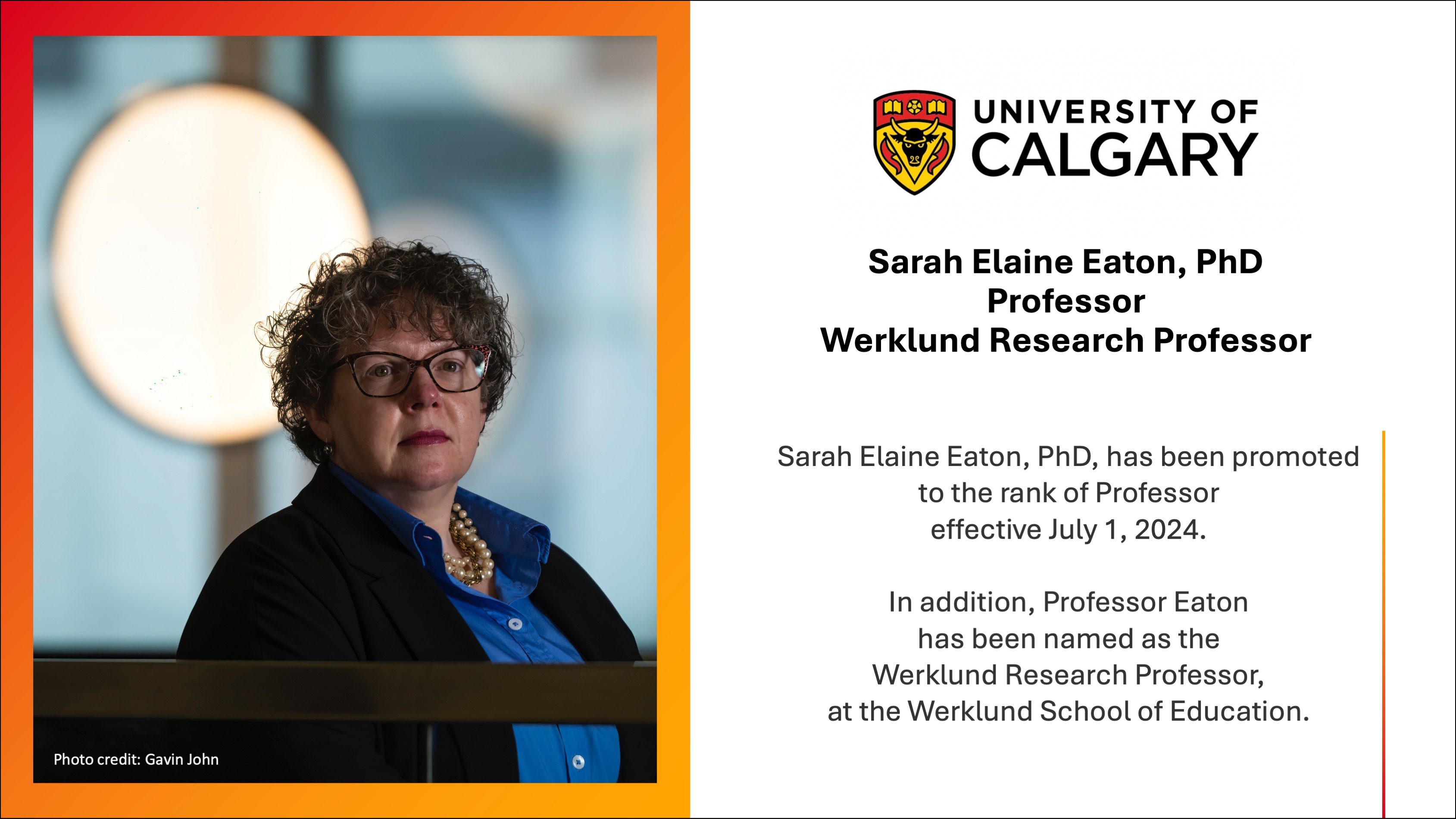

 Learning, Teaching and Leadership
You must be logged in to post a comment.