Why APA formatting matters

January 15, 2014

Imagine you are buying a new home. You tour around a number of properties. You see one that is messy, distasteful and uninviting. The sales agent says, “Oh, don’t worry, the foundation is strong!” The trained eye may be able to see beyond the bad presentation, but it takes a lot of mental energy to get past it.

Now imagine you are taken into a home that is clean, neat and perfectly staged. You immediately feel welcome. You are instantly engaged psychologically and emotionally. You want to see more.

APA formatting is to research papers what presenting a clean, neat and well presented home is to selling a property.

Your prof may be able to look past a messy presentation, but it takes more mental energy. You want to be able to say, “Oh, but the foundation of the work is just fine!”  and you want that be enough.

Well, it’s not enough. It sends a message that you don’t care about presentation. You send a message that you don’t give a flying leap that your work is less appealing to read. You may be brilliant, but if the essence of what you show to others messy and disorganized,  it’s less inviting to enter your world and spend time there. Sometimes, students insist that APA formatting inhibits their creativity or individuality. My reply to that is, fine, go be as bizarre and unique as you like in your own writing space — your blog, your journal or whatever.

There’s an element of persuasion involved in writing a research paper. I won’t say sales, because that will undoubtedly offend some of you. But let’s face it. You are trying to “pitch” your ideas. Follow standard practices for presentation and your work is likely to be accepted a whole lot faster than if you insist on doing it your own way. When you are writing a research paper you are trying to persuade someone to read it, like it and possibly judge its value (e.g. accept it for publication or award a grade for it). 

Sometimes I find that drawing comparisons between reality TV and academia helps students make sense the expectations of life in higher education. Over the past few months, I’ve been watching Income Property. I don’t own any income properties and I probably never will, but I find the show fascinating. I see patterns in how projects are completed so they consistently meet the objectives.

Host Scott McGillivray helps home owners turn unfinished or unacceptable suites into beautiful rental properties. He and his crew completely renovate the space. They focus on doing excellent quality construction, electrical and plumbing work that is up to code. The work is inspected and they get feedback from city officials and inspectors before they start working on the finishes.

To me, that’s the the content of research. It needs to be solid, high quality and done well. Getting feedback along the way is important, too.

Once they get the necessary approvals that the job has been done right, they move on to the finishes. They pay attention to the details and ensure the look of the place is consistent with sound design principles that are timeless and impressive. After watching a few episodes of Income Property I noticed that they use very similar approaches for each project.

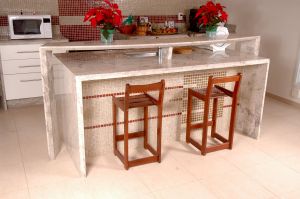
http://www.sxc.hu/photo/670220That’s the presentation of the work. The design principles are outlined by APA, MLA or whatever style guide you use. The format is timeless and paying attention to the details makes it impressive. They follow presentation design principles systematically. Each project is unique, yet they follow standards in a consistent way. It’s almost like there’s a template and yet, every project is individual.

McGillivray consistently points out that doing the construction work properly is non-negotiable. Just like doing high quality research is non-negotiable.

But what gets people to say, “Wow, this is impressive!” are the finishes. Following accepted practices for presentation (which might be interior design for a house, or formatting for a paper) and paying attention to the details are what makes you stand out and be impressive.

For an exemplary end product you need both: quality construction and beautiful finishes. If you have only done only one or the other, you are being sloppy. To do the job right, you need solid construction and a beautiful presentation.

_____________________________________________________

Share or Tweet this: Why APA formatting matters http://wp.me/pNAh3-1Hc

Update – January 2018 – This blog has had over 1.8 million views thanks to readers like you. If you enjoyed this post, please “like” it or share it on social media. Thanks!

Sarah Elaine Eaton is a faculty member in the Werklund School of Education, University of Calgary, Canada.


50 Adverbs to avoid in academic writing

July 2, 2013

Most academic writing is strengthened by eliminating adverbs. To emphasize a point, provide more evidence to support it. Avoid unnecessary words and in particular, adverbs. Instead, choose more precise verbs.

An adverb modifies or describes:

  • A verb (e.g. He runs quickly.)
  • An adjective (e.g. His writing is extraordinarily descriptive.)
  • Another adverb (e.g. He runs extraordinarily quickly.)

Often, but not always, adverbs in English end in –ly. Here are 50 adverbs that I have seen in academic papers that you can eliminate and your writing will be better for it:

  1. Adroitly
  2. Amazingly
  3. Awesomely
  4. Badly
  5. Basically
  6. Carefully
  7. Clearly
  8. Completely
  9. Convincingly
  10. Deftly
  11. Desperately
  12. Dexterously
  13. Effortlessly
  14. Extremely
  15. Faithfully
  16. Fundamentally
  17. Generally
  18. Goodly
  19. Honestly
  20. Inherently
  21. Instantly
  22. Interestingly
  23. Narrowly
  24. Naturally
  25. Nearly
  26. Necessarily
  27. Obviously
  28. Precisely
  29. Previously
  30. Preposterously
  31. Quite
  32. Really
  33. Relentlessly
  34. Simply
  35. Spectacularly
  36. Successfully
  37. Suddenly
  38. Surely
  39. Truthfully
  40. Ubiquitously
  41. Unequivocally
  42. Ungodly
  43. Unnecessarily
  44. Unquestionably
  45. Utterly
  46. Unwittingly
  47. Usually
  48. Very
  49. Widely
  50. Zealously

Often, when writers make a conscious choice to eliminate adverbs and instead find stronger and more precise verbs, the result is writing that is clearer and more powerful.

_____________________

Share or Tweet this: 50 Adverbs to avoid in academic writing http://wp.me/pNAh3-1CL

Update – January 2018 – This blog has had over 1.8 million views thanks to readers like you. If you enjoyed this post, please “like” it or share it on social media. Thanks!

Sarah Elaine Eaton is a faculty member in the Werklund School of Education, University of Calgary, Canada.


Why “as cited in” should be avoided in academic writing

May 21, 2013

For my graduate students… and other readers:

When you are referencing others’ work in our course, whether it is on the discussion board, in your presentation or in your final paper, I urge you to find the primary sources for your citations.

I will be upfront about this and say that I am not at all a fan of citing a work that someone else has cited. Please find the original reference yourself and cite that instead.

The reason for this is three-fold:

  1. You want to be sure that the “original” author actually exists. As heinous as it may seem, people have been known to fabricate references.
  2. More common is that a researcher will mis-quote an author or take someone’s work out of context. By going back to the original source, you have the opportunity to verify for yourself what the original author was trying to say.
  3. “As cited in…” can be an indicator of either a lazy or disinterested scholar who does not care enough to find and cite original authors. I do not think this is the case with anyone in our course, but it is not uncommon for other scholars to dismiss the credibility of a researcher who does not take the time to find primary sources.

Earlier this year, I conducted an informal in-class experiment with a Master’s level class at the U of C. I challenged them to find the original version of Maslow’s “Hierarchy of Needs”. To their surprise, they found that the pyramid that has become an iconic representation of Maslow’s hierarchy is nowhere to be found in his original work. (You can read about it here: Maslow’s hierarchy of needs: Is the pyramid a hoax?  http://wp.me/pNAh3-1rU)

I tell my students, “My point to you is this: Please cite only primary sources in our course. Avoid using ‘as cited in…’ or similar strategies. If you can’t find an original source, don’t cite it.”

The only exception to this would be original works of extreme rarity which are almost impossible to source without physically visiting historical archives.

_______________________

Share or Tweet this: Why “as cited in” should be avoided in academic writing  http://wp.me/pNAh3-1BH

Update – January 2018 – This blog has had over 1.8 million views thanks to readers like you. If you enjoyed this post, please “like” it or share it on social media. Thanks!

Sarah Elaine Eaton is a faculty member in the Werklund School of Education, University of Calgary, Canada.


10 Great writing resources for grad students

April 23, 2013

Sarah Eaton blog technology researchAfter teaching “Writing Educational Research” for Master’s of Education students at the University of Calgary a number of times now, I’ve come up with a list of my top 10 favorite, free online resources for grad students, emerging scholars and educational professionals:

Basics of APA Style (Tutorial) – The tutorial is “chunked out” into 23 sections, each less than 1 minute long. In total, the tutorial is about 21 minutes long. It is highly practical and full of “how to” information.

Purdue University Online Writing Lab (OWL) – One of the best online resources for APA style for students and faculty. The APA Formatting and Style Guide is particularly helpful.

APA Quick Reference Guide – Produced by the University of North Carolina School of Social Work, this quick reference guide highlights the most important points of the APA manual for students.

Academic Writing and Publishing by James Hartley – This comprehensive 209-page resource book is available free of charge to students in .pdf format. It is a must-have for grad students.

Worksheets for academic writers by Wendy Belcher – Designed to accompany Belcher’s text, Writing Your Journal Article in 12-weeks, these worksheets help writers plan and organize their writing projects.

Advice on Academic Writing from the University of Toronto -This site offers academic writers advice on topics such as planning, organizing, using sources, style, editing and more.

Outlining and Organizing Your Writing from the University of Maryland – This site has links to a number of different resources designed to help students learn how to outline and organize their writing projects.

English Grammar Handbook from the University of Athabasca – This free online e-book addresses many grammar concepts that academic writers need to know such as sentence and paragraph structure and how to avoid misusing common words in academic writing.

Graduate Writing Checklist from John Hopkins University – This handy checklist is designed specifically for graduate students to review before they hand in their papers.

Academic Writing Checklist from the University of Warwick – This checklist is more reflective in nature, challenging emerging scholars to engage in a metacognitive process about their own writing.

Academic writing takes practice and time to learn and with these free online resources to help you, it will be even easier.

Related posts:

12 Phrases to Avoid in Your Academic Research Papers http://wp.me/pNAh3-1JX

Active vs. passive voice — How to tell the difference http://wp.me/pNAh3-1HX

Why APA formatting matters http://wp.me/pNAh3-1Hc

How many sources do you need in a literature review?  http://wp.me/pNAh3-1Hu

What’s the difference between a citation and a reference? http://wp.me/pNAh3-1F9

Why “as cited in” should be avoided in academic writing  http://wp.me/pNAh3-1BH

_______________________

If you enjoyed this post, please “like” it or share it on social media. Thanks!

Share or Tweet this: 10 Great writing resources for grad students – http://wp.me/pNAh3-1Bc

Update – January 2018 – This blog has had over 1.8 million views thanks to readers like you. If you enjoyed this post, please “like” it or share it on social media. Thanks!

Sarah Elaine Eaton is a faculty member in the Werklund School of Education, University of Calgary, Canada.


How to create a research paper outline: 5 great resources

January 2, 2013

Sarah Elaine Eaton, speaker, presenter, keynote, technology, social media, Calgary, Canada, educator, education, professional developmentOnce again, I am teaching “Writing Educational Research” to Master’s of Education (M.Ed.) students at the University of Calgary this semester. I have found that some students struggle with the process of outlining their final research papers.

Outlining is an invaluable skill that helps you to conceptualize, plan and organize your writing. I learned to outline my essays when I was in school and to this day, I use outlines for research papers and even my books. I find that organizing my ideas in an outline helps me to keep my writing focussed and clear. I even outlined my Master’s and Ph.D. theses. When my Ph.D. thesis had to be modified as I was writing up my project, having an outline helped to decide what to toss, what to keep and how to re-organize the work effectively.

Here are some excellent resources that are useful to university level students, as well as high school students and adult learners who are learning to write essays:

  1. How to write an outline (SUNY) – This is an excellent web page resource produced by the State University of New York (SUNY). The method they demonstrate is the same one I learned in school. It is a classic “tiered” outline. The chart on this web page presents the information in a very clear way that is easy to understand.
  2. How to write an outline (LAVC) – Similar to the SUNY resource, this web page by the Los Angeles Valley College Library explains the difference between a topic outline and a sentence outline, using the tiered format. This web page has some great examples of what a real outline might look like.
  3. Wikihow – How to write an outline – This Wiki breaks down the process of writing an outline into simple, easy-to-follow steps. The wiki also has samples of a research outline, a literature outline and a “compare and contrast” outline.
  4. How to outline a 5-paragraph essay – This YouTube video (4:26) offers tips on how to write a shorter essay. It is great for students who have to write shorter papers or adults who are learning how to write an essay.
  5. Sample qualitative research outline by Rey Ty – This YouTube video moves a bit slowly, but it gives an excellent overview of how to write an outline for a qualitative research project.

Learning to outline is a valuable skill that will serve you in school and in the workplace. A good outline keeps you focussed, organized and on track.

Related posts:

Readings for Writing Educational Research (EDER 603.23) http://wp.me/pNAh3-1OJ

12 Phrases to Avoid in Your Academic Research Papers http://wp.me/pNAh3-1JX

Active vs. passive voice — How to tell the difference http://wp.me/pNAh3-1HX

Why APA formatting matters http://wp.me/pNAh3-1Hc

How many sources do you need in a literature review?  http://wp.me/pNAh3-1Hu

What’s the difference between a citation and a reference? http://wp.me/pNAh3-1F9

Why “as cited in” should be avoided in academic writing  http://wp.me/pNAh3-1BH

10 Great writing resources for grad students – http://wp.me/pNAh3-1Bc

_________________

If you enjoyed this post, please “like” it or leave a comment. Thanks!

Share or Tweet this: How to create a research paper outline: 5 great resources http://wp.me/pNAh3-1y6

Update – January 2018 – This blog has had over 1.8 million views thanks to readers like you. If you enjoyed this post, please “like” it or share it on social media. Thanks!

Sarah Elaine Eaton is a faculty member in the Werklund School of Education, University of Calgary, Canada.