Last week the Hon. Adrianna LaGrange, Minister of Education in Alberta, published a commentary in the Edmonton Journal about a proposed new legislation she intended to bring forward called the “Student First Act”.
In this blog post I offer my perspective on this editorial through the lens of someone who studies educational integrity, including misconduct. I have pointed out my qualifications to comment on matters related academic misconduct in a previous blog post, so I won’t repeat them here. Suffice to say that I have some expertise related to academic integrity. Those familiar with my work will know that I advocate for a multi-stakeholder approach to academic integrity in which students, educators, and administrators are all held accountable for their behaviours. Academic integrity is about more than student conduct and examining educator and administrator misconduct remains an understudied area, but an important one.
In my analysis of LaGrange’s commentary (which was effectively an announcement about the new proposed legislation), I will examine both the positive and negative aspects of this announcement.
Lack of Transparency
LaGrange opened by stating that, “Fourteen years ago, as a newly elected school board trustee in Red Deer, I began hearing concerns about the lack of transparency in teacher disciplinary process. Now, as Alberta’s minister of education, I hear these same concerns from students and parents across the province.”
It’s a good thing that Minister LaGrange heard these concerns. There shouldn’t be any surprise with regards to misconduct occurring. Misconduct happens in almost every profession and teaching is no exception. Here LaGrange is signalling that she first became aware that there was a “lack of transparency in teacher disciplinary process”.
“Lack of transparency” is a trigger phrase. It is almost a guarantee that readers and members of the public will become offended when they hear about “lack of transparency”, especially from a government. As I have written about in my book, misconduct among educators is usually addressed by human resources. There are strict laws in Canada, including in Alberta, about what a human resources manager or department is legally permitted to disclose regarding an employee misconduct. I am not a labour relations lawyer, but I am confident saying that this “lack of transparency” is a function of existing labour laws, not a flaw in government policy.
Every large organization in Alberta and in Canada has policies and procedures in place to address employee misconduct. There are thresholds in place so that if a misconduct crosses over from an internal disciplinary matter to a criminal one, that these must be reported to police for investigation.
There is an assumption in the LaGrange editorial that school boards lack processes to investigate employee misconduct or that the existing processes are flawed. I suspect that if she dug a little deeper she would find that the existing policies and procedures conform to the labour laws already in place.
Praise… but…
LaGrange goes on to say, “While the overwhelming majority of teachers in the province are dedicated and caring professionals, we know that cases of inappropriate or even dangerous conduct do happen — and sometimes those cases involve a student.”
It’s good to see that the Minister of Education is acknowledging that “the majority of teachers in the province are dedicated and caring professionals”. This is a truism and there’s nothing really new here. In her book, Cheating: Ethics in Everyday Life, author Deborah Rhode guides us to think about cheating and other misconduct behaviours as a bell curve. At one end you have a small minority of people who rarely or never commit misconduct. At the other end, you have another small percentage of people who do bad stuff repeatedly and often. In the middle, there’s about 80% or so who are basically good most of the time, but can be influenced by circumstances on occasion.
One concerning aspect of LaGrange’s statement is that she seems to be focusing on the moral character of the teachers, rather than their behaviour. As someone who studies misconduct, I can say that in Canada, we treat misconduct cases as bad behaviour, not as a moral failing. This is an important distinction because these are drastically different philosophical positions. Bad behaviour can be corrected, but moral failings? That’s an entirely different matter. I am guessing that political scientists might agree that it would be a fool’s errand for any politician to comment on the moral failings of others…
“An extremely concerning case…”
LaGrange goes on to explain that in 2019 an “extremely concerning case” crossed her desk. Wow, that’s got to be bad, right? I mean… an extremely concerning case. We’d better pay attention here, folks.
Let’s unpack that though… A few paragraphs previously, LaGrange commented that she’s been hearing about misconduct cases for fourteen years. It took 14 years for an “extremely concerning case” to cross her desk? As someone who studies misconduct, I am genuinely surprised by this. For those of us who deal with misconduct on a regular basis as part of our jobs, it probably a matter of weeks or months — not years — before we come face to face with an egregious or complicated case. That’s like saying the Minister of Justice didn’t hear about a horrible criminal case until after a decade of being on the job. Really? How remarkably lucky for the minister that she has been in an educational leadership role and has not encountered an extremely concerning case for 14 years.
Of course, we do not know what the details of the case were and nor should we. What we do need to know is that if the case was so concerning that it crossed over into criminal behaviour, it should have been reported to the police. When the minister described that the teacher was “found guilty of inappropriately touching five young students and only a two-year suspension was recommended”. This makes me wonder if the case was reported to the police? Minister LaGrange does not comment on this in her article, but it really is a question worth asking.
Minister LaGrange that she found the recommended penalty for the teacher, “unacceptable” and that she “overturned the recommendation and handed down a lifetime teaching ban”.
Bravo for taking a stand, but the question remains, why was this case not reported to the police? There is no mention that law enforcement was involved. Surely the minister could have insisted that a case of alleged sexual violence against not one but five students be referred to the police immediately?
A Review of the Discipline Process for Educators
LaGrange goes on to say that this incident triggered “a review of the discipline processes for educators”. Periodic reviews of misconduct policies are a good thing. My colleagues and I have recommended such reviews for universities and colleges, for example. If regular reviews of misconduct policies are not already part of the educational policy governance process, then they should be. A review should not be a one-time effort, but a regular part of policy work.
LaGrange states, “cases are dealt with away from the public’s view”. Well, that’s pretty typical in an employee misconduct case, in part due to labour and privacy laws. It would be very unusual for any employer Canada to investigate and address employee misconduct cases in the public view. Employee misconduct cases are dealt with internally in almost every organization, unless the matter is criminal. If a case is criminal it might be prosecuted in court with case-related information being a matter of public record. I reiterate – why are allegations of sexual violence against students not reported to police?
LaGrange also goes on to say that cases “often take years to be settled after a complaint is made”. The timelines for addressing misconduct cases can — and should — be laid out in policy. This is easily fixed through a policy revision that outlines the number of business days permitted to address a case.
In large educational organizations, it is pretty typical for in-house counsel (i.e., the lawyers) to get involved to ensure that procedures are followed and to offer advice. One of the aspects of policy that lawyers provide guidance on is how much time to allow to ensure that a case can be dealt with fairly and in a timely manner.
The Current Legislation
Minister LaGrange states, “current legislation prohibits the government and myself from informing the public”. That’s because when it comes to employee misconduct there are laws in place to protect people’s privacy. This goes back to misconduct being a matter of bad behaviour not a moral failing. I know of no employer anywhere in Canada – including educational institutions – who engage in the practice of publicly naming and shaming every employee (or student) under review for or found responsible of misconduct.
Status of teaching certificates
LaGrange states, “Alberta’s current legislation is lagging behind. British Columbia, Ontario and Saskatchewan all have public registries where parents can easily check the status of their child’s teacher’s certificate”. Well, that’s also an easy fix. But let’s be clear that a public registry of valid teaching certificates should not be conflated with a registry of individuals who have or have not committed misconduct. Teaching certificates can lapse due to illness or any other reason. Besides, every school board in Alberta will ensure its teachers have a valid teaching certificate. Again, this is the job of the HR department.
Others have already commented on the misinformation in LaGrange’s commentary about the need for teachers to undergo police checks, so I’ll refrain from further analysis on that point. Suffice to say that, this point was poorly presented in the editorial.
LaGrange concludes by saying that she will be introducing the “Students First Act” in the legislature next week. I am curious to know what the proposed legislation will say and I’ll be watching carefully. Some key points to keep in mind are:
- What are some easy ways to update current policies (e.g., the time allowed to address a misconduct case) without having to enact legislation? In other words, what’s the low hanging fruit here? What are some ways to tighten up existing policies and procedures quickly while still ensuring they are fair and comprehensive?
- How do we keep the focus on identifying and correcting poor behaviour, as opposed to handing down moral judgement?
- How do we ensure that addressing employee misconduct is not confused with a witch hunt designed to name and shame individuals?
- And perhaps most importantly… how do we ensure that egregious instances of teacher misconduct that cross into criminal behaviour are reported to the police so the Minister herself does not have to serve as judge and jury in such cases?
We all agree that we want to “keep our students safe, parents informed and teachers accountable”, as LaGrange says. It’s how we do it that matters.
Related posts:
_________________________________________
Share or Tweet this: Alberta’s Proposed “Student First Act”: Analysis from an Academic Integrity Perspective – https://drsaraheaton.wordpress.com/2021/11/15/albertas-proposed-student-first-act-analysis-from-an-academic-integrity-perspective/
This blog has had over 2 million views thanks to readers like you. If you enjoyed this post, please “like” it or share it on social media. Thanks!
Sarah Elaine Eaton, PhD, is a faculty member in the Werklund School of Education, and the Educational Leader in Residence, Academic Integrity, University of Calgary, Canada. Opinions are my own and do not represent those of the University of Calgary.
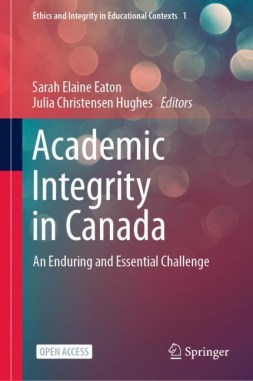 I’m pleased to share that Academic Integrity in Canada: An Enduring and Essential Challenge (Eaton & Christensen Hughes, eds.) has been published. This edited volume spans almost 600 pages, including 31 chapters contributed by 40+ authors.


 Posted by Sarah Elaine Eaton, Ph.D.


 Learning, Teaching and Leadership
You must be logged in to post a comment.