5 Tips to make writing easier

October 4, 2012

This past spring I taught a course on Writing Educational Research to a group of Master’s students, most of whom taught English as an Additional Language as their job. I was surprised how many of them loathed writing. One student said that she was reluctant to teach writing in her EAL courses because it felt like forcing a traumatic experience on them.

Over the course of the six-weeks we learned together, we came up with some strategies that they could use for themselves, and also use with their students. Here they are:

1. Write every day. Saying, “I’m going to write my essay on the weekend,” can turn the weekend into a time of torture instead of a time to relax and recharge your batteries. Instead, commit to writing 30 minutes per day. This helps build the writing habit.

2. Choose a time of the day when you feel fresh and creative.  For me, that time is often first thing in the morning. By mid-afternoon I am crashing and after supper my brain seems capable of basic life support only. In the morning is when I feel both creative and clear-headed.

3. Work with a writing partner. Choose someone you get along with and like to work with. Arrange a time to work together to review each other’s writing, make suggestions and do some peer editing. The point of working together is to try to help each other, not to nit pick. Set some ground rules and focus on the positive.

4. Let go. Some students said they hated writing because they couldn’t tolerate being criticized or being asked to revise their writing. They became very emotionally attached to their writing right away. What if the purpose of writing was to share it? And share it in the best form possible? If we start with that idea, then we might become less emotionally tethered to the writing… You can still be proud of your work without having a  Gollum-like attachment to it.

5. Edit and revise. It is said that Mozart never revised his music. He sat down, wrote it and was done. Unfortunately, most of us are not Mozart. I recently submitted the second revision of an article I submitted to a peer-reviewed academic journal. It was “accepted with minor revisions” when I first submitted it. That was almost six months ago. I made the changes the reviewers requested and re-submitted it. Then recently, the editor came back to me with a few more minor changes. He was right in asking me to change a few more things. I had forgotten to add in some citations, which are important in journal articles. I made the changes and sent the manuscript back again. I had been so close to the work, I could no longer see the errors. Working with editors, reviewers and instructors is really a chance to make your writing better.

Writing seems to be very easy for some people and very painful for others. These strategies may help a few reluctant writers and ease their stress so writing does not seem so daunting.

_______________

Share or Tweet this: 5 Tips to make writing easier http://wp.me/pNAh3-1uY

Update – January 2018 – This blog has had over 1.8 million views thanks to readers like you. If you enjoyed this post, please “like” it or share it on social media. Thanks!

Sarah Elaine Eaton is a faculty member in the Werklund School of Education, University of Calgary, Canada.


Learning to Talk Like Jesus: How TV shows in Sweden support the Aramaic revival in the Middle East

May 29, 2012

Sarah Elaine Eaton blog - Languages, Literacy and Leadership

Sweden is providing a new twist on learning an old language, for  young learners of Aramaic in the two villages in the Holy Land’s small Christian community, in Beit Jala, Palestine and Jish, Israel.

In the Beit Jala Mar Afram school, run by the Syrian Orthodox church, priests have taught over 320 students Aramaic over the past five years.

In Jish approximately 80 elementary school children are taking Aramaic as a voluntary option in school.

The elementary school children who take part in the Aramaic language learning program learn to speak, listen, write Aramaic script and read the language.

Dia Hadid of the Associated Press reports that:

“The dialect taught in Jish and Beit Jala is “Syriac,” which was spoken by their Christian forefathers and resembles the Galilean dialect that Jesus would have used, according to Steven Fassberg, an Aramaic expert at the Hebrew University in Jerusalem.”

The language classes have been met with criticisms from some parents and community members, some of whom are worried that having students learn Aramaic may be an attempt to convert them to Christianity or may be a threat to their Arabic identity.

According to the Associated Press, some members of the Christian community in the region still chant their liturgy in Aramaic, but few people understand the prayers.

Enter Sweden. Swedish officials estimate that anywhere from 30,000 to 80,000 Aramaic speakers reside in that country. The Aramaic community is strong there and includes an Aramaic soccer team, “Syrianska FC” in the Swedish top division from the town of Sodertalje.

Aramaic speakers in Sweden publish a newspaper called “Bahro Suryoyo”, as well as pamphlets and children’s books, including The Little Prince. But what really helps the students learn the language is Soryoyosat, a satellite television station maintained by the Swedish Aramaic community. For some members of these two villages in the holy land, watching Aramaic programming from Swedish TV station provided the first opportunity in decades for them to hear the language spoken outside church. The Associated Press reports that “Hearing it in a modern context inspired them to try revive the language among their communities.”

This is one case, where technology and television are benefitting language learners both in terms of making learning more accessible and in increasing their motivation. These kids are “kickin’ it old school”, using new technology. Aramaic may be saved, yet.

Related post:

Can TV can help you learn another language?

https://drsaraheaton.wordpress.com/2012/05/24/can-t-help-you-learn-another-language/

References

Associated Press. (2012, May 28). Pair of villages in Holy Land teaching Aramaic in effort to revive language that Jesus spoke: New focus comes with help from modern technology. NYDailyNews.com. Retrieved from http://www.nydailynews.com/news/world/pair-villages-holy-land-teaching-aramaic-effort-revive-language-jesus-spoke-article-1.1085728

Hadid, D. (2012, May 28). Aramaic: Efforts To Revive Jesus’ Language In Christian Villages Beit Jala, Jish In Holy Land, Sweden. Huffington Post. Retrieved from http://www.huffingtonpost.com/2012/05/28/aramaic-holy-land-jesus_n_1550507.html

Hadid, D. (2012, May 29). Revival of Jesus’ language attempted in two Holy Land villages. Southeast Missourian. Retrieved from http://www.semissourian.com/story/1854012.html

________________

Share or Tweet this post: Learning to Talk Like Jesus: How TV shows in Sweden support the Aramaic revival in the Middle East http://wp.me/pNAh3-1q7

Update – January 2018 – This blog has had over 1.8 million views thanks to readers like you. If you enjoyed this post, please “like” it or share it on social media. Thanks!

Sarah Elaine Eaton is a faculty member in the Werklund School of Education, University of Calgary, Canada.


Can TV can help you learn another language?

May 24, 2012

Recently someone asked me if watching TV in another language is a good way to learn that language. The answer is… it depends. There are a number of benefits and also a number of factors that may not benefit the learner. Here’s my take on it:

The good

Watching TV exposes you to authentic language, spoken by native speakers. The vocabulary and grammar that students are exposed to in textbooks is carefully controlled to make the learning process methodical. However, real life is not so methodical. By watching TV, you can get a sense of what authentic language sounds like.

You get accustomed to the real rate of speech of the language. Languages are spoken at different speeds. Proper language learning materials will often slow down the speech so that learners can process what they are hearing more effectively. TV is an excellent way to get used to the regular speed at which native speakers talk.

You can learn colloquialisms and slang. Learners often want to master informal jargon and slang not only to understand native speakers, but also to sound like they “fit in”. TV shows often showcase popular slang at the time the show was produced. Slang is presented in a particular social context, among speakers who are likely to use it. The downside to this is that learners still have to master when and how to use the slang in an acceptable way in their own social circles.

The bad

The grammar and syntax of TV are not always correct. TV may represent authentic language, but let’s face it, the real world is far messier than a textbook. TV is a lousy place to learn proper language structure.

Learners can develop language habits that may cause others to laugh at them. TV characters often develop, in part, due to the way the writers script their characters. Sometimes they are given particular words or sayings that, after many repetitions, will become part of their character’s “brand” (Quick! Who do you think of when you hear, “Bazinga!” or “Beam me up, Scotty” or “D’oh!”) Language learners need to know how to distinguish between what is an accepted part of normal speech and what is peculiar to a particular show or character. If they miss the mark, they may find themselves the object of some ridicule.

The ugly

Frustrations can escalate quickly. Learners may find they become frustrated easily when they can not understand a TV program. This may be more likely to happen if they are watching a show with a group of native speakers or others who are more advanced. For the “Type A” personality who demands nothing short of absolute perfection from themselves, watching TV can be a frustrating experience because until your proficiency levels are high, it is unlikely that you will be able to absorb much of what happens.

My recommendations

Watch the news. Newscasters are trained to speak clearly and articulate their words precisely. They also do not use much slang. If you also follow the news in your native language you may have a sense of what some of the news stories are about, giving you contextual clues that can help you understand what is being said.

Avoid comedies. As much as we may love comedy shows in our native language, they are almost impossible to understand in a foreign languages, unless you are already very proficient. Comedy shows tend to use more slang and colloquialisms, making them harder for a language learner to decipher.

Use subtitles in the target language to help you. The “closed captioning” function of your TV to also project the written script of what is being said. Be aware that this service is not always 100% correct, but reading at the same time you are listening may decrease your frustration levels.

Use subtitles in your native language if you have to. If you are really a beginner and the TV show or movie is completely out of your grasp, then use the translated subtitles if your system allows you to. This is not the ideal situation, but it is preferable to sitting there in complete misery as you try to muddle your way through a program and not understanding a word of it.

Live interaction trumps watching TV – Get out and talk with people. For a language learner (or for anyone, really), social interaction with real, live people is probably a more effective way to develop your language skills. If you do not have access to native speakers in your area, then watching TV is not a bad way to get exposure to authentic language. But real-time face-to-face interaction helps you build both listening and speaking skills simultaneously.

Related post:

Learning to Talk Like Jesus: How TV shows in Sweden support the Aramaic revival in the Middle East –  http://wp.me/pNAh3-1q7

__________________________

Share or Tweet this post: Can TV can help you learn another language? http://wp.me/pNAh3-1pI

Update – January 2018 – This blog has had over 1.8 million views thanks to readers like you. If you enjoyed this post, please “like” it or share it on social media. Thanks!

Sarah Elaine Eaton is a faculty member in the Werklund School of Education, University of Calgary, Canada.


Free, online resources for learning Romanian

May 13, 2012

Sarah Eaton, blog, Sarah Elaine EatonIf you’re looking to learn Romanian, here are some free, downloadable resources that may be helpful:

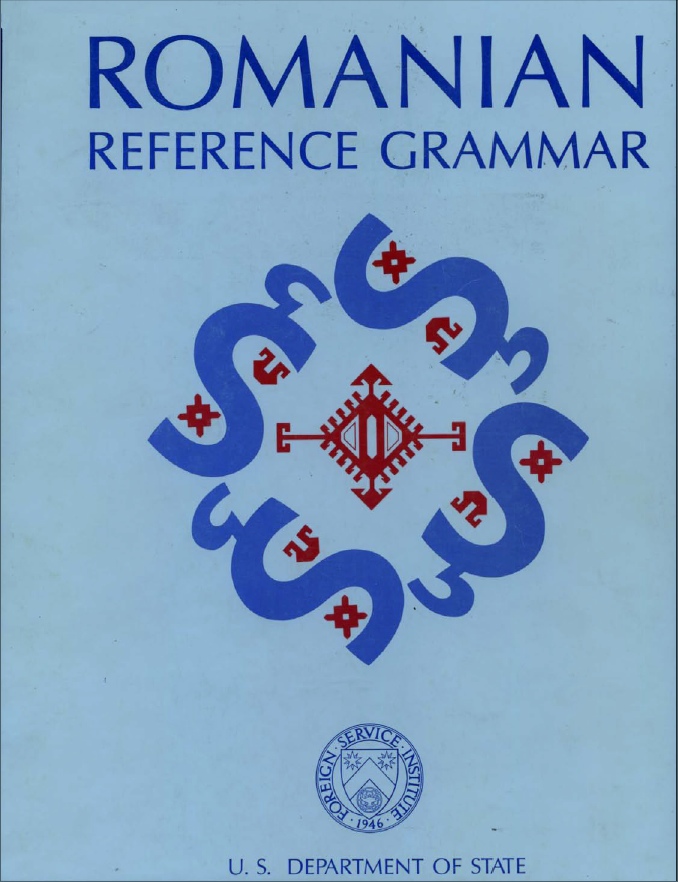
Romanian Reference Grammar (1989) – by Christina N. Hoffman, published by the U.S. Department of State Foreign Service Institute. – This guide is 109 pages and is written in English. Great resource for native English speakers wanting to learn Romanian. Available from: http://fsi-language-courses.org/Courses/Romanian/FSI%20-%20Romanian%20Reference%20Grammar%20-%20Student%20Text.pdf

Romanian Grammar – (n.d.) – Unknown author. – This is a highly detailed and technical grammar manual, spanning 183 pages. Available from: http://www.seelrc.org:8080/grammar/pdf/stand_alone_romanian.pdf

Forvo – Romanian – Online site to help with pronunciation. See: http://www.forvo.com/languages/ro/

Quizlet – A site to make your own flash cards in Romanian. See: http://quizlet.com/5937063/romanian-phrases-flash-cards/#

Note: These resources were originally shared by Paul Widergren on the FLTEACH listserv.

Do you know of other free online resources to learn Romanian? If so, please leave a comment.

__________________________

Share or Tweet this post: Free, online resources for learning Romanian http://wp.me/pNAh3-1oj

Update – January 2018 – This blog has had over 1.8 million views thanks to readers like you. If you enjoyed this post, please “like” it or share it on social media. Thanks!

Sarah Elaine Eaton is a faculty member in the Werklund School of Education, University of Calgary, Canada.


Today’s free webinar on marketing literacy and language schools: Relationship Marketing

May 9, 2012

Today we’re having the eighth in a series of ten free webinars on how to market and promote literacy programs and language schools.

Each webinar highlight different ideas from 101 Ways to Market Your Language Program. Every week you get practical, low-cost ideas to help you promote your program. Best of all, you’ll get to connect with others on line who are also interested in the same topic, ask questions and interact.

The webinars are  30 to 60 minutes in length. Bring a pen and paper. I’m going to give you lots of ideas you can implement right away.

Webinar #8 of 10 – What to expect

Today’s webinar will focus on:

  • Relationship marketing.
  • Building trust.
  • Personal touches that make a huge difference.
  • The real “secret” to marketing.

Webinar time

Date: Wednesday, May 2, 2012

There are some time zone changes coming up around the world, so double-check these times against your local area:

Point of origin – 14:00 (2:00 p.m.) Mountain Time, March 21, 2012 – Calgary / Edmonton

16:00 (4:00 p.m.) – Eastern Time – Toronto / New York

20:00 (8:00 p.m.) – Greenwich Time – London, England

22:00 (10:00 p.m.) – Eastern European Time – Athens / Istanbul

05:00 (5:00 a.m.) – following day – Japan Standard Time – Tokyo

How to log in

There is no need to register. These webinars are free and open to everyone. Seating is limited though, so sign on early.

To join the webinar, simply click here: http://meet11548754.adobeconnect.com/saraheaton/

Will it be recorded?

You bet. I’ll record the program and post it within 24 hours or so. No charges or fees to watch these recorded programs.

What will future webinars cover?

Here’s what we’ll cover in upcoming webinars:

  • Week #9 – Effective follow up with your marketing and not giving up too soon.
  • Week #10 – Social media for marketing.

All you have to do is block off Wednesdays in your calendar at your corresponding local time and then log in using the link above.

If you can’t make the webinar, and you’d like to ask a question about the topic, feel free to leave me a comment. I’ll do my best to answer questions that come in before the program during the webinar. You can watch the recording to get the answer to your question, or I’ll answer you back in the comment section.

Related post:

101 Ways to Market Your Language Program (10 Free webinars) http://wp.me/pNAh3-1j6

Recordings of past programs:

#1 Webinar recording: 101 Ways to Market Your Language and Literacy Program 

#2 Webinar recording: 101 Ways to Market Your Language and Literacy Program

#3 Webinar recording: 101 Ways to Market Your Language and Literacy Program

#4 Webinar recording: 101 Ways to Market Your Language and Literacy Program

#5 Webinar recording: 101 Ways to Market Your Language and Literacy Program

#6 Webinar recording: 101 Ways to Market Your Language and Literacy Program

___________________________

Share or Tweet this post:  Todays free webinar on marketing literacy and language schools: Relationship Marketing http://wp.me/pNAh3-1of

Update – January 2018 – This blog has had over 1.8 million views thanks to readers like you. If you enjoyed this post, please “like” it or share it on social media. Thanks!

Sarah Elaine Eaton is a faculty member in the Werklund School of Education, University of Calgary, Canada.