IELTS Exam Fraud: Is large-scale cheating really a shock to anyone?

January 7, 2025
A screenshot from an online news story. There is a photo of students taking an exam. There is black text on a white background.

The headline reads, “IELTS exam fraud scandal ‘shocks’ Indonesia“, as reported by Vietnam.vn. The article goes on to offer details about large-scale cheating on English-language proficiency testing, saying that, “Faced with the increasing incidence of fraud, many prestigious universities around the world have adjusted their admission policies, especially regarding IELTS requirements.”

Contract cheating and exam proxies (i.e., impersonators) are at the heart of the scandal, with customers each paying about 47,000,000 Vietnamese Dong (which seems to convert to about $1851 USD or $2650 CAD, according to one online currency exchange website).

The article reports that these cheating incidents have caused schools in Singapore, Australia, and the US to raise the minimum test score for entrance to certain programs. (I am puzzled as to why schools think that raising the minimum score for admissions will prevent cheating on standardized texts used as an entrance requirement? My guess is that it might just drive up the price of fraud…)

Two chapters from our edited book, Fake Degrees and Fraudulent Credentials in Higher Education (Eaton, Carmichael, and Pethrick, 2023) are worth mentioning, as the authors of both chapters raised the alarm about the issue of large-scale global cheating on English language proficiency exams.

Soroush Sabbaghan (University of Calgary) and Ismaeil Fazel (University of British Columbia) in their chapter, ‘None of the above: Integrity concerns of standardized English proficiency tests’, “shed light on the complexities and the apparent disconnect between equity, integrity, fairness, and justice in standardized language proficiency tests and the integrity issues that can arise as a result.”

Angela Clark (York University), in her chapter, “Examining the Problem of Fraudulent English Test Scores: What Can Canadian Higher Education Institutions Learn?”, argues that “relying on a single language proficiency test score to determine an individual’s readiness is problematic, and also problematic is the lack of related academic research and data to help guide admissions decision-making”. She looks at media reports from the UK, US, and Canada, noting that, “Media reports and a lack of data serve to promote distrust of the language testing process and the test scores that institutions receive.”

Cheating on English language proficiency exams is nothing new and nor is it isolated to any one country.

Both of these chapters are thoroughly researched and well written. If you’re interested in the topic of fraud in English language exams, I recommend checking them out. In the meantime, large-scale cheating on standardized tests and the related problem of admissions fraud should shock exactly no one.

References

Clark, A. (2023). Examining the problem of fraudulent English test scores: What can Canadian higher education institutions learn? In S. E. Eaton, J. J. Carmichael, & H. Pethrick (Eds.), Fake Degrees and Fraudulent Credentials in Higher Education (pp. 187-207). Springer International Publishing. https://doi.org/10.1007/978-3-031-21796-8_9 

IELTS exam fraud scandal “shocks” Indonesia. (2024, December 28). Vietnam.vn. https://www.vietnam.vn/en/be-boi-thi-ho-ielts-rung-dong-indonesia/

Sabbaghan, S., & Fazel, I. (2023). None of the above: Integrity concerns of standardized English proficiency tests. In S. E. Eaton, J. J. Carmichael, & H. Pethrick (Eds.), Fake Degrees and Fraudulent Credentials in Higher Education (pp. 169-185). Springer International Publishing. https://doi.org/10.1007/978-3-031-21796-8_8 

Related posts:

________________________

Share this post: IELTS Exam Fraud: Is large-scale cheating really a shock to anyone? https://drsaraheaton.com/2025/01/07/ielts-exam-fraud-is-large-scale-cheating-really-a-shock-to-anyone/

This blog has had over 3.7 million views thanks to readers like you. If you enjoyed this post, please ‘Like’ it using the button below or share it on social media. Thanks!

Sarah Elaine Eaton, PhD, is a Professor and Research Chair in the Werklund School of Education at the University of Calgary, Canada. Opinions are my own and do not represent those of my employer. 


Re-Released as a Free Open Access Resource: 101 Ways to Market Your Language Program (2002)

December 6, 2024

In 2002, I published the first edition of 101 Ways to Market Your Language Program. I have just re-released the book as a free open access resource under a Creative Commons (CC BY-NC-ND 4.0). The full book is now available as a free download.

How to cite this work:
Eaton, S. E. (2002/2024). 101 Ways to Market Your Language Program: A Practical Guide for Language Schools and Programs (2024 OA ed.). Eaton International Consulting Inc. https://hdl.handle.net/1880/120145

Abstract

2024 Re-release of the 2002 first edition of this book. The author and copyright holder has released this work under a Creative Commons (CC BY-NC-ND 4.0) license.

This book provides 101 ideas and strategies to empower overall marketing efforts: (1) “Put On Your Thinking Cap” (e.g., define the problem before marketing it, set reasonable goals, and create a niche); (2) “Secrets to Boost Your Marketing Power” (e.g., emphasize the benefits, check out the competition, and sell oneself in as many languages as possible); (3) “Marketing Materials: Tools and Tips to Do the Job Better” (e.g., make a brochure, get mentioned in other brochures, and make it easy to phone for information); (4) “Going Beyond the Basics to Increase Enrollment” (e.g, offer volume discounts and guarantees and give away tuition); (5) “Specialty Tips for Programs at Large Institutions” (e.g., make sure the Web site is easy to find, partner with other educational programs, and get the program mentioned in the calendar); (6) “The Power of People: A Human Touch to Increase Enrollment and Polish Your Image” (e.g., build loyalty with host families, establish win-win relationships, and follow exceptional service standards); (7) “Continue Marketing While Your Students are Enrolled” (e.g., meet students at the airport, partner with local businesses, and create happy memories); and (8) “How to Keep Marketing Once Your Program is Finished” (e.g., create an alumni network, review successes and failures, and plan ahead for next year).

Why Am I Re-Releasing This Work?

I have been invited to deliver the Werklund School of Education 2024-2025 Distinguished Research Lecture.

As part of the lead-up to the lecture, I have decided to make as much of my work as I can available as free, open access resources. This is recognition is a once-in-a-career kind of award and I’m working hard to make sure I can deliver. It is a hybrid public event and you can attend in person or online on March 20, 2025. If you’re interested, you can register here.

Since I am both the author and the copyright holder for this book, I can share it however I want. I am more committed now than ever to make as much of my work as possible freely available to others. Over the coming weeks, I’ll be sharing more links to more freely downloadable resources.

I am super grateful to the University of Calgary digital resources team who are helping me to archive these works.

If you know of someone working in second languages who could use a resource on marketing and recruitment for their program, feel free to share this with them.

________________________

Share this post: Re-released as a Free Open Access Resource: 101 Ways to Market Your Language Program (2002) – https://drsaraheaton.com/2024/12/06/re-released-as-a-free-open-access-resource-101-ways-to-market-your-language-program-2002/

This blog has had over 3 million views thanks to readers like you. If you enjoyed this post, please “like” it or share it on social media. Thanks!

Sarah Elaine Eaton, PhD, is a Professor and Research Chair in the Werklund School of Education at the University of Calgary, Canada. Opinions are my own and do not represent those of my employer.


New article: Perceptions of ESL Program Management in Canadian Higher Education: A Qualitative Case Study

October 10, 2017

I’m pleased to share my latest article, which has been published in the International Journal of Learning, Teaching and Educational Research.

Abstract

ESL programs at post-secondary institutions must often generate revenue in addition to teaching students English. Institutions often impose explicit expectations on these programs to generate profit, creating unique challenges for those who administer them. This qualitative case study investigated challenges faced by ESL program directors at one university in Canada. Semistructured interviews were used to collect data from program directors (N = 3) on topics relating to administration, marketing, the mandate to generate revenue, and the complexities of ESL program legitimacy and marginalization in higher education contexts. Five key themes emerged from the data: (a) the necessity for directors to be highly qualified and multilingual, as well as have international experience; (b) a general lack of training, support, and resources for program directors; (c) institutional barriers such as working with marketers and recruiters with little knowledge of ESL contexts; (d) program fragmentation and marginalization on campus; and (e) reluctance to share information and program protectionism. Findings point to the need for increased training and support for ESL program directors, along with the need for institutions to elevate the profile of these programs so they are not viewed as having less value than other academic programs on campus.

Keywords: TESOL; TESL, ESL, EFL, language program management; administration; leadership; profit; revenue; marketing

Check out the full article here: https://www.ijlter.org/index.php/ijlter/article/view/980

______________________________________________________

Share or Tweet this: New article: Perceptions of ESL Program Management in Canadian Higher Education: A Qualitative Case Study https://wp.me/pNAh3-1Y8

This blog has had over 1.8 million views thanks to readers like you. If you enjoyed this post, please “like” it or share it on social media. Thanks!

Sarah Elaine Eaton is a faculty member in the Werklund School of Education, University of Calgary, Canada.


English for All: Technology in English at The White House

December 15, 2016

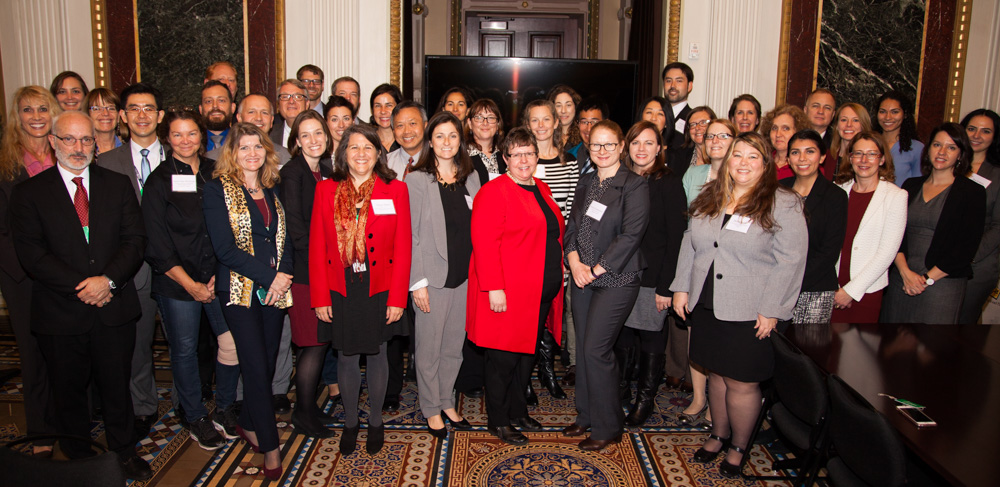
On November 29, 2016 I was one of approximately 30 participants invited to The White House in Washington, D.C. to take part in the English for All Technology in English event. It was an amazing event that brought together thought leaders from academia, government and industry.

Here’s an album of photos taken by an official U.S. Department of State photographer: https://www.flickr.com/photos/exchangesphotos/albums/72157677134648376

You can check out my complete report here: white-house-report

_____________________________

This blog has had over 1.8 million views thanks to readers like you. If you enjoyed this post, please “like” it or share it on social media. Thanks!

Sarah Elaine Eaton is a faculty member in the Werklund School of Education, University of Calgary, Canada.


5 Myths about being an independent language or literacy professional (and secrets of the trade you need to know)

June 18, 2014

Sometimes when I talk with contract language teachers, sessionals, adjuncts, freelance writers, editors and others who dedicate themselves to the language and literacy profession, I’ve learned that there are some myths about the profession that we need to debunk. Here are a few of them:

Myth #1 – The work is about the language

You absolutely need to understand the mechanics of language and the foundations of effective learning to succeed as an independent language professional, the real work is about the people you work with. Helping others to learn, grow and develop as human beings is at the heart of what we do. If you think the job is about being “the spelling police” or a “grammar guru”, you’ve missed the point.

Myth #2 – Being a professional means someone else does the admin work

Language teachers love being in the classroom, but that’s only part of the job. Submitting grades, writing reports and tending to administrative duties comes with the territory. In today’s world, being a professional means paying as much attention to the quality of your administrative work as you do to your teaching. Program and institutional staff are not your personal secretaries. They are professionals in their own right and deserve to be treated as such.

Myth #3 – Being an independent professional means you have no boss

Sometimes people say to me, “You are so lucky!  You have no boss!” Nothing could be further from the truth. You get a minimum of one new boss with every contract you take one. Sometimes you have more than one person you report to. If you’re very lucky, those people will like each other and see eye to eye. If they don’t, you are the one who will get pulled in different directions. Learning to figure out, understand and navigate the reporting requirements of each job is likely to require an immense amount of energy. You invest time and effort at the beginning of every new job. But make no mistake, you will always report to someone, even if it’s not always clear who it is. The trick is to clarify who you report to and understand that your job implicitly involves making that person’s life easier in whatever way you reasonably can.

Myth #4 – The last day of the contract is the end of the job

In many contract situations, there is follow up work to be done after the contract end date. This work is often administrative. Some examples include written reports, expense claims and grade submission. Even though your contract may have officially ended on a particular date, the obligations and expectations of the job may extend past that. Be amenable to reasonable wrap-up duties and ensure you comply with deadlines set by your employer or client. This is important to preserve your positive relationships as you are wrapping up your work. Remember that the end date of a contract may signify the end of a particular job, but your relationships and reputation can outlive any contract.

Myth #5 – It is important to leave with a letter of reference

This is a partial myth. Getting letters of reference can be important, but they can also be formulaic and written according to a template. What’s more important than getting with a generic letter of reference on the last day of the job, is leaving the job with a reputation for excellence and sincere relationships that can last a lifetime. Recommendations that matter are likely to happen over the phone or during informal personal conversations that are more honest and open than a templated letter ever could be. The reality is that we’ll never know about most of the conversations that happen between our prospective employers and our previous employers who are more than likely connected in some collegial way we were never even aware of. Real recommendations don’t come from generic letter we tuck into our portfolios. They come from informal conversations that “never happened”.

There are more myths about the profession that need busting, but these are a few of the most common ones that I see over and over again, especially from folks who are new to the world of working independently either as contractors, freelancers or consultants. The most important thing to remember is that we are only as good as our last contract, our last course or our last project. Our love of language or dedication to literacy is what we do. The reputations we build along the way is how we do it. We need to pay as much attention to the how as we do to the what.

____________________________________________________

If you enjoyed this post, please “like” it or share it on social media. Thanks!

Share or Tweet this: 5 Myths about being an independent language or literacy professional (and secrets of the trade you need to know) http://wp.me/pNAh3-1Io

This blog has had over 1.8 million views thanks to readers like you. If you enjoyed this post, please “like” it or share it on social media. Thanks!

Sarah Elaine Eaton is a faculty member in the Werklund School of Education, University of Calgary, Canada.