Postplagiarism as a Blueprint for Academic Integrity in an AI Age

April 28, 2025

The landscape of academic integrity continues to evolve. Don’t get me wrong. There are timeless aspects to academic integrity that remain constant, like everyone in the educational eco-system following established expectations that are clearly communicated and supported.

Having said that, our world has changed a lot since COVID-19. Digital learning is pretty much embedded into the educational systems of every high-income county and many others, too.

Our approach to plagiarism and academic misconduct must evolve with new developments in technology. The traditional model—focused on catching and punishing—has reached its limits. With a  post-plagiarism framework we can prepare students for their future while honouring their dignity.

Moving Beyond Detection and Punishment

The plagiarism detection industry grew from legitimate concerns about academic misconduct. However, this approach positions students as potential cheaters rather than emerging scholars. Detection software creates an atmosphere of suspicion rather than trust. Students submit work feeling anxious about false positives rather than proud of their learning.

Universities spend millions (billions?) on detection services annually. These resources could support student learning instead. What if we redirected these funds toward writing centers, tutoring programs, and faculty development?

Students as Partners in Academic Integrity

A post-plagiarism approach positions students as partners. They help develop academic integrity policies. They contribute to classroom discussions about citation practices. They mentor peers in proper source use.

Student partnership requires trust. Faculty must believe students want to succeed honestly. Students must trust faculty to guide rather than police. This mutual trust creates space for authentic learning.

Students who participate in policy development understand expectations better. They develop ownership of academic integrity standards. These experiences prepare them for professional environments where ethical conduct matters.

Preserving Dignity in Digital Learning

Technology changes how we learn and create knowledge. AI writing tools now generate sophisticated text. Students need skills to use these tools ethically.

A post-plagiarism approach acknowledges this reality. Rather than banning technology, we teach students to use it responsibly. We help them understand when AI assistance is appropriate and when independent work matters.

Preserving dignity means treating students as capable decision-makers. They need practice making ethical choices about technology use. Our guidance should focus on developing judgment rather than following rules.

Preparing Students for Tomorrow’s Challenges

Today’s students will work in environments transformed by automation and AI. Their value will come from distinctly human capabilities—critical thinking, creativity, collaboration, and ethical reasoning.

Citation skills matter less than attribution.  Students need to evaluate sources critically, synthesize diverse perspectives, and contribute original insights. A post-plagiarism framework prioritizes these higher-order skills.

Assessment methods can evolve accordingly. Assignments that ask students to demonstrate their thinking process resist plagiarism naturally. Projects requiring personal reflection or real-world application showcase authentic learning.

A Blueprint for Change

Practical steps toward a post-plagiarism future include:

  1. Redesign assessments to emphasize process over product
  2. Involve students in academic integrity policy development
  3. Teach technology literacy alongside information literacy
  4. Invest in support systems rather than detection systems
  5. Create classroom cultures that value original thinking

This blueprint requires institutional commitment. Faculty need professional development opportunities. Administrators need courage to question established practices. Students need meaningful involvement in governance.

Conclusion

A post-plagiarism framework offers hope. It acknowledges technological reality while preserving educational values. It treats students as partners rather than suspects. It prepares graduates who understand integrity as professional responsibility rather than compliance obligation.

The future of education requires this shift. Our students deserve learning environments that honor their dignity, nurture their capabilities, and prepare them for tomorrow’s challenges. By moving beyond plagiarism detection toward partnership, we create educational experiences worthy of their potential.

________________________

Share this post: Postplagiarism as a Blueprint for Academic Integrity in an AI Age – https://drsaraheaton.com/2025/04/28/postplagiarism-as-a-blueprint-for-academic-integrity-in-an-ai-age/

Sarah Elaine Eaton, PhD, is a Professor and Research Chair in the Werklund School of Education at the University of Calgary, Canada. Opinions are my own and do not represent those of my employer.


The impact of tech on how instructors teach and how students learn

April 3, 2018

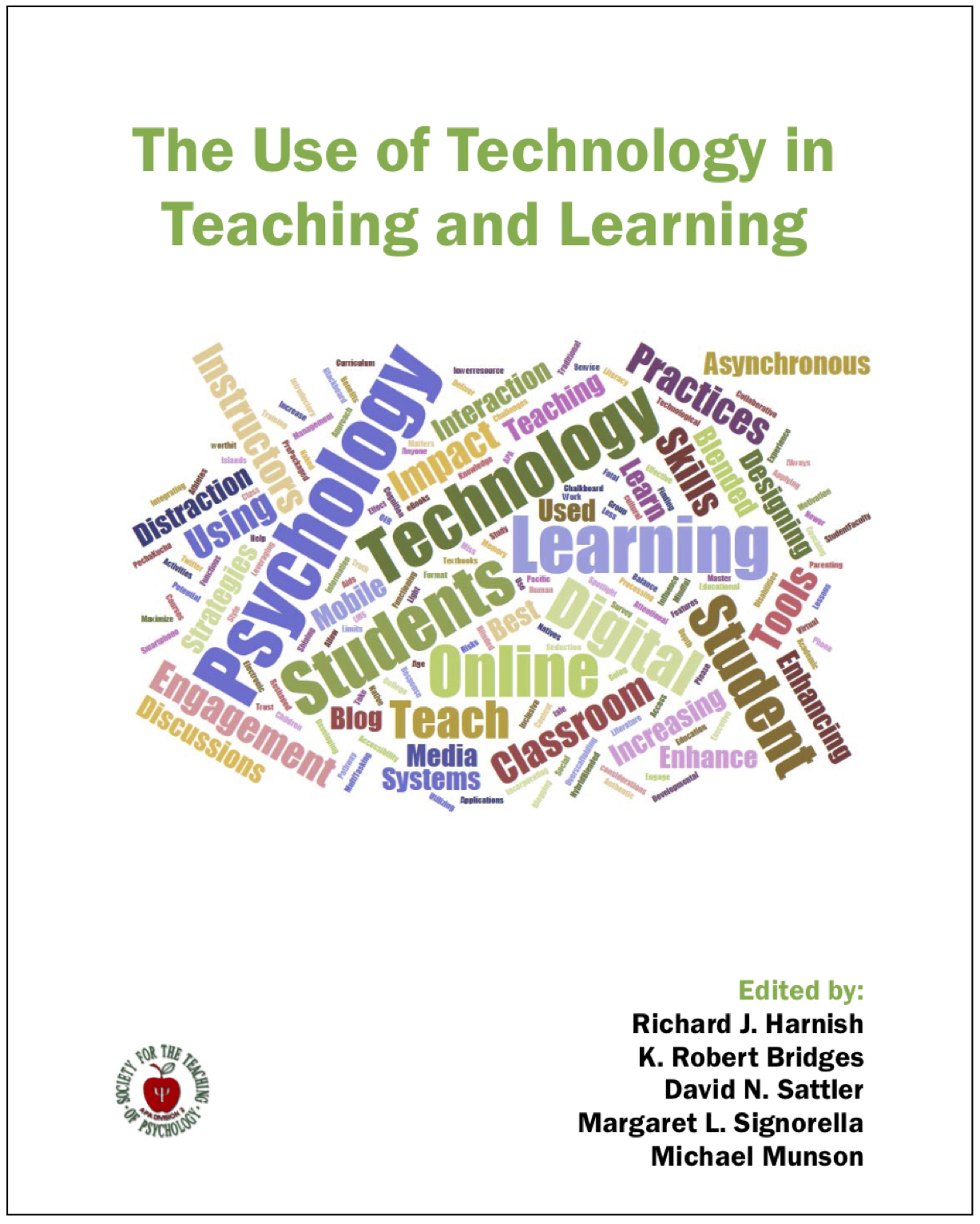
Use of tech cover.jpgI am thrilled to share a new book chapter that’s just been published. The chapter is, “The impact of technology on how instructors teach and how students learn”. It part of, The Use of Technology in Teaching and Learning, edited by Richard Harnish, K. Robert Bridges, David N. Sattler, Margaret L. Signorella and Michael Munson. It is published by the Society for the Teaching of Psychology. (I know, I know, I’m not a psychologist, but the topic fits with one of my areas of interest.)

In this chapter I talk about how technology is impacting educators in terms of their pedagogical knowledge and classroom practice, as well as how tech impacts how students learn.

One of the best things about this book is that is freely available online! You can download your own copy from: https://teachpsych.org/ebooks/useoftech

In fact, the publishers have an entire collection of free books that anyone can download on topics ranging from academic advising to research on teaching, among others. Check them out here: https://teachpsych.org/ebooks/index.php

On a personal note, I have to say that I really appreciate contributing to works that are Open Access, so readers from anywhere can download, read and enjoy. There’s much to be said for this kind of publishing model and as a writer and a scholar, being able to share my work in this way is energizing.

______________________________________________________

Share or Tweet this: The impact of tech on how instructors teach and how students learn

This blog has had over 1.8 million views thanks to readers like you. If you enjoyed this post, please “like” it or share it on social media. Thanks!

Sarah Elaine Eaton is a faculty member in the Werklund School of Education, University of Calgary, Canada.

Opinions are my own and do not represent those of the Werklund School of Education or the University of Calgary.


Marketing and promoting literacy with webinars

June 20, 2012

Marketing and promoting literacy with webinars (cover) - Sarah Elaine EatonAre you interested in using webinars or webcasting in your literacy organization? This report offers practical suggestions for literacy practitioners and program administrators on how to use webinar technology to promote and market literacy. The report is divided into sections that offer ideas on webinars for learners, for staff and volunteers and for the general public.

A checklist is provided of helpful tips on how to make your webinar day a success.

This report is available for free as a downloadable .pdf from Onate Press.

_______________________

Share or Tweet this post: Marketing and promoting literacy with webinars http://wp.me/pNAh3-1rj

If you are interested in booking me (Sarah Eaton) for a presentation, keynote or workshop (either live or via webinar) contact me at sarahelaineeaton (at) gmail.com. Please visit my speaking page, too.


Marketing your language or literacy program: 10 webinars recorded

May 31, 2012

This week we wrapped up our 10-week webinar series on how to market your literacy or language program. Nine of the ten programs featured ideas from  101 Ways to Market Your Language Program. The 10th and final webinar focused on social media, including:

  • Brief overview of social media marketing for non-profit and educational programs
  • Building your social media capacity to market your programs more effectively.
  • Do’s and dont’s of social media marketing.

Here is the tenth webinar recording for you. There are links to the other nine programs below.

If you like these webinars and find them helpful, please share them with others, leave a comment or “like” the video on YouTube.  Thanks to everyone who joined us.

Related post and recordings of past programs:

101 Ways to Market Your Language Program (10 Free webinars) http://wp.me/pNAh3-1j6

#1 Webinar recording: Marketing strategy and planning

#2 Webinar recording: Setting marketing goals and budgets

#3 Webinar recording: Writing effective marketing copy

#4 Webinar recording: Developing written marketing materials

#5 Webinar recording: Identifying what makes you unique

#6 Webinar recording: Speciality tips for programs at large institutions

#7 Webinar recording: The power of your connections

#8 Webinar recording: Relationship marketing

#9 Webinar recording: Effective marketing follow-up

___________________________

Share or Tweet this post:  Marketing your language or literacy program: 10 webinars recorded http://wp.me/pNAh3-1qC

Update – January 2018 – This blog has had over 1.8 million views thanks to readers like you. If you enjoyed this post, please “like” it or share it on social media. Thanks!

Sarah Elaine Eaton is a faculty member in the Werklund School of Education, University of Calgary, Canada.


Tomorrow: Free webinar on using social media to market literacy and language programs

May 29, 2012

Tomorrow we wrap up our series of ten free webinars on how to market literacy programs and language schools.

Each webinar has highlighted different ideas from 101 Ways to Market Your Language Program. Tomorrow is a little different in that the ideas and strategies provided are brand new information, not published in the book. The program will be  30 to 60 minutes in length. Bring a pen and paper. I’m going to give you lots of ideas you can implement right away.

Webinar #10 of 10 – What to expect

Today’s webinar will focus on:

  • Brief overview of social media marketing for non-profit and educational programs
  • Building your social media capacity to market your programs more effectively.
  • Do’s and dont’s of social media marketing.

Webinar time

Date: Wednesday, May 30, 2012

There are some time zone changes coming up around the world, so double-check these times against your local area:

Point of origin – 14:00 (2:00 p.m.) Mountain Time, May 16, 2012 Calgary / Edmonton

16:00 (4:00 p.m.) – Eastern Time – Toronto / New York

20:00 (8:00 p.m.) – Greenwich Time – London, England

22:00 (10:00 p.m.) – Eastern European Time – Athens / Istanbul

05:00 (5:00 a.m.) – following day – Japan Standard Time – Tokyo

How to log in

There is no need to register. These webinars are free and open to everyone. Seating is limited though, so sign on early.

To join the webinar, simply click here: http://meet11548754.adobeconnect.com/saraheaton/

Will it be recorded?

You bet. I’ll record the program and post it within 24 hours or so. No charges or fees to watch these recorded programs.

Related post and recordings of past programs:

101 Ways to Market Your Language Program (10 Free webinars) http://wp.me/pNAh3-1j6

#1 Webinar recording: Marketing strategy and planning

#2 Webinar recording: Setting marketing goals and budgets

#3 Webinar recording: Writing effective marketing copy

#4 Webinar recording: Developing written marketing materials

#5 Webinar recording: Identifying what makes you unique

#6 Webinar recording: Speciality tips for programs at large institutions

#7 Webinar recording: The power of your connections

#8 Webinar recording: Relationship marketing

#9 Webinar recording: Effective marketing follow-up

___________________________

Share or Tweet this post:  Tomorrow: Free webinar on using social media to market literacy and language programs http://wp.me/pNAh3-1ql

Update – January 2018 – This blog has had over 1.8 million views thanks to readers like you. If you enjoyed this post, please “like” it or share it on social media. Thanks!

Sarah Elaine Eaton is a faculty member in the Werklund School of Education, University of Calgary, Canada.