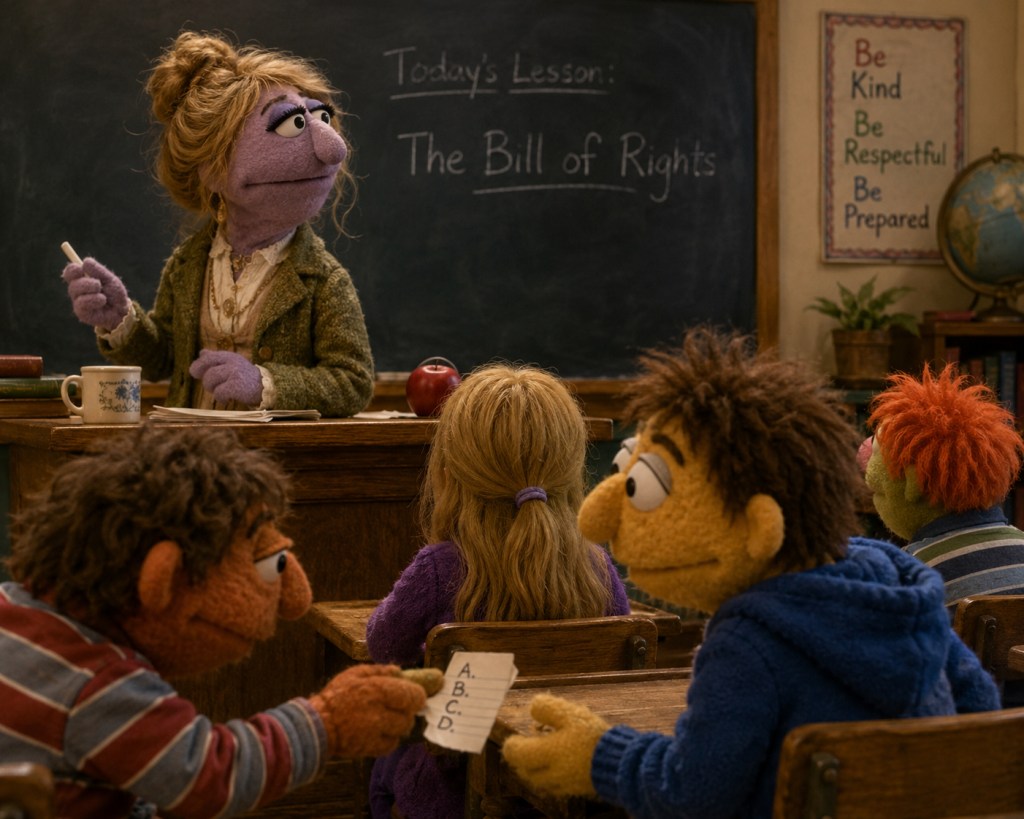
Consequences of Teacher Cheating: A Canadian Case Study

July 3, 2026

A British Columbia arbitrator recently confirmed what the Vernon School District 22 board decided in 2024: Tasha Whitney, a continuing contract teacher at W. L. Seaton Secondary School, will not return to the classroom (Assman, 2026b). The arbitrator dismissed the union’s grievance and upheld her termination for cause. The ruling offers a case study in how academic integrity violations by educators differ from those committed by students, and why the consequences differ, too.

The facts, as reported by Assman (2026a, 2026b), are straightforward. Whitney invigilated a mandatory Grade 12 literacy assessment in June 2024. When one student, identified as CD, joked about having someone else write his exam, Whitney suggested other students who might do it. On the day of the exam, another student, AB, used CD’s login credentials to complete both his own assessment and CD’s, running out the clock on one screen with a video game while completing the other exam on a second screen. Whitney signed documents certifying that both students had written their own assessments. When a colleague noticed the irregularity, Whitney fabricated an explanation. She continued to minimize her role throughout the district investigation and the arbitration hearing that followed.

The arbitrator’s reasoning matters as much as the outcome. Had Whitney told the truth from the outset, the arbitrator indicated that termination would have been excessive; the district could have treated the incident as a serious error made under personal strain, with progressive discipline restoring her employment (Assman, 2026b). The union presented medical evidence that Whitney had experienced post-traumatic stress disorder and anxiety following a violent workplace incident in October 2023, and a psychiatric assessment acknowledged that this anxiety likely affected her decision-making. The assessment found no causal link between the diagnosis and the fraudulent conduct itself. Dishonesty, sustained over months and through a formal investigation, severed the trust her employment required.

This distinction between error and deceit connects to an argument I make with my co-author Zeenath Reza Khan in our own work on ethics in teacher training. Zeenath and I contend that teacher training programs must include explicit instruction in ethical decision-making, not compliance training alone, because teachers model integrity for the students in their care (Eaton & Khan, 2022). The arbitrator’s finding in the Whitney case reflects this same principle, holding that facilitating cheating violated Whitney’s fiduciary duty to model ethical behaviour for the youth in her charge (Assman, 2026b).

A student who cheats on an exam violates a rule. A teacher who helps a student cheat, then invigilates the fraud, signs false certification documents, and misleads colleagues and investigators, violates the basis on which the school entrusts her with that role. I have written, with Zeenath Reza Khan, that academic integrity education for pre-service teachers remains inconsistent internationally, with many programs offering little beyond a brochure or a single workshop (Eaton & Khan, 2022). The Whitney case suggests what happens when that gap is left unaddressed at the level of professional judgement, particularly when a person under stress reaches for concealment rather than disclosure.

The arbitrator’s finding leaves a narrow but clear lesson for the profession: honesty in the aftermath of a mistake changes what an institution can offer in response. Whitney’s initial decision to encourage a workaround may have originated in a lapse of judgement. Her subsequent choice to lie repeatedly, to a colleague, to school administrators, and to an independent investigator, closed the door that honesty could have left open.

References

Assman, B. (2026a, February 10). Vernon teacher fired for helping student cheat on an exam. Castanet. https://www.castanet.net/news/Vernon/598708/Vernon-teacher-fired-for-helping-student-cheat-on-an-exam

Assman, B. (2026b, June 23). Vernon teacher’s firing upheld, after facilitating exam cheating and lying to cover it up. Castanet. https://www.castanet.net/news/Vernon/621104/Vernon-teacher-s-firing-upheld-after-facilitating-exam-cheating-and-lying-to-cover-it-up

Eaton, S. E., & Khan, Z. R. (2022). Ethics in teacher training: An overview. In S. E. Eaton & Z. R. Khan (Eds.), Ethics and integrity in teacher education (pp. 1–11). Springer. https://doi.org/10.1007/978-3-031-16922-9_1

___________

Share this post – Consequences of Teacher Cheating: A Canadian Case Study https://drsaraheaton.com/2026/07/03/consequences-of-teacher-cheating-a-canadian-case-study/

Sarah Elaine Eaton, PhD, is a Professor and Research Chair in the Werklund School of Education at the University of Calgary, Canada. Opinions are my own and do not represent those of my employer.


BC Academic Integrity Day (BC AID) 2021: Recap

October 16, 2021

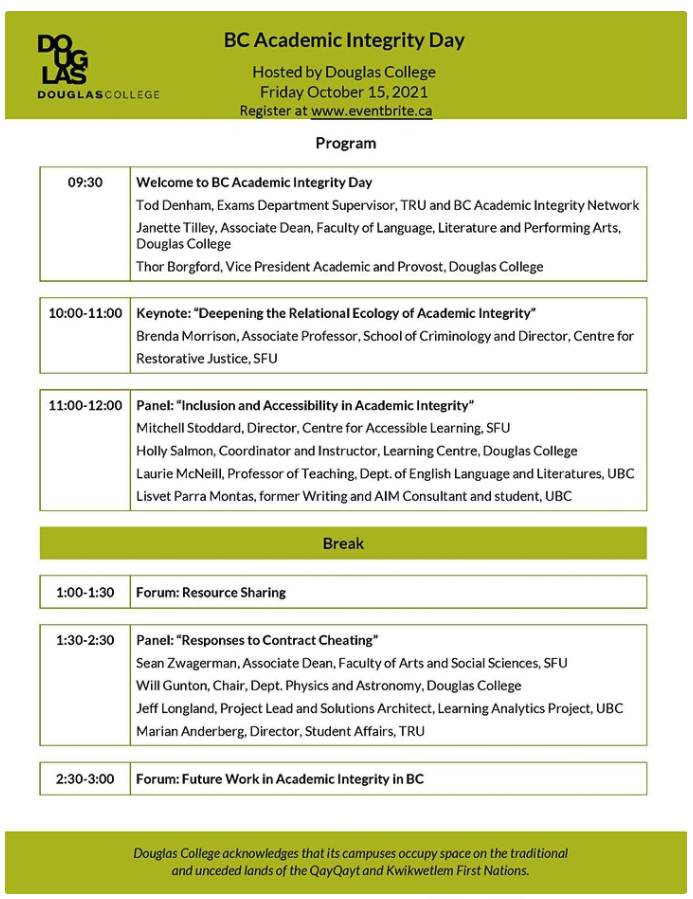
BC Acdemic Integrity Day 1 2021-10-15 at 10.25.42 AMThis virtual event was hosted by Douglas College, with presenters from across British Columbia on Friday, October 15, 2021. At one point, I counted 123 participants in the virtual meeting room.

Welcome to the BC Academic Integrity Day

BC Acdemic Integrity Day 2 2021-10-15 at 10.25.59 AMJanette Tilley, Associate Dean, Faculty of Language, Literature and Performing Arts, Douglas College, opened the event with a land acknowledgement.
Thor Borgford, Vice President Academic and Provost, Douglas College, offered welcoming remarks. He commented that although academic integrity has been important for a long time, things have changed over the past five years, and particularly during COVID-19. He noted that looking for solutions through enforcement is not the way to go, but instead it is important to promote academic integrity so students have skills they can take with them after graduation.

Tod Denham, Exams Department Supervisor, TRU and founding member of the BC Academic Integrity Network, spoke about the history of the BC Academic Integrity Network (BC-AIN). Talked about attending a number of academic integrity events, including the first Canadian Symposium on Academic Integrity at the University of Calgary. From there they organized the first BC-AID at TRU in 2019, where BC-AIN was born. He offers appreciation to Douglas College for hosting this second BC-AID.

Janette Tilley introduced the other members of the organizing committee for the conference:

  • Tod Denham (TRU)
  • Jaclyn Stewart (UBC)
  • Ainsley Rouse (UBC)
  • Arlette Stewart (SFU)
  • Marian Anderberg (TRU)
  • Laura Prada (UBCO)
  • Sean Zwagerman (SFU)

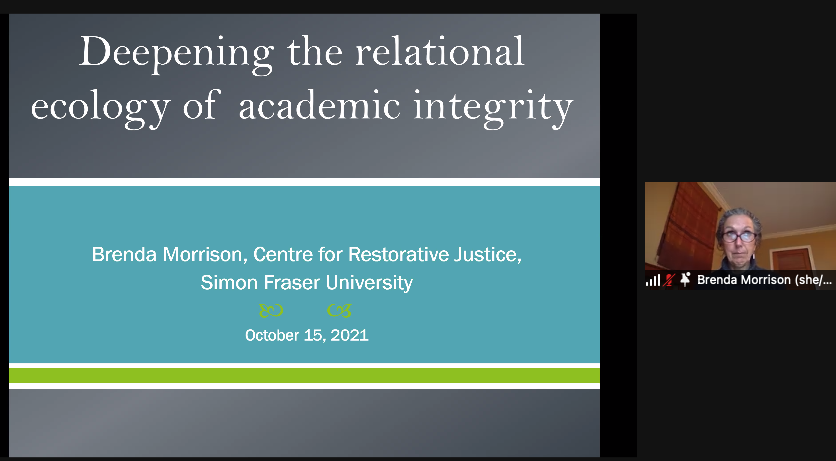
Keynote: “Deepening the Relational Ecology of Academic Integrity”BC Acdemic Integrity Day 3 2021-10-15 at 10.59.12 AM

Brenda Morrison, Associate Professor. School of Criminology and Director, Centre for Restorative Justice, SFU gave a heartfelt and sincere keynote address about the principles of restorative practices, highlighting the difference between traditional policy and restorative approaches to addressing cases of misconduct. Dr. Morrison generously shared this link to her slides.

Panel: “Inclusion and Accessibility in Academic Integrity”

BC Acdemic Integrity Day 4 2021-10-15 at 12.10.08 PM

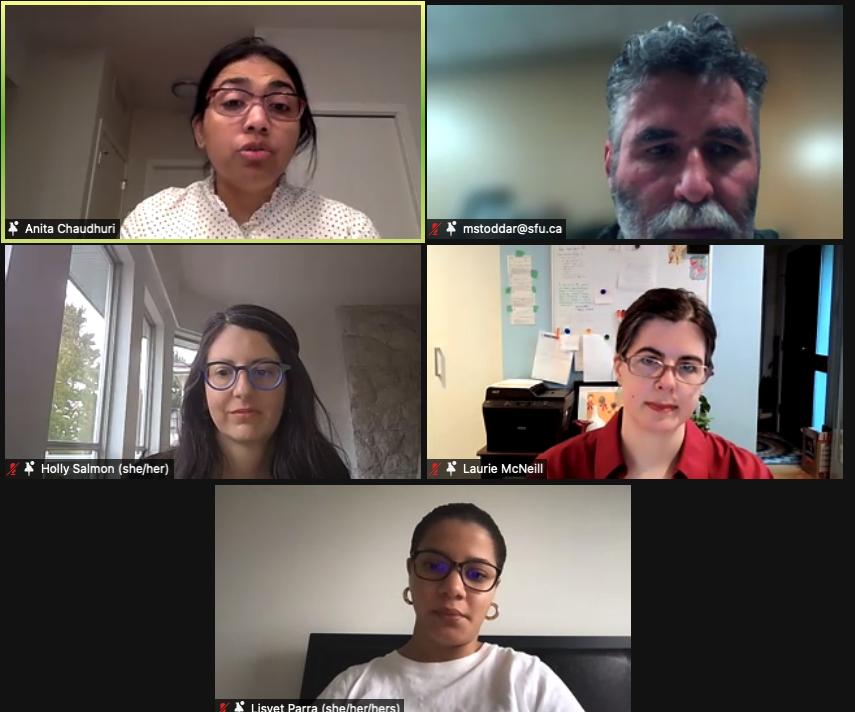
Anita Chaudhuri (UBCO) moderated an excellent panel on accessibility and inclusion in academic integrity with these panelists:

  • Mitchell Stoddard, Director, Centre for Accessible Learning, SFU
  • Holly Salmon, Coordinator and Instructor, Learning Centre, Douglas College
  • Laurie McNeill, Professor of Teaching, Dept, of English Language and Literatures, UBC
  • Lisvet Parra Montas, former Writing and AIM Consultant and student, UBC

Some key points shared during the panel for me were:

  • There continue to be many barriers for students including barriers to learning, as well as barriers to navigating higher education systems.
  • Discrimination, along with equity, diversity, and inclusion (EDI) are topics we must continue to address.
  • Universal design for learning (UDL) helps all students learn with integrity.
  • It is essential for us to listen to students and pay attention to their experiences.

After the panel, there was a lunch break.

Forum: Resource Sharing

After lunch Jackie Stewart (UBC) facilitated a session for participants to share resources related to academic integrity.

Laura Prada (UBCO) shared an academic integrity awareness campaign including resources for faculty members, a Zoom background and some tote bags they are giving away as prizes.

Maggie Ross (Langara College) shared a toolkit for faculty, Encouraging Academic Integrity Through a Preventative Framework, that was showcased on the ICAI blog. Maggie also shared a meme contest they have organized for and a badge they’ll wear to pledge integrity during Academic Integrity Week.

Arlette Stewart (SFU) shared a number of resources, including:

  • SFU’s assignment calculator for students
  • Information about an upcoming webinar on restorative practices in the classroom, Dr. Sheri Fabian, Director of the Institute for the Study of Teaching and Learning in the Disciplines “Beyond the Classroom: How an incident of academic dishonesty kept someone out of prison” on Wednesday, October 20, 2021 from 10:30-11:30 a.m. PST. Here is the link to register.
  • And a couple of suggested syllabi statements from SFU, such as this one and this one.

Colleen Pawlychka from Douglas College shared her academic integrity resource and talked about how she teaches her students about academic integrity in her classes.

I shared that the University of Calgary is hosting a public webinar on October 29, “Contract Cheating in Canada: Exploring Legislative Options and also the forthcoming edited book Academic Integrity in Canada.

Laurie McNeill (UBC) shared Academic Integrity Faculty Resources

Jaclyn Stewart shared – Some suggested syllabus statements from UBC: https://teachingsupport.forestry.ubc.ca/files/2020/09/Approaches-to-Academic-Integrity-in-the-Syllabus_04-Sept-2020.pdf

Jennifer Kendall shared – HOWL (Habits of White Language) by Asao Inoue, saying it “could be a useful starting point for reflecting on our assessment practices and approaching academic integrity in a more inclusive way.”

Sandra Zappa-Hollman shared a link to this podcast with valuable episodes about citing, referencing, and paraphrasing.

Panel: “Responses to Contract Cheating”

BC Academic Integrity Day 5 2021-10-15 at 2.32.46 PM

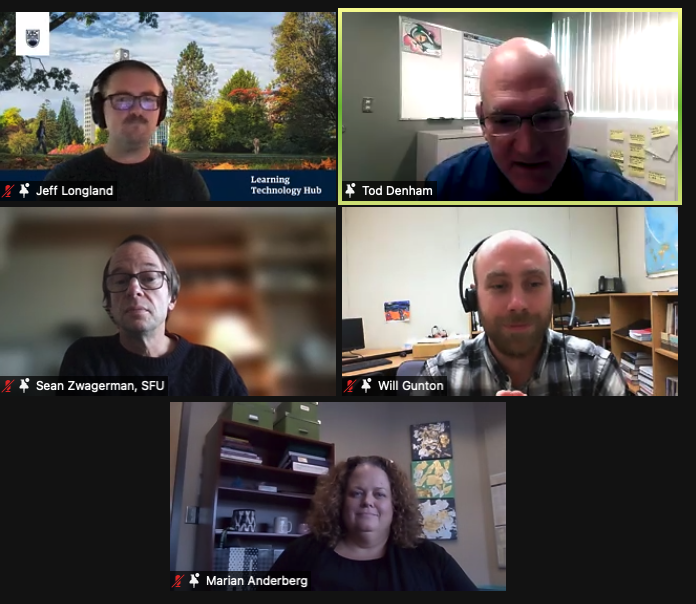
Tod Denham (TRU) moderated a panel of experts from across higher education in British Columbia:

  • Jeff Longland, Project Lead and Solutions Architect, Learning Analytics Project, UBC
  • Sean Zwagerman, Associate Dean, Faculty of Arts and Social Sciences, SFU
  • Will Gunton, Chair, Dept. Physics and Astronomy, Douglas College
  • Marian Anderberg. Director, Student Affairs, TRU

Key takeaways from this panel for me were:

  • There are ways to detect contract cheating, but this work requires resources (dedicated staff and time to do the work).
  • Commercial file-sharing and contract cheating companies are particularly problematic. A shoutout to this article by Thomas Lancaster and Codrin Cortarlan was shared.
  • Need to name contract cheating institutional policy documents.
  • Contract cheating has been increasing during the pandemic and it happens across a variety of courses.
  • Contract cheating is committed by both domestic and international students, but some contract cheating companies are specifically targeting international students, including offering a shadow curriculum in other languages, such as Mandarin, and offering contract cheating as a supplementary service.
  • Companies offering to complete entire online courses on behalf of students seem to be increasing.
  • A model of progressive discipline is common, though there have been more students being suspended for academic misconduct violations including contract cheating during the pandemic.
  • Structural change is needed, including policy revision, and casting an EDI lens on contract cheating. There are myths that need to be busted about who engages in contract cheating and why.
  • Shadow courses and contract cheating companies that have local storefronts are not uncommon in the Lower Mainland of British Columbia.
  • Administrators have been receiving an increasing number of anonymous tips about contact cheating. It is not known if these tips are coming from legitimate students or competing contract cheating suppliers.
  • Sean Zwagerman shared the Petition: Academic Integrity Letter to the Ministry 2021.
  • Catching students will not solve the larger contract cheating problem.

Forum: Future Work in Academic Integrity in BC

Tod Denham (TRU) facilitated a closing conversation about the future of the British Columbia Academic Integrity Network (BC AIN). Janette Tilley closed the event and thanked everyone for attending.

All in all, this was a fabulous virtual event that showcased how post-secondary institutions in British Columbia are promoting academic integrity across their province.

______________________

Share or Tweet this: BC Academic Integrity Day (BC AID) 2021: Recap – https://drsaraheaton.wordpress.com/2021/10/16/bc-academic-integrity-day-bc-aid-2021-recap/

This blog has had over 2 million views thanks to readers like you. If you enjoyed this post, please “like” it or share it on social media. Thanks!

Sarah Elaine Eaton, PhD, is a faculty member in the Werklund School of Education, and the Educational Leader in Residence, Academic Integrity, University of Calgary, Canada.

Opinions are my own and do not represent those of the University of Calgary or anyone else.