Nelson Mandela’s first language being cut from South African schools

January 24, 2012

Nelson Mandela is a man with a deep commitment to defending human rights. He also speaks English as a Second Language. His first language is Xhosa.

A recent article from the Times Alive in South Africa reports that language classes for both Xhosa and Zulu are being cut in South African state schools. The main language of instruction in South African schools is English. Prega Govender reports that until this school year, students were required to take classes in two additional languages, but this year, that requirement has been changed. Now students are only required to take one additional language.

Most schools in the area are opting for Afrikaans as the additional language of choice for students in that region. The article reports that in one case, the Xhosa language teacher has been re-deployed to teach Afrikaans this year. The decision seems to be driven by numbers:

“Last year, 68455 matrics countrywide wrote Afrikaans as their first additional language, whereas only 10943 wrote Zulu and a mere 1547 wrote Xhosa.”

Regular readers of this blog will know that I am strongly opposed to the removal of language programs from a curriculum.  There are a number of reasons for this:

Benefits of learning additional languages for cognitive ability

Research shows that the benefits of learning additional languages extend beyond language and cultural skills. Learning additional languages also has a positive effect on a person’s general cognitive ability (Kimbrough Oller, D and Eilers R.E., 2002). Specific research has also found that students who study other languages also score better on math tests (Bournot-Trites, M. and K. Reeder, 2001; de Courcy, M. and M. Burston, 2000; Turnbull, M., S. Lapkin and D. Hart, 2001 and Turnbull, M., D. Hart and S. Lapkin, 2003). The benefits of learning additional languages are clear and have been documented time and time again through research. We know that the more languages a young person is exposed to, the more capacity he or she will have to develop lifelong multilingual skills.

When languages are removed from a curriculum, it sends a message that the language is unimportant

It could be argued that students in South Africa will still enjoy these cognitive and linguistic benefits, since they will be studying Afrikaans as an additional language. That may be true, but making the decision to remove Xhosa and Zulu from the curriculum sends a strong message that these languages do not matter in formal education in that region.

While I do not profess to understand the complexity of minority languages or the politics of South Africa, I have studied the concepts of formal and informal education extensively.

Young students who speak Xhosa and Zulu as first languages at home have now lost the opportunity to learn their native language in an organized, formal environment, as a shared experience with peers. Though they may continue to learn the language in the informal context of the home, we know that informal learning is considered the least legitimate and is less respected than formal learning.

By removing these languages from the curriculum, those who have the responsibility and authority to set policies and make decisions send a strong message that these languages lack sufficient legitimacy to be included in the standard curriculum of formal education in the region.

Language abilities are linked to leadership skills

In previous research I have discussed how some significant world leaders, such as Ghandi, leveraged multiple languages to extend their leadership reach. Nelson Mandela’s first language is Xhosa. While not a perfect human being, he has arguably been one of the world’s most influential leaders over the past several decades. What message does it send to teachers, parents, students and indeed, everyone living in the region, that this leader’s first language, which was formerly offered as part of the standard state school curriculum, has now been cut for students in the younger grades?

While the article reports that students may still take the language in later grades, cutting it from the curriculum for children in grades one to three sends a strong message that it is not as important as math, science or even Afrikaans. Those subjects are considered part of the critical foundation of the young learner’s formal education experience. But Zulu and Xhosa… these are superfluous options that can be added later.

I worry when languages are cut from curricula. I worry when students and parents get the message that language learning is not important. I worry even more when they get the message that their first language is not important, as is the case for Xhosa and Zulu for many young people in South Africa. Formally recognizing the importance and significance of learning first languages in a plurilingual society such as South Africa is critical.

As educators worldwide we must do everything in our power to prepare the young people of today to lead the world tomorrow. Learning additional languages will help them do that.

References

Bournot-Trites, M. and K. Reeder. (2001). “Interdependence Revisited: Mathematics Achievement in an Intensified French Immersion Program.”

de Courcy, M. and M. Burston. (2000). “Learning Mathematics Through French in Australia.”

Eaton, S. E. (2010). Leading though Language Learning and Teaching: The Case of Gandhi. Retrieved from ERIC: http://www.eric.ed.gov/PDFS/ED508664.pdf

Eaton, S. E. (2010). Formal, non-formal and informal education: The case of literacy, essential skills and language learning in Canada. Calgary.

Kimbrough Oller, D and Eilers R.E. (2002). “Balancing Interpretations Regarding Effects of Bilingualism: Empirical Outcomes and Theoretical Possibilities.”

Turnbull, M., S. Lapkin and D. Hart. (2001). “Grade Three Immersion Students’ Performance in Literacy and Mathematics: Province-wide Results from Ontario (1998–99).”

Turnbull, M., D. Hart and S. Lapkin. (2003). “Grade 6 French Immersion Students’ Performance on Large-scale Reading, Writing, and Mathematics Tests: Building Explanations.”

Related posts

Formal, Non-formal and Informal Learning: What Are the Differences?

Formal, non-formal and informal learning: The case of literacy and language learning in Canada

____________________________

Share this post: Nelson Mandela’s first language being cut from South African schools http://wp.me/pNAh3-1cA

Update – January 2018 – This blog has had over 1.8 million views thanks to readers like you. If you enjoyed this post, please “like” it or share it on social media. Thanks!

Sarah Elaine Eaton is a faculty member in the Werklund School of Education, University of Calgary, Canada.


Dr. Sarah’s favorite resources of the week (Jan.16 – 22, 2012)

January 23, 2012

Here are my favorite resources of the week, curated from my Twitter account.

Social Media Resources, Policy tools and How To’s

Managing social media complaints before they explode into Tweets, YouTube videos and Facebook shares – by Janet Cho

Social Media Policy Must Have: when are they on the clock? – by Shawn Tuma

Muscogee County Schools new social media policy discourages ‘friending,’ texting between teachers, students: Teachers urged to not communicate with students, parents on websites, texts – by Sara Pauff and Sonya Sorich

Business Insider: Our new Twitter-Facebook policy: What Do You Think? – by Henry Blodget

Hampton school board debates new social media policy – by Samieh Shalash

Social media rules for public servants ‘laughable’ – by Amy Simmons

Social Media News

25 Eye-Popping Internet Marketing Statistics for 2012 – by Pamela Vaughan

Educational Technology

Top 10 Free Online Tutoring Tools for 2012 – Edudemic

Grades 9-12 Examples: Voicethread – Voicethread4education

Top 10 Sites for Educational Apps – TechLearning.com

LibriVox – free audiobooks

Technology Resources and News

Shy students should be able to tweet their teacher in class, study finds – by Jeremy Pierce

Can Technology Help the Blog Replace the Term Paper? – New York Times

The 70 Online Databases that Define Our Planet – Technology Review

7 Google Search Techniques You Don’t Know Exist – Teacher Learning Community

Apple vows iBooks 2 will ‘reinvent’ school textbooks – Globe and Mail

Amazon: “Primed” to disrupt Apple’s textbook plans? – by Jason Perlow

Teachers Buzz about Apple’s Education Announcement – Globe and Mail

Literacy Resources

Books for Struggling Readers in Middle or High School – Jenna Scribbles

Literacy and Language News

How one New Brunswick school is celebrating Family Literacy Day – McAdam High

Barnes & Noble Donates Close to 1.2 Million Books To Nonprofit Organizations, Schools, Libraries And Literacy Partners All Across The U.S.A – Press Release

Pioneer of ESL, EAL in PEI, Canada celebrated by local media – The Guardian, Prince Edward Island

Library Link: We can help you give your kids the gift of literacy – by Anne Beaty, Airdire, Alberta

Church’s “Missionary Training Center” promotes international language learning – Deseret News

No Difference Between Kids’ Comprehension of Ebooks, Print Books, Study Says – School Library Journal

EAL / ESL / EFL Resources

Superb collection of ESL / EAL Learning and Teaching Resources – Alberta Education

International Languages Resources and News

Benefits of Learning a Second Language at a Young Age – Sewickley Academy

Hawaiian Language Immersion Program open to all children – by Louise Rockett, Lahaina News

Educational Leadership

7 Top Things Teachers Want from Their Principal – Connected Principals

How to Lead Effectively in Virtual Environments – by Frank Kalman

Education Resources

How can I help my (struggling) child with homework? (Part 1) – by Sylvia Hannah

New Year’s Resolutions for Children with Special Needs – Brain Balance

Education News From Around the Globe

Is Sweden’s Classroom-Free School the Future of Learning? – Good Education

Study on Teacher Value Uses Data From Before Teach-to-Test Era – by Michael Winerip, NY Times

In schools, self-esteem boosting is losing favor to rigor, finer-tuned praise – by Michael Alison Chandler, Washington Post

Everyday tasks can be teaching moments – by Kelly Pedro, London Free Press

Canadian Education News

Paul Martin says generation of Aboriginal Canadians lost – Canada.com

Medicine Hat (Alberta) school officials admit to illegal Tory donations – CBC News

Teachers’ union, province in secret talks to explore cap on work hours – by Matt McClure, Calgary Herald

Youngest students need more time in school: minister – Primary to Grade 2 students now spend four hours a day in class – CBC News

Military training, possible future for Canadian universities? – The Varsity

Related posts:

Dr. Sarah’s favorite resources of the week (Jan. 9-15, 2012)

Dr. Sarah’s favorite resources of the week (Jan. 2-8, 2012)

Dr. Sarah’s favorite resources of the week (Dec. 25, 2011 to January 1, 2012)

Dr. Sarah’s favorite resources of the week (Dec. 18-24, 2011)

Dr. Sarah’s favorite resources of the week (Dec. 11-17, 2011)

Dr. Sarah’s favorite resources of the week (Dec. 4-10, 2011)

____________________________

Share this post: Dr. Sarah’s favorite resources of the week (Jan. 16-22, 2012) http://wp.me/pNAh3-1b4

Update – January 2018 – This blog has had over 1.8 million views thanks to readers like you. If you enjoyed this post, please “like” it or share it on social media. Thanks!

Sarah Elaine Eaton is a faculty member in the Werklund School of Education, University of Calgary, Canada.


Webinar: Harry Potter in Translation: Make language learning magical

January 18, 2012

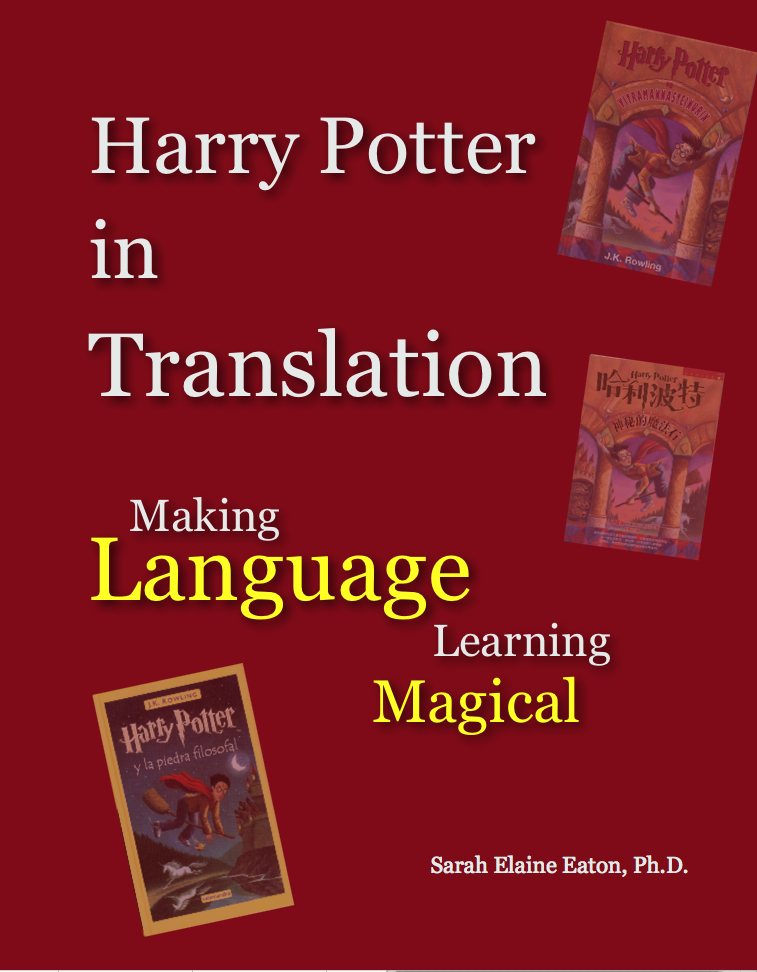
Harry Potter in Translation by Sarah Elaine EatonDid you know that the Harry Potter books have been translated into more than 70 languages? A project through the Language Research Centre brought together dozens of native speakers who recorded a portion of the first Harry Potter book. These recordings are available free of charge for language teachers and students everywhere.

In this professional development webinar for educators, presented by ISU Workforce Training, you get an introduction to the Harry Potter in translation project at the University of Calgary’s Language Research Centre. You also get ideas on how to use this free service in your own language classes.

This program includes 5 lesson plans for teachers to help them use Harry Potter as a teaching tool for second languages.

Make your language class magical by using Harry Potter in translation!

Webinar date: January 19, 2011

Webinar time: 4:00 p.m. MST

Register here.

_______________

Share or Tweet this post: Webinar: Harry Potter in Translation: Make language learning magical http://wp.me/pNAh3-1bZ

Update – January 2018 – This blog has had over 1.8 million views thanks to readers like you. If you enjoyed this post, please “like” it or share it on social media. Thanks!

Sarah Elaine Eaton is a faculty member in the Werklund School of Education, University of Calgary, Canada.


Dr. Sarah’s favorite resources of the week (Jan. 9 – 15, 2012)

January 16, 2012

Here are my favorite resources of the week, curated from my Twitter account.

Social Media Resources, Policy tools and How To’s

Who uses Twitter and how – by Andreas Silva

 7 Ways To Improve Your Social Media Skills and Influence – by Haydn Shaughnessy, Forbes

Using Social Media Marketing to Promote Green Business – by Paul Raybould, Sustainable Business

Social Media Policies: Promoting vs. Policing – by Kyle Lagunas

Social media plays a key role in crisis communication: Report – by Diana Nguyen

Social Media News

Why your business can’t ignore social networking –  by Debra Donston-Miller

Social media restricted for Olympic volunteers – Event Magazine, UK

Educational Technology

Technology Provides Parents a Window on the Classroom by Linking Home to School – EduTopia

10 New Trends in Outsourced Grading – OnlineUniversities.com

10 Most Popular Graphic Organizers – Teachervision

Technology News

Web addicts have brain changes, research suggests – by Helen Briggs, BBC News

The Many Benefits, for Kids, of Playing Video Games – by Peter Gray, Psychology Today

Mobile: Most people get news from social media, not branded apps – by David Silverberg

Literacy Resources

Free Books for BC Literacy Programs through First Books Canada – by Decoda Literacy Solutions

10 Great Literacy Games Sites – Creative Education Blog

Using Graphic Novels and Comics in the Classroom – by Andrew Miller

Literacy and Language News

Good grammar and sentence structure go hand-in-hand with literacy – Globe and Mail

Urban Dictionary, Wordnik track evolution of language as words change, emerge – by Mallary Jean Tenore

Immigrants struggle to land quality jobs in Canadian cities – by Tamara Cunningham

Student’s vocabulary knowledge has a strong relationship to academic success – by Lisa Rowell

Dyslexia and the Brain: What Does Current Research Tell Us? – by Roxanne F. Hudson, Leslie High, and Stephanie Al Otaiba

EAL / ESL / EFL Resources

Free English Language Audio and Ebooks for ESL and EFL learners – by EnglishTalkStation

International Languages Resources

5 must-watch foreign language films by – Geetanjali Jhala

Education Resources

Motivating Students Who Don’t Care – by ASCD

How profs talk about you behind your back – by Todd Pettigrew

Education News

Parents don’t have time to help kids learn, poll finds – CTV news

Music therapy in early childhood classrooms – by Ronna Kaplan, Huffington Post

Province unveils 10-point plan to improve Alberta’s education system: Initiatives include increasing transparency, collecting parental feedback – by Matt McClure, Calgary Herald

Related posts:

Dr. Sarah’s favorite resources of the week (Jan. 2-8, 2012)

Dr. Sarah’s favorite resources of the week (Dec. 25, 2011 to January 1, 2012)

Dr. Sarah’s favorite resources of the week (Dec. 18-24, 2011)

Dr. Sarah’s favorite resources of the week (Dec. 11-17, 2011)

Dr. Sarah’s favorite resources of the week (Dec. 4-10, 2011)

____________________________

Share this post: Dr. Sarah’s favorite resources of the week (Jan. 9-15, 2012) http://wp.me/pNAh3-1aO

Update – January 2018 – This blog has had over 1.8 million views thanks to readers like you. If you enjoyed this post, please “like” it or share it on social media. Thanks!

Sarah Elaine Eaton is a faculty member in the Werklund School of Education, University of Calgary, Canada.


The Joy of Books

January 14, 2012

This is stunning and inspirational display of books. The video makes the books come as alive to our eyes as they are to our imaginations.

Quite possibly, the most inspirational minute and 51 seconds of your day.

____________________________

Share this post: The Joy of Books http://wp.me/pNAh3-1aI

Update – January 2018 – This blog has had over 1.8 million views thanks to readers like you. If you enjoyed this post, please “like” it or share it on social media. Thanks!

Sarah Elaine Eaton is a faculty member in the Werklund School of Education, University of Calgary, Canada.