In 2002, I published the first edition of 101 Ways to Market Your Language Program. I have just re-released the book as a free open access resource under a Creative Commons (CC BY-NC-ND 4.0). The full book is now available as a free download.
How to cite this work: Eaton, S. E. (2002/2024). 101 Ways to Market Your Language Program: A Practical Guide for Language Schools and Programs (2024 OA ed.). Eaton International Consulting Inc. https://hdl.handle.net/1880/120145
Abstract
2024 Re-release of the 2002 first edition of this book. The author and copyright holder has released this work under a Creative Commons (CC BY-NC-ND 4.0) license.
This book provides 101 ideas and strategies to empower overall marketing efforts: (1) “Put On Your Thinking Cap” (e.g., define the problem before marketing it, set reasonable goals, and create a niche); (2) “Secrets to Boost Your Marketing Power” (e.g., emphasize the benefits, check out the competition, and sell oneself in as many languages as possible); (3) “Marketing Materials: Tools and Tips to Do the Job Better” (e.g., make a brochure, get mentioned in other brochures, and make it easy to phone for information); (4) “Going Beyond the Basics to Increase Enrollment” (e.g, offer volume discounts and guarantees and give away tuition); (5) “Specialty Tips for Programs at Large Institutions” (e.g., make sure the Web site is easy to find, partner with other educational programs, and get the program mentioned in the calendar); (6) “The Power of People: A Human Touch to Increase Enrollment and Polish Your Image” (e.g., build loyalty with host families, establish win-win relationships, and follow exceptional service standards); (7) “Continue Marketing While Your Students are Enrolled” (e.g., meet students at the airport, partner with local businesses, and create happy memories); and (8) “How to Keep Marketing Once Your Program is Finished” (e.g., create an alumni network, review successes and failures, and plan ahead for next year).
As part of the lead-up to the lecture, I have decided to make as much of my work as I can available as free, open access resources. This is recognition is a once-in-a-career kind of award and I’m working hard to make sure I can deliver. It is a hybrid public event and you can attend in person or online on March 20, 2025. If you’re interested, you can register here.
Since I am both the author and the copyright holder for this book, I can share it however I want. I am more committed now than ever to make as much of my work as possible freely available to others. Over the coming weeks, I’ll be sharing more links to more freely downloadable resources.
I am super grateful to the University of Calgary digital resources team who are helping me to archive these works.
If you know of someone working in second languages who could use a resource on marketing and recruitment for their program, feel free to share this with them.
This blog has had over 3 million views thanks to readers like you. If you enjoyed this post, please “like” it or share it on social media. Thanks!
Sarah Elaine Eaton, PhD, is a Professor and Research Chair in the Werklund School of Education at the University of Calgary, Canada. Opinions are my own and do not represent those of my employer.
As I write this, the Handbook of Academic Integrity (2nd ed.) is well underway. All the chapters have been submitted and are at various stages of review, revision, and production. Page proofs should start going out to contributing authors this month. This has been a massive project: 150+ authors, 109 chapters, 9 section editors, and me herding all the cool cats who have made it happen.
After all the chapters had been submitted, I realized that we had something new and fresh with this edition. We have pushed the boundaries beyond persistently historical ideas about academic integrity only as a matter of student conduct. So, I wrote an introduction for the handbook that synthesizes some its through lines. The common threads of this updated edition are summed up in this Comprehensive Academic Integrity (CAI) framework.
I wrote this intro in two epic writing sessions, fuelled by gallons of coffee, Vegemite on toast, and a pizza that a friend had delivered to my house because he felt sorry for me eating Vegemite on toasted bread crusts. (I am not kidding.) Anyway, first, I drafted the chapter in full. Then I asked a couple of other section editors and contributors to the handbook to provide me with an open peer review of the draft. In the chapter I acknowledge them by name and I re-iterate my gratitude to them here. Thanks are due to Guy Curtis, Brenda M. Stoesz, Rahul Kumar, Beatriz Moya, and Bibek Dahal for their feedback that helped me to improve the chapter. In the second writing session, I incorporated just about all of their suggestions and completely re-vamped the visual image to the one you see below. The CAI Framework is a high-level synthesis of all the chapters in the handbook and as such, every single author who has contributed to the handbook (as well as those they have cited in their respective chapters) all deserve credit.
According to the publisher’s rules around self-archiving and pre-prints, I am not allowed to share the entire chapter with you ahead of publication. But I can share a summary of it, so I’m doing that here. I’ve also self-archived a copy of this overview (minus the background commentary about Vegemite and pizza) in our university’s digital repository. On the off-chance you want to cite the “official” version of the summary, I have included instructions below. You’ll have to wait for the Handbook to be published to read the full chapter, but in the meantime, I hope this overview is useful.
For years scholars and other experts have called for a more holistic approach to academic integrity (e.g., Bertram Gallant, 2008; Boud & Bearman, 2022; Bretag et al, 2014; Carrol & Duggan, 2005; Löfström et al., 2015; Morris & Carrol, 2016; Turner & Beemsterboer, 2003). The CAI framework synthesizes ideas that have been repeated for decades in various iterations.
The central argument behind a wholistic framework is that academic integrity must encompass, but extend beyond, notions of student conduct, and should be considered a foundation of all aspects of education. In this framework, I do not propose a new definition of academic integrity in part, because several useful definitions already exist (see Bretag, 2016; ICAI, 2021; Tauginienė et al., 2018). Instead, this framework can be used with existing definitions.
The Comprehensive Academic Integrity (CAI) framework includes eight (8) essential elements that includes, and extends beyond traditional notions of academic integrity merely as a student responsibility:
Appreciation to Kieran Forde at the University of British Columbia for his most awesome interpretation of the graphic as a “colourful swirly donut”. Who doesn’t love donuts?! Thanks, Kieran!
References
Bertram Gallant, T. (2008). Academic integrity in the twenty-first century: A teaching and learning imperative. Wiley.
Boud, D., & Bearman, M. (2022). The assessment challenge of social and collaborative learning in higher education. Educational philosophy and theory, 1-10. https://doi.org/10.1080/00131857.2022.2114346
Bretag, T. (2016). Educational integrity in Australia. In T. A. Bretag (Ed.), Handbook of Academic Integrity (pp. 1-13). Springer Singapore.https://doi.org/10.1007/978-981-287-079-7_2-1
Bretag, T., Mahmud, S., Wallace, M., Walker, R., McGowan, U., East, J., Green, M., Partridge, L., & James, C. (2014). ‘Teach us how to do it properly!’ An Australian academic integrity student survey. Studies in higher education, 39(7), 1150-1169. https://doi.org/10.1080/03075079.2013.777406
Carroll, J., & Duggan, F. (2005, December 2-5). Institutional change to deter student plagiarism: What seems essential to a holistic approach? 2nd Asia-Pacific Educational Integrity Conference, University of Newcastle, Callaghan, Australia.
Eaton, S. E. (forthcoming). Comprehensive academic integrity (CAI): An ethical framework for educational contexts. In S. E. Eaton (Ed.), Handbook of Academic Integrity (2nd ed.). Springer.
Löfström, E., Trotman, T., Furnari, M., & Shephard, K. (2015). Who teaches academic integrity and how do they teach it? Higher Education, 69(3), 435-448. https://doi.org/10.1007/s10734-014-9784-3
Morris, E. J., & Carroll, J. (2016). Developing a sustainable holistic institutional approach: Dealing with realities “on the ground” when implementing an academic integrity policy. In T. Bretag (Ed.), Handbook of Academic Integrity (pp. 449-462). Springer Singapore. https://doi.org/10.1007/978-981-287-098-8_23
This blog has had over 3 million views thanks to readers like you. If you enjoyed this post, please “like” it or share it on social media. Thanks!
Sarah Elaine Eaton, PhD, is a faculty member in the Werklund School of Education, and the Educational Leader in Residence, Academic Integrity, University of Calgary, Canada. Opinions are my own and do not represent those of the University of Calgary.
Students stop attending classes. Staff members will do anything to avoid a departmental meeting. Voters don’t go to the polls.
Apathy and disengagement abound. For leaders and change agents, figuring out the root causes can morph into an obsession, but “why?” is the wrong question to ask. Chances are, you’ll never find out why. If you ask, you may get an answer that you know is not really true.
Why did you stop attending class? May result in a head hung low and a sheepish, “I dunno…”
Why did you stop attending meetings? May result in a superficial smile and a politically correct, “I’m so sorry… I’m just so busy right now…”
Why don’t you vote? May result in a shrug of the shoulders and a deflated counter-question, “What difference does one vote make anyway?”
Asking people why they have become disengaged or disenchanted rarely results in a useful answer. It takes too much mental energy to think through the answer. Or if the person already knows the answer, it takes too much emotional energy to share it. The probability of confrontation is high. It’s too risky.
To avoid confrontation, those who have abandoned a project, process or commitment may share a polite answer that allows them to sidestep the real issue, or they may shrug it off entirely.
If you really want to understand the reasons someone has become disenchanted, sit down with them, face-to-face, and ask a different question: How do we make it better?
Surveys and e-mails are not an effective way to ask this question. They are impersonal. Quick. Efficient. And ultimately, they send a message that you want something (information), but you’re not willing to invest anything (effort).
If you want insight, you need to be willing to invest effort. If you want depth of insight, be wiling to add a personal touch that is genuine and sincere. Book a lunch (and then pay for it). Invite the person over for coffee (without asking the invitee to bring anything).
Show that you are willing to give in order to get… and do so without expectation. The disenchanted may be guarded, unwilling to take risks or afraid of consequences if they are honest. If you want their input, you need to extend the offer first. Be generous and establish an environment of personal trust and social (or professional) safety. There should be no punishment for sharing viewpoints, opinions or feelings.
When you ask “How do we make it better?” you allow the other to share without the risk of punishment or confrontation. You may never get that person back, but you can figure out what happened so you can improve for those who follow in their footsteps.
Ask, “How do we improve?” Then, shut up and listen.
Update – January 2018 – This blog has had over 1.8 million views thanks to readers like you. If you enjoyed this post, please “like” it or share it on social media. Thanks!
Sarah Elaine Eaton is a faculty member in the Werklund School of Education, University of Calgary, Canada.
You are probably familiar with the term “re-grouping”. It means taking a breath and a step back from a situation in order to re-assess the current state of it.
Lately, I have been “de-grouping”, mostly on LinkedIn. For a number of years, I have been a member of the maximum number of groups allowed, which is 50. I signed up for groups related to topics I was interested in professionally including leadership, literacy, languages, marketing, education and other topics. I tried to read discussion posts and contribute. I thought it was a good way to keep my pulse on sectors and industries that I felt were important to my career.
What I found was quite the opposite. Instead of staying on top of news and trends, I was inundated with messages, many of which did not help me learn, grow or provide many insights.
On the flip side, I was also unable to contribute much of value to many of the discussions.
I have pared down my membership to 10 LinkedIn groups. Here are the three criteria I used to decide which groups to stay in:
I personally know some or all of the members. I’ve seen the whites of their eyes and I can easily remember their smile.
I learn something from the discussions.
I can contribute something of value to the discussions from time to time.
For me, cutting back on the number of groups I am a member of on LinkedIn has helped free up time and energy for other activities such as tending to my clients, teaching students and preparing upcoming presentations and workshops for the fall. All in all, being more selective about how I spend my time and energy online has helped me to cultivate my professional and leadership skills overall. I’m still online… just more selectively than ever before.
I have increased energy as I am using laser-focus to determine which activities bring value to my profession and where I can also make a meaningful contribution.
Related post: How to delete LinkedIn contacts who spam you (and why you should) http://wp.me/pNAh3-1CO
__________________________
If you enjoyed this post, please “like” it or share it on social media. Thanks!
Update – January 2018 – This blog has had over 1.8 million views thanks to readers like you. If you enjoyed this post, please “like” it or share it on social media. Thanks!
Sarah Elaine Eaton is a faculty member in the Werklund School of Education, University of Calgary, Canada.
I just deleted 5000 messages from my e-mail box without reading any of them. I admit it: I am an e-mail hoarder. I save all kinds of messages that I don’t need to.
This year, my business has grown and I find myself busier than ever before. My messy inbox was killing my productivity and adding to my stress levels. I have missed important messages from clients and colleagues.
So, I went to war with my Inbox. Over the past 24 hours I have been relentlessly and ruthlessly deleting unnecessary e-mails. Here are some of the messages I have deleted:
Newsletters
Event invitations
Thank you notes
Updates from friends, colleagues and organizations that I support
News alerts
Social media messages (e.g. “You have a new Twitter follower!)
Meeting confirmations for events that have passed
Photos
In addition to deleting unnecessary messages, I filed another 3000 or so. Now every message that I need to keep has been neatly filed and organized into a folder.
How long did all this take? Less time than you might think. Once I put my mind to it, I was focused and diligent. The entire process took less than two days.
The trick is not to open every single e-mail and read though it. I looked at the subject line and made an instantaneous decision: Delete or File.
I have been an e-mail user since the late 1980s — the dawn of e-mail. I have never been able to figure out how to keep my Inbox clean. It has taken me about 25 years to figure out that most messages can be deleted or filed.
It feels great to see, for the first time ever, an Inbox that is manageable.
As I get busier and my business grows, I can not afford to miss messages or have the stress of cyber clutter. For me, cleaning out my inbox has been an important step in developing personal leadership and self-management skills.
Is it your turn to clean out your inbox?
_____________________
If you enjoyed this post, please “like” it or share it on social media. Thanks!
Share or Tweet this: How I finally cleaned up my Inbox — and how you can, toohttp://wp.me/pNAh3-1CX
Update – January 2018 – This blog has had over 1.8 million views thanks to readers like you. If you enjoyed this post, please “like” it or share it on social media. Thanks!
Sarah Elaine Eaton is a faculty member in the Werklund School of Education, University of Calgary, Canada.


 Posted by Sarah Elaine Eaton, Ph.D.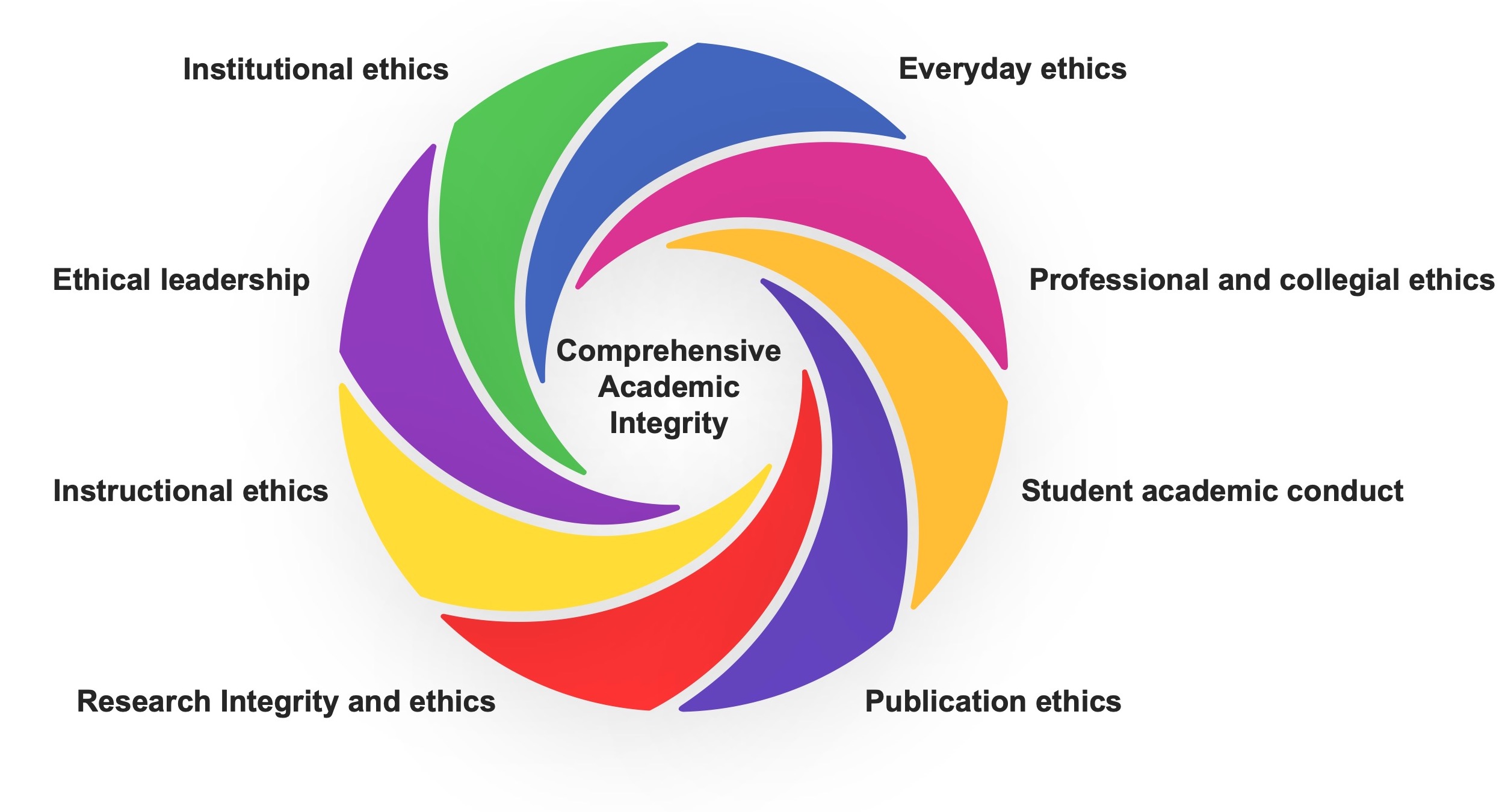



 Learning, Teaching and Leadership
You must be logged in to post a comment.