How Not to Respond: 5 Mistakes Professors Make After Misconduct Rulings

May 28, 2025

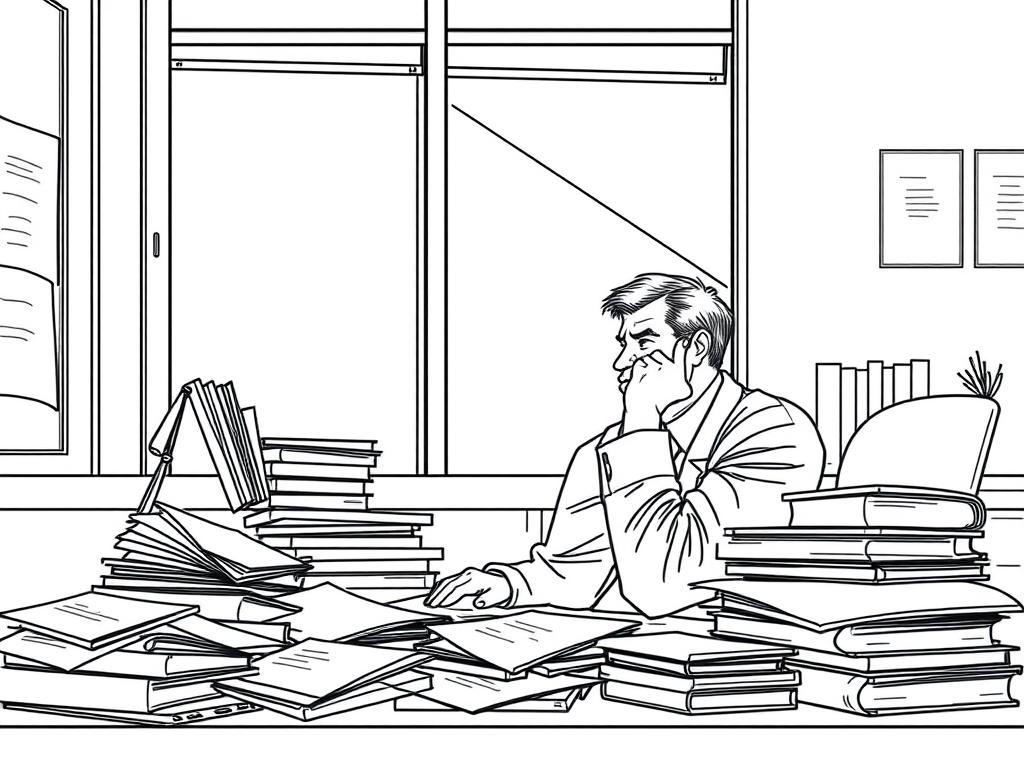
Academic misconduct cases can leave professors feeling frustrated, especially when outcomes don’t align with their expectations. These emotions are understandable and how faculty respond to disappointing rulings can impact their professional standing; relationships with colleagues and students; and future effectiveness in addressing misconduct.

Here are five common mistakes professors make when they disagree with academic misconduct decisions—and better approaches to consider.

1. Venting to Students About the Decision

The Mistake: Discussing the case details or expressing frustration about the ruling with other students, either in class or informal settings.

Why It Backfires: This behavior undermines institutional authority, creates an uncomfortable environment for students, and may violate confidentiality requirements. Students lose confidence in the system and may question whether they’ll receive fair treatment.

Better Approach: Process your concerns through appropriate channels. If you need to discuss the case, speak with department chairs, ombudspersons, or trusted colleagues who understand confidentiality requirements.

2. Making Public Complaints on Social Media or Forums

The Mistake: Posting about the case on social media, academic forums, or other public platforms, even when avoiding specific names.

Why It Backfires: Public complaints damage professional relationships and institutional reputation. Even anonymous posts can often be traced back to their authors. This approach also models poor conflict resolution for students and colleagues.

Better Approach: Use internal grievance procedures or professional development opportunities to address systemic concerns. Focus energy on improving processes rather than criticizing past decisions.

3. Refusing to Participate in Future Misconduct Proceedings

The Mistake: Declining to serve on academic integrity committees or refusing to report suspected misconduct because of disagreement with previous outcomes.

Why It Backfires: Withdrawal from the process eliminates your voice from future decisions and reduces the system’s effectiveness. This stance also shifts additional burden to colleagues who continue participating.

Better Approach: Stay engaged while working to improve the system. Use your experience to advocate for clearer guidelines, better training, or procedural improvements that address your concerns.

4. Treating the Student Differently in Future Interactions

The Mistake: Allowing disappointment about the ruling to affect how you interact with the student in subsequent courses, recommendations, or professional settings.

Why It Backfires: This behavior constitutes unprofessional conduct and potential retaliation. It undermines the educational mission and creates legal risks for both you and the institution.

Better Approach: Maintain professional boundaries and treat all students equitably. If you find it difficult to interact objectively with the student, consider recusing yourself from situations where bias might affect your judgment.

5. Bypassing Established Processes

The Mistake: Going directly to senior administrators, board members, or external parties without following institutional procedures for investigations, appeals, or grievances.

Why It Backfires: Skipping proper channels damages relationships with immediate supervisors and colleagues. It also reduces the likelihood that your concerns will receive serious consideration, as decision-makers prefer to see that established processes were followed.

Better Approach: Work through designated channels first. Document your concerns clearly and present them through official appeal mechanisms. If these prove insufficient, seek guidance from faculty governance bodies or professional organizations.
Moving Forward Constructively

Disagreement with academic misconduct decisions stems from genuine concern for educational standards and fairness. Channel this concern into productive action by focusing on prevention, process improvement, and professional development rather than relitigating past cases.

Consider these constructive alternatives: participate in policy review committees, mentor colleagues on documentation practices, advocate for faculty training on academic integrity, or contribute to scholarship on effective misconduct prevention.

The goal is not to eliminate disagreement with misconduct decisions—different perspectives strengthen academic integrity systems. The goal is to express disagreement in ways that improve outcomes for everyone involved while maintaining the professional standards that serve our educational mission.

________________________

Share this post: How Not to Respond: 5 Mistakes Professors Make After Misconduct Rulings – https://drsaraheaton.com/2025/05/28/how-not-to-respond-5-mistakes-professors-make-after-misconduct-rulings/

Sarah Elaine Eaton, PhD, is a Professor and Research Chair in the Werklund School of Education at the University of Calgary, Canada. Opinions are my own and do not represent those of my employer.


When Good Ideas Meet Poor Execution: The Humane AI Pin and the Future of Language Translation

May 18, 2025

One of the tenets of postplgiarism is that artificial intelligence technologies will help us overcome language barriers and understand each other in countless languages (Eaton, 2023). 

We already have apps that translate text from photos taken on our phones. These apps help when travelling in countries where you don’t speak the language. Now we have applications extending this idea further into wearable technology.

Wearable technology has existed for years. We wear fitness gadgets on our wrists to track steps. AI technology will become more embedded into the software that drives these devices.

New wearable devices have emerged quickly, with varying levels of success. One example was introduced about a year after ChatGPT was released. The company was called Humane and the device was powered by OpenAI technology.

The Humane pin was wearable technology that included a square-shaped pin and a battery pack that attached magnetically to your shirt or jacket. It was marketed as enabling users to communicate in just about any language (Pierce, 2023). To Star Trek fans, the resemblance to a communicator badge was unmistakable.

The device retailed for $700 US and required a software subscription of $24 USD per month, which provided data coverage for real-time use through their proprietary software based on a Snapdragon processor (Pierce, 2023). The device only worked with the T-Mobile network in the United States. Since I live in Canada and T-Mobile isn’t available here, I never bought one.

Like others, I watched with enthusiasm, hoping the product would succeed so it could expand to other markets. Pre-order sales indicated huge potential for success. By late 2023, the Humane pin was heralded as “Silicon Valley’s ‘next big thing'” (Chokkattu, 2025a). (I can’t help but wonder if the resemblance to a Star Trek communicator badge was part of the allure.)

A person wearing a light blue dress shirt and a dark blue suit jacket. The shirt has a button labeled 'A7' on the collar. Attached to the collar is a small, square electronic device with a screen displaying an icon of a circular arrow, indicating a loading or refresh symbol. The background features an out-of-focus world map.

When tech enthusiasts received the product in 2024, the reviews were dismal. One reviewer gave it 4 out of 10 and called it a “party trick” (Chokkattu, 2024). (Ouch.) The Humane pin did not live up to its promises. Less than a year after its release, the device was dead. HP acquired the company and retired the product at the end of February 2025.

Tech writer Julian Chokkattu declared the device was e-waste and suggested it could be used as a paperweight or stored in a box in the attic. Chokkattu (2025b) says, “In 50 years, you’ll accidentally find it in the attic and then tell your grandkids how this little gadget was once—for a fleeting moment—supposed to be the next big thing.”

Learning from Failure: The Promise Remains

The failure of the Humane AI Pin does not invalidate the vision of AI-powered real-time translation. The device failed because of execution problems—poor battery life, overheating, an annoying projector interface, and limited functionality (Chokkattu, 2024). The core AI translation capabilities were among the features that actually worked.

Real-time translation represents one of the most compelling applications of generative AI. When the technology works seamlessly, it can transform human communication. The Humane pin showed us what not to do: create a standalone device with too many functions, none executed well.

The future of AI translation likely lies not in dedicated hardware but in integration with devices we already use. Our smartphones, earbuds, and smart glasses will become the vehicles for breaking down language barriers. The underlying AI models continue to improve rapidly, and the infrastructure for real-time translation grows more robust.

The Humane pin’s failure teaches us that good ideas require good execution. But we should not abandon the goal of using AI to help humans understand each other across languages. That goal remains as important as ever in our increasingly connected world. The technology will improve, the interfaces will become more intuitive, and the promise of the postplagiarism tenet—that language barriers will begin to disappear—will eventually be realized.

The Humane AI pin may be dead, but we should keep our hope alive that AI technology will help us overcome language barriers and provide new opportunities for communication.

Live long and prosper.

References

Chokkattu, J. (2024, April 11). Review: Humane Ai Pin. https://www.wired.com/review/humane-ai-pin/

Chokkattu, J. (2025a, February 22). The Humane Ai Pin Will Become E-Waste Next Week. Wired. https://www.wired.com/story/humane-ai-pin-will-become-e-waste-next-week/

Chokkattu, J. (2025b, February 28). What to Do With Your Defunct Humane Ai Pin. Wired. https://www.wired.com/story/what-to-do-with-your-humane-ai-pin/

Eaton, S. E. (2023). Postplagiarism: Transdisciplinary ethics and integrity in the age of artificial intelligence and neurotechnology. International Journal for Educational Integrity, 19(1), 1–10. https://doi.org/10.1007/s40979-023-00144-1 

Pierce, D. (2023, November 9). Humane officially launches the AI Pin, its OpenAI-powered wearable. The Verge. https://www.theverge.com/2023/11/9/23953901/humane-ai-pin-launch-date-price-openai 

Note: This is a re-post of a piece originally posted on the Postplagiarism blog.

________________________

Share this post: When Good Ideas Meet Poor Execution: The Humane AI Pin and the Future of Language Translation – https://drsaraheaton.com/2025/05/18/when-good-ideas-meet-poor-execution-the-humane-ai-pin-and-the-future-of-language-translation/

Sarah Elaine Eaton, PhD, is a Professor and Research Chair in the Werklund School of Education at the University of Calgary, Canada. Opinions are my own and do not represent those of my employer.


UHaveIntegrity: A Strengths-Based Approach to Academic Integrity at the University of Calgary

May 9, 2025
AltText: The image shows a closed laptop with a honeycomb-patterned cover on a wooden surface. On top of the laptop, there is a rectangular sticker that reads "#UHaveIntegrity" with the "integrity" part in red text. The sticker also includes a small logo for the University of Calgary.

I have been doing a lot of travelling lately, giving talks on postplagiarsm and academic integrity in the age of generative artificial intelligence. Recently I was at the Calgary airport and ask I was going through the security screening process, I took out my laptop and placed it in the bin to be screened. A staff member pointed to my laptop and asked, “Are you a professor at the University of Calgary?!”

She recognized the laptop sticker. It says #UHaveIntegrity, which is the slogan for our academic integrity campaign at the University of Calgary.

I replied, “Yes! Yes, I am! Are you a student?” She replied yes, that she was a majoring in political science.

It was most inspiring moment I have ever had going through airport security!

Shifting the Conversation

Traditional academic integrity messaging often starts from a deficit model, emphasizing what students should not do and the consequences of misconduct. This approach inadvertently positions students as potential cheaters rather than developing adults.

The #UHaveIntegrity campaign reframes this conversation. We acknowledge and celebrate  students as whole human beings with existing ethical foundations. Our role as educators shifts from policing to supporting their continued development.

From Classroom to Career

Academic integrity transcends assignment submissions and exam protocols. It forms the foundation for ethical decision-making that extends beyond graduation. The research literature demonstrates that students who develop strong ethical frameworks during their education carry these principles into their professional lives (e.g., Guerrero-Dib et al., 2020; Tammeleht et al., 2022).

When we recognize that students already have integrity, we create space for authentic dialogue about ethical challenges rather than simply enforcing rules. Students become active participants in their ethical development rather than passive recipients of policy statements.

Supporting Student Success

The #UHaveIntegrity campaign represents our commitment to supporting student learning and academic success. By starting from a position of trust, we establish educational environments where:

  • Students feel empowered to ask questions about citation and collaboration
  • Errors become learning opportunities rather than character judgments
  • Discussions about integrity focus on growth rather than compliance

Moving Toward Postplagiarism

The #UHaveIntegrity campaign exemplifies what we call postplagiarism pedagogy—an educational approach that moves beyond rule-based instruction to consider how learning, writing, and collaboration can happen ethically in the age of generative AI.

Postplagiarism does not mean ignoring source citation or academic honesty. Instead, it acknowledges that students develop as writers in a world where information flows differently than in previous generations. ChatGPT was released almost two and half years ago, in November 2022. Here we are in 2025 and our historical norms around citing and referencing are inadequate in the age of remix, mashup, and co-creation with GenAI.

By starting from the premise that students have integrity, educators can engage in richer conversations about:

  • How knowledge creation occurs in digital environments
  • Why proper attribution matters in different contexts
  • How collaboration and individual work intersect in contemporary scholarship

In a small-scale study led by my colleague, Dr. Soroush Sabbaghan, we interviewed ten graduate students about their use of GenAI. They told us that they want and need guidance and support to use GenAI ethically. They also wanted agency to use GenAI tools to help them do their research. They wanted GenAI tools to help them amplify their own voices and discover new perspectives. Although our study was small, the findings are worthy of consideration. You can check out the article here if you are interested.

Moving Forward Together

The sticker on my laptop serves as a daily reminder of our responsibility as educators. It’s up to us educators to create learning environments that nurture the integrity students already possess, providing them with the knowledge and skills to navigate increasingly complex ethical landscapes.

The next time you encounter academic integrity challenges in your classroom, remember: your students have integrity. The question is not about instilling values they lack, but supporting their application of existing values to new academic contexts.

#UHaveIntegrity is more than a hashtag. It is our University of Calgary commitment to educational partnerships built on integrity and mutual respect.

University of Calgary Academic Integrity Week 2025

This year at the University of Calgary, we’ll mark Academic Integrity Week from October 14-17. Our themes are artificial intelligence and engaging students as partners in academic integrity. We are excited to engage with students on these important topics!

References

Guerrero-Dib, J. G., Portales, L., & Heredia-Escorza, Y. (2020). Impact of academic integrity on workplace ethical behaviour. International Journal for Educational Integrity, 16(1), 2. https://doi.org/10.1007/s40979-020-0051-3 

Sabbaghan, S., & Eaton, S. E. (2025). Navigating the ethical frontier: Graduate students’ experiences with generative AI-mediated scholarship. International Journal of Artificial Intelligence in Education. https://doi.org/10.1007/s40593-024-00454-6 

Tammeleht, A., Löfström, E., & Rodríguez-Triana, j. M. J. (2022). Facilitating development of research ethics and integrity leadership competencies. International Journal for Educational Integrity, 18(1), 1–23. https://doi.org/10.1007/s40979-022-00102-3

________________________

Share this post: #UHaveIntegrity: A Strengths-Based Approach to Academic Integrity – https://drsaraheaton.com/2025/05/09/uhaveintegrity-a-strengths-based-approach-to-academic-integrity-at-the-university-of-calgary/

Sarah Elaine Eaton, PhD, is a Professor and Research Chair in the Werklund School of Education at the University of Calgary, Canada. Opinions are my own and do not represent those of my employer.


A Wraparound Approach to Academic Integrity: Centering Students in the Postplagiarism Era

May 7, 2025


I am trying out SSRN. I feel like this is something I should have known about long ago. Last year, one of the doctoral students whom I supervise, Myke Healy, posted a paper about academic integrity in secondary schools on SSRN. (It’s a really good ready, by the way.)

Then, a research team that I’m on posted our rapid review protocol pre-print on assessment, academic integrity, and artificial intelligence on SSRN. Myke is on our team and posted the paper on our behalf.

On my recent travels, I was listening to Malcolm Gladwell’s podcast, Revisionist History. In one of episodes (I forget which one exactly), Gladwell raves about SSRN. I mean, gushes.

I thought to myself, “Well, it seems the universe is asking me to pay attention to SSRN.” So, I did.

I got working on a paper that had been sort of lingering for a couple of years. (Yes, a couple of years. Good work takes time!) I unpacked the ideas, developed the argument, referenced people whose contributions influenced and shaped my thinking and got it formatted.

So, I’ve now posted my first paper on SSRN:
Eaton, S. E. (2025). A Wraparound Approach to Academic Integrity: Centering Students in the Postplagiarism Era (April 20, 2025). SSRN. https://doi.org/http://dx.doi.org/10.2139/ssrn.5223911

I’m not really sure what happens next. There doesn’t really seem to be a place for folks to comment on the paper, though you can download it and add it to your library. I guess the next step is to submit it to a journal and go from there.

If you use SSRN and have tips on how to make the most of it, feel free to share. I’m learning as I go and I’m all ears.

________________________

Share this post: A Wraparound Approach to Academic Integrity: Centering Students in the Postplagiarism Era – https://drsaraheaton.com/2025/05/07/a-wraparound-approach-to-academic-integrity-centering-students-in-the-postplagiarism-era/

Sarah Elaine Eaton, PhD, is a Professor and Research Chair in the Werklund School of Education at the University of Calgary, Canada. Opinions are my own and do not represent those of my employer.